
Hreflang: A Beginner’s Guide to Targeting Languages and Regions

Tapping into new audiences is an incredibly effective way to grow your website traffic.

If you’re expanding your business globally, you may have already considered translating your website into different languages. It can be a great way to monetize your content or sell to people outside your local area. 

It’s an exciting thought, but it’s not quite as simple as just hiring someone to translate your website’s pages. Some of the translated pages would likely be similar to the content on your existing pages, leaving you at risk for being penalized by search engines for duplicate content

Consider the experience of your reader, too. Imagine how quickly they’d leave a site that offers prices and shipping details in the wrong currency or language. 

There’s a huge opportunity to grow your business by attracting people in different geographical or language areas, but there is a specific way to guide new users to your site.

The best way to access these new audiences is by using hreflang HTML attribute tags. 
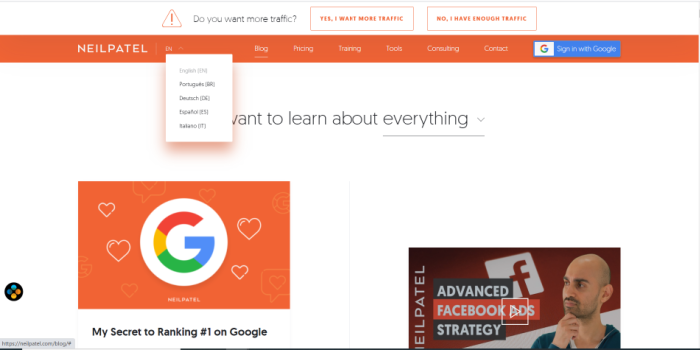
Screenshot showing targeting languages and regions with hreflang.

What Is the Hreflang Tag?

Hreflang is an HTML language attribute or code that tells search engines important information about your content by indicating language codes and country codes for each piece of content. This code tells search engines what language and region you’re targeting with the content. 

Here are new audiences you could attract using hreflang:

  1. Visitors in the same country, who speak different languages
  2. Visitors from different countries, who speak other languages
  3. Visitors from different countries, who speak the same language

Using hreflang can boost the organic search engine optimization (SEO) on your website and launch your digital marketing outreach to new audiences without costing you domain authority or impacting user experience. 

Why Are Hreflang Tags Important?

Hreflang allows you to tell search engines which pages to show to which users to show audiences the pages you created just for them. It also gives search engines a clear indication that the content on these pages was not duplicated, but rather, has been customized for different people.

Let’s say your website is written entirely in English, with your local currency noted for products. However, other English speakers in different geographic regions could benefit from your content and offerings.

What if you could show them an alternate version of your website that would automatically reflect their daily currency? 

Let’s go a step further. What if you could also translate your content into different languages and then somehow make sure search engines showed the right search result to your target audience? 

You can, and while it will take a bit of work to set up, the value of showing visitors what they want to see can be a significant boost to your rankings. 

Want to learn more about getting international visitors to your content? Watch this video:

Who Should Use Hreflang Code Attributes?

You should use these tags when you want to offer the correct version of your website to groups you can identify and separate by language or geographical region. 

This could include having your entire site content translated into different languages, just portions of it translated, or indicating that you have alternate versions of your site with other currencies. 

For example, Canadian, American, and British English are the same language but have different currencies.

This tactic is best for companies that have a good reason to be accessing international markets. For instance, you can monetize the traffic, sell directly to those visitors, or creating a global brand. 

If this sounds like your company, it might be time to invest in creating a global SEO strategy. 

SEO and More:  Benefits of Proper Use of Hreflang Tags

Your website can benefit from hreflang tags in three critical ways:

  1. Improve your organic SEO by lowering bounce rates, increasing rankings, and improving click-through and conversion rates. 
  2. Your user experience (UX) will improve for readers outside your region.
  3. It may protect you from being penalized for duplicate content.

The world is full of people who may not share your first language but are still valuable readers for your content. What about Spanish-, Hindi-, or Mandarin-speaking users? 

There is a substantial global audience you could be reaching, but to do so, you’ll need to find ways to offer them versions of your content that is optimized for their experience. 

When these readers can access a personalized version of your content, they’re more likely to stay on your site longer, reading more pages, which reduces your overall bounce rate. 

However, you need to tread carefully any time you create similar content, even in another language. Use hreflang to match the correct piece of content to what the user wants to see.

What Does a Hreflang Tag Look Like?

A valid hreflang attribute might look like this:

link rel=”alternate” href=”http://example.com” hreflang=”en-us” />

How to Implement Hreflang Tags

What does successful implementation look like? There are few things to consider when setting up hreflang for your site content. If any of these steps are not complete, your tags will not work. 

Create a Content Map and Plan

Start by doing a site audit to map out what you have already done to target new languages or regions. Include your existing content and any pages you have already translated. 

Next, check your analytics and see who else is visiting your website, where they’re from, and the language settings in their browsers. Making decisions based on audiences already finding your site will help your changes have a larger impact.

Decide if your entire site needs to be shown in alternate languages. Would it be enough to have your home page or just your contact information and your footer changed? This can help you decide where to focus your time and resources.

Language and Country Codes

Next, you’ll need to choose the correct codes to create your tags. There are established language codes and country codes, so be sure you’re verifying as you go. 

When creating codes, remember that you’ll need a language or country code. This means that you could simply choose a language code, but you’ll never just have a country code by itself. 

Remember that you may not know every country you need to target, so it’s also good to have just a language code. This allows you to offer French content for people in France and a French version to capture French-speaking users from any other country.

Relationship Between Tags

You’ll need to be sure that you show the correct relationship between tags, which means understanding self-referential and bidirectional hreflang attribute references. 

  1. Self-referencing tags mean that each language version should reference itself and all the other versions. 
  2. Bidirectional means each tag should be paired with a tag on the alternate piece of content. For example, if page A links to page B, then page B needs to link back to page A. (This also ensures that nobody can create a one-way tag that links to an external source, taking your traffic away.)
  3. X-default creates a default version of a page that does not target any specific language, or where users are asked to select a language once landing on a page. This should capture anyone who doesn’t have a language designated in their browser settings, or whose IP address doesn’t match any of the languages on your site. This would be your x-default tag: <link rel=”alternate” href=”http://example.com/” hreflang=”x-default” />

Choose an Implementation Method

You can implement valid hreflang attributes in one of three ways: 

  1. Implement the hreflang attribute using HTML in link elements in the <head> section of every page.
  2. Implement the hreflang attribute in HTTP headers for PDFs and other non-HTML pages or non-HTML files.
  3. Implementing the hreflang attribute in your XML sitemap markup (this will avoid having to edit multiple HTML documents each time you edit or delete a page. Direct access to the XML sitemap file can make this even easier.)

Resources for Successful Implementation of Hreflang Tags

There are a few handy resources to tackle hreflang tags on your site content. This is by no means a complete list, but they’ll come in handy as you move ahead. Remember that different platforms will have specific instructions for implementation, so reference those before you begin. 

  1. Hreflang tags generator tool 
  2. Google search console
  3. XML sitemap tool for hreflang tags 
  4. Hreflang tag checker 
  5. Learn more about setting up international SEO before beginning the project

Should I Use Hreflang with Canonical Tags?

Yes, they should be used together, as they perform different functions. Canonical tags tell search engines which URL is the official or canonical version of a page and which page should be indexed. Hreflang tags tell search engines what language and region a page is targeting.

Common Pitfalls When Implementing Hreflang Tags

Common errors include using the wrong language code or country code, trying to use a code for too large a region (like using the EU instead of GBR), forgetting to make versions self-referential, or forgetting that pages need to be bidirectional.

Another area challenge is maintaining valid hreflang attributes once they are set up. As content is added to or removed from the site, or redirects are created within your existing content, hreflang tags must be updated. 

Hreflang code attributes are a guide for search engines, not a guaranteed function. All it can do is suggest which pages search engines should display based on a user’s browser settings. 

Additionally, while it works with Google and Yandex, it does not work for others such as Bing and Baidu, so look into options and instructions for each.

Conclusion

Hreflang can be a useful tool to tell search engines what language your site is written in, and what region you’re targeting with a particular piece of content. 

Implementing hreflang tags can help you reach international audiences with content or offerings. Need help deciding if hreflang could work for you? It might be time to get help with your digital marketing strategy.

Hreflang is not easy to implement but can expand your reach and boost your organic SEO far beyond what your website is doing today. 

Just remember to create a plan that avoids common pitfalls and double-check your tags after implementation and every few months.

Which language or region would you target first using hreflang attributes?

The post Hreflang: A Beginner’s Guide to Targeting Languages and Regions appeared first on Neil Patel.

How to Choose The Right Content Marketing Agency

Content marketers who blog regularly receive 55 percent more website visitors and 67 percent more leads than those who don’t. Organizations that prioritize content marketing receive 13X more ROI than those that don’t.  

It’s no secret that content marketing works. 

What’s difficult is showing up day after day, with fresh content your readers find educational and valuable. After a while, the content marketing arms race can become a grind. If you have the right content marketing agency, growth is easier. It’s simple to create content that’s focused, helpful, and profitable. 

Know your content marketing goals and desired outcomes

Research from the Content Marketing Institute shows 80 percent of B2B marketers use metrics to measure their content performance, 65 percent have set KPIs, and 43 percent measure their content marketing ROI. 

Do you? 

If you’re not sure about your goals and desired outcomes, content marketing can become an expensive black hole. Successful content marketing starts with setting goals and objectives. The metrics and KPIs you use depends on a few different factors — the size and location of your business, your industry, and your circumstances. Here’s a list of the top six metrics marketers have used to measure their content marketing performance in the last 12 months. 

  1. Email engagement (e.g., opens, clicks, downloads)
  2. Website traffic (e.g., page views, unique visitors, backlinks, conversions) 
  3. Social media metrics (e.g., shares, follows, views, likes)
  4. Conversions (e.g., traffic to leads, traffic to subscribers, leads to sales)
  5. Subscriber counts (e.g., # of follows, growth, unsubscribes)
  6. Search rankings 

What should your goals and desired outcomes be? 

When it comes to content marketing, there really isn’t a shortage of metrics. If you wanted to, you could track 50+ metrics around your business. That’s not helpful if you’re focused on vanity metrics that don’t help you grow. You’ll probably want to focus your attention on the metrics that are directly tied to your revenue. 

This is why goals and outcomes are so important. 

If you’re aware of the goals and outcomes you want, you have a better sense of the metrics you need to track. These metrics show you whether you’re getting close to your goal or not. 

Here’s an example. 

If you’re running a SaaS business, you’d be focused on improving the five must-have metrics

  • Increasing monthly recurring revenue (MRR)
  • Decreasing user churn rates
  • Decreasing cost per acquisition
  • Increasing average revenue per customer
  • Increasing Customer lifetime value

If you’re focused on these goals, your content marketing metrics would be directly tied to these as well. If you’re a SaaS business, you’d prioritize content marketing metrics like traffic, subscriber counts, and conversions. These would have the biggest impact on your SaaS business. 

  1. What specifically do I need to stay in business? (e.g., $75K per mo., 300 basic customers, churn rate of 4.7% or less)
  2. Which areas of my business cost me money? (e.g., low return on ad spend, high acquisition costs, high churn rates)
  3. Where are my most/least profitable customers coming from? 
  4. Which content produces the most revenue? 

Start with the core metrics in your business. Ask yourself these four questions to get a better idea of your core metrics. You can always add more metrics if you need more data. 

9 Characteristics That Make a Great Content Marketing Agency

Clutch.co lists more than 13,873 content marketing agencies on its website. New agencies are added every day. How do you know that the agency you choose is a good fit? What kind of characteristics make a great content marketing agency?  

You need to know what you’re looking for in an agency. 

Here’s a list of the qualities and characteristics you need to find the right agency for your business. 

  1. A good reputation: Good reviews and testimonials are a good start. If you’re looking for an agency, they should have a portfolio of well-written content as well as online reviews, case studies, or references they can provide. You’ll want to go deeper; the agency you choose should have a portfolio of relevant content you can review. They should also have a good reputation with journalists, publishers, and influencers. If you run into any red flags here, they’ll need to explain why. 
  2. No ethical grey areas: Your agency should have a hard-line stance against obvious issues like plagiarism, inaccurate or misleading content, or material that’s socially inappropriate. But they should also have a clear stance against ethically murky issues like pay-for-play, paid links, or undisclosed conflicts of interest. When exposed, these unethical moves do permanent damage to your business, even if your agency did this with another client. 
  3. Project management skills: Content marketing depends on deadlines. If you’re working with journalists, partners, or influencers, you’ll need an agency that can provide you with on-time and in-budget content delivery. An editorial calendar can be difficult to manage; your agency should be able to handle these details for you. Ask them to show you their project management process.
  4. Clear goal setting: Your agency should be comfortable working with your goals and objectives. They should understand your business well enough to be able to track and manage the key metrics and KPIs you need to grow. The right agency should be able to show you how each metric fits with your goals and outcomes.
  5. Consistent ROI: Experienced agencies create content that meets your goals consistently. Their content development keeps you, the client, ahead of your competitors. It’s pretty easy to verify ROI; ask for case studies in the references that go along with them.
  6. Subject matter expertise: Your agency should have experience creating content in the same industry or space. They should have in-depth knowledge and experience with your industry, business, product, or service. If they don’t have the expertise you need, they should be able to demonstrate that they have experience with a similar topic or niche.
  7. A stable team of content creators: Good content marketing agencies have a list of reliable writers on their team, stable writers are skilled at writing, grammar, logical consistency, and storytelling. These writers should be specialists who have the subject matter expertise or experience you need.
  8. Match your voice, tone, and style: Experienced agencies shouldn’t have a problem matching their client’s brand voice. It should be easy for them to create content that sounds like something their clients would say, using the tone and style their client already uses.
  9. Write for people and search engines: Agency content pieces should be created to attract the right visitor at the right time, whether you’re speaking to a cold audience, subscribers, customers, followers, fans, or a combination. 

This is a lot for clients to handle on their own. That’s why 84 percent of marketers outsource their content creation activities. 

How to work with a content marketing agency

You’ll want to make sure that you give your content marketing agency the tools they need to work hard for you. 

  • Usernames and passwords. You can use tools like LastPass to handle credentials management for your agency. 
  • Work-related content. The content your agency needs to work. This includes items like marketing materials, brand and style guides, photos, and media.
  • Legal content. The list of do’s and don’ts your content needs to follow — terms of use, privacy policy, return/exchange policies, warranty and guarantee information, and intellectual property details.
  • Case studies and accolades. Your case studies, awards, recognition, PR (positive or negative), testimonials, praise, review profiles — any recognition you’ve received in your business. 
  • Good feedback. In the beginning, your agency will need lots of input from you. A good agency will ask lots of questions about your business. They’ll need consistent feedback from you to create the kind of content you need. 

Here are some tips you can use to keep your relationship with your agency healthy and successful.

Give your agency a point-of-contact

Make sure they assign a dedicated account manager or point-of-contact to your account. Verify that your agency has access to a point-of-contact in your business and decision-makers when necessary. Make sure you both know when and how to reach each other.

Set your expectations upfront

Your agency needs to know how to work with you. Do you want your agency to be hands-on, or would you prefer that they focus on the work? Make sure your agency knows what your expectations are—ask them to verify that your expectations are realistic and achievable.

Outline your approval process

Are you an influencer or decision-maker? If you don’t have the power to make important decisions on behalf of your company, you want to let your agency know that ahead of time. They’ll probably need access to a decision-maker at some point. If you’re not a decision-maker, give your agency the chance to earn buy-in from them. This will keep the agency/client relationship stable.

Ask your agency for feedback

Sometimes agencies are nervous about offending their clients. Ask your agency for feedback on your feedback. Find out ahead of time whether your thoughts were helpful or clear. Ask your agency about how you can provide better feedback during your next meeting.

How to Find the Right Content Marketing Agency For You 

If you’d prefer to do your research from scratch, you can use ratings and review websites like Clutch.co, G2, or TopSEOs to create a list of content marketing agencies. Use the criteria I mentioned above to create a list of agencies you can interview. 

To make things easier for you, we’ve created a list of the best content marketing agencies of 2020. 

8 Top Content Marketing Agencies

1. NP Digital – Best for Immediate and Consistent Revenue Growth

NP Digital is my content marketing agency. I focus our agency on revenue and the metrics that increase revenue. Our focus with content marketing is helping clients build a business that produces traffic, leads, and revenue. Most agencies separate services like technical SEO, link building, or conversion optimization. We keep SEO and content marketing as a package deal. 

2. Seer Interactive – Best for Big Data Search and Content

Seer Interactive doesn’t trust their gut; they use their data warehouse and tools to look across millions of keywords instantly. Using big data, they look for new, hidden, and unexpected customer trends in competitive industries. They’re one of the few agencies with a big query environment of 202 million SERP records. 

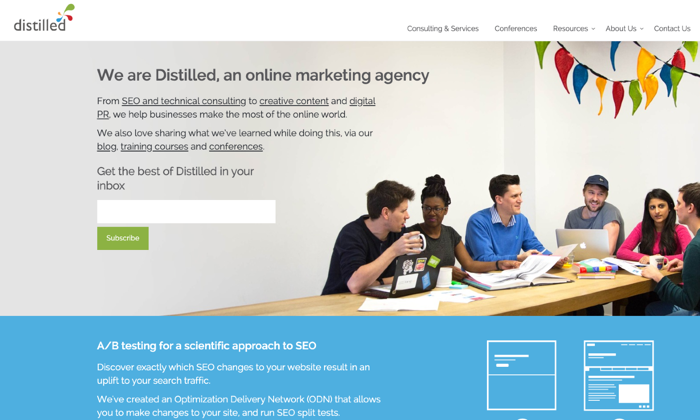
3. Distilled – Best for Technical SEO

As an agency, Distilled builds its content marketing campaigns around technical SEO. All of the services they offer are oriented around search. Distilled created an Optimization Delivery Network (ODN) that allows clients to make changes to their site and run SEO split tests. 

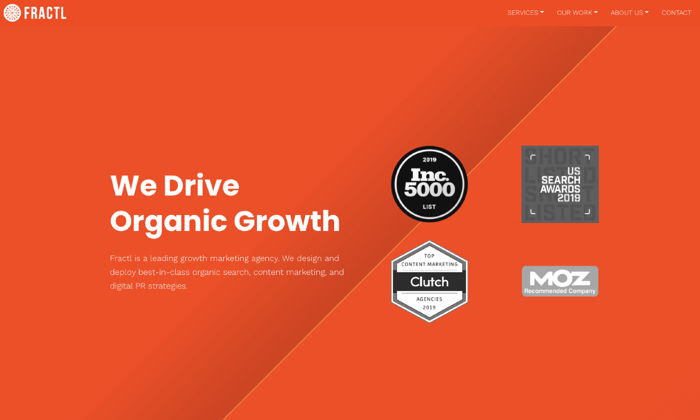
4. Fractl – Best for In-Depth, Research-Heavy Content

Fractl is a research-heavy, data-driven content marketing agency. They focus on rapid organic growth via a combination of content marketing, data journalism, digital PR, and SEO. They have deep knowledge in specific industries, and they publish original research in journals and well-known publications. 

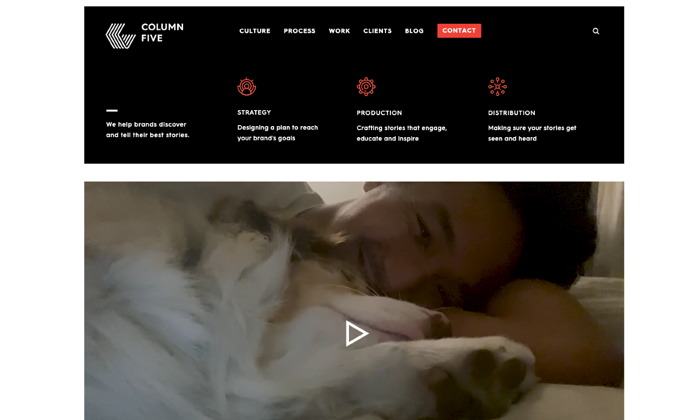
5. Column Five – Best for Data and Content Visualization

As a content marketing agency, Column Five is focused on the creative side of content development — storytelling, design, data visualization, interactive motion graphics, and exhibition design. Creativity is the priority; their agency uses a mix of organic and paid distribution to promote client content.  

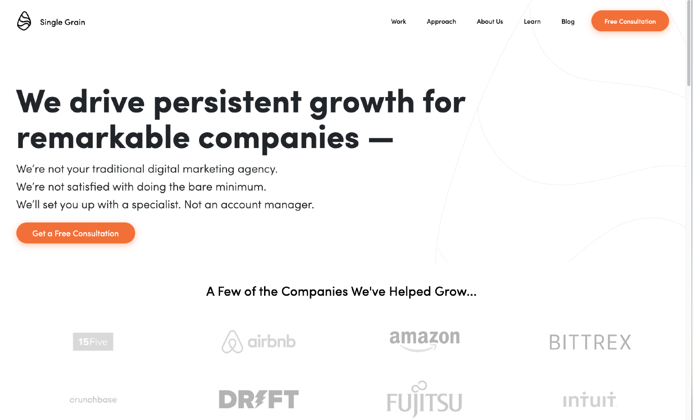
8. Single Grain – Best for Conversion-Driven Content Marketing

Single Grain uses its content marketing and conversion optimization services to boost client conversions. They’re focused on rapid and consistent growth for each of their clients. 

9. The Content Bureau – Best for B2B Content Marketing

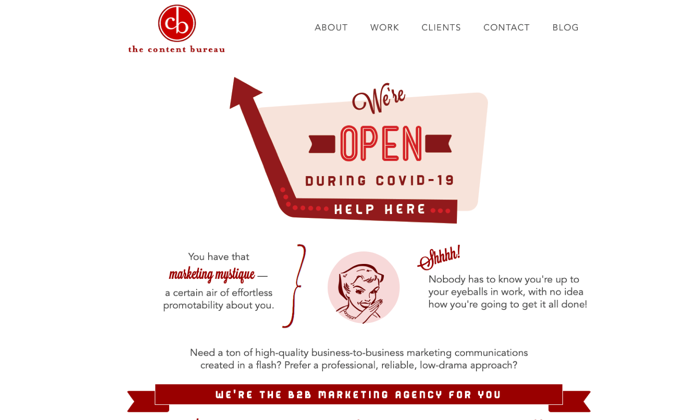
These B2B content marketing specialists are woman-owned, 90 percent female, and fully remote. They’re focused almost exclusively on clients in the tech, VC, and financial sectors, focusing their attention on global corporations that need consistent, year-over-year growth.  

10. Web Profits – Best for SaaS Content Marketing

Webprofits focuses exclusively on SaaS content marketing and advertising. These SaaS specialists use their experience as SaaS business owners to build other SaaS clients. They work with large and small clients, including Rackspace and Shopify.  

Conclusion

It can be tough to show up day after day with fresh content for your customers. The right content marketing agency makes content development simple and straightforward. Choosing the right content marketing agency isn’t rocket science; you just have to ask the right questions. 

It starts with your goals and outcomes. 

If you’re aware of the goals and outcomes you want, you’ll know which metrics you need to track to reach those goals. With the right goals and metrics, you’ll be able to find, vet, and choose the right content marketing agency — you’ll have the team you need to generate more revenue for your business. 

The post How to Choose The Right Content Marketing Agency appeared first on Neil Patel.

After being counted out again, the Raptors are headed to Game 7

A gutty double-overtime Game 6 victory has the defending champions one win away from defying the odds.

The post After being counted out again, the Raptors are headed to Game 7 appeared first on Buy It At A Bargain – Deals And Reviews.

TyltGO (YC S20) Is Hiring Software Engineers in Kitchener, Canada

Article URL: https://www.linkedin.com/company/tyltgo/jobs

Comments URL: https://news.ycombinator.com/item?id=24431438

Points: 1

# Comments: 0

Gravitational (YC S15) is hiring a remote web developer

Come work with us, we’re a pleasant group of people and we’re remote-friendly!

Own everything you see on gravitational.com, both the front-end and the (currently non-existing) back-end.

Specifically, we’re looking for a strong engineer to manage our web properties for Gravitational. You will be charged with keeping us up to date with the latest web technology and implementing pixel perfect designs that run smoothly on Desktop and Mobile devices. You should have very strong technical skills especially in the areas of Javascript, react, CSS, and HTML. We expect you to enforce strict web standards and watch over website SEO using the latest tools.

Apply here:
https://jobs.lever.co/gravitational/4914bfe9-46ed-4711-af70-…

Or just shoot an email to CEO: ev@gravitational.com


Comments URL: https://news.ycombinator.com/item?id=24434206

Points: 1

# Comments: 0

How Does Your Garden Grow? Best Business Line of Credit in a Recession

The COVID-19 pandemic caught the world by surprise and turned the economy upside down.  If you are a business trying to make it during this time, we can help.  The Federal government has approved funding through  The CARES Act, including the Paycheck Protection Plan.  In addition, many states and local organizations are offering their own COVID-19 relief options.  Beyond that, we can help you find the best business line of credit in a recession.

A Business Line of Credit is Like Miracle Grow for Your Business

A business line of credit can be an incredible tool for your business, even in a recession. You don’t want just any line of credit however. You want the best one for your business needs.

Not all businesses are the same, and not all lines of credit are best for all businesses. Different limits, rates, and terms work better for some than others. How do you ensure you are getting the best business line of credit in a recession?

What’s a Line of Credit?

It can help to get a quick rundown of exactly what a line of credit is. The most basic definition is that it is a revolving line of credit, similar to a credit card. You have a limit and continuous access to that limit while making payments only on the portion you use each month.

For example, if you have a $10,000 line of credit, you can use however much of those funds you need each month for whatever you want, unless your lender issues some sort of restriction. If you use $2,000, then when you get your statement your payment will be based on $2,000 plus the interest, rather than a payment plus interest on the entire credit line.

If you were to pay $1,000, then spend another $500, you would pay on the $1,500 balance the next month. Your payments change as your balance changes. Just like with a credit card.

Access is most typically granted through checks or a card connected to the line of credit account.  Electronic draws and transfers are also popular.

Learn bank rating secrets with our free, sure-fire guide which can even help during a recession.

Line of Credit vs. Credit Cards

The question is always asked what the difference is between a line of credit and a credit card, and why is one better than the other? The truth is that in some cases, a credit card may be the better option. There is a choice to make based on several different factors.

The main difference between the two that most borrowers need to know is that a line of credit typically has a consistently lower interest rate.  Also, there are no perks like 0% interest or cash back that you sometimes see with credit cards.

What Signifies the Best Business Line of Credit in a Recession?

The best business line of credit in a recession is going to be the one with the best rates and terms that your business can qualify for.  That makes finding it a little more involved. You have to know where you stand and what various lenders offer and require.

It will take some leg work on your part to pull together the information needed for application.  You will also need to understand that the best business line of credit in a recession may not come from the same place you would have gotten a business line of credit pre-recession.  You might have better luck with online lenders or smaller banks over larger traditional banks during an economic downturn.

A Word of Warning

Before you apply for the best business line of credit in a recession, remember that balance is important.  Recession times are by default, hard.  A line of credit can ease some of the burden, but be careful not to let the credit line itself become a burden.  Know your limits as far as what you can pay.

If you do not make payments on-time, you could end up with more trouble than you already had.

How to Find the Best Business Line of Credit in a Recession?

There are several steps to this process.

1. Why do you need a business line of credit in a recession?

Figuring this out could be the most vital step in finding the best business line of credit for your needs. You have to understand why you need a credit line in the first place. Here are some examples of how a business may use a line of credit.

  • Take advantage of a sale on inventory, raw materials, or supplies. This can reduce the cost of goods sold and consequently, increase the bottom line.
  • Purchase or repair minor equipment when needed. This would be like a new printer or laptop. It would not include items like an industrial oven or delivery truck. Larger equipment would best be purchased with an equipment loan.
  • Bridge temporary cash gaps or continuous, known cash gaps due to timing issues. An example of this would be several bills that are due at the beginning of the month when you know your largest contracts pay at the end of the month. The money is coming, but the bills come due before the money gets there. You can pay the bills with the line of credit, then pay off the line of credit when the contracts pay.

Another example of this is a seasonal line of credit for a business that does the majority of its sales during a certain time of the year.  A florist does a large percentage of sales during Valentines day, so a seasonal line of credit can come in handy to bridge the cash gap during other times of the year.

2. Determine your options.

Shop around with various financial institutions to determine which ones offer the best business lines of credit in a recession. You will want to look at factors such as interest rate and credit limit in relation to what you need and can afford.

Check with various types of lenders to get a feel for which ones offer what you need.  Check with larger commercial banks, small local institutions and credit unions, and alternative lenders such as those that operate exclusively online.

Pay specific attention to eligibility requirements to avoid wasting your time with those you do not qualify for.

Learn bank rating secrets with our free, sure-fire guide which can even help during a recession.

3. Know where you stand.

Your ability to get approval for the best business line of credit in a recession will be directly related to your business credit. Traditional banks pay more attention to personal credit, but they crack down a lot on lending when there is a recession.  Non-traditional lenders may also consider income and cash flow. They may, in addition, rely heavily on your business credit score when making an approval decision about a line of credit.

A lower business credit score does not necessarily mean you can’t get approval.  It could greatly affect your interest rate and credit limit however.

Consider signing up for a credit monitoring service that lets you keep tabs on your business credit and what is affecting it each month. The one offered by CreditSuite.com is easy to use and cost effective.

Once you have a handle on why you need a business line of credit, what is available, and what you may actually be eligible for, you can make a decision as to where you are going to apply and which product you are going to apply for.

Determining which of these lenders has the best business line of credit in a recession for you goes back to knowing what you need, who has it, and who will approve you for it.

When Is a Line of Credit Better than a Credit Card?

If you are going to need to make payments, a line of credit is a better option. The reason is pretty simple. The credit rate is almost always lower. The few exceptions are those cards that offer 0% APR for a short period of time.

If you are going to use a credit card to make regular purchases you intend to pay off immediately, that’s another story.  Especially if you qualify for a card with perks such as cash back.  In that case, you may find that you can benefit from using a credit card over a line of credit.

An example would be if you wanted to use your business credit card to make your monthly supplies purchase each month and then pay it off in the following month. You could take advantage of the cash back and reduce your overall cost.

To float a cash flow gap or make significant purchases that you will need to pay out over a short amount of time, a line of credit is almost always the best choice.

Where to Find the Best Business Line of Credit in a Recession

Some small businesses will have a hard time getting approval from a traditional lender due to poor credit or a lack of sufficient credit history.  We found examples of what alternative lenders are offering currently. Keep in mind these offerings can change, so make sure to visit the lender and verify.

Kabbage

Kabbage offers a credit line of up to $150,000 with no credit score required. The catch is that the interest rate is between 32% and 108%. The business must have been in existence for at least one year and have revenue of at least $50,000.

The interest rate is very high. This is really only an option for those businesses that cannot get financing due to a low or nonexistent credit score and need funding immediately.

Best Business Line of Credit in a Recession Credit Suite2

StreetShares

There is a credit line available here of up to $100,000.  A business must have what they consider to have “reasonable credit.”  It also must be in business for at least one year and have more than $25,000 in revenue. Repayment is weekly.

Due to the lower revenue requirement, this is a good option for smaller businesses with okay credit scores but lower annual revenue. Also, the interest rate minimum is lower, with the low end at 9%.

OnDeck

If you have a credit score of at least 600 you can get a credit line of up to $100,000 with OnDeck. There is a $20 per month maintenance fee and weekly repayment. The interest rate is a little higher here than with those that require a higher credit score minimum. It ranges from 13.99% to 39.99%.

Again, due to the higher interest rate, this should only be an option if you cannot meet the higher credit score requirement.

Lending Club

The credit line offered by lending club goes up to a limit of $300,000. It requires a credit score of 600.  In addition, at least one year in business and at least $50,000 in revenue are necessary. The repayment term is 25 months, and they require collateral for limits over $100,000.

This is a good option for those that meet the requirement as there is a higher limit available with collateral, and the interest rate can go as low as 6.25%. The repayment terms are much friendlier as well.

Credit Line Hybrid: Another Option

A credit line hybrid is revolving, unsecured financing.  It allows you to fund your business without putting up collateral, and you only pay back what you use.  It even works for startups.

What are the Qualifications?

How hard is it to qualify?  It’s probably easier than you think.  You do need good personal credit.  That is, your personal credit score should be at least 685.  In addition, you can’t have any liens, judgments, bankruptcies or late payments.  Also, in the past 6 months, you should have less than 5 credit inquiries, and you should have less than a 45% balance on all business and personal credit cards.  It’s also preferred that you have established business credit as well as personal credit.

If you do not meet all of the requirements, all is not lost. You can take on a credit partner that meets each of these requirements.  Many business owners work with a friend or relative to fund their business. If a relative or a friend meets all of these requirements, they can partner with you to allow you to tap into their credit to access funding.

Business Credit in a Recession

When you apply for the best business line of credit in a recession, consider using your business credit rather than personal credit.  Some lenders will require you to use both.  If you can get a credit line on your business credit only, that is best. If not, strong business credit can help negotiate better terms and rates.

Learn bank rating secrets with our free, sure-fire guide which can even help during a recession.

Not sure what business credit is, if you have it, or how to get it?  Here’s a quick rundown.  Business credit is similar to your personal FICO, but it is for your business only.  It is not attached to your name or social security number, but rather to your business name and EIN.

The most commonly used business credit reporting agency is Dun & Bradstreet, but there are others.  With Dun & Bradstreet however, you must have a DUNS number to have a record with them.  If you do not have one, you don’t have a D&B business credit report.

You can get a free DUNS number on the D&B website.  Before you do, your business must be incorporated.  It also must have dedicated, separate contact information that is not your personal contact information.  You can find out more about incorporation options and how to get a free EIN on the IRS website.

It is Possible to Find the Best Business Line of Credit in a Recession

A business line of credit is a great financing option. It offers flexibility that isn’t always available with a term loan. Interest rates are often better than those offered by business credit cards.  With alternative lenders in the mix, a line of credit is an option for most small businesses even during a recession.

The post How Does Your Garden Grow? Best Business Line of Credit in a Recession appeared first on Credit Suite.