Stop! Before You Borrow, Check Out Our Fundera Review for Better Recession Funding

Recession Age Funding

The number of American banks as well as thrifts has been decreasing slowly for a quarter of a century. This is from consolidation in the marketplace in addition to deregulation in the 1990s, reducing barriers to interstate banking. See: fundera.com/blog/happened-americas-small-businesses-financial-crisis-six-years-start-crisis-look-back-10-charts. Assets concentrated in ever‐larger banks is problematic for small business proprietors. Big banks are much less likely to make small loans. Economic slumps indicate banks become more careful with lending. Luckily, business credit does not rely upon banks. That’s why we’re offering our Fundera review.

Looking for Funding? You Need to Read Our Fundera Review

Fundera is an online lending company. They offer small business loans with a variety of options. They also have SBA loans and equipment financing, among other financing options. We look at the specifics and drill down into the details of Fundera online lending.

Background

Fundera is located online here: https://www.fundera.com/. Their physical address is:

123 William Street, 21st Floor

New York NY 10038.

You can call them here: (800) 386-3372. You can email them at: support@fundera.com.  Fundera is financed by Khosla Ventures; SGE Susquehanna Growth Equity, LLC; Core Innovation Capital; First Round; and QED Investors.

Fundera Review: SBA Loans

Most companies approved had four or more years in business. Most business owners approved had 680 or better credit scores. And most companies approved had $180,000 in annual revenue. Loan amounts run from $5,000 – 5 million, with 5 – 25 year terms. You can get funding in as little as 2 weeks. However, they may require collateral.

Fees

Their interest rates start at 6%.

Fundera Review: Term Loans

Most companies approved had three or more years’ time in business. Most business owners approved had a credit score of 680 or better. And most companies approved had $300,000 or more in annual revenue. $25,000 – 500,000 is available. Terms are 1 – 5 years. It is as little as 2 days to approval.

Fees

Their interest rates range from 7 – 30%, and there are possible prepayment penalties.

Fundera Review: Equipment Financing

Most companies approved had been in business for two or more years. Most business owners approved had a credit score of 630 or better. And most companies approved had $130,000 or more in annual revenue. Your loan amount up is to 100% of equipment value. The term is the expected life of the equipment, and the equipment serves as the collateral. You can get approval in as little as 2 days.

Fees

Interest rates range from 8 – 30%. Equipment depreciation may be required; this cuts into tax deductions.

Fundera Review: Business Lines of Credit

Most companies approved had been in business for a year or more. Most business owners approved had a credit score of 630 or better. And most companies approved had  $180,000 or more in annual revenue. $10,000 to over $1 million in funding is available, with 6 months to 5 years terms. Approval is in as little as one day.

Fees

Interest rates range from 7 – 25%. However, they may require collateral. There are higher rates for lower credit scores.

Fundera Review: Invoice Financing

Most companies approved had been in business for one year or more. Most business owners approved had a credit score of 600 or better. And most companies approved had $130,000 or more in annual revenue. The maximum advance is equivalent to 100% of the total amount of invoice. Approval is in as little as one day.

Fees

Get a fast advance of about 85% of the value of invoices. Most of the other 15% is paid later. The factor fee is 3% + %/week outstanding. These fees are based on the time it takes for a customer to pay off the invoice.

Fundera Review: Advantages

Advantages include several flexible options. And some of them can get an approval with rather low minimum FICO scores. This choice makes Fundera an option for entrepreneurs who do not have stellar credit. You can also get some forms of funding with fairly low annual revenues. Companies with comparably low annual revenue could get approvals for startup loans and personal loans for business.

Fundera Review: Disadvantages

Disadvantages include your fees are based on how fast your customer pays, so any deadbeat customers will cost you.

An Alternative: Building Business Credit

Small business credit is credit in a small business’s name. It doesn’t attach to an entrepreneur’s personal credit, not even if the owner is a sole proprietor and the only employee of the business.

As a result, an entrepreneur’s business and individual credit scores can be very different. And it is vital in a poor economy.

The Benefits

Since small business credit is separate from personal, it helps to secure an entrepreneur’s personal assets, in case of a lawsuit or business bankruptcy.

Also, with two distinct credit scores, a business owner can get two different cards from the same merchant. This effectively doubles buying power.

Another advantage is that even startup businesses can do this. Going to a bank for a business loan can be a recipe for frustration. But building business credit, when done right, is a plan for success.

Consumer credit scores are dependent on payments but also additional factors like credit utilization percentages.

But for company credit, the scores really just hinge on whether a small business pays its debts in a timely manner.
Fundera Review for Better Recession Funding Credit Suite

Learn business loan secrets with our free, sure-fire guide. We can help you get money, even during a recession.

The Process

Growing small business credit is a process, and it does not occur without effort. A small business must proactively work to build business credit.

That being said, it can be done easily and quickly, and it is much quicker than establishing personal credit scores.

Vendors are a big aspect of this process.

Accomplishing the steps out of order will cause repetitive rejections. No one can start at the top with business credit. For instance, you can’t start with retail or cash credit from your bank. If you do, you’ll get a rejection 100% of the time.

Business Fundability

A business must be fundable to lenders and vendors.

That’s why, a small business will need a professional-looking website and e-mail address. And it needs to have website hosting bought from a supplier like GoDaddy.

In addition, company telephone  numbers must have a listing on ListYourself.com.

In addition, the business telephone number should be toll-free (800 exchange or the like).

A business will also need a bank account devoted strictly to it, and it has to have all of the licenses essential for operating.

Licenses

These licenses all must be in the identical, correct name of the small business. And they need to have the same business address and telephone numbers.

So keep in mind, that this means not just state licenses, but possibly also city licenses.

Fundera Review for Better Recession Funding Credit Suite

Learn business loan secrets with our free, sure-fire guide. We can help you get money, even during a recession.

Working with the IRS

Visit the IRS web site and acquire an EIN for the business. They’re free. Choose a business entity like corporation, LLC, etc.

A small business can get started as a sole proprietor. But they will most likely want to change to a form of corporation or an LLC.

This is in order to decrease risk. And it will maximize tax benefits.

A business entity will matter when it pertains to tax obligations and liability in the event of a lawsuit. A sole proprietorship means the business owner is it when it comes to liability and taxes. Nobody else is responsible.

Sole Proprietors Take Note

If you operate a company as a sole proprietor, then at the very least be sure to file for a DBA. This is ‘doing business as’ status.

If you do not, then your personal name is the same as the small business name. Consequently, you can end up being personally responsible for all business financial obligations.

And also, per the IRS, using this arrangement there is a 1 in 7 probability of an IRS audit. There is a 1 in 50 chance for corporations! Prevent confusion and drastically decrease the odds of an Internal Revenue Service audit at the same time.

But never look at a DBA filing as ever being anything beyond a steppingstone to incorporating.

Instigating the Business Credit Reporting Process

Start at the D&B web site and get a totally free D-U-N-S number. A D-U-N-S number is how D&B gets a company in their system, to generate a PAYDEX score. If there is no D-U-N-S number, then there is no record and no PAYDEX score.

Once in D&B’s system, search Equifax and Experian’s websites for the business. You can do this at www.creditsuite.com/reports. If there is a record with them, check it for accuracy and completeness. If there are no records with them, go to the next step in the process.

By doing this, Experian and Equifax will have something to report on.

Vendor Credit Tier

First you should establish trade lines that report. This is also known as the vendor credit tier. Then you’ll have an established credit profile, and you’ll get a business credit score.

And with an established business credit profile and score you can begin to obtain credit in the retail and cash credit tiers.

These kinds of accounts often tend to be for the things bought all the time, like marketing materials, shipping boxes, outdoor work wear, ink and toner, and office furniture.

But first of all, what is trade credit? These trade lines are credit issuers who will give you preliminary credit when you have none now. Terms are often Net 30, versus revolving.

Therefore, if you get approval for $1,000 in vendor credit and use all of it, you will need to pay that money back in a set term, such as within 30 days on a Net 30 account.

Details

Net 30 accounts need to be paid in full within 30 days. 60 accounts have to be paid fully within 60 days. In contrast to with revolving accounts, you have a set time when you have to pay back what you borrowed or the credit you used.

To launch your business credit profile the proper way, you should get approval for vendor accounts that report to the business credit reporting agencies. When that’s done, you can then make use of the credit.

Then pay back what you used, and the account is on report to Dun & Bradstreet, Experian, or Equifax.

Vendor Credit Tier – It Makes Sense

Not every vendor can help like true starter credit can. These are vendors that will grant an approval with negligible effort. You also need them to be reporting to one or more of the big three CRAs: Dun & Bradstreet, Equifax, and Experian.

You want 5 to 8 of these to move onto the next step, which is the retail credit tier. But you may have to apply more than one time to these vendors. So, this is to demonstrate you are dependable and will pay in a timely manner.

Retail Credit Tier

Once there are 5 to 8 or more vendor trade accounts reporting to at least one of the CRAs, then move to the retail credit tier. These are companies like Office Depot and Staples.

Only use your SSN and date of birth on these applications for verification purposes. For credit checks and guarantees, use the small business’s EIN on these credit applications.

One instance is Lowe’s. They report to D&B, Equifax and Business Experian. They need to see a D-U-N-S and a PAYDEX score of 78 or more.

Fleet Credit Tier

Are there 8 to 10 accounts reporting? Then move onto the fleet credit tier. These are companies such as BP and Conoco. Use this credit to purchase fuel, and to repair, and take care of vehicles. Just use your SSN and date of birth on these applications for verification purposes. For credit checks and guarantees, make sure to apply using the company’s EIN.

One such example is Shell. They report to D&B and Business Experian. They want to see a PAYDEX Score of 78 or higher and a 411 business telephone listing.

Shell might claim they want a specific amount of time in business or profits. But if you already have adequate vendor accounts, that won’t be necessary. And you can still get approval.

Fundera Review for Better Recession Funding Credit Suite

Learn business loan secrets with our free, sure-fire guide. We can help you get money, even during a recession.

Cash Credit Tier

Have you been responsibly handling the credit you’ve up to this point? Then progress to the cash credit tier. These are businesses such as Visa and MasterCard. Only use your SSN and date of birth on these applications for verification purposes. For credit checks and guarantees, use your EIN instead.

One such example is the Fuelman MasterCard. They report to D&B and Equifax Business. They need to see a PAYDEX Score of 78 or higher. And they also want you to have 10 trade lines reporting on your D&B report.

Plus, they want to see a $10,000 high credit limit reporting on your D&B report (other account reporting).

In addition, they want you to have an established small business.

These are companies like Walmart and Dell, and also Home Depot, BP, and Racetrac. These are often MasterCard credit cards. If you have 14 trade accounts reporting, then these are in reach.

Monitor Your Business Credit

Know what is happening with your credit. Make certain it is being reported and deal with any inaccuracies as soon as possible. Get in the habit of taking a look at credit reports and digging into the particulars, and not just the scores.

We can help you monitor business credit at Experian and D&B for 90% less than it would cost you at the CRAs. See: www.creditsuite.com/monitoring.

Update Your Data

Update the information if there are inaccuracies or the data is incomplete.

Fix Your Business Credit

So, what’s all this monitoring for? It’s to dispute any mistakes in your records. Mistakes in your credit report(s) can be taken care of. But the CRAs normally want you to dispute in a particular way.

Disputes

Disputing credit report mistakes typically means you mail a paper letter with copies of any proofs of payment with it. These are documents like receipts and cancelled checks. Never mail the original copies. Always mail copies and retain the original copies.

Fixing credit report errors also means you specifically itemize any charges you challenge. Make your dispute letter as understandable as possible. Be specific about the problems with your report. Use certified mail so that you will have proof that you sent in your dispute.

A Word about Building Business Credit

Always use credit responsibly! Don’t borrow more than what you can pay off. Monitor balances and deadlines for repayments. Paying punctually and in full will do more to increase business credit scores than just about anything else.

Building small business credit pays. Excellent business credit scores help a company get loans. Your lending institution knows the small business can pay its financial obligations. They know the company is bona fide.

The small business’s EIN attaches to high scores and credit issuers won’t feel the need to request a personal guarantee.

Business credit is an asset which can help your company for years to come.

Upshot

With fairly low annual revenue and minimum FICO score requirements, the Fundera online lender program is a good choice for newer businesses that haven’t quite gotten up to speed yet. However, because your company will be charged for deadbeat clients, even a startup will need to be certain their customers will pay on time.

And finally, as with every other lending program, whether online or offline, remember to read the fine print and do the math. Go over the details with care. Only you can decide if this option will be good for you and your company.

In addition, consider alternative financing options that go beyond lending. This includes building business credit. In a recession, you need to best decide how to get the money you need to help your business grow.

Today, we want to hear from our audience! Share your voice with us about your experiences with online lenders.

The post Stop! Before You Borrow, Check Out Our Fundera Review for Better Recession Funding appeared first on Credit Suite.

How to Get Startup Funding

Building a business is thankless, difficult work. Sometimes, you just wish you had a little breathing room.

Usually, business owners have an idea of how they’d like to scale and grow their business. The only problem? Capital. There’s just not enough money to drive the growth they’d like to see.

It’s around this time that some businesses start to consider startup funding. Access to more capital means implementing better growth tools, expanding the team, and generally making the journey to profitability much smoother.

All of this sounds great, but it brings up important questions: How on earth are you supposed to get startup funding? What kind of funding should you consider? Does your business need startup funding?

I’m going to demystify the topic of startup funding and help you understand your options when it comes to raising money for your business.

How Do I Get Startup Funding for My Business?

Right off the bat, we need to establish a few ground rules.

It’s important that you understand what “raising money” actually does to your business. You’re essentially doing one of two things.

When it comes to startup funding, you’re either trading money for equity or trading it for debt.

When the average business owner pictures startup funding, they’re usually thinking about equity. To put it simply, equity is when you trade a percentage of your business in exchange for capital.

That equity is based on the perceived value of your company, which means it’s vital that you have some established value before you walk into an investor meeting. Ideas are great, but trust me when I say that these venture capitalists and angel investors have heard it all before. You’re going to need solid numbers and data if you want a chance at their money.

Of course, if you don’t have the data to secure startup funding from an investor, you could always rely on debt.

I’m just going to come out and say it: Going into debt as a startup is almost always the wrong approach. Whether it’s bank loans or credit cards, those terrible interest rates will eat your business alive. As “Shark Tank” investor Mark Cuban himself says,

If you’re starting a business and you take out a loan, you’re a moron. There are so many uncertainties involved with starting a business yet the one certainty that you’ll have to have is paying back your loan.

All of this is vital to understand because it highlights the reality of startup funding. What you’re really doing is giving pieces of your business away in exchange for some cash. Think of it like you’re borrowing from your future self.

I bring this up because I’ve seen plenty of startups ask if they can raise money. Do you know what I don’t see? Startups asking if they even need to raise money.

Don’t get me wrong, if your startup ends up being as big as Facebook or Slack, you can probably afford to trade some equity to increase cash. But trading away pieces of your profits just to keep your business afloat won’t be the right path for everyone.

Before you continue down this path, you and your team need to sit down and establish your needs, as well as the potential risks and rewards associated with each form of startup funding.

Remember, every single startup is going to have different needs, different risk tolerances, and different definitions of success. Consider each of these startup funding options carefully and make informed decisions for your business. Your future self will thank you.

How Much Startup Funding Do I Need?

Before you start asking for investor money, it’s essential that you establish your startup costs and how much you’ll need to continue building your business.

Assuming your business already exists, you should have a clear idea of your current expenses. As your startup continues to grow, it’s vital that you consider how much money your expansion is going to cost.

How much will you need for your new offices? How many employees will you be hiring, and what will their salaries be? What’s your projected ad spend? These are just some of the questions that you’ll need to have answers before you receive a dime from investors.

If you’re struggling, the SBA has a great startup costs calculator you can use to simplify this process.

When we think of startup funding, we tend to think of massive sums of money with startups raising millions of dollars. A study by Babson College found that the average business was able to start up with just $15,000 of funding.

When it comes to startup funding, it’s not about raising as much money as humanly possible. The goal is to raise the money you need without giving away too much of your startup in the process. Here are some options to do that, starting with the most common when we think of “startup funding.”

Check Out Startup Series Funding

The concept of Series funding can get rather complex, so for now, we’re going to address the basics.

This type of funding is typically thought of in terms of rounds. Series A round, Series B round, and so on.

But before any of that, there are a few other rounds that take place. Startups don’t usually just go straight into Series A, although it is possible.

First, there’s the pre-seed funding. This is friends, family, and other people in your support network. Seed stage funding is next, and this is typically where equity funding official starts. Venture capitalists and angel investors are usually found here, and these rounds will raise anywhere from $10,000 to $2 million.

Next, we have Series A funding. As the potential for greater funding increases, so does the level of scrutiny your business gets put under. Monetization is key here. These rounds typically run from $2 million to $15 million.

The rounds can continue from here, with each letter representing both an expectation of growth, as well as a potential increase in access to capital for your business.

Find Investors for Your Startup

Let’s assume that you didn’t make it to “Shark Tank.” How are you supposed to find investors?

There are typically five ways to find investors. The first, which I’ve already covered, is friends and family.

From there, you can look at loans and grants, but those aren’t realistic for every business. The more common option explored by startups is private investors. If you’re looking for angel investors, the Angel Capital Association is worth checking out.

While angel investors are typically individuals with a high net worth looking to invest, venture capitalists are using investor money to fund your business. It seems like a slight difference, but the approach to funding is actually very different.

Angel investors are interested in working with you to maximize the potential of the business. Venture capitalists are usually looking to fund a business that’s already well-established. Choosing the right investor can and will have a massive impact on the future development of your business.

Bootstrap Your Own Startup

Funding your startup through personal savings is far from glamorous, but it’s still your smartest move.

Why? The less of your company you have to give away, the better. But there’s something else at work when you’re bootstrapping your startup.

You’re creating tangible data that’s going to make raising money significantly easier.

Think about it. Most startups walk into investor meetings with a poorly designed MVP, a flimsy proof of concept, and a massive ask. More importantly, none of them address the elephant in the room.

Investors don’t care about good ideas. Investors want something tangible. They’re not looking to gamble away their money. They want the best possible chance of maximizing their returns.

Now, imagine you walk in with a fully formed business. Suddenly, the conversations are different. You don’t have an underwhelming MVP, you have a product that converts.

You don’t have a weak proof of concept, you’ve already established real product/market fit. As far as funding goes, you’re able to bring more to the table because your business is already off the ground.

When you bootstrap successfully, you’re able to present a much more compelling investment opportunity, while putting yourself in a strong negotiating position. This means better deals for you and peace of mind for investors, who know that your business is likely to be a winner.

Take the time to bootstrap your business, for as long as you can. It might not be as exciting as getting millions of dollars, but a bootstrapped business is 100% yours, and that’s pretty exciting to me.

Look for Business Startup Loans

While I don’t think that business startup loans are the right option for most founders, there is a right way to handle them.

Let’s start with what you need to know. A startup loan can be as low as $500 or as high as $750,000. The higher your loan, the more heavily your business plan will be scrutinized.

As a bare minimum, you should expect to explain both how and when you plan to make money. From there, you’ll likely be asked to explain why you’re better than your competition, how much potential your market has, etc. With some lenders, you’ll be required to present collateral, in the event that you can no longer pay back the loan.

Repayment of these loans can range anywhere from one to five years. You can expect to pay between 8% and 17%, even if your credit is solid. It’s worth mentioning that while you’re repaying this loan, it will be significantly harder for your business to secure another type of funding. After all, investors don’t want to be involved with a business that’s still paying their way out of debt.

Really, there’s only one reason you’d ever take out a startup loan. In a perfect world, you’re doing this because your business is already successful, you don’t want to give up equity, and you have a clear repayment plan that doesn’t create an excessive burden on your business.

Get Startup Funding From Family and Friends

This one is a bit tricky. On the surface, it sounds fantastic. It has the perks of a startup loan, without any of the drawbacks. Your friends and family can offer you capital for a low, or sometimes nonexistent interest rate. They’re also significantly more flexible when it comes to equity distribution, so what’s the problem?

Well, it’s family. Your support network might be rooting for you, but taking their money means they’re suddenly involved in the process. Suddenly, your decisions aren’t your own. Even when you own the majority of the company, family members might have their own ideas about how things should be done.

While there are plenty of entrepreneurs that raise money from friends and family, it’s a delicate decision to make. There are plenty of personal relationships that never recover after going into business together.

Still, it’s definitely an option to consider. Your wealthy aunt may not invite you to Thanksgiving this year if you lost all her money, but at least she won’t kick you out of your house.

Listen, if you have a rich uncle that was going to spend $25,000 on an addition to his house this year anyway, go ahead and see if he’s open to funding your business. Just understand that you’re not just dealing with your uncle anymore. You’re dealing with his money, too.

Raise Startup Money Through Crowdfunding

The average startup tends to ignore the possibility of crowdfunding for a few reasons.

Over the years, crowdfunding has developed a reputation as something of an incomplete funding strategy based more on wishful thinking than sound business sense.

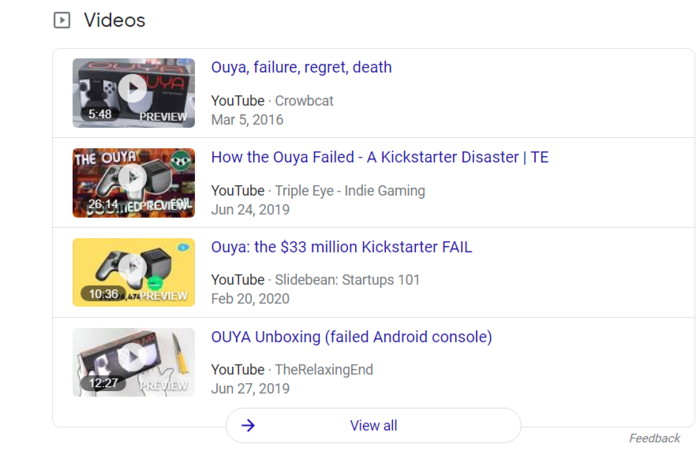
Horror stories of products like the OUYA still haunt startup teams who are considering raising capital this way.

startup funding ouya

The second and more common reason is that they simply don’t know how to get started. It feels a bit more like putting on a performance than it does a round of investing.

The reality is that getting started is actually pretty straightforward. Start with a financial goal in mind. A common concept implemented within crowdfunding platforms is the concept of a stretch goal. The more money you raise, the more you’re able to deliver at launch.

Of course, you aren’t just getting money for free. Your new army of investors expects something valuable in exchange for their money. But with a bit of creativity and a strong understanding of what you can afford to offer financially, you should be able to make this work.

Once you have your goal and stretch goals established, start to build out the marketing materials. Make a video on who you are, and why they should invest in your business.

Crowdfunding is a highly competitive space, so don’t expect this to be easy. But if you’re willing to work for it, crowdfunding might just be the right approach for your business.

Apply for Small Business Grants

For whatever reason, small business grants aren’t looked into by most startup founders I talk to. I just figured they’d never heard of the concept, but now I’m starting to think it’s because they don’t think they’d qualify.

For example, the U.S. government is offering low-interest loans and even grants to small business leaders. Economically, the government supporting entrepreneurs makes financial sense. After all, competing internationally is much easier when your economy is boosted by five or six massively successful companies.

What does that mean for you? If you’re building a new tech or science business, you actually have a strong chance of securing some of that free government money. Plus, you typically qualify for state and federal grants.  

Conclusion

Money being tight as an entrepreneur is nothing new. It’s natural to consider the option of startup funding. What’s important for you to keep in mind is that finding the right funding can make or break your business.

Take the time to consider your options carefully. If you can afford to bootstrap, do it for as long as you can. No matter what, protect yourself and your business so that it can develop properly over time.

Which kind of funding seems most interesting to you? Let me know in the comments below!

The post How to Get Startup Funding appeared first on Neil Patel.

Why You Should Consider Selling Customized Products

In today’s global marketplace, it’s a great time to be a consumer. The rise of e-commerce means more and more businesses are striving to get the consumer’s attention, offering better prices and services just to keep them interested. With online sales representing 16 percent of total retail ad spend, business owners don’t want to leave money on the table.

The smartest business owners know that the only way to consistently beat the competition is by offering more value to customers.

However, if everyone in my industry is selling the same products, at the same price, how can I stay competitive? The answer: Create memorable experiences.

If you’re looking for a unique way to offer value to consumers, customized products can be a powerful, engaging tool that improves customer satisfaction and drives up conversions in the process.

What Are Customized Products?

Customized products exist as a way for consumers to customize their purchases and walk away with a unique brand experience.

Examples include:

These examples showcase the importance of offering customization and customization.

It’s not just a theory. Epsilon’s research found that 80% of consumers are more likely to make a purchase when brands offer customized experiences.

The concept of customization was designed just a few decades ago to promote exclusivity. Customized products were a status symbol, a vehicle to make consumers with massive budgets feel special.

Although that’s still the case with certain products (exotic cars and designer handbags, for example), rapid advances in technology have made mass-customization a possibility for everyone.

Still, despite the lowered barrier to entry, product customization maintains a certain allure to consumers. This begs the question: If the key component of customized products is no longer there (the exclusive status symbol), then why are consumers still so interested?

The answer is actually pretty straightforward: Businesses were operating with a fundamental misunderstanding of what made customization so appealing in the first place.

Reasons Your Company Should Offer Customized Products

What massive brands around the world have figured out, and what e-commerce business owners need to understand, is that exclusivity was only a small piece of the puzzle.

Product customization can have a massive impact on customer satisfaction, and by extension, your e-commerce business’s success. Why? Because not all of your customers want to experience your product in the same way.

Think about it. When it comes to something like marketing, we understand that different customers have different needs. The first-time visitor to your site needs a different call-to-action than the customer with the abandoned shopping cart. Customized customer experiences are nothing new, it’s just time that e-commerce businesses started to expand their customization horizons.

Where things get really interesting for me is when you start considering the potential financial value this brings to companies all over the world. Let’s not ignore the fact that 91% of consumers are more likely to shop with brands that provide relevant offers and recommendations. More specifically, it puts business owners in a win-win scenario.

When you offer dozens of different variants and options to users, you’re creating a more inclusive marketplace, and different consumers with unique priorities can still walk away with something they like.

Even more interesting is the capacity for testing. You don’t need to make everything in your store customizable. Instead, you can test for specific features and determine the ones that people love.

Over time, business owners can collect data and use this information to build product offerings that their customers are statistically more interested in. More value for consumers, more value for the business. Win-win.

Understand What’s Driving the Popularity of Customized Products

The benefits of customized products are pretty easy to measure. When a consumer can personalize a purchase, it gives them a chance to “stand out” and be distinctive.

Let’s use the example of a custom T-shirt. On the surface, it seems like customers are simply modifying something to maximize the value of that product. In reality, the experience is a bit more layered.

For the sake of analysis, let’s break down a study conducted by the Journal of Information Technology Management.

We’ve established that customizing products brings consumers a certain level of enjoyment. We can view “Enjoyment” as the umbrella category.

Within that category, there are two subcategories of enjoyment. On one hand, there’s “Use Enjoyment” and “Design Enjoyment.” Certain customers will fall into certain categories, depending on what they value in particular.

Each of those subcategories had its own subdivisions.

Consumers who fell in the “Use Enjoyment” category either enjoyed the unique appearance of the item or enjoyed the functionalities of the item that fulfilled their unique needs. Consumers in the “Design Enjoyment” category either enjoyed innovating or enjoyed participating in the design process.

You can use this framework as a way to test what your consumers expect from your business, but the key lesson to keep in mind here is that product customization should be an engaging, exciting process for customers.

Examples of Customized Products

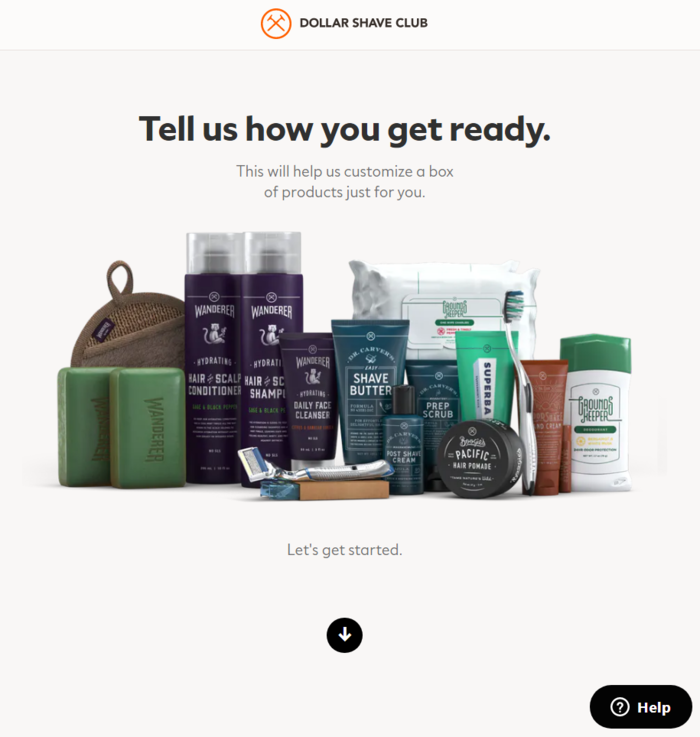
All of this can get a bit abstract, so let’s take a look at a tangible example. Here’s how Dollar Shave Club handles customization.

They start with some strong and clear copy, and with a single click, you’re building your custom Dollar Shave Club box.

customized products quiz

From there, you’ll complete a quiz and come out on the other end with a straightforward recommendation and a strong call-to-action. Of course, you can further customize your options by scrolling down the page.

On the surface, this might look like just another way to sell their products. In reality, that’s only half the story. Every aspect of this quiz is designed to ensure that consumers are presented with a solution that accurately addresses their pain points.

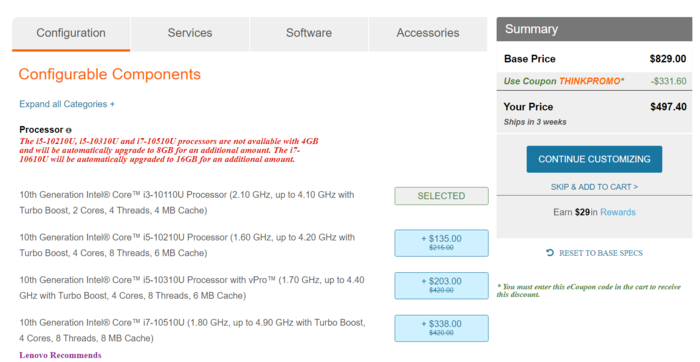
Lenovo, on the other hand, actually lets you build out your dream laptop.

It’s important to keep the limitations in mind, of course. While the laptop would be customized, the capacity of the laptop is limited.

When creating your customized product offerings, remember that removing concerns about compatibility can make life much simpler for your consumer. Unless they’re particularly tech-savvy, they probably wouldn’t understand why certain components just don’t work together.

customized products kit example

Alleviating friction before it becomes an issue is one of the many benefits that come from creating a rich customization experience.

Tips for Creating Customized Products

All of that looks and sounds great, but how on earth are you supposed to create customized products for your consumers? After all, offering 100+ options isn’t exactly budget-friendly.

Well, remember that consumers aren’t just interested in custom products. They want customized experiences. Most business owners already know this. It’s the reason so much time and money goes into marketing campaigns.

Focusing on customized experiences helps you develop a deeper relationship with your consumers. They can buy products anywhere, but your business is the only one that helps them customize their experience. Those better experiences lead to customer satisfaction, brand loyalty, and hopefully, repeat customers!

So, with that in mind, let’s take a look at some of the tools you can use to build tailor-made products and experiences.

Custom Fit

Whether you sell swimsuits, winter jackets, or everything in between, you understand that selling clothes online can be a customer satisfaction nightmare.

The biggest problem? Fit.

Everyone seems to have different definitions of small, medium, and large. While this can usually be fixed with a quick return and exchange, it tends to leave a bad taste in your customer’s mouth.

So rather than focusing on fixing the problem, let’s find a way to make sure it never happens again. Making it an engaging sales tool is just a bonus!

A Custom Fit quiz might seem simple but make no mistake: Making your customers feel more secure about their sizing choices means they’re more likely to purchase as possible sizing issues are avoided.

Customized Product Bundling

One of the most undervalued aspects of product customization is its potential for reducing friction.

When you offer to bundle an accessory with a particular product, you’re not just upselling to make some extra money on the sale. You’re addressing two possible customer pain points before they even arise.

Right off the bat, you’re making customers aware of the fact that a particular accessory is necessary to ensure they maximize their purchase. As a bonus, you’re able to confirm compatibility by clearly showing consumers which items they should pair together.

It’s a way to ensure that consumers walk away with everything they need after a single transaction. Further, it’s more than just a good sales tactic. It’s an effective, thorough customer satisfaction tactic.

Tips for Selling Customized Products

Maximizing your sales and profit margins is always going to be a priority, and every tactic here is designed to support that goal.

That being said, selling a consumer on the concept of customized products is less about actively selling and more about creating experiences that guide customers down the sales funnel with valuable information.

As far as I’m concerned, the best-customized experiences sell themselves. Of course, it helps if you’re building experiences that are so compelling and engaging that consumers can’t help but click the “Buy” button.

Use these tactics to drive conversions while still keeping the shopping experience engaging and personal.

Don’t Overcommit (Test the Waters)

All this talk of customized products might have you worried that you’ll need to spend tons of money on new inventory and be stocked up for potential buyers.

In reality, the process should start small. Unless you have a massive budget, your best bet is to test the waters and figure out what versions of products consumers are actively seeking.

If you’re experimenting with customizable T-shirt colors, you don’t need 50 new colors. Start with a few set colors, and give yourself plenty of lead time so you don’t have to rush production.

People aren’t interested in new colors? You can phase them out without worrying that you’ve let hundreds of dollars go to waste.

Customized Product Recommendations

We already discussed this a bit earlier, but the value of the customer quiz shouldn’t be understated.

Let’s say you frequently have website visitors that don’t have a well-defined shopping list yet. These are people who are just browsing and seeing what catches their eye.

Well, what if you could guide that person towards a sale, while also providing them with value in an engaging way? Sounds like a great way to kick-start your relationship, if you ask me. Keep in mind that 90% of consumers are willing to share their behavioral data if it’ll make their shopping easier.

By creating a simple quiz and offering customized product recommendations, you can accomplish so much.

For starters, customers will walk away with a much clearer understanding of their needs. They’ll also associate you with industry authority since your business showcased your know-how and expertise.

Beyond that, your consumers are one step closer to making a purchase through your site. All thanks to a simple, two-minute quiz.

Conclusion

Customized products are often seen as some sort of gimmick, a cheap way to offer variety instead of value.

Interestingly enough, I’ve found that well-designed customized products offer an impressive amount of value to consumers.

Consumers can be empowered by a process that simplifies their shopping experience. Or they can walk away with a deeper understanding of what they need from your business.

As long as your customized e-commerce experience is compelling, engaging, and generally value-driven, you can be optimistic that you’re enhancing your customer’s shopping experience and by extension, increasing your chances of making a sale.

What kind of customized products do you think offer the most value? Let me know in the comments below!

The post Why You Should Consider Selling Customized Products appeared first on Neil Patel.