Disclosure: This content is reader-supported, which means if you click on some of our links that we may earn a commission.
Everybody makes mistakes.
Some big, some small, but some of them are downright annoying.
And one of the most notorious headache-causing mistakes you make is messing up your code.
Coding is everything when it comes to web development. So you simply have to get it right for better security and to avoid glitches in the future.
Luckily, there’s a very effective solution to ensure this.
Just like how Grammarly and Hemingway can improve your text by checking them for spelling errors and improving readability, web developers can use HTML editors to write and improve their code.
Even those who don’t have any coding knowledge can create websites and put them online.
Coding becomes faster and easier thanks to HTML editors’ spell-checking, syntax highlighting, and auto-completion features, among others.
In this guide, I’ll look at the best HTML editors available to take your websites to the next level without much effort and time on your part.
Excited? Let’s dig right in!
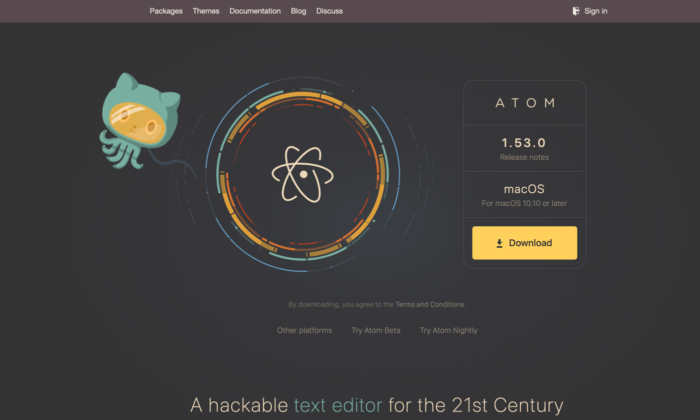
#1 – Atom – The Best for Advanced Customization
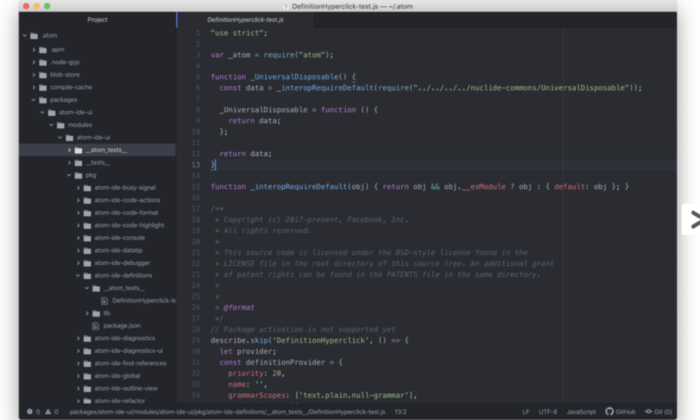
Atom is a free, open-source code editor developed by the GitHub team and maintained by the GitHub community. It comes with enough packages and theme collections, runs light, and loads super fast, making this HTML editor one of the best you can find.
It’s a modernized WYSIWYG HTML editor available for Windows, Mac, and Linux and is built for collaboration. Whether you’re a newbie or an experienced professional, Atom is everyone’s favorite with its premium feel and customization flexibility.
Think of it as an advanced text editor that has several features commonly limited to high-level coding programs.
It also comes with a hackable text editor! It’s a feature that enables developers to edit, extend, change, and share the program source code and design their own packages to improve Atom.
Multiple pane support is another feature I like. You can split the interface into as many windows as you need to compare and write code side-by-side.
Other features include syntax correction and highlighting, autocompletion, project management, and Teletype (users can collaborate with other developers in real-time).
Atom is entirely free of charge! So you don’t have to shell out any money to use this excellent editor.
#2 – Notepad + + – The Best for Front-End Developers and Web Designers
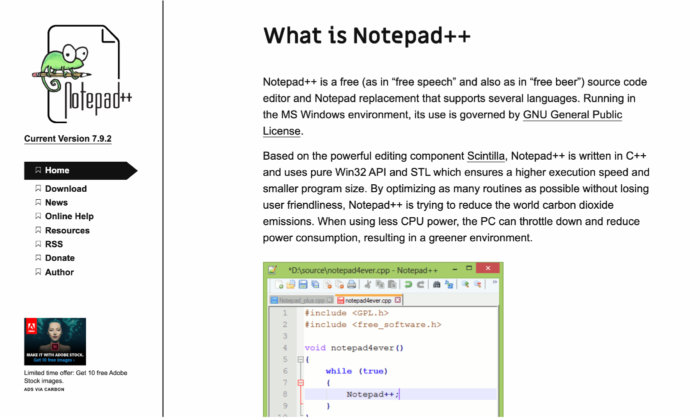
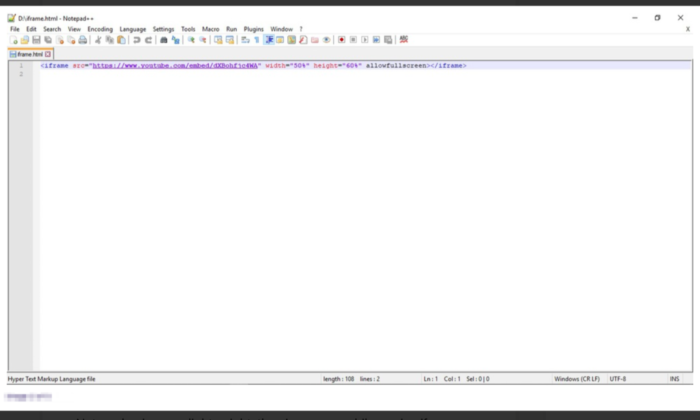
Fast working, time-tested, and foolproof, Notepad + + is one of the most popular HTML editors used by millions worldwide. It’s an open-code editor that offers multi-language support, which isn’t restricted to only HTML and CSS.
One of the primary reasons for Notepad + +‘s popularity is its feature-rich interface.
You get syntax folding, syntax highlighting, multi-view, document map, multi-document interface, auto-completion, bookmarks, and a fully customizable GUI. And even after this long list, there’s still more.
Notepad + + was developed for Windows-based machines, but Linux users can use it via Wine. As the name suggests, this editor is like an upgraded version of the Notepad software, which is already available in Windows by default. You also get its repository on GitHub.
A mobile version is also available if you fancy that.
Environmentalists would love Notepad + + as well. It has programs that run on less CPU power in a bid to reduce carbon emissions.
Notepad + + is free for all! So no extra money or hidden costs for you to worry about.
#3 – Brackets – The Best for Beginners
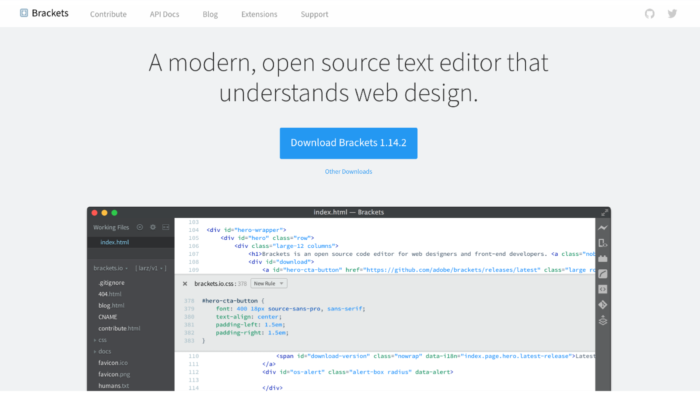
Brackets is another widely popular HTML editor for programmers compatible with different operating systems like Windows, Mac, and Linux. It comes with a built-in package manager that allows users to search and install any supported package they like.
I highly recommend this open-source HTML editor for beginners due to its smart auto-completion feature that makes coding incredibly fast and accurate.
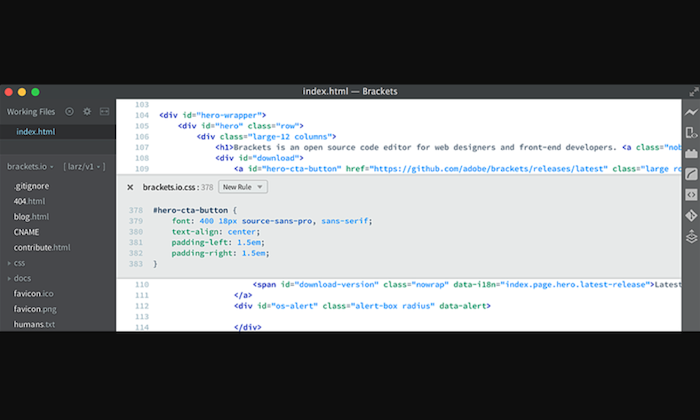
Bracket’s coding UI can be split into multiple panes, making writing and comparing codes between different files easy and precise. Its integrated file system browser enables you to access files within your PC.
Plus, it has a find and replace feature that allows developers to fine-tune the code when appropriate. This can be useful for novices and experienced professionals to ensure their website stays up-to-date.
Styling and customization are super easy and simple, so coding won’t ever get boring with Brackets.
The pre-installed syntax themes feature dark and flashy bright colors. With no shortage of packages on the platform, you can add as many features as you want, based on your use-case and preference.
Brackets is completely free! You can download it directly from the official website.
#4 – Sublime Text – The Best for Multi-Language Support
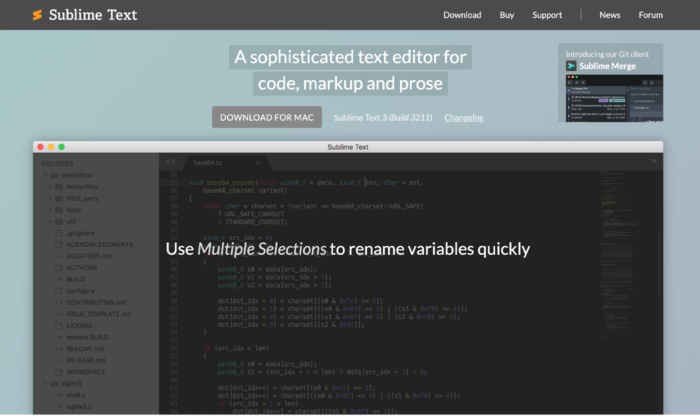
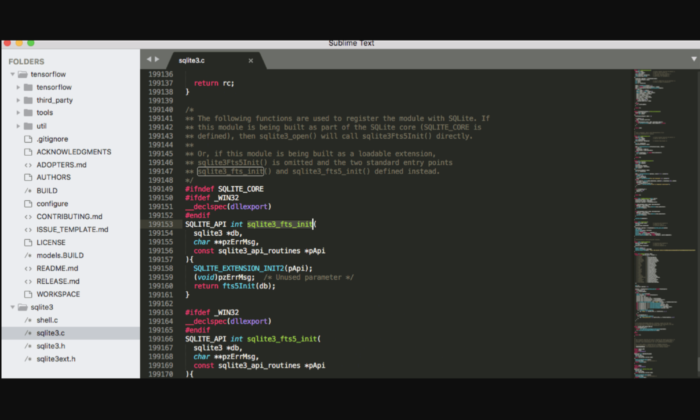
Sublime Text is the advanced version of Notepad + +. It comes with the standard features of Notepad + +, along with more modern ones to suit the sophisticated needs of the more experienced users.
You get cross-platform support, split editing, multiple-selection editing, proprietary command palette, and syntax editing to make web development simpler. The editor is incredibly powerful and promises high performance. However, you have a steeper learning curve ahead of you in exchange for this flexibility and power.
One of the more advanced features of Sublime Text is “Goto Anything.” Using this, you can find and replace the code within a considerably shorter period. The distraction-free mode is another great feature that displays only the code by hiding other elements.
You can use keyboard shortcuts to execute tasks quickly–provided you can remember them. Everything is easily customizable in the editor as well, whether you want to personalize key bindings to snippets to menus.
Accessible on Windows, Mac, and Linux, Sublime Text also supports different languages like C, HTML, C++, C#, Java, CSS, JavaScript, PHP, Python, Ruby, and many more.
Sublime Text has a free version available that’s enough for beginners, but if you want access to all its features, you have to pay a one-time cost of $80.
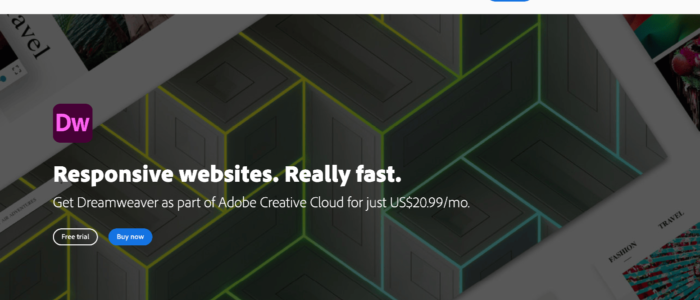
#5 – Adobe Dreamweaver CC – The Best for Web Developers
Most of the other options work great for front-end development, but having an HTML editor that facilitates back-end development is also necessary, which is where Adobe Dreamweaver CC comes in.
Made by renowned company Adobe, this editor is hands down one of the most famous and influential options on the market. You get all sorts of plugins and premium features that you wouldn’t normally have access to with other HTML editors.
Whether it’s creating more responsive sites or editing the website code, Dreamweaver makes everything possible.
This editor is a closed source software, designed to work within the Adobe ecosystem. It supports both the textual and WYSIWYG methods, allowing you to choose between coding with a live visual presentation or take the traditional route. You can write code in any major programming language and enjoy access to creative cloud libraries.
Web developers would particularly love Adobe Dreamweaver CC. It automatically confirms the code and page accessibility, making it easier for developers to follow Web Content Accessibility Guidelines (WCAG), and even reviews the end product.
Plus, the direct access to an abundant supply of assets in the Adobe ecosystem like graphics, layers, colors, words, characters, and much more, is another advantage.
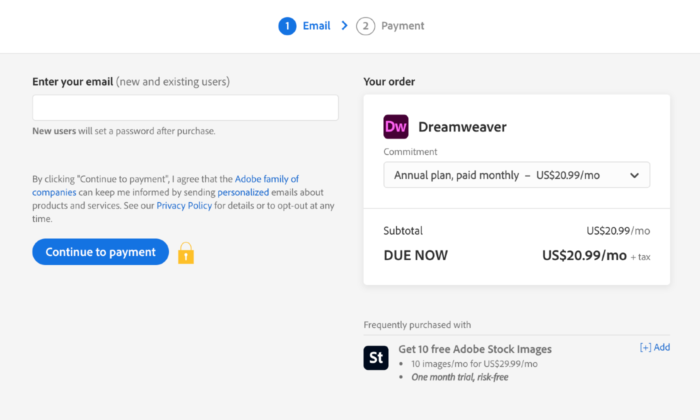
Dreamweaver has a free version, but you can opt for premium plans as well. You have three options:
Annual Plan, Payable Monthly – $25.99 per month
Monthly Plan – $31.49 per month
Annual Plan, Prepaid – $239.88 per year
What I Looked at to Find the Best HTML Editor
HTML editors—both free and paid—come with several cosmetic features. Based on your business needs, you’ll find some to be absolutely necessary, while others you may not need at all.
I’ve compiled a list of features that I think a good HTML editor should have. You may not need all of them, but here is what you should be looking for when choosing an HTML editor.
Color-Coding or Syntax Highlighting
HTML has a tag-based markup language. You need an HTML editor with syntax highlighting or color-coding features to light up these tags.
Doing this will help you identify the tags quickly, which, in turn, will make working with blocks of code easier.
Autocomplete and Suggestions
The autocomplete and suggestions feature helps to quickly fill in longer code at the press of a button.
The editor gives you pop up suggestions based on your work–all you have to do is click on it, and the code will autocomplete. Think of how you type text messages on your phone or when you do a quick Google search.
You can also automate creating closing tabs through this feature.
Find and Replace
I highly recommend looking for code editors with the find and replace feature, as it allows you to locate certain strings and replace them with something else very quickly.
Plus, HTML is constantly changing and updating standards and deprecation of inefficient tags. So, you’ll definitely find yourself wanting this feature sometime in the future to update your website.
Version Control
Editors with version control enable you to see the previous versions of your code and rollback when needed.
As a result, you can store all the copies without making separate documents, and I know how crucial this is when you’re working with other developers.
Multi-Cursor Functionality
The role of multi-cursors is simple: It allows you to write code in multiple places at once. In other words, you can edit code simultaneously.
This is especially useful when you want to add duplicates of the same tag.
FTP Support and Error Detection
Getting HTML editors with FTP support lets you connect to WordPress and upload changes you want to make without any hassle. As a result, you won’t find yourself logging into FileZilla or your preferred FTP client every time you want to update anything.
Live error detection is equally important.
HTML is a markup language and not a programming language, which is why it doesn’t compile. It also means you can’t test your code. With live error detection, though, you’ll know immediately whenever you write something incorrectly.
In addition to these, there are several other features like code folding and autosave that can increase productivity and accuracy.
Note: If you’re looking for a code editor with advanced features and platform integration, you‘ll need an integrated development environment or IDE rather than a text editor. While IDEs are similar to HTML editors, they are more beefed up designed for advanced developers.
Conclusion
HTML editors are a must for any web development and design toolkit. Not only can you create code faster, but it also simplifies the whole process by helping you avoid errors.
The only catch is to select an option that aligns with your needs.
You can select an option from my top picks or look for other alternatives in the market. Here is a complete list of the top picks:
Try to look for prospective editors that include syntax highlighting and live preview. If you want something more sophisticated, a find and replace feature will be a great asset.
Millennials are something of a mythical bunch in society. Much is said about their behaviors and preferences, yet many of the stories seem to contradict. Even narrowing down what age group millennials represent is challenging, and many people have differing views.
This confusing picture makes it challenging to target millennials through paid ads, but don’t let it put you off. Let’s look at who millennials are and how you can use that data to create targeted ads that will convince them to convert.
This makes understanding millennials crucial to creating paid ads that actually drive revenue.
What Makes Millennials Unique?
One of the key things that make millennials unique is their relationship with technology.
Millennials were born into a world where modern technology hadn’t yet taken hold in daily life like it has today. However, they did grow up in an age where technology was transforming the way we live, so they aren’t new to it.
Generation X adapted to digital technology as adults, and Generation Z have never known life without the smartphone or super-fast internet, but millennials have a foot in both worlds.
The rapid shift to a digital world means millennials’ lives have followed a different path to those generations before and after them. This has influenced them in many different ways.
Of course, it’s hard to ascribe common characteristics to such a diverse group, but some traits seem to be common in this generation, including:
connected
tech-savvy
curious
in need of instant gratification
collaborative
seek transparency
crave authenticity
care about diversity and sustainability
Keep in mind; this is just a rough picture of millennials. There are still individual people with unique politics, education levels, likes, and dislikes. However, these insights need to inform your paid ad strategy.
Why You Should Target Millennials Through Paid Ads
If you successfully target millennials through paid ads, you’ll engage 21.97 percent of the US population and 2 billion people worldwide. While millennials are more receptive to certain products, this is a huge market for virtually any business.
However, millennials pose several challenges to marketers. First, it is a large, diverse group, and secondly, they’re so accustomed to advertising that some think they’ve become immune to it.
Nobody is immune to advertising, and millennials click paid ads every day. The trick is finding the right strategy.
It starts with understanding your target audience. If your product doesn’t solve the problems millennials have or fit their view of the world, then this group shouldn’t be your primary target.
For example, businesses that provide traditional weddings and razor blade manufacturers have a notoriously difficult time advertising to millennials. This isn’t because this generation is immune to advertising, it’s because the products aren’t as closely aligned to the people’s wants and needs (think of the proliferation of beards in society today versus 20 years ago).
Instead, it’s businesses in travel, tech, fast food, and other sectors where the products match millennials’ specific pain points that are finding success.
If millennials are a key part of your target audience, then paid advertising is an effective option, because it allows you to reach these people where they’re “hanging out.” Ninety percent of millennials are on Facebook, making it exceptionally easy to reach these people with your message.
A key part of marketing is getting your message seen, and millennials give you ample chances to do this.
6 Strategies for Targeting Millennials Through Paid Ads
To successfully target millennials through paid ads, you have to remember this group is very tech-savvy, and they’ve grown up with online advertising.
They see through the cheap gimmicks and aren’t coerced into clicking for no reason. Therefore, you should focus on offering genuine value. The strategies you use to target millennials through paid ads must add to the experience, rather than just serving your own purposes.
Here’s a few ways to successfully target millennials with paid ads.
1. Run Ads on the Social Media Platforms Millennials Use the Most
The good thing about millennials is they are easy to reach. A huge percentage are active on social media, but to make the most of this, we need to understand what platforms millennials are using.
In the past, this was pretty easy. People had Facebook, Twitter, and maybe Instagram. There weren’t many other popular options. Today there are dozens of social media platforms, with new ones popping up every day.
There are plenty of opportunities out there to target millennials through paid ads. The ability to reach this group isn’t difficult; the tricky part is getting your medium and message right.
These platforms rely on marketing revenues though, so they’re constantly innovating and finding new ways for advertisers to engage their users. For example, Pinterest Story Pins, or Instagram filters let you offer the experience millennials are looking for.
2. Create Paid Ads That Appeal to Millennial Values
Many studies point to millennials closely held values, and three that are commonly referenced are personal responsibility, diversity, and sustainability.
It’s no surprise, given that millennials make up such a large percentage of the population that these values are being highlighted more in advertising. We often see ads that reference issues that are close to millennials’ hearts, such as climate change and equality.
If your brand is active in these issues, then this is something you should be highlighting in your advertising.
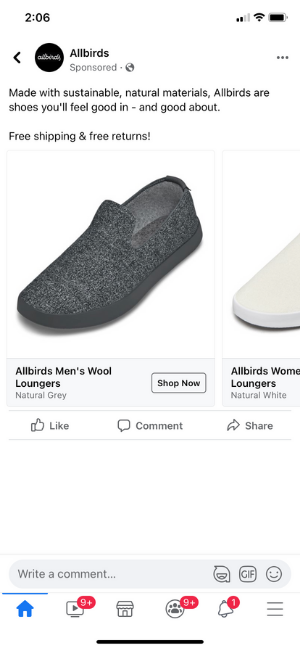
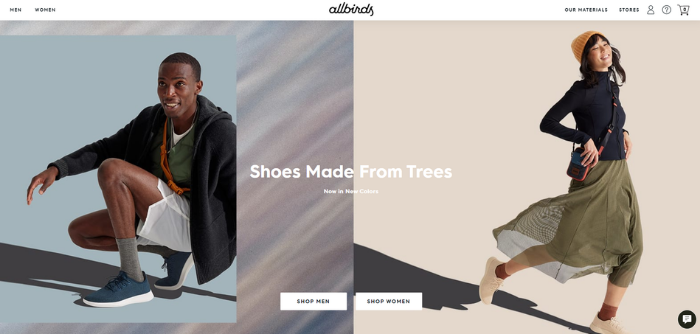
Take Allbirds shoes. they entered the highly-saturated shoe market in 2015, where they faced huge competition. Through a highly-effective advertising campaign that played on their shoes’ sustainable credentials, sales have exploded, and today the company is worth $1.4 billion.
There’s no crazy marketing strategy, it’s just clear messaging that hits on people’s (millennial’s) values.
3. Be Upfront and Honest in Your Paid Ads Targeting Millennials
Millennials grew up in the digital age, and for the most part, they’ve seen all the tricks. They’re used to gimmicky advertising tricks to get their attention, and they learned to filter these out.
What cuts through the noise with millennials (and this is closely related to their values) is being honest and upfront with your advertising. This group knows if something sounds too good to be true, then it probably is, so there’s no point in over-promising and under-delivering.
This ties in with creating paid ads that appeal to millennials’ values; if you’re not serious about sustainability, or equality, or whatever it might be, then millennials are more likely to hold you to account.
This group grew up in a world of big (often faceless) corporations, but thanks to technology, they have a chance to see behind the branding and see the values behind a company. This can be a great opportunity for your advertising, but it’s got to be done in a clear, honest way.
For example, Allbirds doesn’t just use convenient slogans about sustainability in their paid ads. It’s a theme that’s central to its entire customer journey, and it delivers on its promises.
4. Create Funny Paid Ads to Target Millennials
Fifty-five percent of 13 to 35-year-olds send memes every week, and 30 percent do so daily. That’s a lot of memes!
Humor plays a huge role in millennial culture, and it’s something you can use in your paid ads. Funny ads are nothing new; just take a look back at some of the classic TV ads, but for some brands keep things very straightlaced online.
It’s an easy way to show your brand’s personality.
They increase engagement.
They’re easy to use.
They are shareable.
People enjoy humor, and there’s certainly a place for it when you target millennials through paid ads. Just make sure your ads reflect the values of your business and resonate with your target audience. Otherwise, it can backfire.
5. Take Your Cue From Millennial Trends
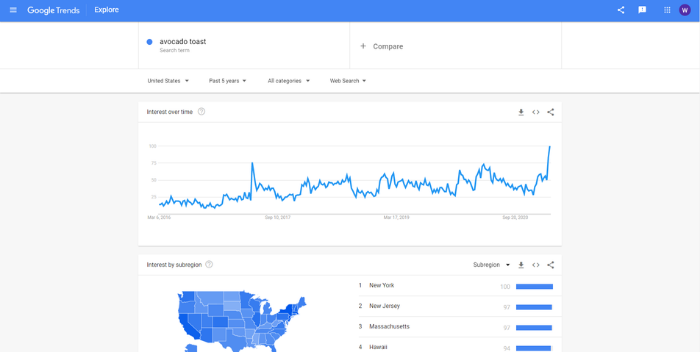
The boozy brunch, avocado toast, and emojis are just some of the reported millennial trends in recent years. When 21.97 percent of the population enthusiastically gets behind something, you can bet it’s a factor to target with your marketing.
If you keep seeing something crop up in popular culture, then check it on Google Trends and see if it’s worth factoring into your marketing.
Remember that millennials are cynical consumers of advertising, so if it’s a reach to link your products to the trend, it’s probably best to leave it alone rather than look like you’re just trying too hard.
6. Ask the Millennials in Your Office for Help
One of the best ways to learn about your target audience is simply to ask them questions. Millennials now make up the largest proportion of the workforce, so there are bound to be some in your office.
Obviously, your co-workers have jobs to do, but it won’t hurt to run a few ideas by them. Millennials are a very diverse group, so they won’t be able to speak for everyone, but they might be able to give you some ideas about what works and what doesn’t with this generation.
Examples of Paid Ads Targeting Millennials
Brands are always trying to reach millennials through paid advertising, so there are lots of examples, some of which have had tremendous success, and others that are best forgotten. Let’s take a look at the best and the worst of the bunch.
The Good
Here are a few ads that nailed millennial marketing.
NFL and McDonald’s: Bad Lip Reading
This is a great example of brands capitalizing on millennial trends in a positive way.
In 2013, a series of YouTube videos found huge success by taking video footage of normal events and overlaying them with “bad lip reading.” One of the most successful videos was “The NFL: A Bad Lip Reading,” which has over 72 million views.
Rather than take offense at the light-hearted fun, the NFL embraced the trend and teamed up with McDonald’s to create their own version.
Airbnb: Belong Anywhere
Airbnb was founded in 2008 and was valued at over $100 billion when it went public in 2020. Part of its success has been a product that is closely aligned with the values of millennials, and its advertising continues to capitalize on this.
Messages such as “Let’s Keep Travelling Forward,” and “We Accept” fit perfectly with the ideals millennials respond to, and this has helped bring the company great success.
The Bad
What does it look like when millennial marketing goes wrong? Here are a few ads that missed the mark.
McDonald’s: Fish Fillet
It was widely accepted that McDonald’s missed the mark with its fish fillet ad because it’s seen as emotional manipulation.
Emotion is a big part of any ad, but it’s got to be done in the right way. This ad just seems like McDonald’s is using a child’s grief to sell its sandwiches, and that’s something millennials will see through.
Pepsi: Kendall Jenner Protest Ad
Millennials tend to feel a personal responsibility to make a positive change in the world, but brands that exploit that drive will suffer. For many people, this Pepsi ad featuring Kendall Jenner did just that.
Aired during a time of heightened tension around America, the ad seemed to trivialize the cause of the protests and struck the wrong chord with millennials.
Conclusion
Millennials are a diverse, tech-savvy group that were brought up with advertising, so it’s no surprise that it takes some fine-tuning to get your targeting right.
For some businesses, millennials simply won’t be part of their target market, but with this group making up over a fifth of the population, the majority of businesses are going to have to learn how to target them through paid ads.
This website uses cookies to improve your experience. We'll assume you're ok with this, but you can opt-out if you wish.AcceptRejectRead More
Privacy & Cookies Policy
Privacy Overview
This website uses cookies to improve your experience while you navigate through the website. Out of these, the cookies that are categorized as necessary are stored on your browser as they are essential for the working of basic functionalities of the website. We also use third-party cookies that help us analyze and understand how you use this website. These cookies will be stored in your browser only with your consent. You also have the option to opt-out of these cookies. But opting out of some of these cookies may affect your browsing experience.
Necessary cookies are absolutely essential for the website to function properly. This category only includes cookies that ensures basic functionalities and security features of the website. These cookies do not store any personal information.
Any cookies that may not be particularly necessary for the website to function and is used specifically to collect user personal data via analytics, ads, other embedded contents are termed as non-necessary cookies. It is mandatory to procure user consent prior to running these cookies on your website.