Alternatives to Traditional Start Up Business Loans

Start up business loans are the age-old solution for funding a new business.  Since the beginning of capitalism, entrepreneurs have used a combination of investors and business loans to fund a startup.  But what happens when the traditional routes don’t work?  What happens when you can’t get a start up business loan, for whatever reason? 

What are The Best Alternatives to Standard Start Up Business Loans?

Today, entrepreneurs have more options for start up funding than ever before.  In addition to traditional investors, you have SBA loan programs.  Dig deeper and you’ll find angel investors, crowdfunding, online lenders with alternative eligibility criteria, and hybrid options that most don’t even know about. Let’s dive into what’s out there so you can have a better idea of which options will work best for you. 

Start Up Business Loans: SBA Loans

SBA loans are the most like standard start up business loans. In fact, they are exactly the same, except that they come with a government guarantee.  That means lenders can relax their standards a little when making approvals. 

That’s not to say they are easy to get.  Due to the government guarantee, there is a ton of red tape involved.  However, once you cut through it, it is easier to qualify for SBA loans than regular start up loans.  Here are a couple of SBA loan programs that work well as start up business loans. 

7(a) Loans

This is the Small Business Administration’s most popular program. It offers federally funded term loans that go up to $5 million. The money can fund expansion, purchasing equipment, working capital and even start ups. Lenders partner with the SBA to process these loans and disburse the cash.

The minimum credit score to qualify is 680, and there is also a required down payment of at least 10% for the purchase of a business, commercial real estate, or equipment. You have to be in business for at least 2 years. However, business experience equivalent to two years will meet this requirement if you are a start up.

504 Loans

You can get up to $5 million from the 504 program as well.  You can use the money to buy machinery, facilities, or land. Generally, they are for expansion.  Private sector lenders or nonprofits process and disburse the funds. They work especially well for commercial real estate purchases.

Terms for 504 Loans range from 10 to 20 years, and funding can take from 30 to 90 days. They require a minimum credit score of 680.  The asset that is being financed has to be used as collateral. There is also a down payment requirement of 10%, which can increase to 15% for a new business.

Like 7(a) loans, to qualify you must be in business at least 2 years, or management must have equivalent experience if the business is a startup.
start up business loans Credit Suite

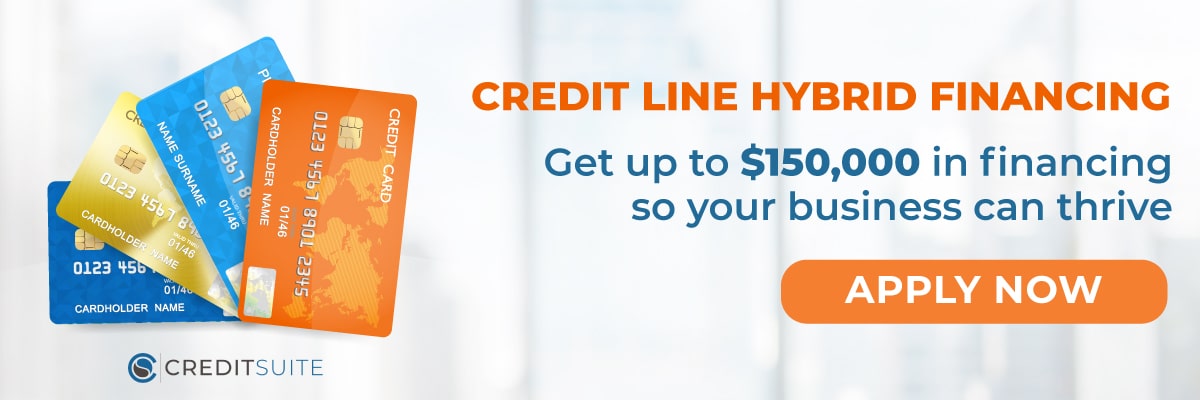
Credit Line Hybrid Financing: Get up to $150,000 in financing so your business can thrive.

Microloans 

The microloan program offers funds up to $50,000. You can use the money to start a business, purchase equipment, buy inventory, or for working capital. Unlike most other SBA loan programs, this financing comes directly through the SBA.

SBA Express Loans 

You can get up to $350,000 through the express loan program.  To qualify, your credit score must be above 680, and you must have a debt to service ratio of 1.1 or higher. If the loan is greater than $25,000, collateral may be necessary depending on the lender.

These loans have a much faster turnaround.  In fact, the SBA takes 36 hours or less to give a decision. Necessary paperwork for application is less also.  Consequently, express loans are a great option for working capital, among other things, if you qualify.

Start Up Business Loans: Private Lenders

What do you do if you do not qualify for an SBA loan?  You can try a private lender.  The lenders operate largely online.  They draw is that they rely on things other than credit score to determine whether a borrower qualifies for a loan.  Most still do a credit check, but they do not require as high of a score as traditional loans and SBA loans. 

Yet, you do have to be careful.  There are a lot of scammers when it comes to online lenders.  Do your research so you know exactly what you are getting into.  Here are a few to get you started. 

BlueVine 

You will find with most any online lender, they often offer options more similar to invoice factoring and lines of credit.  This is because these present fewer risks than straight term loans.  You can find out more in our Bluevine review.

Upstart

Upstart is an online lender that uses a completely innovative platform for loans.  The company itself questions the ability of financial information and FICO on their own to truly determine the risk of lending to a specific borrower.  They choose to use a combination of artificial intelligence (AI) and machine learning to gather alternative data instead.  They then use this data to help them make credit decisions.

This alternative data can include such things as mobile phone bills, rent, deposits, withdrawals, and even other information less directly tied to finances.  The software they use learns and improves on its own. You can use their online quote tool to play with different amounts and terms to see the various interest rate possibilities.  

To be eligible for a loan with Upstart, you must meet the following qualifications:

  • Credit score of 620+
  • No bankruptcies or negative public records
  • No delinquent accounts
  • Meet debt to income standards (they only note they will check this ratio, not what their standards are.)
  • Have fewer than 6 inquiries in the past 6 months on your credit report, not including those related to student loans, vehicle loans, or mortgages

These are the requirements they list on their website.  One independent review said that the requirement for the debt to income ratio is a maximum of 45%. It also says that the minimum annual income has to be at least $12,000.  For more information visit our Upstart review

Fora Financial 

Founded in 2008 by college roommates, online lender Fora Financial now funds more than $1.3 million in working capital around the United States. There is no minimum credit score, and there is an early repayment discount if you qualify.

The minimum loan amount is $5,000 and the maximum is $500,000. The business must be at least 6 months in operation and the monthly revenue has to be $12,000 or more. There can be no open bankruptcies.

OnDeck 

Obtaining financing from OnDeck is quick and easy. First, you apply online and receive your decision once application processing is complete. If you receive approval, your loan funds will go directly to your bank account. The minimum loan amount is $5,000 and the maximum is $500,000.

Just like any other online lender, they do have certain requirements to qualify for a loan.  For example, a personal credit score of 600 or more.  Also, you must be in business for at least 3 years. Annual revenue must be at or exceed $100,000. In addition, there can be no bankruptcy on file in the past 2 years and no unresolved liens or judgements.

It’s important to remember that, as with all lenders, the details of interest, minimum and maximums, and eligibility requirements can change without notice. Be sure to check all information with the specific lender for the most current information.

start up business loans Credit Suite

Credit Line Hybrid Financing: Get up to $150,000 in financing so your business can thrive.

Start Up Business Loans: Credit Line Hybrid

This is an option that most entrepreneurs do not know about.  It allows you to fund your business without putting up collateral, and you only pay back what you use.  

To qualify on your own, your personal credit score should be at least 685.  In addition, you can’t have any liens, judgments, bankruptcies or late payments.  Furthermore, in the past 6 months you should have less than 5 credit inquiries, and you should have less than a 45% balance on all business and personal credit cards.  It’s also preferred that you have established business credit as well as personal credit.

However, if you do not meet all of the requirements, you can take on a credit partner that does.  Many business owners work with a friend or relative to fund their business.  If a relative or a friend meets all of these requirements, they can partner with you to allow you to tap into their credit to access funding. 

What are the Benefits of a Credit Line Hybrid? 

There are many benefits to using a credit line hybrid.  First, it is unsecured, meaning you do not have to have any collateral to put up.  Next, the funding is “no-doc.”  This means you do not have to provide any bank statements or financials.  

Even better, typical approval is up to 5x that of the highest credit limit on the personal credit report. Additionally, you can often get interest rates as low as 0% for the first few months.  This will allow you to put that savings back into your business. 

The process is pretty quick, especially with a qualified expert to walk you through it.  Also, with the approval for multiple credit cards, competition is created.  This makes it easier, and likely even if you handle the credit responsibly, that you can get interest rates lowered and limits raised every few months. 

Start Up Business Loans: Debt Free Alternatives

It is rare to run a business completely debt free.  However, you can definitely raise some funds that you do not have to repay.  Any little bit helps.  

Crowdfunding

Crowdfunding is a way to get lots of micro investors at one time.  You advertise your business on a crowdfunding platform, and pretty much anyone who wants can give you money.  Rewards based crowdfunding allows donations as low as $5, and backers receive some non-equity gift for their generosity. 

There is also a such thing as equity crowdfunding which works virtually the same way, but investors actually receive equity in the company for their outlay.  Usually these amounts have to be at least $500. 

Grants

Grants are another debt free option to help supplement start up business loans.  There are not a ton of them out there, and the competition is fierce, but it’s worth the hassle for free money.  If you are a business owner that is a minority, a woman, a veteran, or if you run a business in a low -income area, there are more grant options available. 

Start Building Business Credit

The best time to start building business credit is in the startup phase. It takes time, but with expert help to guide you through the process, it can go much more smoothly.  This will allow you to access funding for your business, as it grows, on the merits of the business itself rather than your own credit.  

Why is the start up phase the best time to begin the business credit building process?  Because the entire process hinges on how your business is set up.  It’s much easier to set it up to build credit for itself in the beginning than to try and back track after the fact. 

start up business loans Credit Suite

Credit Line Hybrid Financing: Get up to $150,000 in financing so your business can thrive.

Start Up Business Loans: What’s Best for Your Business?

Usually, some combination of a number of different funding options is necessary if you do not qualify for traditional start up business loans.  Sometimes, this is necessary even if you do qualify for traditional financing.  The options you choose will depend on what you have available to you.  

If you can get SBA loans, that’s great.  If you want to get short term lower interest rates with no security, a credit line hybrid can be an amazing solution.  Of course, private lenders are there to help you out if you need them, but keep in mind they use higher interest rates to help reduce risk since they do not put as much weight on credit scores. 

In the end, you have to weigh what you are eligible to get against what makes the most business sense.  It helps to have an expert walk you through it.  For more about expert help and alternatives to traditional start up business loans, check out these options.

The post Alternatives to Traditional Start Up Business Loans appeared first on Credit Suite.

Get Business Credit Without SSN, and Other Tips for Becoming Fundable

Did you know you can apply for credit in your business name and it won’t hit your personal credit report?  You can, no matter what is happening with the economy!  There’s a trick to it though.  You have to set your business up properly, and you have to apply with the right information.  It is possible to get business credit without SSN being an issue.

Get Business Credit without SSN and Make Your Business More Fundable

When you get business credit without using your SSN, you take the first step in obtaining credit in the name of your business.  That is separate credit that only affects the credit score of your business, not your personal credit score. 

Of course, there is way more to separating business credit from personal credit than knowing how to get business credit without SSN, but that is definitely a place to start.

Check out our best webinar with its trustworthy list of seven vendors to help you build business credit, even in a recession.

Get Business Credit Without SSN

get biz credit without SSN Credit SuiteThere is really no amazing trick to this.  You can easily get business credit without SSN by simply using an EIN (Employer Identification Number) in place of the SSN on credit applications.  That one simple step will disconnect debt taken in the name of your business from your personal debt.  Again, there are a few more steps to keep it completely separate but, this is huge and very simple. 

You can get an EIN for free on the IRS website.  Just go to IRS.gov and apply.  The process is fast.  Once you have that number, you have taken the first step in building credit for your business separate from yourself.  This is the pivotal step getting business credit without your SSN.

It is important to note that you may have to provide your SSN for identification purposes to help prevent fraud.  However, this is different than getting credit using your SSN.  If you use your social security number for identification purposes only, the debt will still not be connected to it. 

Separate Your Bank Accounts

You have to open a separate, dedicated business bank account.  There are a few reasons for this.  First, it will help you keep track of business finances.  It will also help you keep them separate from personal finances for tax purposes. 

There’s more to it however.  There are several types of funding you cannot get without a business bank account.  Many lenders and credit cards want to see one with a minimum average balance.  In addition, you can’t get a merchant account without a business account at a bank. The result is, you cannot take credit card payments.  Studies show shoppers usually spend more when they can pay by credit card.

Kick Your Business Out of the Nest! Separate Contact Info Is a Must

Your business needs its own phone number, fax number, and address.  You can still run your business from your home or on your computer.  You don’t even have to have a fax machine.  

In fact, you can get a business phone number and fax number that will work over the internet instead of phone lines without a lot of trouble.  In addition, the phone number will forward to any phone you want it to.  You can simply use your personal cell phone or landline if you want.  Whenever someone calls your business number it will ring straight to you. 

Faxes can be sent to an online fax service, if anyone ever happens to actually fax you.  This part may seem outdated, but it does help your business appear legitimate to lenders. 

You can use a virtual office for a business address. How do you get a virtual office?  What is that?  It’s not what you may think.  This is a business that offers a physical address for a fee, and sometimes they even offer mail service and live receptionist services.  In addition, there are some that offer meeting spaces for those times you may need to meet a client or customer in person.

Make Sure Your Website and Email Address are In Synch

What does a website and email address have to do with business funding?  These days, you do not exist if you do not have a website.  However, having a poorly put together website can be even worse.  It is the first impression you make on many, and if it appears to be unprofessional it looks bad to lenders as well as customers. 

Spend the time and money necessary to make sure your website is professionally designed and works well.  Pay for hosting too. Don’t use a free hosting service.  Along these same lines, your business needs a dedicated business email address.  Make sure it has the same URL as your Website.  Don’t use a free service such as Yahoo or Gmail. 

Incorporate

Incorporating your business as an LLC, S-corp, or corporation is non-negotiable.  It lends credence to the legitimacy of your business. It also offers some protection from liability. 

Which option you choose does not matter as much for fundability as it does for your budget and needs for liability protection.  The best thing to do is talk to your attorney or a tax professional.  

Now, incorporation is important to business credit building.  However, so is time in business.  The longer you have been in business the more fundable you appear to be. Time in business starts on the date of incorporation, regardless of when you actually started doing business. That means, it is vital to incorporate as soon as possible.

Check out our best webinar with its trustworthy list of seven vendors to help you build business credit, even in a recession

Where to Start to Get Business Credit without SSN

Once you have these things in place, you can start applying to get business credit without SSN, but with your EIN.  Don’t just jump into credit cards.  It helps to begin with starter vendors.  There are a few out there.  

Starter vendors are vendors that sell items you use everyday in the course of business.  They will extend credit in the form of net terms on invoices without a credit check.  Then, they will report payments on those invoices to the business credit reporting agencies.  

If you have followed the steps, then when they report those payments, they will be reporting in your business name to the business credit reporting agencies such as Dun & Bradstreet, Equifax, and Experian. This is how you start to build your business credit score. 

Get Business Credit Without SSN: What Next? 

After you get enough starter vendor accounts reporting, you’ll be able to apply for other types of cards and without your SSN.  The key is to apply for certain types of cards in a specific order.  For example, it is best to start with store cards.  These are cards that are issued with a specific store name.  Typically, you can only use them at that specific store or on that store’s website.  Examples include Office Depot and Best Buy. Some fleet cards fall into this category as well. 

Fleet cards are cards that you can only use for fuel or auto repair and maintenance.  It is usually easier to get approval for these cards after you have several starter vendors and store cards reporting.  Examples of fleet credit cards include Fuelman and Shell. 

After enough of these types of accounts are reporting to the business credit reporting agencies in your business name, with your EIN, then you can apply for general use credit cards.  Those are the credit cards you can use anytime, anywhere, on anything.  Usually, they have the best interest rates and rewards.  They also have the highest credit limits, meaning you have instant access to the funds you need to run your business day in and day out. 

Get Business Credit With SSN: A Warning

Here are a few key things to remember when you get business credit without SSN.  

First, the whole point is to separate your business credit from your personal credit.  Why do this?  There are a few reasons.  For example, you typically get a higher credit limit when you get credit related to your business with an EIN than you would with your SSN. 

Another reason, however, is so that your personal credit is not affected if you have problems on your business credit report.  However, you want your business credit to be strong also.  The only way to make this happen is to handle your credit responsibly.  Do not bite off more than you can chew. Make your payments regularly and on-time.  Bad business credit is just as harmful as no business credit. 

Keep and Eye on Your Business Credit

It’s important to keep an eye on your business credit while you are going through this process.  Once you get business credit without SSN, you’ll need to keep tabs on which accounts are reporting, how many accounts are reporting, and what your score looks like.  This is how you will know when it is time to apply for other types of cards. 

It is also how you will know when there is a mistake.  If you do see a mistake, you can contest it in writing to have it removed.  

When it comes to business credit monitoring, there are a few different credit reporting agencies. The main three we have already mentioned.  They include Dun & Bradstreet, Experian, and Equifax.  There are others as well, but if you know what your business credit score is with the main three, you can have a good idea of what it is with any credit reporting agency. 

Funding in the Meantime

It takes some time to get business credit without SSN.  If you need money to run your business quickly, while you work through the process, you might consider a credit line hybrid. This is revolving, unsecured financing that allows you to fund your business without putting up collateral.  Furthermore, you only pay back what you use.  

It’s easier than you may think to qualify.  You can do so with a personal credit score that is way below what you would need to get approval for a term loan or line of credit at a traditional bank.  The minimum is 685. Even if you did get approval at a traditional bank with this score, your interest rate would be much more than what is typical with a credit line hybrid. 

In addition to meeting the minimum credit score requirement, you can’t have any liens, judgments, bankruptcies or late payments.  Also, in the past 6 months, you should have less than 5 credit inquiries, and less than a 45% balance on all business and personal credit cards.  While it is preferred that you have established business credit as well as personal credit, it is possible to qualify without business credit. In fact, a credit line hybrid can help build business credit. 

What If I Don’t Qualify?   

If you do not meet all of the requirements, there is still a chance. You can take on a credit partner that meets each of these requirements.  Many business owners work with a friend or relative to fund their business.  If a relative or a friend meets all of these requirements, they can partner with you to allow you to tap into their credit to access funding. 

What Makes a Credit Line Hybrid A Good Option? 

There are many benefits to using a credit line hybrid.  First, it is unsecured, meaning you do not have to have any collateral to put up.  Next, you do not have to provide any bank statements or financials.  

Also, typical approval amounts are up to 5x that of the highest credit limit on the personal credit report. Additionally, interest rates can go as low as 0% for the first few months.  You can put that savings back into your business.

Check out our best webinar with its trustworthy list of seven vendors to help you build business credit, even in a recession

The process is pretty fast, especially with a qualified expert to walk you through it.  One other benefit is this.  With the approval for multiple credit cards, competition is created.  This makes it easier to get interest rates lowered and limits raised every few months. 

Get Business Credit Without SSN and Have Access to Funding to Run and Grow Your Business

One of the largest parts of establishing business credit is to get business credit without SSN.  If you use your SSN to apply, that account is going to end up on your personal credit report.  This is the opposite of what you want.  However, using an EIN instead of an SSN is not enough.  You have to follow the other steps to create separation between you and your business. Then, you will be well on your way to building business credit separate from your personal credit. Now is a great time to get started.

The post Get Business Credit Without SSN, and Other Tips for Becoming Fundable appeared first on Credit Suite.

Can You Get Kabbage Business Funding in a Recession?

Is  There Any Kabbage Business Funding in a Recession?

Kabbage is one of several lending companies online. It provides small business funding in the form of loans and lines of credit. We look at the specifics and drill down into the details about the online lending option.

Kabbage Business Funding in a Recession: Background

Kabbage is located online here: https://www.kabbage.com/. Their physical address is:

925B Peachtree Street NE

Suite 1688

Atlanta, GA 30309.

You can call them here: (888) 986-8263. You can email them at: support@kabbage.com. Their contact page is here: https://www.kabbage.com/support/contact/. They have been in business since 2009, which is longer than most of the players in this space.

Kabbage is one of several lending companies online. It provides small business funding in the form of a line of credit.

Kabbage is a venture funded company. They are backed by investors which include SoftBank Capital, Thomvest Ventures, Reverence Capital Partners, Mohr Davidow Ventures, the UPS Strategic Enterprise Fund, ING, BlueRun Ventures, Santander InnoVentures, Scotiabank, and TCW/Craton.

The company offers perks for its customers. These include specials from Dun & Bradstreet, UPS, Vonage, and Adobe Creative Cloud. See: https://www.kabbage.com/customer-perks/.

Loans and Lines of Credit

First, they offer lines of credit.  This means it is revolving credit you can use as needed.  For most, amounts of up to $250,000 are available. You can qualify in as little as 10 minutes. Furthermore, terms are 6, 12, or 18 months. You have to be in business for more than one year, and your business revenue has to be $50,000 annually or $4200 per month over the last 3 months.

Kabbage Review: Credit Reporting and Score Requirements

In the course of this Kabbage review, I could not find anything concrete about a credit score requirement or credit reporting.  I did find other reviewers that had contradicting information. For example, one claimed there was no minimum interest rate requirement.  In contrast, another claimed that the minimum interest rate for application approval is 500. Another put the minimum at 560. Whatever the case, it appears that their minimum required credit score is much lower than others in the field. In addition, one reviewer stated that they do not report on-time payments to the credit agencies, but they may report late or missed payments.

The only thing concrete I could find from Kabbage themselves is that they do a one-time hard credit pull.  A hard credit check will affect your credit score. Also I found this information in the FAQs on the Kabbage website. It wasn’t just out there on a top page.

Kabbage Review: Approval and Receipt of Funds

Kabbage links to your bank or merchant accounts to understand your cash flow and decide what amount you can afford to borrow. Their lines of credit range from $1,000 to $250,000.

For lines of credit up to $200,000, if they are able to automatically get business information and verify your bank account, they can approve a loan in minutes.  Amounts over $200,000 must have a manual review. Sometimes, mistakes happen during the sign-up process. Also, they may send small deposits to help confirm your banking information for security purposes. In these cases, it may take longer to get access to funds.

Once everything is settled, they send funds to the account of your choice. If you choose to have your funds deposited to a PayPal account, it takes just a few minutes. However, loans that go to a business checking account can take up to three days to be deposited.  It just depends on your bank.

They retain access to your account.  This means they can review your revenue faster than other lenders.  Still, it also means they have access to your account for the duration and beyond unless you take action.

If you make a draw using the dashboard or app, you have to take a minimum of $500.  In contrast, if you use your Kabbage card there is no minimum draw.

Kabbage Business Funding in a Recession: Advantages

Advantages include fairly low fees. Kabbage perks are a nice touch not found with other online lenders.

Kabbage Business Funding in a Recession: Disadvantages

Disadvantages include how hard it is to find the actual, correct requirements to qualify for their loans.

Demolish your funding problems with our rock-solid guide about 27 killer ways to get cash for your business. You might turn out to not need Kabbage business funding in a recession.

A Viable Alternative to Kabbage Business Funding in a Recession – Building Business Credit

This is credit in a small business’s name. It doesn’t link to an entrepreneur’s consumer credit, not even if the owner is a sole proprietor and the only employee of the small business.

Thus, an entrepreneur’s business and consumer credit scores can be very different.

The Benefits

Due to the fact that small business credit is separate from individual, it helps to secure a small business owner’s personal assets, in the event of litigation or business bankruptcy.

Also, with two separate credit scores, a business owner can get two different cards from the same vendor. This effectively doubles buying power.

Another benefit is that even start-ups can do this. Going to a bank for a business loan can be a recipe for disappointment. But building small business credit, when done correctly, is a plan for success.

Consumer credit scores depend upon payments but also additional factors like credit usage percentages.

But for small business credit, the scores actually merely hinge on if a company pays its bills timely.

The Process

Establishing business credit is a process, and it does not occur without effort. A business must proactively work to establish business credit.

Nonetheless, it can be done readily and quickly, and it is much quicker than establishing consumer credit scores.

Vendors are a big aspect of this process.

Doing the steps out of sequence will cause repetitive denials. No one can start at the top with company credit. For example, you can’t start with retail or cash credit from your bank. If you do, you’ll get a denial 100% of the time.

Business Fundability

A small business must be fundable to loan providers and merchants.

That’s why, a company will need a professional-looking website and email address. And it needs to have site hosting bought from a supplier such as GoDaddy.

In addition, business phone and fax numbers should have a listing on ListYourself.net.

At the same time, the company phone number should be toll-free (800 exchange or comparable).

A business will also need a bank account devoted purely to it, and it must have every one of the licenses essential for running.

Licenses

These licenses all must be in the accurate, appropriate name of the company. And they must have the same company address and telephone numbers.

So bear in mind, that this means not just state licenses, but potentially also city licenses.

Demolish your funding problems with our rock-solid guide about 27 killer ways to get cash for your business. You might turn out to not need Kabbage business funding in a recession.

Working with the IRS

Visit the Internal Revenue Service web site and obtain an EIN for the company. They’re totally free. Pick a business entity like corporation, LLC, etc.

A business can begin as a sole proprietor. But they will more than likely want to change to a variety of corporation or an LLC.

This is in order to limit risk. And it will make the most of tax benefits.

A business entity will matter when it involves taxes and liability in case of a lawsuit. A sole proprietorship means the entrepreneur is it when it comes to liability and taxes. No one else is responsible.

Sole Proprietors Take Note

If you operate a company as a sole proprietor, then at least be sure to file for a DBA. This is ‘doing business as’ status.

If you do not, then your personal name is the same as the small business name. Hence, you can wind up being directly accountable for all small business financial obligations.

Additionally, per the IRS, with this structure there is a 1 in 7 possibility of an IRS audit. There is a 1 in 50 possibility for corporations! Steer clear of confusion and substantially reduce the odds of an IRS audit simultaneously.

Starting the Business Credit Reporting Process

Start at the D&B web site and obtain a free D-U-N-S number. A D-U-N-S number is how D&B gets a small business into their system, to produce a PAYDEX score. If there is no D-U-N-S number, then there is no record and no PAYDEX score.

Once in D&B’s system, search Equifax and Experian’s web sites for the small business. You can do this at www.creditsuite.com/reports. If there is a record with them, check it for correctness and completeness. If there are no records with them, go to the next step in the process.

In this way, Experian and Equifax will have activity to report on.

Vendor Credit

First you must establish trade lines that report. This is also referred to as vendor credit. Then you’ll have an established credit profile, and you’ll get a business credit score.

And with an established business credit profile and score you can begin to get retail and cash credit.

These kinds of accounts tend to be for the things bought all the time, like marketing materials, shipping boxes, outdoor work wear, ink and toner, and office furniture.

But first of all, what is trade credit? These trade lines are credit issuers who will give you initial credit when you have none now. Terms are often Net 30, rather than revolving.

Hence, if you get an approval for $1,000 in vendor credit and use all of it, you will need to pay that money back in a set term, such as within 30 days on a Net 30 account.

Demolish your funding problems with our rock-solid guide about 27 killer ways to get cash for your business. You might turn out to not need Kabbage business funding in a recession.

Details

Net 30 accounts have to be paid in full within 30 days. 60 accounts must be paid in full within 60 days. In comparison with revolving accounts, you have a set time when you must pay back what you borrowed or the credit you used.

To launch your business credit profile the right way, you need to get approval for vendor accounts that report to the business credit reporting agencies. Once that’s done, you can then make use of the credit.

Then pay back what you used, and the account is on report to Dun & Bradstreet, Experian, or Equifax.

Vendor Credit  – It Makes Sense

Not every vendor can help in the same way true starter credit can. These are merchants that will grant an approval with very little effort. You also want them to be reporting to one or more of the big three CRAs: Dun & Bradstreet, Equifax, and Experian.

You want 3 of these to move onto the next step, which is retail credit.

Retail Credit

Once there are 3 or more vendor trade accounts reporting to at least one of the CRAs, then move to retail credit. These are businesses which include Office Depot and Staples.

Only use your SSN and date of birth on these applications for verification purposes. For credit checks and guarantees, use the company’s EIN on these credit applications.

Fleet Credit

Are there more accounts reporting? Then move to fleet credit. These are service providers such as BP and Conoco. Use this credit to buy fuel, and to repair and take care of vehicles. Only use your Social Security Number and date of birth on these applications for verification purposes. For credit checks and guarantees, make certain to apply using the small business’s EIN.

Cash Credit

Have you been sensibly handling the credit you’ve gotten up to this point? Then move to more universal cash credit. These are businesses like Visa and MasterCard. Just use your SSN and date of birth on these applications for verification purposes. For credit checks and guarantees, use your EIN instead.

Kabbage Business Funding in a Recession Credit SuiteThese are normally MasterCard credit cards. If you have more trade accounts reporting, then these are in reach.

Monitor Your Business Credit

Know what is happening with your credit. Make certain it is being reported and take care of any inaccuracies ASAP. Get in the practice of checking credit reports. Dig into the particulars, not just the scores.

We can help you monitor business credit at Experian and D&B for 90% less.

Update Your Record

Update the relevant information if there are mistakes or the data is incomplete. At D&B, you can do this at: https://iupdate.dnb.com/iUpdate/viewiUpdateHome.htm. For Experian, go here: www.experian.com/small-business/business-credit-information.jsp. And for Equifax, go here: www.equifax.com/business/small-business.

Fix Your Business Credit

So, what’s all this monitoring for? It’s to challenge any mistakes in your records. Mistakes in your credit report(s) can be corrected. But the CRAs typically want you to dispute in a particular way.

Disputes

Disputing credit report mistakes typically means you send a paper letter with copies of any proofs of payment with it. These are documents like receipts and cancelled checks. Never send the original copies. Always mail copies and retain the originals.

Fixing credit report inaccuracies also means you precisely spell out any charges you challenge. Make your dispute letter as understandable as possible. Be specific about the problems with your report. Use certified mail so that you will have proof that you mailed in your dispute.

A Word about Business Credit Building

Always use credit sensibly! Don’t borrow beyond what you can pay off. Keep an eye on balances and deadlines for repayments. Paying on schedule and in full will do more to increase business credit scores than pretty much anything else.

Building small business credit pays off. Excellent business credit scores help a company get loans. Your loan provider knows the small business can pay its debts. They know the small business is for real.

The small business’s EIN attaches to high scores and lenders won’t feel the need to request a personal guarantee.

Business credit is an asset which can help your company for years to come. Learn more here and get started toward establishing business credit.

Kabbage Business Funding in a Recession: Upshot

Companies which will do best with this particular lender are already somewhat successful. Most businesses would be able to take advantage of the perks which Kabbage offers. However, smaller companies which are less successful would do well to look elsewhere. In particular, for a company looking for a lower end line of credit would more likely be better served getting a microloan.

So while you can probably get Kabbage business funding in a recession, there are other options out there.

And finally, as with every other lending program, whether online or offline, remember to read the fine print and do the math. Go over the details with a fine-toothed comb, and decide whether this option will be good for you and your company. In addition, consider alternative financing options that go beyond lending, including building business credit, in order to best decide how to get the money you need to help your business grow.

The post Can You Get Kabbage Business Funding in a Recession? appeared first on Credit Suite.

Get the Best Credit Card for Business Travel

Check out the best credit card for business travel. 

We’ve Got the Best Credit Card for Business Travel

We investigated and found the best credit card for business travel. There’s more than option – it depends on what you want and need. So, here are our selections.

Per the SBA, business credit card limits are a massive 10 – 100 times that of personal credit cards!

This shows you can get a lot more money with corporate credit cards. And it also shows you can have personal credit cards at stores. So, you would now have an extra card at the very same stores for your small business.

And you will not need collateral, cash flow, or financials to get small business credit.

The Best Credit Card for Business Travel: Benefits

Benefits can vary. So, make sure to select the benefit you would like from this selection of alternatives.

Get the Best Credit Card for Business Travel Points

Flat-rate Travel Rewards

Capital One® Spark® Miles for Business

Check out the Capital One® Spark® Miles for Business. It has an introductory annual fee of $0 for the first year, which then rises to $95. The regular APR is 18.49%, variable due to the prime rate. There is no introductory annual percentage rate. Pay no transfer fees. Late fees go up to $39.

This card is fantastic for travel if your expenses do not fall under conventional bonus categories. You can get unlimited double miles on all purchases, without any limits. Get 5x miles on rental cars and hotels if you book via Capital One Travel.

Get an introductory bonus of 50,000 miles. That’s the same as $500 in travel. But you only get it if you spend $4,500 in the first 3 months from account opening. There is no foreign transaction fee. You will need a good to excellent FICO rating to qualify.

Find it here: https://www.capitalone.com/small-business/credit-cards/spark-miles/ 

Best Credit Card for Business Travel Credit Suite

Establish business credit fast with our research-backed guide to 12 business credit cards and lines. Get the best credit card for business travel – even during a recession.

Bonus Travel Categories with a Sign-Up Offer

Ink Business Preferred℠ Credit Card

For a fantastic sign-up offer and bonus categories, take a look at the Ink Business Preferred℠ Credit Card. 

Pay a yearly fee of $95. Regular APR is 17.49 – 22.49%, variable. There is no introductory APR offer.

Get 100,000 bonus points after spending $15,000 in the initial 3 months after account opening. This works out to $1,250 towards travel rewards if you redeem using Chase Ultimate Rewards.

Get three points per dollar of the initial $150,000 you spend with this card. So this is for purchases on travel, shipping, internet, cable, and phone services. Plus it includes advertising purchases made with social media sites and search engines each account anniversary year.

You can get 25% more in travel redemption when you redeem for travel through Chase Ultimate Rewards. You will need a good to superb FICO score to qualify.

Find it here: https://creditcards.chase.com/business-credit-cards/ink/business-preferred

No Yearly Fee

Bank of America® Business Advantage Travel Rewards World MasterCard® credit card

For no yearly fee while still getting travel rewards, check out this card from Bank of America. It has no yearly fee and a 0% introductory APR for purchases during the initial nine billing cycles. After that, its regular APR is 13.74 – 23.74% variable.

You can get 30,000 bonus points when you make a minimum of $3,000 in net purchases. So this is within 90 days of your account opening. You can redeem these points for a $300 statement credit towards travel purchases.

Earn unlimited 1.5 points for every $1 you spend on all purchases, everywhere, every time. And this is no matter how much you spend.

Likewise earn 3 points per every dollar spent when you book your travel (car, hotel, airline) with the Bank of America® Travel Center. There is no limit to the number of points you can get and points don’t expire.

You will need superb credit to get this one (as in, 700s or better).

Find it here: https://www.bankofamerica.com/smallbusiness/credit-cards/products/travel-rewards-business-credit-card/

Best Credit Card for Business Travel Credit Suite

Establish business credit fast with our research-backed guide to 12 business credit cards and lines. Get the best credit card for business travel – even during a recession.

Hotel Credit Card

Marriott Bonvoy Business™ American Express® Card

Check out the Marriott Bonvoy Business™ Card from American Express. It has a yearly fee of $125. There is no introductory APR offer. The regular APR is a variable 17.24 – 26.24%. You will need great to exceptional credit to get this card.

Points

You can get 75,000 Marriott Bonvoy points after using your card to make purchases of $3,000 in the first three months. Get 6x the points for eligible purchases at participating Marriott Bonvoy hotels. You can get 4x the points at US restaurants and gas stations. And you can get 4x the points on wireless telephone services purchased directly from US service providers and on American purchases for shipping.

Get double points on all other eligible purchases.

Rewards

Also, you get a free night each year after your card anniversary. And you can earn one more free night after you spend $60,000 on your card in a calendar year.

You get Marriott Bonvoy Silver Elite status with your Card. Plus, spend $35,000 on qualified purchases in a calendar year and earn an upgrade to Marriott Bonvoy Gold Elite status through the end of the following calendar year.

Plus, each calendar year you can get credit for 15 nights towards the next level of Marriott Bonvoy Elite status.

Find it here: https://creditcard.americanexpress.com/d/bonvoy-business/

Airline Credit Card

Delta SkyMiles® Reserve Business American Express Card

Check out the Delta SkyMiles® Reserve Business American Express Card. It has a $550 yearly fee! There is no introductory APR offer. Rather, the regular APR is a variable 17.24 – 26.24%.

Yet if you travel for business a lot, it could be the card for you. Get up to 100,000 Bonus Miles and 20,000 Medallion® Qualification Miles. You can get 80,000 bonus miles and 20,000 Medallion® Qualification Miles after you spend $5,000 in your initial three months. Also, earn an extra 20,000 bonus miles after your initial anniversary of card membership.

Get triple miles on Delta purchases. And get 1.5 x miles on qualified purchases the remainder of the year after you spend $150,000 in a calendar year. Get a companion certificate annually upon renewal. And you get one Global Entry ($100) statement credit every 4 years. Or you can get one TSA Pre ® ($85) statement credit every 4.5 years for an application, free.

You will need good to exceptional credit to qualify.

Find it here: https://creditcard.americanexpress.com/d/delta/ 

Best Credit Card for Business Travel for Fair to Poor Credit, Not Requiring a Personal Guarantee

Brex Card for Startups

Check out the Brex Card for Startups. It has no yearly fee.

You will not need to supply your Social Security number to apply. And you will not need to provide a personal guarantee. They will take your EIN.

Nonetheless, they do not accept every industry.

Also, there are some industries they will not work with, as well as others where they want more paperwork. For a list, go here: https://brex.com/legal/prohibited_activities/.

To determine creditworthiness, Brex checks a company’s cash balance, spending patterns, and investors.

You can get 7x points on rideshare. Get 4x on Brex Travel. Also, get triple points on restaurants. And get double points on recurring software payments. Get 1x points on everything else.

You can have poor credit (even a 300 FICO) to qualify.

Find it here: https://brex.com/lp/startups-higher-limits/

Best Credit Card for Business Travel Credit Suite

Establish business credit fast with our research-backed guide to 12 business credit cards and lines. Get the best credit card for business travel – even during a recession.

Best Credit Card for Business Travel with No Annual Fee

No Annual Fee/Flat Rate Cash Back

Ink Business Unlimited℠ Credit Card

Have a look at the Ink Business Unlimited℠ Credit Card. Beyond no yearly fee, get an introductory 0% APR for the first twelve months. After that, the APR is a variable 14.74 – 20.74%.

You can get unlimited 1.5% Cash Back rewards on every purchase made for your business. And get $500 bonus cash back after spending $3,000 in the first 3 months from account opening. You can redeem your rewards for cash back, gift cards, travel and more using Chase Ultimate Rewards®. You will need excellent credit scores to receive this card.

Find it here: https://creditcards.chase.com/business-credit-cards/ink/unlimited

Terrific Cards for Cash Back

Boosted Cash Back Categories

Bank of America® Business Advantage Cash Rewards MasterCard® credit card

Take a look at the Bank of America® Business Advantage Cash Rewards MasterCard® credit card. Get an 0% introductory APR for the first 9 billing cycles of the account. After that, the APR is 13.74% – 23.74% variable. There is no annual fee. You can get a $300 statement credit offer.

Get 3% cash back in the category of your choice. So these are gasoline stations (default), office supply stores, travel, TV/telecom & wireless, computer services or business consulting services. Earn 2% cash back on dining. So this is for the first $50,000 in combined choice category/dining purchases each calendar year. Then get 1% after, with no limits.

You will need superb credit to qualify.

Find it here: https://promo.bankofamerica.com/smallbusinesscards2/

The Best Credit Card for Business Travel for You

Your straight-out best credit card for business travel will always hinge on your credit history and scores.

Just you can select which features you want and need. So, to do your homework. What is outstanding for you could be catastrophic for another person.

And, as always, ensure to establish credit in the recommended order for the best, quickest benefits.

The post Get the Best Credit Card for Business Travel appeared first on Credit Suite.

How to Finance a Business in Any Economy

COVID-19 wreaked havoc on the world’s economy.  Business owners are helpless as they watch their businesses slip away. It can seem like there are no options, but there are.  Do you know how to finance a business? There are lots of options, regardless of what the economy is like?  

Best Options for How to Finance a Business 

The economy changes direction much like the wind.  It’s just the way of the world.  Still, none of us have ever seen anything quite like COVID-19 before.  Things may never truly be the same, which means adapting to a new normal is going to be vital. You can’t adapt the way you do business however, if you can’t afford to do business at all.  You need to know how to finance a business regardless of the economy.

How to Finance a Business: Credit Line Hybrid

One of the best options for how to fund a business is the credit line hybrid.  This is revolving, unsecured financing.  It allows you to fund your business without putting up collateral, and you only pay back what you use.  

Do You Qualify? 

You do need good personal credit.  It should be at least 680.  In addition, there can’t be any liens, judgments, bankruptcies or late payments.  Furthermore, in the past 6 months you should have less than 4 credit inquiries, and you should have less than a 45% balance on all business and personal credit cards.  It’s also preferred that you have established business credit as well as personal credit.

If you do not meet all of the requirements, it’s okay. You can take on a credit partner that meets each of these requirements.  Many business owners work with a friend or relative to fund their business.  If a relative or a friend meets all of these requirements, they can partner with you to allow you to tap into their credit to access funding.

how to finance a business Credit Suite

Get up to $150,000 in financing so your business can thrive.

Why is a Credit Line Hybrid Awesome? 

There are many benefits to using a credit line hybrid.  First, it is unsecured, meaning you do not have to have any collateral.  Next, the funding is “no-doc.”  This means you do not have to provide any bank statements or financials.  

Not only that, but typically approval is up to 5x that of the highest credit limit on the personal credit report. Additionally, often you can get interest rates as low as 0% for the first few months, allowing you to put that savings back into your business. 

The process is pretty fast, especially with a qualified expert to walk you through it.  One other benefit is this.  With the approval for multiple credit cards, competition is created.  This makes it easier, and likely even if you handle the credit responsibly, that you can get interest rates lowered and limits raised every few months. 

How to Finance a Business: Credit Cards

Don’t discount credit cards when considering how to finance a business.  In fact, they are probably the easiest and fastest source of funds to help keep you afloat right now.  You have to be smart, and you have to be responsible, but they are definitely a legit option. 

Brex Card for Startups

This Brex Card has no yearly fee.  You will not need to supply your Social Security number to apply. Also, you will not need a personal guarantee. However, this card does not work for every  industry. 

To determine creditworthiness, Brex checks a company’s cash balance, spending patterns, and investors. Rewards include 7x points on rideshare and 4x on Brex Travel. Also, you can get triple points on restaurants and get double points on recurring software payments. Get 1x points on everything else.

Capital One® Spark® Classic for Business

The Capital One® Spark® Classic for Business is another to check out. It has no annual fee and there is no introductory APR offer. The regular APR is a variable 24.49%. However, you can get unlimited 1% cash back on every purchase for your company and there is no minimum to redeem.

While this card is within reach if you have fair credit scores, beware of the APR. If you can pay promptly, and completely, it’s a good deal.

Ink Business Unlimited℠ Credit Card

The Ink Business Unlimited℠ Credit Card has no annual fee and a 0% introductory APR. After that expires, the APR is a variable 14.74 to 20.74%. 

You can earn unlimited 1.5% Cash Back rewards on every purchase made for your company and get $500 bonus cash back after spending $3,000 in the initial 3 months from account opening. You can get rewards for cash back, gift cards, travel and more using Chase Ultimate Rewards®. It takes superb credit to get approval for this card.

Blue Business® Plus Credit Card from American Express

The Blue Business® Plus Credit Card from American Express also has no  no annual fee and  a 0% introductory APR for the first year. After that, the APR is a variable 14.74 to 20.74%.

You can get double Membership Rewards® points on everyday business purchases like office supplies or client dinners.  This applies to the first $50,000 spent each year. You get 1 point per dollar after that.  You will need great to exceptional credit to qualify.

American Express® Blue Business Cash Card

Another one to look into is the American Express® Blue Business Cash Card. Note: the American Express® Blue Business Cash Card is identical to the Blue Business® Plus Credit Card from American Express. However, its rewards are in cash instead of points. You get 2% cash back on all eligible purchases up to $50,000 per calendar year. After that, it’s 1%.

There is no yearly fee, and there is a 0% introductory APR for the first one year. Afterwards, the APR is a variable 14.74 to 20.74%.  You will need great to superb credit to qualify.

Capital One ® Spark® Cash for Business 

Check out the Capital One® Spark® Cash for Business. It has an introductory $0 annual fee for the initial year. After that, this card costs $95 per year. There is no introductory APR deal. The regular APR is a variable 18.49%.

You can get a $500 one-time cash bonus after spending $4,000 in the first 3 months from account opening. Get unlimited 2% cash back. Redeem any time without any minimums.  You will need great to outstanding credit scores to qualify.

how to finance a business Credit Suite

Get up to $150,000 in financing so your business can thrive.

Discover it® Business Card

Another one to check out the Discover it® Business Card. It has no yearly fee. There is an introductory APR of 0% on purchases for twelve months. After that is over,  the regular APR is a variable 14.49 to 22.49%. 

You get unlimited 1.5% cash back on all purchases, with no category restrictions or bonuses. Also, they double the 1.5% Cashback Match™ at the end of the first year. There is no minimum spend requirement either.

You can download transactions easily to Quicken, QuickBooks, and Excel. Note: you will need great to exceptional credit to get approval for this card.

Marriott Bonvoy Business™ American Express® Card

If your normal course of business includes travel, and you think you may return to that once everything calms down, have a look at the Marriott Bonvoy Business™ Card from American Express. It has an annual fee of $125. There is no introductory APR offer. The regular APR is a variable 17.24 — 26.24%. You will need good to outstanding credit to get this card.

Delta SkyMiles® Reserve Business American Express Card

This is a great option if flying is your thing.  Even if you don’t fly in the course of business, you can use the rewards for personal travel.  Take a vacation from being stuck in your house! 

The Delta SkyMiles® Reserve Business American Express Card does have a $550 yearly fee! There is no introductory APR offer. Instead, the regular APR is a variable 17.24 — 26.24%.

That doesn’t sound great, but this does.  Get up to 100,000 Bonus Miles and 20,000 Medallion® Qualification Miles. You can earn 80,000 bonus miles and 20,000 Medallion® Qualification Miles after you spend $5,000 in your first three months. Plus, get an extra 20,000 bonus miles after your first anniversary of card membership.

Get triple miles on Delta purchases and 1.5 x miles on eligible purchases the rest of the year after you spend $150,000 in a calendar year. Get a companion certificate annually upon renewal. And you get one $100 statement credit every 4 years. Or you can get one TSA Pre ® statement credit every 4.5 years which is an $85 value.

You will need great to excellent credit to qualify.

How to Finance a Business: Online Lenders

Online lenders are private companies that operate completely online.  They are also known as private lenders or alternative lenders. 

BlueVine 

You will find with most any online lender, they often offer options more similar to invoice factoring and lines of credit.  This is because these present fewer risks than straight term loans.

The minimum loan amount available from BlueVine is $5,000 and the maximum is $100,000. Annual revenue must be $120,000 or more and the borrower must be in business for at least 6 months. Your personal credit score has to be 600 or above. It is important to note also, that BlueVine does not offer a line of credit in all states.  

Upstart

Upstart is an online lender that uses a completely innovative platform for loans.  The company itself questions the ability of financial information and FICO on their own to truly determine the risk of lending to a specific borrower.  They choose to use a combination of artificial intelligence (AI) and machine learning to gather alternative data instead.  They then use this data to help them make credit decisions.

This alternative data can include such things as mobile phone bills, rent, deposits, withdrawals, and even other information less directly tied to finances.  The software they use learns and improves on its own. You can use their online quote tool to play with different amounts and terms to see the various interest rate possibilities.  Typically, business loans are available ranging from $1,000 to $50,000.  Interest rates vary greatly, ranging from 7.5% to 35.99%.  Repayment terms can be either 3 -year or 5-year. 

To be eligible for a loan with Upstart, you must meet the following qualifications:

  • Credit score of 620+
  • No bankruptcies or negative public records
  • No delinquent accounts
  • Meet debt to income standards (they only note they will check this ratio, not what their standards are.)
  • Have fewer than 6 inquiries in the past 6 months on your credit report, not including those related to student loans, vehicle loans, or mortgages

These are the requirements they list on their website.  One independent review said that the requirement for the debt to income ratio is a maximum of 45%. It also says that the minimum annual income has to be at least $12,000.  

Fora Financial 

Founded in 2008 by college roommates, online lender Fora Financial now funds more than $1.3 million in working capital around the United States. There is no minimum credit score, and there is an early repayment discount if you qualify.

The minimum loan amount is $5,000 and the maximum is $500,000. The business must be at least 6 months in operation and the monthly revenue has to be $12,000 or more. There can be no open bankruptcies.

OnDeck 

Obtaining financing from OnDeck is quick and easy. First, you apply online and receive your decision once application processing is complete. If you receive approval, your loan funds will go directly to your bank account. The minimum loan amount is $5,000 and the maximum is $500,000.

Just like any other online lender, they do have certain requirements to qualify for a loan.  For example, a personal credit score of 600 or more.  Also, you must be in business for at least 3 years. Annual revenue must be at or exceed $100,000. In addition, there can be no bankruptcy on file in the past 2 years and no unresolved liens or judgements.

how to finance a business Credit Suite

Get up to $150,000 in financing so your business can thrive.

How to Finance a Business: When to Go Another Route

Of course, you may want to try to fund your business without debt.  While it is certainly possible to get some funding without debt, it is much more likely your business will have to take on at least some debt. However, non-debt options are definitely great for reducing the amount of debt your business takes on.  Start with trying to find investors.  Although for small businesses, this will likely look different than you imagine.  Most likely you will need to find angel investors or consider crowdfunding

Grants are also an option.  This is especially true if you meet certain criteria.  While grants are available to business owners of all types, there are many specifically geared toward minority business owners, women business owners, business owners that are veterans, and those in low-income areas. 

How to Finance a Business: There Is No One Size Fits All

The truth is, the answer to the question of how to finance a business is going to be different for almost every business owner.  Varying credit scores, revenue amounts, and times in business will all make a difference. Sometimes it helps to have someone walk you through the process of figuring out what types of funding and financing will work best for your specific situation. Either way, you need to know all the options and look at each one carefully to figure out the be combination for your business.

The post How to Finance a Business in Any Economy appeared first on Credit Suite.

Get the Best Business Credit Card for Bad Credit

Are you looking for a business credit card for bad credit? Well, look no further – we have great choices for a business credit card for bad credit.

Get an Excellent Business Credit Card for Bad Credit and Check Out Other Options

We looked into every business credit card for bad credit we could find. So, here are our options.

Per the SBA, business credit card limits are a massive 10 – 100 times that of personal credit cards!

This reveals you can get a lot more money with company credit cards. And it also reveals you can have personal credit cards at stores. So, you would now have an additional card at the exact same stores for your business.

And you will not need collateral, cash flow, or financials to get business credit.

Business Credit Card for Bad Credit: Benefits

Benefits can differ. So, make certain to choose the benefit you would prefer from this choice of alternatives.

Dependable Business Credit Card for Bad Credit, Not Requiring a Personal Guarantee

Brex Card for Startups

Have a look at the Brex Card for Startups. It has no annual fee.

You will not need to provide your Social Security number to apply. And you will not need to provide a personal guarantee. They will take your EIN. 

Nevertheless, they do not accept every industry. 

Likewise, there are some industries they will not work with, and others where they want more paperwork. For a list, go here: https://brex.com/legal/prohibited_activities/.

To determine creditworthiness, Brex checks a business’s cash balance, spending patterns, and investors.

You can get 7x points on rideshare. Get 4x on Brex Travel. Also, get triple points on restaurants. And get double points on recurring software payments. Get 1x points on everything else.

You can have bad credit scores (even a 300 FICO) to qualify.

Find it here: https://brex.com/lp/startups-higher-limits/ 

Business Credit Card for Bad Credit Suite

Establish business credit fast with our research-backed guide to 12 business credit cards and lines.

Get a Business Credit Card for Bad Credit

Capital One® Spark® Classic for Business

Have a look at the Capital One® Spark® Classic for Business. It has no yearly fee. There is no introductory APR offer. The regular APR is a variable 24.49%. You can earn unlimited 1% cash back on every purchase for your company, without minimum to redeem.

While this card is within reach if you have fair credit, beware of the APR. However if you can pay in a timely manner, and completely, then it’s a good deal.

Find it here: https://www.capitalone.com/small-business/credit-cards/spark-classic/ 

Flexible Financing Credit Cards – Have A Look at an Alternative to a Business Credit Card for Bad Credit!

The Plum Card® from American Express

Check out the Plum Card® from American Express. It has an introductory annual fee of $0 for the first year. Afterwards, pay $250 each year.

Get a 1.5% early pay discount cash back bonus when you pay within 10 days. You can take up to 60 days to pay without interest when you pay the minimum due by the payment due date.

You will need good to excellent credit scores to qualify.

Find it here: https://creditcard.americanexpress.com/d/the-plum-card-business-charge-card/ 

As you improve your credit scores, you may be looking for other alternatives to a business credit card for bad credit. Here are our favorites.

Outstanding Business Credit Cards with No Annual Fee

No Yearly Fee/Flat Rate Cash Back

Ink Business Unlimited℠ Credit Card

Check out the Ink Business Unlimited℠ Credit Card. Beyond no annual fee, get an introductory 0% APR for the initial year. After that, the APR is a variable 14.74 – 20.74%. 

You can earn unlimited 1.5% Cash Back rewards on every purchase made for your business. And get $500 bonus cash back after spending $3,000 in the initial three months from account opening. You can redeem your rewards for cash back, gift cards, travel and more via Chase Ultimate Rewards®. You will need superb credit scores to receive this card.

Find it here: https://creditcards.chase.com/business-credit-cards/ink/unlimited 

Business Credit Card for Bad Credit Suite

Establish business credit fast with our research-backed guide to 12 business credit cards and lines.

Company Credit Cards with a 0% Introductory APR – Pay Zero!

Blue Business® Plus Credit Card from American Express

Have a look at the Blue Business® Plus Credit Card from American Express. It has no annual fee. There is a 0% introductory APR for the initial one year. Afterwards, the APR is a variable 14.74 – 20.74%.

Get double Membership Rewards® points on day to day company purchases like office supplies or client suppers for the first $50,000 spent annually. Get 1 point per dollar afterwards.

You will need great to excellent credit to qualify.

Find it here: https://creditcard.americanexpress.com/d/bluebusinessplus-credit-card/ 

American Express® Blue Business Cash Card

Also check out the American Express® Blue Business Cash Card. Keep in mind: the American Express® Blue Business Cash Card is identical to the Blue Business® Plus Credit Card from American Express. Yet its rewards are in cash instead of points.

Get 2% cash back on all qualified purchases on up to $50,000 per calendar year. Then get 1%.

It has no annual fee. There is a 0% introductory APR for the first year. Afterwards, the APR is a variable 14.74 – 20.74%.

You will need great to exceptional credit to qualify.

Find it here: https://creditcard.americanexpress.com/d/business-bluecash-credit-card/  

Terrific Cards for Cash Back

Flat-Rate Rewards

Capital One ® Spark® Cash for Business 

Check out the Capital One® Spark® Cash for Business. It has an introductory $0 yearly fee for the first year. After that, this card costs $95 each year. There is no introductory APR deal. The regular APR is a variable 18.49%.

You can get a $500 one-time cash bonus after spending $4,000 in the first 3 months from account opening. Get unlimited 2% cash back. Redeem at any time without any minimums.

You will need great to outstanding credit scores to qualify.

Find it here: https://www.capitalone.com/small-business/credit-cards/spark-cash/ 

Flat-Rate Rewards and No Yearly Fee

Discover it® Business Card

Check out the Discover it® Business Card. It has no annual fee. There is an introductory APR of 0% on purchases for year. After that the regular APR is a variable 14.49 – 22.49%. 

Get unlimited 1.5% cash back on all purchases, with no category restrictions or bonuses. They double the 1.5% Cashback Match™ at the end of the first year. There is no minimal spend requirement.

You can download transactions| easily to Quicken, QuickBooks, and Excel. Note: you will need good to superb credit to qualify for this card.

https://www.discover.com/credit-cards/business/

Bonus Categories

Ink Business Cash℠ Credit Card

Check out the Ink Business Cash℠ Credit Card. It has no annual fee. There is a 0% introductory APR for the initial one year. After that, the APR is a variable 14.74 – 20.74%. You can get a $500 one-time cash bonus after spending $3,000 in the first 3 months from account opening.

You can get 5% cash back on the initial $25,000 spent in combined purchases at office supply stores and on internet, cable, and phone services each account anniversary year. 

Get 2% cash back on the first $25,000 spent in combined purchases at gas stations and restaurants each account anniversary year. Get 1% cash back on all other purchases. There is no restriction to the amount you can earn.

You will need superb credit scores to qualify for this card.

Find it here: https://creditcards.chase.com/business-credit-cards/ink/cash?iCELL=61GF 

Boosted Cash Back Categories

Bank of America® Business Advantage Cash Rewards MasterCard® credit card

Take a look at the Bank of America® Business Advantage Cash Rewards MasterCard® credit card. Get an 0% introductory APR for the initial 9 billing cycles of the account. After that, the APR is 13.74% – 23.74% variable. There is no annual fee. You can get a $300 statement credit offer.

Get 3% cash back in the category of your choice. So these are filling stations (default), office supply stores, travel, TV/telecom & wireless, computer services or business consulting services. Get 2% cash back on dining. So this is for the initial $50,000 in combined choice category/dining purchases each calendar year. After that earn 1% after, with no limits.

You will need outstanding credit to qualify.

Find it here: https://promo.bankofamerica.com/smallbusinesscards2/ 

Unbeatable Cards for Jackpot Rewards That Never Expire

Capital One® Spark® Cash Select for Business

Have a look at the Capital One® Spark® Cash Select for Business. It has no yearly fee. You can get 1.5% cash back on every purchase. There is no limit on the cash back you can get. Also earn a one-time $200 cash bonus as soon as you spend $3,000 on purchases in the first three months. Rewards never expire.

Pay a 0% introductory APR for 9 months. Then pay 14.49% – 22.49% variable APR after that.

You will need good to excellent credit scores to qualify.

Find it here: https://www.capitalone.com/small-business/credit-cards/spark-cash-select/

Business Credit Card for Bad Credit Suite

Establish business credit fast with our research-backed guide to 12 business credit cards and lines.

Company Credit Cards for Luxurious Travel Points

Flat-rate Travel Rewards

Capital One® Spark® Miles for Business

Have a look at the Capital One® Spark® Miles for Business. It has an introductory annual fee of $0 for the first year, which then rises to $95. The regular APR is 18.49%, variable due to the prime rate. There is no introductory annual percentage rate. Pay no transfer fees. Late fees go up to $39.

This card is fantastic for travel if your expenses do not fall into basic bonus categories. You can get unlimited double miles on all purchases, without any limits. Earn 5x miles on rental cars and hotels if you book via Capital One Travel.

Get an initial bonus of 50,000 miles. That’s the same as $500 in travel. Yet you just get it if you spend $4,500 in the first 3 months from account opening. There is no foreign transaction fee. You will need a great to outstanding FICO rating to qualify.

Find it here: https://www.capitalone.com/small-business/credit-cards/spark-miles/  

No Annual Fee

Bank of America® Business Advantage Travel Rewards World MasterCard® credit card

For no yearly fee while still getting travel rewards, check out this card from Bank of America. It has no yearly fee and a 0% introductory APR for purchases during the first nine billing cycles. After that, its regular APR is 13.74 – 23.74% variable.

You can get 30,000 bonus points when you make a minimum of $3,000 in net purchases. So this is within 90 days of your account opening. You can redeem these points for a $300 statement credit towards travel purchases.

Get unlimited 1.5 points for every $1 you spend on all purchases, everywhere, every time. And this is despite how much you spend.

Also earn 3 points per every dollar spent when you reserve your travel (car, hotel, airline) through the Bank of America® Travel Center. There is no limit to the number of points you can earn and points don’t expire.

You will need superb credit to get this one (as in, 700s or better).

Find it here: https://www.bankofamerica.com/smallbusiness/credit-cards/products/travel-rewards-business-credit-card/ 

The Very Best Business Credit Card for Bad Credit for You

Your outright best small business credit card for bad credit for you will depend upon your credit history and scores.

Only you can pick which features you want and need. So, to do your research. What is exceptional for you could be devastating for another person.

And, as always, ensure to develop credit in the advised order for the best, fastest benefits. Because once your business credit scores are good, you won’t need a business credit card for bad credit.

The post Get the Best Business Credit Card for Bad Credit appeared first on Credit Suite.

Get to Know the Main Business Credit Scores from Equifax Loans

Are you looking for Equifax loans? Equifax is not an actual lender. But what they score will be one of the reasons whether your business can borrow money at all. So consider Equifax loans and scores. Because they are vital parts of the decision making process when it comes to borrowing money or getting credit for your business.

But first, it helps to consider what business credit actually is.

What is Business Credit? How Does it Relate to Equifax Loans?

Business credit is credit which is in the name of a business. It is not tied to the owner’s creditworthiness or Social Security Number. Instead, business credit scores depend on how well a company can pay its bills. Consumer and business credit scores can vary dramatically.

What are the Biggest Business Credit Reporting Agencies?

When you are looking at Equifax loans, then you should be looking at business credit reporting agencies. There are three large business CRAs: Dun & Bradstreet, Experian, and Equifax. There is also the FICO SBSS business score.

Equifax Funding Data

The company gets its data from a data sharing agreement with the Small Business Exchange, and Net 30 type industry trade credit information from a wide variety of suppliers. These suppliers provide products and services to businesses on an invoice basis.

Equifax Financial Report Details and Scores

Equifax has a few main scores: 

  • The Small Business Credit Risk Score for Financial Services; plus the Small Business Credit Risk Score for Suppliers
  • The Small Business Failure Risk Score
  • The Payment Trend, and the Payment Index

Check out a sample Equifax business credit report at assets.equifax.com/assets/usis/small_business_sample_credit_report.pdf.

What is the Purpose of Equifax Loans Scores?

It is a good idea to explore the purpose of scores. Scores answer one basic question: How likely is a business to go severely delinquent in its payments? The score is an indication of whether a company is likely to make late payments.

Equifax’s Credit Risk Scores for Equifax Loans

It is time to consider Equifax Credit Risk scores. 

The key factors are:

  • Evidence of Non-Financial Trades Ever Cycle 2+ Delinquent or Charge-Off
  • Length of Time Since Oldest Financial Account Opened Suggests Lower Risk
  • Available Credit Limit on Revolving Trades Suggests Lower Risk, and
  • Company Size (Number of Employees)

Any of these can suggest lower risk.

Equifax Loans Credit Suite

Learn more here and start building business credit with your company’s EIN, not your SSN.

The Small Business Credit Risk Score for Financial Services

Check out the Small Business Credit Risk Score for Financial Services. The Business Credit Risk Score predicts the likelihood of a business incurring a 90 days severe delinquency, or charge-off over the next 12 months. So the score ranges from 101 to 992. A lower score indicates higher risk.

The Small Business Credit Risk Score for Suppliers

Compare with the Small Business Credit Risk Score for Suppliers. This score predicts severe delinquency or change-offs, on supplier accounts, or bankruptcy within 12 months. So its scores range from 101 to 816.

The Small Business Failure Score

Check out the Small Business Failure Risk Score. So this score runs from 1000 to 1880. Higher scores mean a business is less likely to fail.

Key Factors

The key factors for the Small Business Failure Score are:

  • Length of Time Since Oldest Financial Account Opened Suggests Lower Risk
  • Total Balance to Total Current Credit Limit Average Utilization in Prior 3 Months Suggests Higher Risk
  • Worst Payment Status on All Trades in the Prior 24 Months Suggests Higher Risk, and
  • Evidence of Non-Financial Trades for two or more Cycles Historically

Any of these can help to determine Equifax loans decisions.

Details on the Small Business Failure Score

Let’s look at the Small Business Failure Score. The Business Failure Score predicts the likelihood of a business failing through either formal or informal bankruptcy over the next 12 months. So the score ranges from 1000 to 1610. A lower score indicates higher risk.

Payment Trend

So check out the Payment Trend. The Payment Trend shows a twelve month payment trend. This is in comparison to the industry norm. It measures the average days beyond terms by date reported. So this is for non-financial accounts only.

Trended Data

Equifax is using trended data to help its customers make lending and credit decisions. Because trended data helps businesses to identify those more likely to default or declare bankruptcy. And it helps them to monitor on-going account activities. So it also helps them to refine and monitor underwriting and modeling strategies. And it helps to predict propensity to pay. And it helps identify abnormal spending patterns to mitigate fraud and reduce delinquency.

Equifax Loans Credit Suite

Learn more here and start building business credit with your company’s EIN, not your SSN.

What is the Equifax Loans Payment Index?

Let’s look at the Payment Index. The Payment Index compares payments to the industry norm. 

90 or better means Paid as Agreed. So 80 to 89 means one to 30 days overdue. 60 to 79 means 31 to 60 days overdue. 

40 to 59 means 61 to 90 days overdue. So 20 to 39 means 91 to 120 days overdue. And one to 19 means 120 or more days overdue.

Equifax Loans Business Credit Scores are Combined with Consumer Scores

Equifax is blending scores with consumer scores. And Equifax offers a blended option. It is for the Small Business Credit Risk Score for Financial Services and the Small Business Credit Risk Score for Suppliers. Both of these scores can be used with commercial-only data or commercial and consumer credit data.

A For-Instance

For example, the blended option for the Small Business Credit Risk Score for Financial Services uses consumer credit information on the business owner, principal, or guarantor. It adds this information to public records, firmographics, and supplier credit history data. It also combined with lease payment and banking information.

Equifax Loans Business Credit Reports

Consider Equifax business credit reports. An Equifax business credit report also includes information on the percent of utilization. But this is for financial accounts only. So this is the amount of credit in use. And then that figure is divided by the total amount of available credit.

An Equifax business credit report also includes information from public records. This includes bankruptcies, judgments, and liens.

An Equifax business credit report also includes information on any recent inquiries. It also shows whether the company has any alternate names, and if there is a DBA.

Equifax Loans Credit Suite

Learn more here and start building business credit with your company’s EIN, not your SSN.

How You Can Navigate and Improve your Equifax Business Credit Report

Let’s look at your actual Equifax business credit report. It divides into sections. Here’s a sample Business Credit Advantage report: https://sbcr.experian.com/pdp.aspx?pg=Sample-BcaP&ftr=nolinksCloseButton&hdr=reportPopup&link=5558

Company Identifying Information

The first part is devoted to identifying information about your company, e. g. the business name, and its address and telephone number, but also details such as whether or not your small business is incorporated, and the date you first went into business. This area will also consist of the number of employees and your company’s annual sales. This sector will additionally display if there are any alerts. So it is at the top.

Scores

The following portion consists of two scores:

  1. Your business credit score and
  2. Your financial stability risk rating

Credit Summary

In the summary component, the report shows the number of your business’s tradeline accounts, and the number of business inquiries. It also has your total outstanding balance, and any derogatory information such as liens, judgments, and bankruptcies. If there are any specific tax liens or the like, those are specified further down in the report. And it has the single greatest amount of credit extended, the median amount of credit extended, and the highest and lowest open 6 month balances. 

Payment Trend Summary

So this next piece is a number of graphs regarding your payment trends over time.

Trade Payment Information, Inquiries, Collection Filings and Summary

These sections offer more information about the above sections. Also, they contain dates and balances. The Trade Payment Information portion also contains the terms you are paying to various supplier categories. 

Commercial Banking, Insurance, Leasing

Next are the specifics on your bank accounts, insurance accounts, and any leases your business is obligated to pay back.

Judgment Filings and Tax Filings

So these two portions show the specifics about any tax liens and judgements against your business. 

Hence the details include date, jurisdiction or location, and liability amounts.

UCC Filings and UCC Filings Summary

A Uniform Commercial Code filing is often a part of getting a loan or having credit extended to a business.

These sections have all the details on any UCC filings as against your business. These details include the date, the filing jurisdiction, and the name of the party holding the lien.

Score Improvement Tips

So Equifax offers tips to improve your score. These include urging businesses to negotiate net 30 terms and pay their debts on time. Tips also include keeping your credit utilization within reason and length of credit history.

Furthermore, the end of a typical report gives information on how to dispute any errors.

Equifax Loans: Takeaways

Equifax has five main business credit scores. These are:

  • The Small Business Credit Risk Score for Financial Services
  • Small Business Credit Risk Score for Suppliers
  • Also, the Small Business Failure Risk Score; Payment Trend, and 
  • the Payment Index

An Equifax financial report will also contain information on public records and more.

While there is technically nothing known as Equifax loans, all of the Equifax funding information you could ever want is in their reports.

The post Get to Know the Main Business Credit Scores from Equifax Loans appeared first on Credit Suite.
Managing AML and fraud – A risky business needs a risk-based approach

Financial services organisations (FSOs) are expected to meet strict financial crime regulations regardless of their size, and those with smaller budgets and fewer resources are finding this increasingly difficult as regulations, guidelines and threats continue to evolve. Regulators are also expecting FSOs to use the risk-based approach to target their anti-money laundering compliance resources. Risk.net hosted a webinar in association with NICE Actimize on the benefits of a risk-based approach to combat money laundering and other forms of financial fraud

The post Managing AML and fraud – A risky business needs a risk-based approach appeared first on Buy It At A Bargain – Deals And Reviews.

Get the Best Business Cash Back Credit Cards

Get the best business cash back credit cards here! Pick from our wide selection and get what you and your business need. Where are the Best Business Cash Back Credit Cards? We researched the best business cash back credit cards – and more – for you. So, here are our selections. Per the SBA, company … Continue reading Get the Best Business Cash Back Credit Cards

Get to Know the Main Business Credit Scores from Equifax Loans

Are you looking for Equifax loans? Equifax is not an actual lender. But what they score will be one of the reasons whether your business can borrow money at all. So consider Equifax loans and scores. Because they are vital parts of the decision making process when it comes to borrowing money or getting credit for your business.

But first, it helps to consider what business credit actually is.

What is Business Credit? How Does it Relate to Equifax Loans?

Business credit is credit which is in the name of a business. It is not tied to the owner’s creditworthiness or Social Security Number. Instead, business credit scores depend on how well a company can pay its bills. Consumer and business credit scores can vary dramatically.

What are the Biggest Business Credit Reporting Agencies?

When you are looking at Equifax loans, then you should be looking at business credit reporting agencies. There are three large business CRAs: Dun & Bradstreet, Experian, and Equifax. There is also the FICO SBSS business score.

Equifax Funding Data

The company gets its data from a data sharing agreement with the Small Business Exchange, and Net 30 type industry trade credit information from a wide variety of suppliers. These suppliers provide products and services to businesses on an invoice basis.

Equifax Financial Report Details and Scores

Equifax has a few main scores: 

  • The Small Business Credit Risk Score for Financial Services; plus the Small Business Credit Risk Score for Suppliers
  • The Small Business Failure Risk Score
  • The Payment Trend, and the Payment Index

Check out a sample Equifax business credit report at assets.equifax.com/assets/usis/small_business_sample_credit_report.pdf.

What is the Purpose of Equifax Loans Scores?

It is a good idea to explore the purpose of scores. Scores answer one basic question: How likely is a business to go severely delinquent in its payments? The score is an indication of whether a company is likely to make late payments.

Equifax’s Credit Risk Scores for Equifax Loans

It is time to consider Equifax Credit Risk scores. 

The key factors are:

  • Evidence of Non-Financial Trades Ever Cycle 2+ Delinquent or Charge-Off
  • Length of Time Since Oldest Financial Account Opened Suggests Lower Risk
  • Available Credit Limit on Revolving Trades Suggests Lower Risk, and
  • Company Size (Number of Employees)

Any of these can suggest lower risk.

Learn more here and start building business credit with your company’s EIN, not your SSN.

The Small Business Credit Risk Score for Financial Services

Check out the Small Business Credit Risk Score for Financial Services. The Business Credit Risk Score predicts the likelihood of a business incurring a 90 days severe delinquency, or charge-off over the next 12 months. So the score ranges from 101 to 992. A lower score indicates higher risk.

The Small Business Credit Risk Score for Suppliers

Compare with the Small Business Credit Risk Score for Suppliers. This score predicts severe delinquency or change-offs, on supplier accounts, or bankruptcy within 12 months. So its scores range from 101 to 816.

The Small Business Failure Score

Check out the Small Business Failure Risk Score. So this score runs from 1000 to 1880. Higher scores mean a business is less likely to fail.

Key Factors

The key factors for the Small Business Failure Score are:

  • Length of Time Since Oldest Financial Account Opened Suggests Lower Risk
  • Total Balance to Total Current Credit Limit Average Utilization in Prior 3 Months Suggests Higher Risk
  • Worst Payment Status on All Trades in the Prior 24 Months Suggests Higher Risk, and
  • Evidence of Non-Financial Trades for two or more Cycles Historically

Any of these can help to determine Equifax loans decisions.

Details on the Small Business Failure Score

Let’s look at the Small Business Failure Score. The Business Failure Score predicts the likelihood of a business failing through either formal or informal bankruptcy over the next 12 months. So the score ranges from 1000 to 1610. A lower score indicates higher risk.

Payment Trend

So check out the Payment Trend. The Payment Trend shows a twelve month payment trend. This is in comparison to the industry norm. It measures the average days beyond terms by date reported. So this is for non-financial accounts only.

Trended Data

Equifax is using trended data to help its customers make lending and credit decisions. Because trended data helps businesses to identify those more likely to default or declare bankruptcy. And it helps them to monitor on-going account activities. So it also helps them to refine and monitor underwriting and modeling strategies. And it helps to predict propensity to pay. And it helps identify abnormal spending patterns to mitigate fraud and reduce delinquency.

Learn more here and start building business credit with your company’s EIN, not your SSN.

What is the Equifax Loans Payment Index?

Let’s look at the Payment Index. The Payment Index compares payments to the industry norm. 

90 or better means Paid as Agreed. So 80 to 89 means one to 30 days overdue. 60 to 79 means 31 to 60 days overdue. 

40 to 59 means 61 to 90 days overdue. So 20 to 39 means 91 to 120 days overdue. And one to 19 means 120 or more days overdue.

Equifax Loans Business Credit Scores are Combined with Consumer Scores

Equifax is blending scores with consumer scores. And Equifax offers a blended option. It is for the Small Business Credit Risk Score for Financial Services and the Small Business Credit Risk Score for Suppliers. Both of these scores can be used with commercial-only data or commercial and consumer credit data.

A For-Instance

For example, the blended option for the Small Business Credit Risk Score for Financial Services uses consumer credit information on the business owner, principal, or guarantor. It adds this information to public records, firmographics, and supplier credit history data. It also combined with lease payment and banking information.

Equifax Loans Business Credit Reports

Consider Equifax business credit reports. An Equifax business credit report also includes information on the percent of utilization. But this is for financial accounts only. So this is the amount of credit in use. And then that figure is divided by the total amount of available credit.

An Equifax business credit report also includes information from public records. This includes bankruptcies, judgments, and liens.

An Equifax business credit report also includes information on any recent inquiries. It also shows whether the company has any alternate names, and if there is a DBA.

Learn more here and start building business credit with your company’s EIN, not your SSN.

How You Can Navigate and Improve your Equifax Business Credit Report

Let’s look at your actual Equifax business credit report. It divides into sections. Here’s a sample Business Credit Advantage report: https://sbcr.experian.com/pdp.aspx?pg=Sample-BcaP&ftr=nolinksCloseButton&hdr=reportPopup&link=5558

Company Identifying Information

The first part is devoted to identifying information about your company, e. g. the business name, and its address and telephone number, but also details such as whether or not your small business is incorporated, and the date you first went into business. This area will also consist of the number of employees and your company’s annual sales. This sector will additionally display if there are any alerts. So it is at the top.

Scores

The following portion consists of two scores:

  1. Your business credit score and
  2. Your financial stability risk rating

Credit Summary

In the summary component, the report shows the number of your business’s tradeline accounts, and the number of business inquiries. It also has your total outstanding balance, and any derogatory information such as liens, judgments, and bankruptcies. If there are any specific tax liens or the like, those are specified further down in the report. And it has the single greatest amount of credit extended, the median amount of credit extended, and the highest and lowest open 6 month balances. 

Payment Trend Summary

So this next piece is a number of graphs regarding your payment trends over time.

Trade Payment Information, Inquiries, Collection Filings and Summary

These sections offer more information about the above sections. Also, they contain dates and balances. The Trade Payment Information portion also contains the terms you are paying to various supplier categories. 

Commercial Banking, Insurance, Leasing

Next are the specifics on your bank accounts, insurance accounts, and any leases your business is obligated to pay back.

Judgment Filings and Tax Filings

So these two portions show the specifics about any tax liens and judgements against your business. 

Hence the details include date, jurisdiction or location, and liability amounts.

UCC Filings and UCC Filings Summary

A Uniform Commercial Code filing is often a part of getting a loan or having credit extended to a business.

These sections have all the details on any UCC filings as against your business. These details include the date, the filing jurisdiction, and the name of the party holding the lien.

Score Improvement Tips

So Equifax offers tips to improve your score. These include urging businesses to negotiate net 30 terms and pay their debts on time. Tips also include keeping your credit utilization within reason and length of credit history.

Furthermore, the end of a typical report gives information on how to dispute any errors.

Equifax Loans: Takeaways

Equifax has five main business credit scores. These are:

  • The Small Business Credit Risk Score for Financial Services
  • Small Business Credit Risk Score for Suppliers
  • Also, the Small Business Failure Risk Score; Payment Trend, and 
  • the Payment Index

An Equifax financial report will also contain information on public records and more.

While there is technically nothing known as Equifax loans, all of the Equifax funding information you could ever want is in their reports.

The post Get to Know the Main Business Credit Scores from Equifax Loans appeared first on Credit Suite.

The post Get to Know the Main Business Credit Scores from Equifax Loans appeared first on Buy It At A Bargain – Deals And Reviews.