These Pinterest Image Sizes Get Businesses 80% More Traffic

Pinterest is a great way to get your brand noticed online.

After all, the world’s 14th largest social network boasts around 454 million active monthly users.

Brands looking to boost performance on Pinterest should be keeping Pinterest image sizes in mind.

Certain image sizes are more likely to catch the eyes of Pinterest users, and it’s important to understand how size can impact Pinterest success.

The more attention you attract, the more potential web visitors you can convert.

To help you out, we’ve compiled a list of the best Pinterest image sizes for driving website traffic.

We’ll explore how different pins and sizing can impact traffic and how to use this information to boost your own Pinterest marketing.

What Are the Best Sizes for Pinterest Images for Your Business?

You can leverage many different kinds of pins on Pinterest, from static pins to video ads. Each type of pin has a recommended aspect ratio from Pinterest itself.

Generally, vertical pins should be 1000 x 1500 pixels, or a 2:3 aspect ratio. Pinterest does not recommend images smaller than 600 x 900 pixels.

Pinterest also has specific recommended sizes from their ads manager, so be sure to check those before running any Pinterest ads.

You’ll want to use the correct image sizing so your images fit well without getting cut off.

The image below represents pins that meet the 2:3 aspect ratio Pinterest recommends.

table of optional Pinterest image sizes

The best Pinterest image size for your business depends on several factors, including the type and messaging in your pin images.

That means you should always test and measure pin traffic and conversions to figure out what works best.

There are plenty of tools to help with this, including the Pinterest Business Analytics Dashboard, which has a custom pin size tool within it. 

There are currently eight sizes to choose from when creating pins:
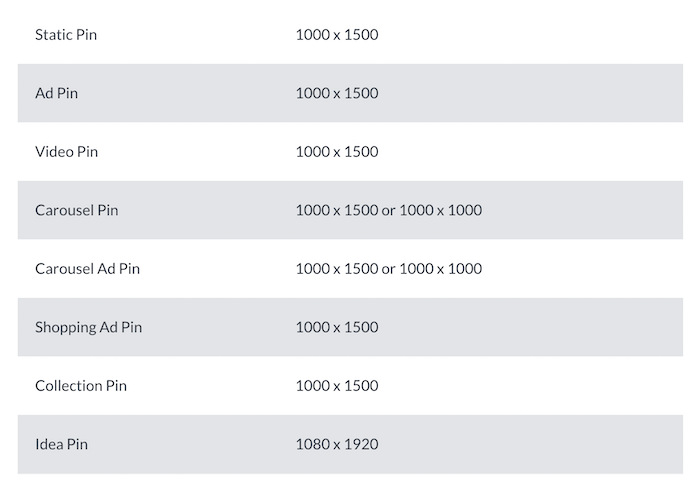
Pinterest image size chart

Let’s explore how and why these Pinterest image sizes are used and how they work to drive traffic to your site.

Pinterest Images: Static Pins

Static pins are the most basic type of Pinterest image. They feature only one image and a few sentences that link your pin to your website.

While they may be simple, static pins are very SEO-friendly because they offer concise, relevant keywords that search engines pick up on.

They also provide clear calls to action and direct users to your website with a clickable link in the pin description. 

While you might think using multiple images in one pin would be more engaging for users, if the pinner doesn’t have time to read all of your content, they might keep scrolling.

For this reason, static pins can be a great way to get instant traffic from Pinterest directly to your site.

The best Pinterest image size for static pins is 2:3 or 1000 x 1500 pixels. Anything larger than this risks being cut off in user feeds. Static pins work best with PNG or JPEG files at a maximum of 10 MB.

To create a high-performing static pin, be sure to keep your image and text short.

Pinterest users are often scrolling through their feeds quickly, so it’s important to have a clear image with relevant text.
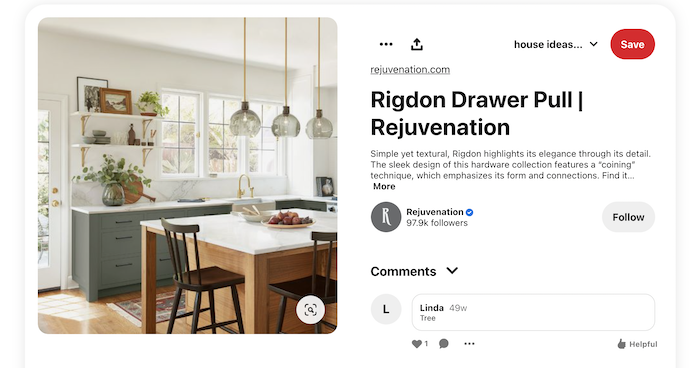
Pinterest image - static pin of home decor

Pinterest Images: Infographic Pins

Infographic pins are vertical Pinterest images that are uniquely visual and encourage users to click through on your content

Vertical pins perform best on Pinterest, which makes infographics a strong contender for driving traffic. 

Infographic pins are also easy to share across social media platforms, bringing in new audiences for your business.

That said, some users argue infographic pins can negatively impact your search rankings, as they become truncated in search.

How they perform for you will depend on individual factors, so there’s no harm in testing them to see how they perform for you.

The best size for a Pinterest image infographic is 1000 x 3000 with a Pinterest Pin ratio of 1:3. Infographic pins should be no larger than 600 x 2400 pixels.

Let’s look at the different types of infographic pins, and how to use them effectively.

First up are standard infographics which often feature text overlaid on top of a graphic or image. Although they may seem like an obvious choice, not all businesses have strong visual content that works well in this format. Business coaches, influencers, and wellness brands tend to see the most traffic with these pins.

Another option is to use a more complex and detailed image, such as one that features different colors or shapes alongside the text. For example, a retail store could create a gift guide as a long form infographic.

Finally, if you want the most pin-worthy content possible for infographics, try making them interactive. Interactive content is more eye-catching and can encourage users to share your pin, driving more traffic to your site.
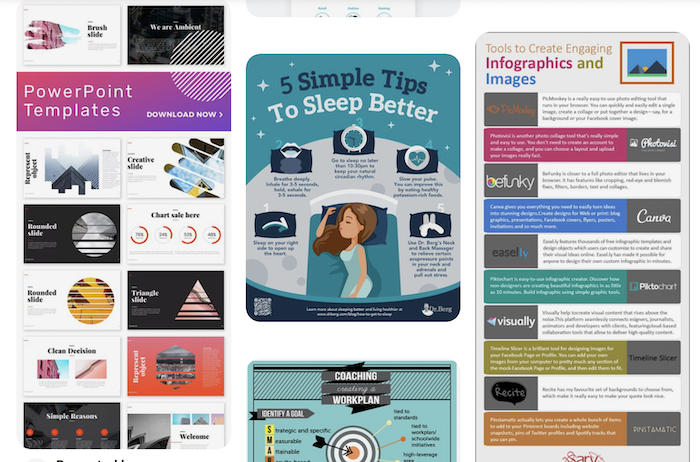
Pinterest image - infographics

Pinterest Images: Square Pins

Square pins are great for sharing images from your Instagram feed.

The best Pinterest image size for square pins is a 1:1 aspect ratio or 1000 x 1000 pixels. The maximum image file size of a square pin should be 20 MB.

Square pins allow you to share compact images that are relevant to your brand aesthetic and easy to share.

Although some people claim square pins get less engagement, other users say their likes, impressions, and clicks have improved with square pins.

Studies have shown the average user spends less than five seconds on a Pinterest page, so it’s critical your images and pin descriptions are concise and effective.

A clear title makes it easier for users to understand what they’re clicking into or scrolling past.

Square pins are easy to view on most devices, which is why they’re a great fit for social media platforms like Pinterest.

Plus, square Pinterest images work well when you need users to click through or check out your website or blog content.

To see if square pins work for you, run some tests and judge the results for yourself!

Pinterest Images: Long Pins

Long pins are typically used for blog content or articles, where users can scroll to read the entire text.

Long pins are great when you need people to click through and engage with your website content.

Long pins should use a Pinterest Pin ratio of 1:2.1 or 1000 x 2100 pixels.

If your long pin exceeds this recommended size limit, it may be cut off in user feeds.

If your long pin cannot meet this length, don’t worry! You can help users stay engaged by centering any text before the truncated portion. Once they click the image, they’ll be able to see the rest of your content.

Long pins work best for businesses that have articles or blog posts to share. For example, if you own a hairdressing or beauty salon, you could pin an article about how to take care of your hair type.

Another great use for long pins is if you’re selling products online. You could share a link with several different images that sends users through to the product page.

This allows users to see different views or angles of the product, so they can make an informed decision about what to purchase.

Pinterest images - Long Pins

Pinterest Images: Carousel Pins

Carousel pins are a great way to show a lot of information in one pin.

For example, if you’re selling jewellery online and have several rings for sale from the same collection, carousel pins allow you to include up to five images per pin/item that users can scroll through.

The best Pinterest image size for carousel pins is 1000 x 2000 pixels and should be no more than three images in length. As well, carousel pins can be shown in either standard Pin Size (2:3) or Square Pins (1:1).

Carousel pins allow you to showcase multiple images with a short text description below each image. These are perfect for businesses that showcase events, recipes, tutorials or other content people want to scroll through.

These Pinterest image pins can help drive people directly to your online store, as they can see exactly what you’re selling and buying right from the pin. This is a great way to generate sales!

Outerwear brand REI found that carousel ads using Pinterest carousel pins increased their click-through-rate by 32 percent.

Pinterest images - Carousel Pins

5 Best Practices for Pinterest Images

There are a few things to keep in mind when creating your Pinterest images so you can drive as much traffic back to your site as possible.

1. Be Descriptive

Include descriptive text on the image itself, including hashtags and relevant keywords. This is one of the most powerful ways you can increase website traffic from each pin’s click-through rate, as it helps your Pinterest page connect to search results across the internet.

This will also ensure your pins are easy to find when people search on Pinterest.

2. Include the Right Links

Next, include a link in the pin’s image description so when someone clicks it they can be taken back to your site with ease. You can also use copy to encourage them to click through again by including more text about what they will see if they do.

3. Use High-Quality Images

If you’re linking to your store, be sure to use product pins with clear, high quality images. Link the pin to a specific product with an easy-to-understand description that encourages viewers to purchase there or visit your website for more information.

Ensure your logo is displayed on every pin you create, but make sure it’s visible. Pinterest recommends avoiding the lower right corner as that area gets covered up by product icons.

4. Include Alt Text on Pins

Be sure to add alt text to all your images. This will help improve the SEO of your website and let Pinterest know what each image is about.

You can also pin images directly from your website or blog by adding a “Pin it” button on the page. By doing this, you won’t have to upload and crop each image as they will be sized automatically for Pinterest image requirements. (This also allows users to pin your images, which expands your reach.)

5. Monitor Pin Performance

Lastly, monitor all of your pin impressions to see how you can improve your content. Different pins may bring in different results, so pay attention to what you pin to track how Pinterest impacts site traffic and conversions. 

Frequently Asked Questions About Pinterest Images

What are the Pinterest post dimensions?

Different kinds of Pinterest images use different sizing, but Pinterest generally recommends a ​​2:3 aspect ratio, or 1000 x 1500 pixels limit.

What are the most popular pins on Pinterest?

The most popular pinned content on Pinterest is DIY and craft pins, entertainment, weddings, and holidays and events.

How do I drive traffic to my website on Pinterest?

There are many ways to drive traffic to your website from Pinterest which can include keyword targeting, proper Pinterest image sizing, applying for Rich Pins, and creating strong visual content.

Is Pinterest a good source of traffic?

Pinterest is one of the leading sources of traffic for bloggers, sometimes even beating out SEO.

{
“@context”: “https://schema.org”,
“@type”: “FAQPage”,
“mainEntity”: [
{
“@type”: “Question”,
“name”: “What are the Pinterest post dimensions?”,
“acceptedAnswer”: {
“@type”: “Answer”,
“text”: ”

Different kinds of Pinterest images use different sizing, but Pinterest generally recommends a ​​2:3 aspect ratio, or 1000 x 1500 pixels limit.


}
}
, {
“@type”: “Question”,
“name”: “What are the most popular pins on Pinterest?”,
“acceptedAnswer”: {
“@type”: “Answer”,
“text”: ”

The most popular pinned content on Pinterest is DIY and craft pins, entertainment, weddings, and holidays and events.


}
}
, {
“@type”: “Question”,
“name”: “How do I drive traffic to my website on Pinterest?”,
“acceptedAnswer”: {
“@type”: “Answer”,
“text”: ”

There are many ways to drive traffic to your website from Pinterest which can include keyword targeting, proper Pinterest image sizing, applying for Rich Pins, and creating strong visual content.


}
}
, {
“@type”: “Question”,
“name”: “Is Pinterest a good source of traffic?”,
“acceptedAnswer”: {
“@type”: “Answer”,
“text”: ”

Pinterest is one of the leading sources of traffic for bloggers, sometimes even beating out SEO.


}
}
]
}

Pinterest Image Size Conclusion

When well optimized, Pinterest images can grow your audience and increase web traffic to your site.

By using the right Pinterest image sizes, optimizing your content, and tracking performance with Pinterest Analytics, you can transform your Pinterest page into a high-performing marketing tool.

Don’t forget to strengthen your Pinterest image strategy with strong SEO and impressive web design, to encourage new visitors to convert. 

What Pinterest images work best for your brand?

How to Translate Foot Traffic Into Digital Sales

As an entrepreneur, the move towards e-commerce and digital transformation shouldn’t pass you by. The good news is that as a brick-and-mortar business owner, you can promote your website to the foot traffic in and around your store to aid your online visibility and increase digital sales.

Perhaps your biggest advantage is you don’t need to spend quite so long building the relationships that turn people into buyers: you’ve already done that. 

Shoppers coming into your store know you, trust you, and are more likely to purchase from you. Also, the surrounding foot traffic is at least familiar with your business, even if they haven’t bought anything from you yet.

Now comes the question: How do you turn your foot traffic into more digital sales

Whether your website is fresh up or you’ve been running your website for some time, the techniques featured in this article are open to everyone.

First, let’s look at the two main different types of retail traffic along with their advantages and disadvantages.

Foot Traffic Vs. Online Traffic: What Are the Pros and Cons

When we talk about foot traffic, we mean the number of people coming into your store and those who walk nearby. It has always been an important measure of retail success, and naturally, the more foot traffic an area has, the more chances there are to make sales.

Each type of traffic has its pros and cons. 

With regular foot traffic, the advantages are it:

  • allows businesses to see and interact with customers personally
  • can generate word-of-mouth advertising and, in turn, repeat customers through recommendations
  • enables face-to-face sales, which many consumers are more comfortable with
  • allows customers to ask questions directly and get immediate answers

However, there are also disadvantages to foot traffic. The most significant disadvantage is the decline. According to RetailNext, recent Black Friday figures were down 48 percent, and this is a trend that’s likely to continue as more consumers turn to e-commerce.

There are other disadvantages too, such as:

  • It’s weather dependent. Fewer shoppers are out about when the weather’s bad or the heat’s too intense.
  • There are declining brick-and-mortar sales

Consumers who use e-commerce benefit from the convenience and special offers available online. However, the growth in online sales is good for website owners too. 

The main advantages of online traffic include:

  • There’s a constant flow of visitors to your store anytime, even when you’re sleeping.
  • It provides targeted reach.
  • There are little to no geographical limitations.
  • Tracking allows you to spot patterns and refine your marketing strategy.

Disadvantages of online traffic include:

  • It takes time to get established online.
  • There is over-reliance on technology.
  • Changing algorithms mean you can lose your position in search engines.
  • It costs money to keep getting fresh visitors to your store.

8 Ways to Convert Foot Traffic Into Digital Sales

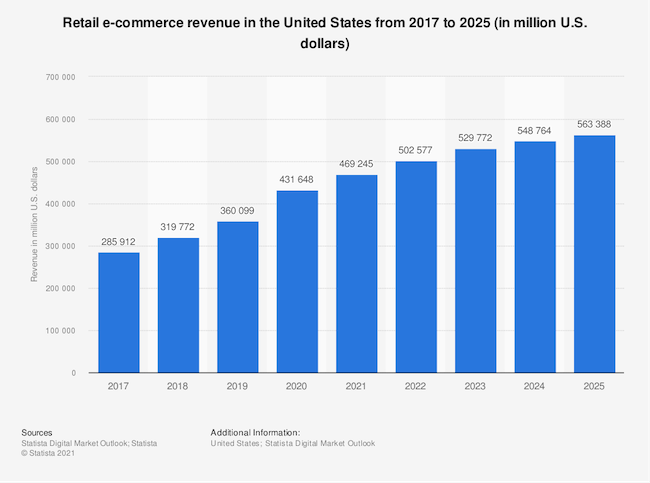
No store owner can afford to ignore the potential of digital sales. E-commerce has dominated the retail sector for years now, and that’s not going to change, according to forecasts.

According to statistics, e-commerce sales are likely to reach 563.4 billion dollars by 2025, and your online business can benefit from this surge.

Foot traffic Statista forecast chart

1. Advertise Your Online Presence

You’ve got customers coming into your store every day. Make sure they know about your website and social media presence by advertising your digital channels around the store. 

Don’t go too crazy, though. 

There’s no need for giant banners with “find us online @” written on them. Instead, be a little more discreet. For instance, you could:

  • Add your website URL and social media pages to receipts.
  • Include business cards with a discount code when packing bags. 
  • Put your online details on any packaging.
  • Include small plaques on shelving around the store with your online information.
  • Advertise details on any outside signage and in your windows for passing foot traffic to see.

Also, if you have any special internet offers, promote them through in-store advertising and handing out promotional materials. Add an incentive to spur interest.

2. Advertise Online-Only Sales

Many people have two things in common: they love a bargain and have a fear of missing out (FOMO). According to the stats:

  • Sixty-nine percent of millennials have FOMO.
  • Wealthier households are more likely to experience FOMO.
  • Social media is a major contributor.

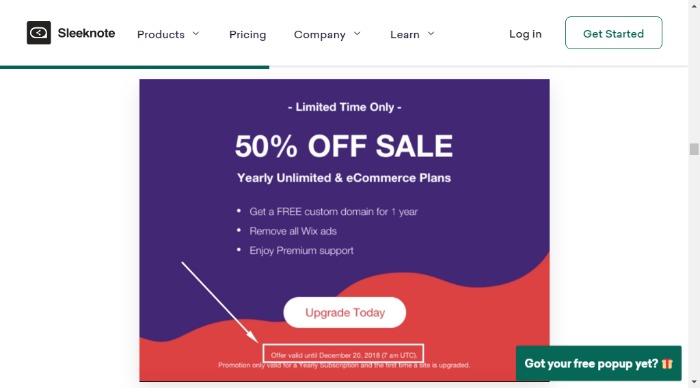
FOMO is a proven psychological tactic for driving sales. That’s why offering online-only items or special discounts can be an effective profit booster for your business, especially when you include a time limit on the offers.

E-commerce companies like Sleeknote use this approach, creating a sense of urgency to get consumers to sign up.

drive foot traffic sleek note

Another benefit of this approach is that buyers are only too keen to tell their friends and families about the great deal they got. This could mean even more visitors to your digital platforms.

When doing this kind of promotion, be sure to spread the word among your offline customers with leaflets or small cards and a promotion code so you can track your campaign’s success.

3. Offer Free Shipping Discount Codes

One deal-breaker for consumers is shipping costs. Eighty-two percent of shoppers hate them and prefer free shipping overpaid expedited options.

To overcome this obstacle, why not offer a free shipping discount code?

Once customers get to your website, sign up and register, it’s easier to engage them and build relationships by sending targeted offers. They also get to realize the benefits of online shopping.

If it makes sense, you could also offer free shipping on orders of a minimum value for future orders to further engage and encourage your customers to purchase.

4. Offer Incentives for Connecting on Social Media

Sometimes customers just need a nudge. They might have meant to check out your business on social media but just haven’t got around to it yet.

What can you do to get buyers to visit your social media platforms? You create incentives. They can be in the form of coupons, freebies, contests, and prizes.

You could also offer points or a percentage off if your customer shares your social media pages with others or gets a friend to sign up to your digital channels. 

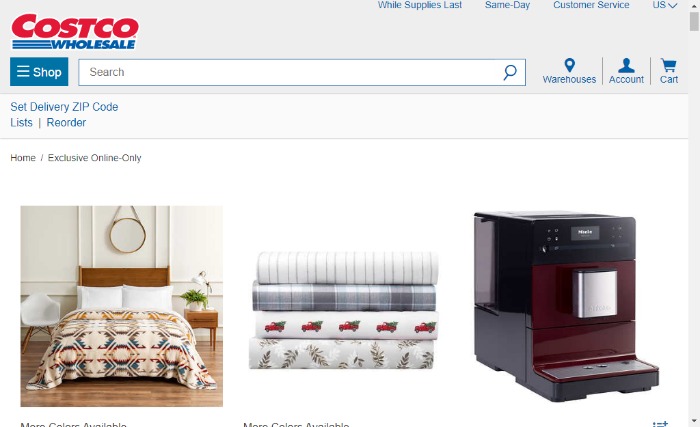
5. Highlight Exclusive Online-Only Products

Let’s go back to FOMO just for a moment. 

Arguably, FOMO has done a lot to keep the retail industry alive, especially on major shopping occasions, like Black Friday.

costco foot traffic example

E-commerce store owners often use FOMO to secure more sales, and there are multiple other ways you can use it in your marketing campaigns.

By offering exclusive online-only products, you’re giving shoppers the reason they need to head to your website and sign up.

However, FOMO has a downside, too. 

It can lead to impulsive buying by consumers. That’s not what you or your business needs: you want customers that keep coming back for more. 

Also, it could be damaging to the overall customer experience, so use this strategy with care.

6. Cross-promote With Other Store Owners

If another local store has a product that complements yours, then you may find cross-promoting each other’s products/services is mutually beneficial.

For example, an organic store selling nutritious foods and natural skincare products could pair with a local beauty salon or a gym.      

You promote their online offerings and digital platforms in your store, and they do the same in their premises. 

Perhaps take this a step further and collaborate with other local store owners to create a co-branded coupon with local businesses’ online details.

This approach can reach a broader scope of foot traffic, potentially leading to more visitors to your website and increased digital sales.

7. Use In-store Events

In-store promotions have been around for years, and they’re a staple of retail marketing. The goal of in-store promotion is to:

  • increase customer traffic 
  • improve brand awareness
  • create awareness for new products
  • get people talking

By creating a buzz, an in-store promotion attracts foot traffic from regular customers and possibly from passersby. 

These events give consumers the chance to visit a store, check out products, and get to know you. They also give you the opportunity to promote your online channels and give out promotional materials directing people to your website. 

Additionally, in-store promotions help with word of mouth, build customer loyalty, and you also have some flexibility regarding the style of the event.

Depending on what you want to achieve, your promotion could be:

  • educational
  • luxurious
  • experimental 
  • holiday-themed

Alternatively, you could take the Ikea approach and create a bring a friend event. Ikea asked people to “like” their Facebook page if they wanted to access the special offers only available to attendees who brought a friend along.

You can use such events to promote your store in other ways too. For example, you could invite visitors to take pictures or videos and share them on your digital channels to promote your brand further online.

8. Hand Out Flyers

Go wider and make the most of the foot traffic outside of your door. Flyers are one of the oldest forms of advertising, and they still work.

Hand out flyers to passersby highlighting your special deals and internet-only products to passersby. However, be sure to check if it’s permissible locally before you do.

You can then use this as an opportunity to introduce yourself to potential customers and tell them about your business and the advantages of buying from you online.

You can also:

  • pin flyers to local community boards
  • advertise in your store windows 
  • keep a pile of flyers on your counter for shoppers to take
  • include flyers in your customer’s grocery bags

Finally, offer discounts to anyone that signs up and include a code for people to use so you can track success.

Frequently Asked Questions About Foot Traffic

How can I use my website for more foot traffic?

You can use your website to attract extra foot traffic for a further business boost. Consider inviting people to buy online and pick up in-store, providing in-store redeemable coupons, and offering in-store exchanges and returns.

What’s the best way to track the success of my campaigns?

You can add codes to any flyers, cards, or other promotional materials that you put out or ask customers how they found you when they registered online.

How can I improve my foot traffic offline?

By using signage, introducing a loyalty program, marketing, and social media. However, remember that these tactics take time, so they may not increase your foot traffic immediately.

How does foot traffic increase sales?

The more foot traffic you have, the greater the opportunity for engagement and sales, helping boost your revenues.

{
“@context”: “https://schema.org”,
“@type”: “FAQPage”,
“mainEntity”: [
{
“@type”: “Question”,
“name”: “How can I use my website for more foot traffic?”,
“acceptedAnswer”: {
“@type”: “Answer”,
“text”: ”

You can use your website to attract extra foot traffic for a further business boost. Consider inviting people to buy online and pick up in-store, providing in-store redeemable coupons, and offering in-store exchanges and returns.


}
}
, {
“@type”: “Question”,
“name”: “What’s the best way to track the success of my campaigns?”,
“acceptedAnswer”: {
“@type”: “Answer”,
“text”: ”

You can add codes to any flyers, cards, or other promotional materials that you put out or ask customers how they found you when they registered online.


}
}
, {
“@type”: “Question”,
“name”: “How can I improve my foot traffic offline?”,
“acceptedAnswer”: {
“@type”: “Answer”,
“text”: ”

By using signage, introducing a loyalty program, marketing, and social media. However, remember that these tactics take time, so they may not increase your foot traffic immediately.


}
}
, {
“@type”: “Question”,
“name”: “How does foot traffic increase sales?”,
“acceptedAnswer”: {
“@type”: “Answer”,
“text”: ”

The more foot traffic you have, the greater the opportunity for engagement and sales, helping boost your revenues.


}
}
]
}

Foot Traffic Conclusion

As a store owner, you’re in the unique position to start sending customers directly to your website to increase your digital sales.

You don’t need to rely on them finding you by chance, and you don’t have to take so much time building trust because these buyers already know you.

That gives you a perfect chance to start actively promoting your website to the foot traffic in and around your store.

There are plenty of strategies you can use to do this. For example, offering incentives to get consumers to sign up to your social channels, holding in-store promotions to highlight online-only products and give demonstrations, and advertising your store on your packaging materials and receipts.

Are you a store owner? How do you get your foot traffic to find you online?

How to Do Quarterly Content Planning to 10x Content Output

Content planning is easily the most unenjoyable part of the entire content production and marketing process—just ask any digital marketer.

Yet, it’s an essential component of content marketing that can’t be ignored if you want to 10x your content output.

Not only will organization help you stay on top of things, but content planning helps improve the overall quality of your content. You should regularly review your content plan and look for ways to maximize your productivity—even on a shoestring budget.

Remember, content plays a huge role in your business growth.

As a result, you must be deliberate and proactive about the type and quality of content you publish. Planning your content will help you provide real value to your audience, remain consistent in posting, and stay ahead of your workload for the month.

This will create more time to respond and engage with your target audience: the true goal of content marketing.

Review Last Quarter’s Content Metrics

A key part of creating a quarterly content plan is to review the previous quarter’s performance metrics for your social media, mailing list, and blog pages.

Check everything from traffic on your pages to direct social media engagement to click-throughs to your website. Analyzing your content this way will help you understand what kind of content your audience is looking for and what works best.

You’ll also be able to identify what hasn’t taken off and has been a waste of your marketing budget. This will help inform your content strategy moving forward.

To make this segment of your quarterly content planning more effective, design a way of keeping track of your content’s performance each quarter. You can use a spreadsheet or any other content-management tool that you find easiest.

Set Content Goals

Before you start planning the type of content you’ll publish, it’s essential that you first decide what you want to achieve with your content.

You should set goals for your content each and every quarter.

A few business goals you can achieve with your content include:

  • brand awareness
  • customer acquisition
  • sales
  • customer retention
  • engagement levels

When setting your quarterly content goals, it’s a good idea to use your previous quarter’s content performance as the benchmark for your next quarter’s content goals. It’s also an excellent idea to set SMART goals as this makes your goals easy to track and measure. For example, your goal could be a 20 percent increase in organic traffic in the next quarter.

Every content marketing campaign you run must be designed to accomplish specific goals that align with your future business plans.

Define Content Campaign Metrics

One of the biggest mistakes you can make with your content is spraying and praying—publishing content and hoping it will perform. Content doesn’t perform by chance. You have to be strategic about every component of your campaign.

That’s why you must define the metrics you’ll use to gauge the performance of your campaign. Defining your content campaign metrics will help ensure that every piece of content and every campaign is data-driven, thereby increasing the chances of success.

How do you define your content campaign metrics?

Easy. Your metrics should be tied to the content goals you set for the quarter. A few examples of the metrics you can use to review the performance of your content include:

  • Page views: This shows the number of unique visitors seeing your content.
  • Time on-page: This is the amount of time visitors spend on a particular page. If your content is relevant and engaging, time spent on the page will be higher.
  • Bounce rate: This is the percentage of website visitors that leave without performing a relevant action.
  • Social media shares and engagement: This metric indicates how much people find your content useful.
  • SEO performance: Check factors like page ranking, backlinks acquired, and the keywords the page is ranking for as indicators of SEO performance.
  • Newsletter signups and engagement: How readers engage with your newsletter shows the relevance of your content.

Defining your content campaign metrics will give you the perfect way to measure the success of each piece of content and the campaign as a whole.

Evaluate Your Content’s Target Audience

One critical aspect of your content plan is understanding the audience you’re targeting. If your targeting is off, your campaign will flop.

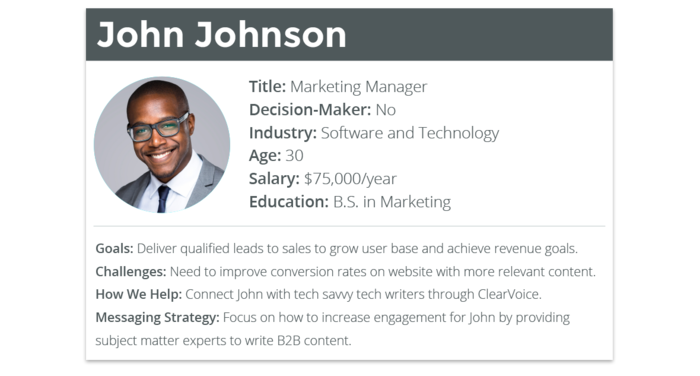
To ensure you’re targeting the right audience, you need to conduct audience research and build personas representing your ideal customer.

A few things to note as you research your target audience include:

  • Demographics: These are the physical attributes that members of your target audience have in common. Examples include geographical location, gender, age, and marital status.
  • Psychographics: Psychographic data refers to the general psychological makeup of members of your target audience. Examples include interests, aspirations, opinions, and more.
  • Firmographics: This mainly applies to B2B brands as it refers to the descriptive attributes that make up a brand’s ideal customer profile (ICP). Examples include industry, location, company size, customer base, and technology stack.

Using the data you obtain, you can then build profiles of your perfect customer.

Audience research is an essential aspect of content planning

Doing this will help you design the right messaging and create personalized experiences for your audience.

Besides understanding your audience, you should also seek to understand which stage of the funnel they are in. This will help you know which stage of the funnel to put more effort into as you create content for the next quarter.

Decide What Types of Content to Create

Another important element for creating a quarterly content plan that will 10x your output is knowing what type of content to create.

Different content types include:

  • social media
  • webinars
  • how-to guides
  • blog posts
  • infographics
  • memes/GIFs
  • videos (live stream videos, YouTube videos, TikTok, Instagram reels, etc.)
  • podcasts
  • email newsletters and campaigns
  • user generated content (UGC)
  • long form pieces
  • white papers

As you well know, making decisions (even concerning the smallest details of your life) can be challenging. Thankfully, a few factors will help you decide on the content types to focus on in the next quarter. These include your:

  1. Target audience: Create the type of content they find valuable and engaging.
  2. Sales funnel: Make sure to create content that caters to each stage of your sales funnel.
  3. Competitors: Study your competitors and take note of the content types that are bringing them results. You can do this by checking out Ubersuggest, a free marketing tool.

You can also review your own content to check which types of content have worked well for you.

For now, here are some of the content types you can leverage in your content marketing campaigns:

1. Blog Posts

Easy to produce with the help of the right content writers, blog posts are among the most consumed types of content. They are also the easiest to rank in search engines as they provide many opportunities for SEO optimization.

2. e-books

E-books are a type of long-form content in PDF or HTML formats. They are a great way of showcasing your expertise, thereby helping you gain your audience’s trust. Plus, they are great for earning passive income.

3. White Papers

White papers are informational documents that go in-depth to highlight a specific topic and how your product or service can help solve said problem. Their most prominent use is to help establish you as a thought leader. They’re also great for lead generation.

4. Case Studies

Another excellent type of content you can use to gain your audience’s trust is a case study. Case studies highlight a common problem your audience faces and how one of your customers used your solution to solve that problem.

5. Video Content

Video content has grown in popularity over the past few years thanks to its highly interactive nature. It’s a great way to drive engagement and easily convey your message.

6. Infographics

Infographics are a superb visual way of presenting information in an easy-to-digest format. They’re also great for driving engagement and attracting backlinks.

Review Your Content Budget

Now that you know the types of content you’ll create, you can start reviewing your content budget. You’ll have to work out how much you’re prepared to spend on:

  • content strategy
  • content creation
  • content promotion

As content marketing plays a huge role in the success of your business, you should set aside a healthy portion of your marketing budget for it.

How much should you budget for your content marketing?

The answer is largely dependent on several factors—including the types of content you plan on creating, the volume of publishing, and the size of your business. However, research shows that most brands spend anywhere from $5,000 to over $50,000 on content marketing. Marketing budgets in general should be between 7-12 percent of your total revenue.

Review Content Production Workflow

With the budget sorted, you can now start getting the gears of your content creation in motion.

It’s time to review your content production workflow.

A content workflow is a series of tasks that you and your team must perform to ensure that each piece of content is perfectly crafted and created on time. It also highlights who creates which parts of your content, such as writing, recording, editing, and graphic design.

A well-designed content production workflow ensures that your content creation runs smoothly and efficiently. That’s why, as you do your quarterly content planning, you must review how well your content workflow worked. Ask yourself:

  • Did your content production run smoothly?
  • What parts of the workflow do you feel need improvement?

As you review your content production workflow, take note of the parts of the process that you can automate. For example, you could streamline aspects of the process by creating templates that ensure uniformity in the quality of the deliverables.

Create a Content Promotional Plan

Most people make a mistake when it comes to content marketing. They think the process stops after hitting the publish button. You need to realize that content marketing has two critical stages: content production and content promotion. Writing content is only half the battle.

You also need to promote it. After hitting the publish button, you must aggressively promote your content. This can be via alternative content marketing platforms—e.g., sharing your blog posts on social media, or sending your LinkedIn article to your mailing list.

A few tips to help you create an effective content promotion plan include:

  • Understanding the platforms your audience frequents: Do they prefer to consume content on social media, blog posts, or YouTube?
  • Outlining what types of campaigns you’ll run: Examples include SEO, paid social ads, google ads, and email marketing.
  • Defining your content promotion KPIs: Doing so will help you track the performance of your campaign.
  • Creating a content promotion calendar: A content promotion calendar shows you which content to promote, on which platform, and on what day.

Design your content promotion plan in such a way that the day you launch a piece of content, you’re already prepared to start promoting it. Content promotion and distribution must start immediately after you publish a piece of content.

Quarterly Content Plan Frequently Asked Questions

How can I increase my content production?

Content creation is a big challenge for many businesses. The best way to increase your content production is to plan ahead. That’s why you need to create a quarterly content production plan.

Are there any tools that can help increase content production?

There is a myriad of tools you can use to increase your content production. Examples include spreadsheets, Trello, Frase, Workflowy, Grammarly, and many more.

How often should I review my content production plan?

Reviewing your content production plan is an essential part of running a successful content marketing campaign. That’s why you must regularly review yours. For your quarterly content plan, a monthly review is best as it gives enough time to get enough data to help you have a clear picture of how your content is performing.

What should be included in my content production plan?

Your content production plan should include everything that can help you effectively produce quality content. This includes content research, workflows, creation, and promotion.

{
“@context”: “https://schema.org”,
“@type”: “FAQPage”,
“mainEntity”: [
{
“@type”: “Question”,
“name”: “How can I increase my content production? “,
“acceptedAnswer”: {
“@type”: “Answer”,
“text”: ”

Content creation is a big challenge for many businesses. The best way to increase your content production is to plan ahead. That’s why you need to create a quarterly content production plan.


}
}
, {
“@type”: “Question”,
“name”: “Are there any tools that can help increase content production? “,
“acceptedAnswer”: {
“@type”: “Answer”,
“text”: ”

There is a myriad of tools you can use to increase your content production. Examples include spreadsheets, Trello, Frase, Workflowy, Grammarly, and many more.


}
}
, {
“@type”: “Question”,
“name”: “How often should I review my content production plan? “,
“acceptedAnswer”: {
“@type”: “Answer”,
“text”: ”

Reviewing your content production plan is an essential part of running a successful content marketing campaign. That’s why you must regularly review yours. For your quarterly content plan, a monthly review is best as it gives enough time to get enough data to help you have a clear picture of how your content is performing.


}
}
, {
“@type”: “Question”,
“name”: “What should be included in my content production plan? “,
“acceptedAnswer”: {
“@type”: “Answer”,
“text”: ”

Your content production plan should include everything that can help you effectively produce quality content. This includes content research, workflows, creation, and promotion.


}
}
]
}

Quarterly Content Plan Conclusion

Content marketing plays a significant role in the success of marketing your business.

For your content marketing campaigns to succeed, you need to plan your content ahead of time. You need to create a quarterly content plan that will help you 10x your content output—both qualitatively and quantitatively.

Content planning has many advantages it brings to your content team and business overall. From speeding up the content creation process to improving content quality, you can engage your audience in new ways and maximize your marketing budget ROI.

Go ahead and use the tips outlined above to create your quarterly content plan.

What content planning tips have you found to be most helpful?

New comment by dpark369 in "Ask HN: Who wants to be hired? (October 2021)"

Location: Columbus, OH / Elkgrove Village, IL

Remote: Yes

Willing to relocate: Maybe

Technologies: JavaScript, React, Bootstrap, CSS, HTML, Git, Express, MongoDB

Resume/CV: https://drive.google.com/file/d/1R9j21agkwtxlNFwDEL4X-aiGT9X…

Email:dpark369@gmail.com

I’m looking for work near Chicago area but I’m also open to remote work.

New comment by fredwu in "Ask HN: Who wants to be hired? (October 2021)"

– Location: Melbourne, Australia

– Remote: Yes

– Willing to relocate: No

– Technologies: Elixir, Ruby, React, JS

– Résumé/CV: https://fredwu.me/cv.pdf

– Email: ifredwu at gmail dot com

My name’s Fred Wu, I’m an experienced Elixir and Ruby developer who has worked on multiple commercial projects as well as having released multiple open source Hex packages and Rubygems.

I work at a fintech startup as CTO, leading a small team. During Covid I’ve been pumping out around 40 extra hours per week on freelancing work. My day job involves mostly the non-coding part of problem solving so it’s a nice mix of pace for me to keep my coding skills sharp during the evenings and on weekends.

I’ve been using Elixir for half a decade, ruby for over a decade, lead and built multiple commercial B2B & B2C SaaS projects. I’ve always been very hands on, and have worked with multiple tech stacks in the past, including JS/React, PHP, Golang, and most recently Clojure at the startup I’m currently working at.

– My blog and talks: https://fredwu.me/

– My Github profile: https://github.com/fredwu

– My LinkedIn profile: https://www.linkedin.com/in/wufred/

As you probably noticed I have quite a few projects on Github. Some of the more interesting ones are:

– Crawler, a high performance web crawler built in Elixir: https://github.com/fredwu/crawler

– Simple Bayes, a naive bayes machine learning implementation in Elixir: https://github.com/fredwu/simple_bayes

– OPQ, a simple in-memory queue with worker pooling and rate limiting in Elixir: https://github.com/fredwu/opq

– And a few years ago when I was heavily involved in the ruby/rails community, I had done an experimental project building a “layer 0” ORM on top of ActiveRecord and Sequel: https://github.com/fredwu/datamappify

If you think my skills and experience could add value to the project I’d love to chat more. You could reach me at ifredwu at gmail dot com. Thanks!

Jitx (YC S18) is hiring software engineers to automate circuit board design

Article URL: https://www.jitx.com/careers Comments URL: https://news.ycombinator.com/item?id=28920451 Points: 1 # Comments: 0

Heron Data (YC S20) Is Hiring a Full-Stack Engineer (London)

Article URL: https://www.ycombinator.com/companies/heron-data/jobs/kN46lMk-software-engineer Comments URL: https://news.ycombinator.com/item?id=28916344 Points: 1 # Comments: 0

How Do Government Contracts for Small Business Work?

Get Government Contracts for Small Business

Are you looking for government contracts for small business? The federal government can be a terrific place to get clients. But there are many details to learn! The Small Business Administration has got you covered.

Government Contracting

The government is a huge consumer of goods and services. So any US business should be trying to get a supply contract with them. Unlike other customers, the government will be a consumer for as long as the United States exists. The SBA Contracting Guide helps small businesses navigate the details.

SBA Contracting Guide

The SBA has a role in government contracting. They work with federal agencies and offer what are essentially SBA contracting assistance programs. The idea is to award 23% of prime government contract dollars to eligible small businesses. It also offers counseling and help to small business contractors.

Government contracts are a tremendous financial opportunity for small businesses. Per the SBA Contracting Guide, the US government buys all types of products and services. And the law requires it to consider buying from small businesses.

The government wants to buy from small businesses for several reasons, including:

  • They want to ensure that large businesses don’t muscle out small businesses
  • To gain access to the new ideas that small businesses provide
  • To support small businesses as engines of economic development and job creation
  • And to offer opportunities to disadvantaged socio-economic groups

How Do Government Contracts Work?

  • Requesting proposals, evaluating bids, and awarding contracts should be on a level playing field
  • The government should consider a bid from any qualified business
  • With set-aside and sole-source contracts, federal agencies must publicly list their contract opportunities
  • Some of these contracts are set aside only for small businesses

At times, set-aside contracts might make up certain types of tasks on larger contracts. In others, entire contracts may be reserved for small businesses. When a contract is set aside for one specific small business,  it’s called a sole-source contract.

Demolish your funding problems with 27 killer ways to get cash for your business.

Does Your Business Have What it Takes to Get Government Contracts for Small Business?

Start with market research. To bid on and win government contracts, you must sell products or services the government buys. And you must do so at a competitive price. Check to see if there’s a market for your product or service. The SBA can help you to determine how big the market is, and find potential buyers.

The Federal Procurement Data System

Move onto the Federal Procurement Data System. This system is the repository of all federal contracting data for contracts over $25,000. With this system, you can see which agencies have contracts and with whom. Find out what agencies buy, and learn which contractors have contracts.

USSpending.gov

Take a look at USASpending.gov. USASpending.gov tracks government spending through the contracts it awards. This searchable database contains information for each federal contract. Use this information to help identify government purchasing trends.

Agency Recurring Procurement Forecasts

Federal agency procurement forecasts can be very helpful. Each government agency releases a procurement forecast. It includes contracting opportunities for small businesses. Review Agency Recurring Procurement Forecasts. Find out if there are agencies that are buying what you sell.

Procurement forecasts can get granular. You can look up procurement for (for example) the Department of Veterans Affairs. And then break it down by location. And then see budgeted amounts for everything from asbestos abatement to buying stretchers.

What Makes a Successful Contractor?

The government prefers to work with established, reliable businesses. This means it’s likely that startups need not apply. Do you have a track record of delivering quality goods and services on time and within budget? Is your reputation within your industry strong?

Downsides of Trying to Get Government Contracts for Small Business

It take a long time to win your first government contract. And it can also take a significant amount of money. Some businesses spend between $80,000 and $130,000 to earn their first contract! Also, it could take up to two years to start making a return on your investment. So you must have enough cash flow to sustain your business. Government Contracts for Small Business Credit Suite

Keep a diverse list of private-sector clients. This can help offset any potential initial losses. Being e-commerce savvy is also very important in government contracting. For example, to work with the Department of Defense, you must be able to invoice and receive payments electronically.

The SBA Offers Counseling to Small Businesses

One form of this help comes from a government contracts website called Procurement Center Representatives. Procurement Center Representatives (PCRs) help small businesses win federal contracts. PCRs view many federal acquisition and procurement strategies before they’re announced. This way, they can influence opportunities that should be set aside for small businesses. PCRs also conduct market research and help small businesses with payment issues. They also provide counseling on the contracting process.

Subcontracting Program Assistance (SPA)

The SPA can help you with subcontracting questions after the awarding of a contract. SPA can help you with tools to match prime contractors and subcontractors. And it can help small businesses market their services to prime contractors. You will have to reach them by email.

SBA Learning Center

You can also check out the SBA Learning Center. The SBA offers free online courses. These are to help small businesses understand government contracting. These are in the form of video classes.

Demolish your funding problems with 27 killer ways to get cash for your business.

Procurement Technical Assistance Centers (PTACs)

Or work with Procurement Technical Assistance Centers. PTACs help small businesses interested in government contracting. PTACs can help you determine if your business is ready for government contracting. They can help you register in the proper databases. And they can help you to find and bid on contracts.

SCORE

Another option is working with SCORE. SCORE is a nonprofit association. It has thousands of volunteer business counselors around the country. These counselors educate small business owners. SCORE provides free in-person and online counseling. They also provide educational workshops.

Small Business Development Centers

Or try the SBA’s Small Business Development Centers. Small Business Development Centers (SBDCs) offer free, one-on-one counseling and low-cost training services. Business owners can go to SBDCs for help with procurement and contracting. SBDCs will also help with market research. And they will provide 8(a) program support for minority-owned businesses

SBA Small Business Offices

Or you can turn to the SBA’s small business offices. Many federal agencies have an Office of Small and Disadvantaged Business Utilization (OSDBU). Or they may have an Office of Small Business Programs (OSBP). These offices work to identify opportunities to contract with small businesses.

OSDBUs and OSBPs

An OSDBU promotes using certain kinds of small businesses. These include disadvantaged, 8(a), women-owned, veteran-owned, service-disabled veteran-owned, and HUBZone small businesses. This is within the US Department of Commerce’s (DOC) acquisition process.

OSBPs advocate to include small businesses in the cleared industrial base. They do so through education and collaboration. They also maximize opportunity for small businesses in DCSA acquisitions. DCSA stands for Defense Counterintelligence and Security Agency.

Demolish your funding problems with 27 killer ways to get cash for your business.

Basic Requirements for Getting Government Contracts for Small Business

Before a business can engage in federal contracting, they must meet certain basic minimum requirements. Your business must have a D-U-N-S number. It also needs an NAICS code.

You must also meet size standards. Most manufacturing companies must have 500 employees or fewer. Most non-manufacturing businesses with average annual receipts under $7.5 million will qualify. You’ll need to register with SAM (the System for Award Management). SAM is a database that government agencies search to find contractors. And you must maintain compliance. The federal government’s purchasing process comes under the Federal Acquisition Regulation.

Federal Acquisition Regulations

Note: Federal Acquisition Regulations allow for some deviance from the norm. Regulations covering government contracting programs for small businesses are in 13 CFR 125. This rule defines when a business can say one or more service-disabled veterans own it. It also includes the government definition of subcontracting.

How to Win Contracts

You want to find contracts – use databases like the Dynamic Small Business Search. And you must market to the government. Some great places to find out what agencies or prime contractors need are:

  • Federal Procurement Data System
  • Office of Small and Disadvantaged Business Utilization (OSDBU) (specific to some agencies)
  • Office of Small Business Programs (OSBP) (specific to some agencies)

You also want to address any objections that may arise. A federal contracting officer may reject a business due to questions about ability to fulfill the contract. Then the SBA offers the small business a chance to apply for a Certificate of Competency. Here, you can prove your business is up to the challenge. But note: a COC is only good for one contract. So you may need to reapply in the future if you bid for another government contract in the future.

Types of Contracts

The government limits competition for certain contracts to small businesses. Those contracts are called small business set-asides. Set-asides can be competitive or sole-source. These can be some of the easiest government contracts to win.

Competitive Set-Asides

If 2+ small businesses could do the work or provide the products, the government sets aside the contract just for small businesses. Much of the time, this is automatic for government contracts under $150,000. Also, some set-asides are open only to small businesses in SBA contracting assistance programs.

Sole-Source Set-Asides

The government issues some contracts without a competitive bidding process. This often happens when only one business can fulfill the requirements of a contract. For consideration, register your business with the System for Award Management. And take part in any contracting program you may qualify for. Such as 8(a) Business Development or Women-Owned Small Business.

Government Contracts for Small Business: Takeaways

The US government is a huge consumer of goods and services. They are a client likely to be able to pay your business on time, and unlikely to go out of business in your lifetime. The SBA gives extensive guidance for getting government contracts for small business. Also, check if you or your business qualify for special programs to help you win government contracts.

The post How Do Government Contracts for Small Business Work? appeared first on Credit Suite.

Heron Data (YC S20) Is Hiring a Full-Stack Engineer (London)

Article URL: https://www.ycombinator.com/companies/heron-data/jobs/kN46lMk-software-engineer

Comments URL: https://news.ycombinator.com/item?id=28916344

Points: 1

# Comments: 0

Reflect (YC S20) is hiring a software engineer to modernize web testing

Article URL: https://www.workatastartup.com/jobs/46431

Comments URL: https://news.ycombinator.com/item?id=28917155

Points: 1

# Comments: 0