You have to pay your taxes. Not only is it illegal not to, but paying your personal and business taxes is a major factor in fundability. If you apply for business funding and a lender sees you have not been paying your taxes, it will likely result in denial. After all, if you can’t pay your taxes, how can they believe you will repay them? That said, there is no reason to pay more than necessary. There are several tax write offs for small business that can help. Many of them may surprise you.
Tax Write Offs for Small Business Can Save You Money
In truth, a tax professional is the best way to make sure you take advantage of all of the tax write-offs available. There are more than most realize. Below is a list of tax deductions for small business that can help. Remember, this is not a complete list, and not every business will be eligible for every deduction. Always work with a tax professional to ensure your business taxes and personal taxes are filed properly.
Check out this list of tax write offs for small business, and ask your tax professional if any of them are an option for you.
#1: Simplified Home Office Deduction
When it comes to business tax write offs, this one is pretty popular. Most everyone knows there is a way to deduct home office expenses on your taxes. If you work from your home, you can deduct the portion of that home that you use specifically for business purposes. However, you must have a dedicated office space that you only use for work. Then, you have to determine the percentage of home expenses that are associated with the business.
For example, if your home office space is ¼ of the total square footage of your home, you can deduct ¼ of the utilities, etc. as a business expense. As you can imagine, this calculation can get complicated and tedious quickly. As a result, a lot of home business owners do not take this deduction. They do not feel they can properly keep up with it. Some do not feel the deduction is worth the time it would take to keep up with all that is necessary for the calculation.
What you may not know is that there is a simplified calculation for this deduction. The simplified option is a quick and easy way to determine your home office deduction. You just multiply the total square footage of the space you dedicate to work only by $5. Remember, the maximum amount you can claim using this method is $1,500
#2: Qualified Business Income Deduction (QBI)
If you own a sole proprietorship, partnership, or an S corporation, you may be eligible for a qualified business income deduction. If so, you could deduct up to 20% of your qualified business income from your tax return.
That means if you have qualified business income of $100,000, you can deduct $20,000 and only pay taxes on $80,000.
#3: Bonus Depreciation
Depreciation tax write offs for small business are nothing new. Business assets like equipment are depreciated on the books over time at a set rate. That means you do not count the full cost of the item in the first year it is purchased. However, under bonus depreciation, you can deduct more than standard depreciation in the first year.
Before 2017 the bonus depreciation amount was 50% of the cost. Then, you would depreciate the remaining 50% of the cost over the life of the asset. However, the new law says that for anything purchased between September 27, 2017 and January 1, 2023, you can deduct 100% of the cost in the first year the item is put into service.
You don’t have to, but it could be advantageous to do so. Your tax professional can help you make that decision.
What types of items qualify for bonus depreciation? Tangible assets with a useful life of 20-years or less as dictated by the IRS.
Some items that fall into this category include:
Machinery
Equipment
Computers
Appliances
And furniture
#4: Business Related Legal and Professional Fees
If you use an attorney or an accountant for business services, their fees are deductible. Did you have an accountant prepare your taxes? That’s deductible. Using an attorney to help draft employment contracts or a writer to write a business plan? That is all deductible.
#5: Dues and Memberships
Fees paid to professional organizations for membership are deductible.So, a pediatrician could deduct any fees paid for membership to the American Academy of Pediatrics, or an architect could join the American Design Drafting Association (ADDA). If the business pays the fees, it is tax deductible on that business’s tax return.
#6: Interest on a Business Loan
Did you know you can deduct the interest you pay on a business loan? If you meet a few qualifications that is.
Qualifications include:
Funds come from an actual lender, not family or friends
You are liable for the debt, legally
Both you and the lender intend for the debt to be repaid
It’s also important to note that you have to actually spend the loan funds. You can’t just put them in an account and make payments. That’s considered an investment by the IRS, and therefore does not qualify as one of the tax write offs for small business.
#7: Bank Charges
Pay attention to your bank and credit card statements. All those little charges and fees are tax deductible. It may not seem like much, but they can add up. Especially when you consider all of the charges this can ecompass.
Costs such as:
Cash deposit fees
Merchant service fees
Late fees
Online banking fees
And even credit card convenience fees
These all count, so keep up with them.
#8: Continuing Education Expenses
As a business owner, you can pay for continuing education for your employee and yourself, and it could be tax deductible. The IRS says if the cost is related to training that maintains or improves skills required for the job, it is deductible. The deduction includes a number of education related expenses.
For example:
Course fees and tuition
Books
Supplies
Lab fees
And other similar items
#9: Business Animals
Animals that are used in the course of business are tax deductible. That means both the cost of the animal itself and the care and feeding of it. Of course, you can’t just buy a dog or cat and call it a business animal. However, if you have a dog and you use it as a guard dog in your business, some of those expenses could be tax deductible.
One fun example is a junkyard owner who bought cats to help with rats. The IRS ruled it was a legitimate business expense and therefore, deductible.
If you are an animal breeder, you can also deduct costs related to animals for breeding.
The costs associated with maintaining a website can be tax deductible. This may include hosting fees, design costs, and a number of other related expenses.
#11: Magazine Subscriptions
You can deduct the costs of some subscriptions, including those for professional journals, trade publications, and even technical journals. It’s important to note that you cannot deduct the cost of magazines for a waiting room.
Don’t Do It On Your Own
Want to know the number one sure fire way to pay more than you need to in business taxes? Try to do them yourself. Don’t do that. Hire a professional. After all, the fees are tax deductible. Then, you can know you are getting all the tax deductions for small business you are eligible for. Don’t let not paying taxes negatively affect business fundability. Want to know more about fundability and what may be affecting yours? Try a free consultation with one of our business credit specialists now.
You have three months left to hit your sales targets and end the year on a high note.
The only problem?
Your sales pipeline is dry. No one is signing up for your offers, and your forecast looks bleak.
Luckily, not all hope is lost.
I’ve compiled some of my top strategies which will help you increase B2B sales and smash your Q4 targets. Not only have these tips helped grow my agency, but these are tried-and-true methods we use for our clients as well.
Let’s dive in and open the B2B sales flood gates.
10 Ways to Increase B2B Sales
Whether you’re an SME or a massive conglomerate, you can use these strategies to increase your sales and give your Q4 pipeline a kick in the direction.
1. Leverage Social Selling
Still not sold on the buying power of social media? You’re leaving money on the table.
Fifty-four percent of social media users research products on different platforms.
Seventy-one percent of users will make a purchase based on social media referrals.
Seventy-seven percent will choose a brand over a competitor after a positive social media experience.
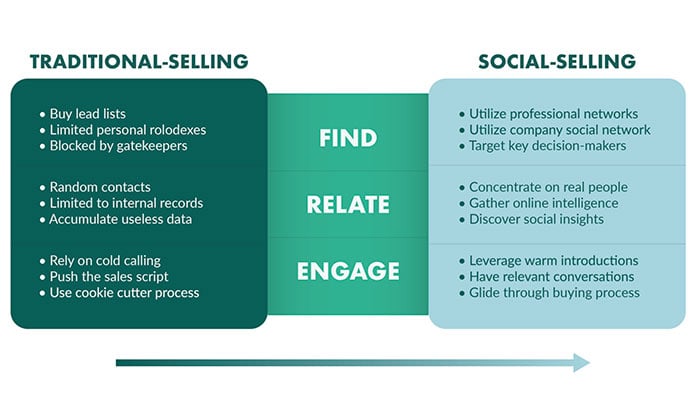
What is social selling? It’s the process of finding and engaging with your potential customers online.
Every time you log into Instagram and reply to a DM or share an article on LinkedIn, you’re providing value and social selling. It’s a much softer approach than cold emailing and focuses more on building long-term, authentic relationships than traditional sales techniques.
How can you leverage social selling?
Position your brand as the go-to industry expert: Use content marketing to answer your prospect’s most pressing questions and lead them down your marketing funnel.
Share case studies and testimonials:Social proof is a driving factor for online purchases. Use your results to prove you’re the best and develop a deeper know, like, and trust factor with your audience.
Focus on engagement: Instead of spending all your time creating content, focus on building relationships. Reply to all your DMs, jump into conversations in LinkedIn groups, follow your ideal customers, and engage with their content.
Talk about your transformation: Businesses and people buy transformations, not features. When talking about your product or service online, focus on the result someone gets from working with you.
2. Support Your Sales Team
If there is one thing that can ruin a potential sale, it’s bad sales rep interactions.
Whether it’s someone dropping the ball and ignoring an email for weeks, or a dumpster fire cold email, it can quickly tank your brand’s rep and Q4 income goals.
How do you prevent a sales mishap?
By training your team.
People buy from people they know, like, and trust. Your sales reps need the tools to figure out how to develop a rapport and close the sale.
For a successful Q4, make sure your sales training includes:
Scripts for people to fall back on and avoid awkward silences or sounding unsure.
Strategies for finding leads and moving each one along the buyer’s journey.
Remember, the better trained your sales team, the quicker you’ll get to your 150% Q4 sales target.
3. Cash in on the Holidays
The holidays are a gold mine for increasing your B2B sales. With the right strategy in place, you can scoop up some of the disposable income people have during these months.
Here are some ideas to get the ball rolling:
Use expiring bonuses: This works well for Black Friday and Cyber Monday. Each day, remove one bonus to create a sense of urgency and FOMO (fear of missing out).
Increase the price: Start with your lowest price for an offer, and slowly increase it each day.
Create an exclusive offer: Put together a new product, service, or package for the holiday season. You can add a sense of urgency by telling your audience it’s only available for the holidays.
Offer free shipping or a discount: Cash in on the psychology of free stuff to lure in more sales. Getting something for nothing is a powerful emotional trigger known as the “zero price effect” and it’s extremely hard to resist.
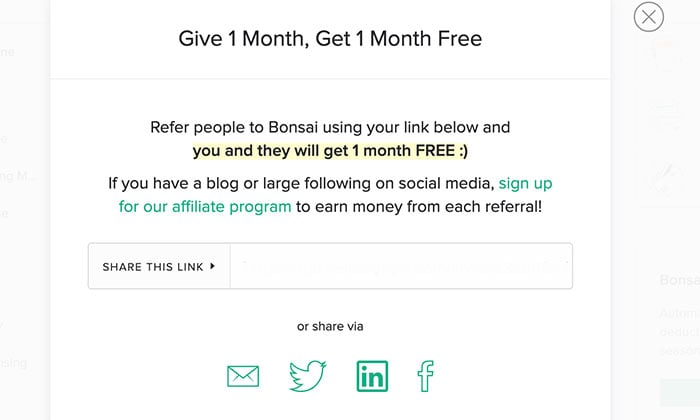
4. Ask Existing Clients for Referrals
Referrals are the backbone of any business.
Why?
It’s the easiest sale you can get.
Unlike a cold pitch where you have to establish trust before someone gives you a yes, referrals are warm leads. The person already trusts your brand and is ready to give you their money because the personal recommendation came from a friend, family member, or colleague.
It’s one of the reasons why influencer marketing is dominating the online space. Brands are paying for the endorsement and trust the content creator has with their audience, which has more sway than a random ad in the newspaper.
If you’re mass spamming everyone and anyone with no real strategy, you’re not going to see any results.
Why?
No one likes to waft through irrelevant pitches. You’ll earn brownie points by taking the time to identify a problem you can solve and presenting a solution in a format that feels tailored, not mass-produced.
With more people online than ever before and 80.76 percent of the global population owning a smartphone, it’s time to dip your feet into this gold mine.
By honing in on the keywords your audience uses to find solutions to the problem you solve, you can increase B2B sales while you sleep.
If that’s not enough to get you opening up a Google AdWords account, this will:
PPC ads yield 50 percent more conversions than organic advertising.
Google ads can increase brand awareness by 80 percent.
The results are equally impressive on social media. The Content Marketing Institute found B2B paid advertising increased to 83 percent, with LinkedIn ads dominating the pack.
Of all paid distribution channels, paid social media ranked second in producing results, with SEM taking first place.
7. Create a List of Potential Clients
The best strategy for increasing B2B sales? Knowing exactly who you want to target.
Before diving into any of the other tips in this post, get clear on who you want to convert into paying customers.
It’s the foundation of your game plan. Without it, you’re only wishing for a result instead of making it happen.
How do you make a list of potential clients? Answer these questions:
How many employees does your dream client have?
How much does the business make in annual revenue?
What is the niche problem you solve?
The more specific you get here, the better chance you’ll increase your B2B sales during a slow Q4.
Once you have those answers, you can use tools like LinkedIn or Angelist to find companies that match your dream client description.
8. Develop a Strong Email Marketing Strategy
Almost every couple of years, Facebook, Instagram or Twitter goes down, and influencers, business owners, and users start spiraling.
It’s a harsh reminder that any of the apps you’ve spent hours on growing a community can vanish with a click of a button.
That’s why it’s crucial you get your followers onto a platform you can control, like email marketing. Not only will you always have access to your list (unless someone unsubscribes), but it’s profitable.
According to OptinMonster, email marketing generates $44 for every $1 spent. That’s a mindblowing 4400 percent ROI, making it one of the best ways to increase B2B sales.
Online shoppers are 1.8x more likely to convert after watching a demo video.
With Instagram trying to compete with TikTok, the platform is working hard to gain market share.
The result? Instagram Reels has high engagement, and the algorithm prioritizes it above photo posts. In fact, Instagram came out and said it’s a video-sharing platform, not a photo-sharing app.
The takeaway: There’s no better time to add videos to your content marketing mix and use it to increase your B2B sales. Start a YouTube channel, develop a Reels strategy, or embed videos on your website.
10. Use Case Studies to Increase B2B Sales
Selling to B2B is a little different from B2C.
For one, there’s usually more than one person involved in the decision process. If you want a resounding yes from everyone involved, you need to show how your product or service delivers value.
One of the most powerful marketing tools you can use to illustrate this is case studies. This piece of content is typically used near the end of the consideration and early decision stage of the buyer’s journey. It can help sway business your way when a prospect is deciding between two possible solutions.
With 81 percent of people trusting friends or family over a business, a case study helps you leverage an outsider’s perspective in your favor.
Even though you’re creating the content, it’s about how one of your customers achieved a specific result and what someone can expect from working with you.
It’s that all-important social proof we spoke about earlier, and it can go a long way in driving more B2B sales in Q4.
Frequently Asked Questions About Increasing B2B Sales
What is a B2B strategy?
A B2B strategy is a marketing strategy employed by a company that sells products or services to other businesses instead of individuals.
What are the four types of B2B marketing?
There are four types of B2B marketing: producers, resellers, governments, and institutions.
What is the B2B selling process?
The B2B selling process is a business’s steps to market and sell its services or products to another business.
What does B2B mean in sales?
B2B stands for business-to-business. It happens when a business transaction takes place between two companies. For example, one company will buy raw materials from another to make their final product.
The B2B selling process is a business’s steps to market and sell its services or products to another business.
”
}
}
, {
“@type”: “Question”,
“name”: “What does B2B mean in sales? “,
“acceptedAnswer”: {
“@type”: “Answer”,
“text”: ”
B2B stands for business-to-business. It happens when a business transaction takes place between two companies. For example, one company will buy raw materials from another to make their final product.
”
}
}
]
}
Increase B2B Sales Conclusion
While the world of B2B sales has changed a lot over the last 10 years, you have a whole host of new tools at your disposal. Instead of resisting social selling or the rise of video content, embrace it, and use it to increase your B2B sales for Q4.
Remember, the more proactive you are with your strategies, the bigger your competitive edge. Keep experimenting with your sales strategies and stick with the ones which give you the results you want.
Which of these strategies are you going to use to increase B2B sales in Q4?
When you get a credit card tied directly to a store, it’s called a retail credit card. Common examples include retail credit cards from Lowe’s and Office Depot. Generally, you can only use these accounts at the specific store that issues the card. Some stores offer credit accounts with net terms rather than retail credit cards.
Retail Credit Cards and Accounts Can Push Business Credit Beyond the Beginning
There are a lot of steps to building a business credit profile that many business owners just don’t know. We do our best to help out in that area, but once you get started, you have to keep going. Building a fundable foundation is important, of course. You cannot have business credit without that.
Then, you have to get initial accounts reporting. That’s where starter vendors come in. Yet, you can’t stop there. That is just the effort it takes to build the snowball and get it to the edge. You have to push it down the hill if it is ever going to grow.
That is where you get to the next step after starter vendors. In the Business Credit Builder we call it Tier 2. This is where second step credit providers live.
Retail Credit Cards and Accounts: AKA Tier 2 Credit Providers
There are various types of credit providers in the Tier 2 category. These are credit providers that will approve you with limited business credit history or a personal guarantee. What really sets them apart is that they will report your on-time payments to the business credit reporting agencies.
Not all business credit providers do that. Many will only report late or missed payments, if they report anything at all. However, if you find those that report positive payment history, your business credit profile continues to grow. Your business credit score continues to grow as well.
This is how your business credit score can really take off.
Finding Tier 2 Retail Credit Providers
It can be a bit tricky to find these types of accounts. Despite the fact that most large retailers offer retail credit cards or net accounts, many do not make it easy to find out whether or not they will report. If you are working on building business credit, reporting on-time payments is vital.
That’s part of the value of the Business Credit Builder.There is a whole database full of Tier 2 vendors that report. We list them for you along with what it takes to get approval and which business credit agencies they report to.
Some will still extend credit, and still report to the business credit reporting agencies, even if you do not meet the requirements or do not have enough business credit history. The catch is, they will require a personal guarantee.
Retail Credit Cards or Net Accounts and a Personal Guarantee
Others will not require a PG, but it will make it much easier to get approved with minimal business credit history. This is why the first steps of the Business Credit Builder are so important. Without a strong business credit profile, you may be able to get approval with a PG. In contrast, if you build a solid foundation and business credit score with starter vendors first, you can get approval without a PG.
That right there is the secret that no one wants to talk about when it comes to retail credit. You do not have to give a personal guarantee to get it. There is another way. You can build a strong business credit profile before you apply.
It’s not that a personal guarantee is bad, per se. Sometimes you may need it to get started. Still, it does add more liability to you personally. So, if you can get away without it, why not?
Examples of Tier 2 Retail Credit
Here are just a few options from the Business Credit Builder.
They also like to see a minimum of 2 accounts reporting. But, they will look at the merit of the overall application, so minimum accounts reporting isn’t necessarily a deal breaker.
They also require a business phone number listed in the 411 directory and at least 3 years in business. The minimum PAYDEX required is 80, and you must also have a good Experian business score. You can request Net 60 terms after the account is established.
If there is not enough business credit history or you have been in business for less than 3 years, a Personal Guarantee(PG) is required.
Quill.com
Quill.com sells supplies any business can use in day-to-day operations, including office and cleaning supplies. For approval, they want to see:
Business address- matching everywhere
D & B number
Business License- if applicable
Business Bank account
At least 3 trade/credit references
A good D&B paydex score of 80 or higher
That the business has been established for at least 6 months
New businesses or businesses with no credit history with D&B may need to pre pay purchases for 3 consecutive months until Net 30 is approved.
Office Depot
To get approval for Net 30 withOffice Depotyou must have:
An EIN
A business address- matching everywhere.
Your business License- if applicable
A business bank account
At least 3 years in business
A good D&B paydex score of 80 or higher and good Experian business credit score
If any above criteria is not met, a Personal Guarantee (PG) is recommended but not required.
Once you’ve got your 5 (or more) starter vendors reporting, you should be eligible for credit from these retailers. That is, assuming you have handled your credit from starter vendors wisely. As you can see, exact requirements for approval vary by lender.
Retail Credit Cards or Net Accounts and Building Business Credit
Many of these credit providers have more than one option for business credit. For example, they may offer net terms as well as a revolving account. If you do not qualify for the revolving account, you may qualify for net terms.
You can use the net account to help you build your business credit profile until you qualify for the revolving account. These examples can help you see what’s out there and what it takes to get approval. They make it crystal clear why building a fundable foundation and getting initial accounts reporting using starter vendors is vital.
Once you do so, you can get retail credit accounts from tier 2 reporting as well. This keeps the snowball rolling and growing allowing you to pick up bigger accounts with better terms. If done properly, the need for a personal guarantee can be kept to a minimum.
For going concerns with some time in business, cash flow financing can be a good way to fund expansion, growth, or everyday needs. But what IS cash flow financing? And where do you get it?
Fundability, Cash Flow, and Your Business
Fundability is the ability of a business to get funding. It covers all the points a lender or credit provider will check when trying to figure out if you’ll pay back a loan or credit extended to you. These include details you may not have thought about or might think aren’t so important. But they are!
The 3 Cs Capital Acquisition Formula
When you think like a lender, you come to understand that all they want is to be sure that you’ll pay them back. Lenders look at one of three things for loan approval: cash flow, collateral, and/or credit. The more of these “Cs” you have, the more funding options are available. Let’s look at how cash flow financing can help your business.
Cash Flow Financing
Cash flow financing is a loan made to a company is backed by a company’s expected cash flows. A company’s cash flow is the amount of cash that flows in and out of a business. This is within a specific period. Cash flow financing or a cash flow loan uses generated cash flow as the way to pay back the loan. It’s one of the smarter financing activities you can do if you’ve got a going concern with predictable income.
Cash Flow Financing: Terms and Qualifying
Much of the time, you must have a few years in business. You may need a certain minimum credit score. You must prove historical cash flow, and present your accounts receivables and accounts payables, so the lender can determine how much to loan to your business.
Account Receivable Financing
You can use outstanding account receivables as your collateral for business financing. Receivables should be with the government or another business. If you also have purchase orders, you can get financing to have those filled. You won’t need to use your cash flow to do so. Get an accounts receivable credit line with rates of less than 1% with no consumer credit requirement.
Account Receivable Financing: Terms and Qualifying
Use your outstanding account receivables for financing. Get as much as 90% of receivables advanced ongoing or more, in less than 24 hours. The rest of the accounts receivable are released once the invoice is paid in full. Factor rates as low as 1.33%.
Terms are for Credit Suite account receivable financing. The only collateral necessary is your account receivables. Loan amounts run from $10,000 to $10 million. Up to 95% of receivables can be advanced within a week. Rates start at prime rate 2%. You must have a FICO score of 500 or better.
Receivables must come from another business or government agency, not an individual. Business must be open for at least one year to qualify. Medical receivables must have $1 million in annual sales or more. For the deal submission, you must provide the application, a breakdown of existing receivables, and a sample invoice.
Purchase Order Financing
Purchase order financing is advanced to a business with a large purchase order or contract, but the business is unable to fulfill it. A lender then loans the funds necessary to complete the order and charges a percentage for the service. Then the company can fulfill its order or contract.
The difference between purchase order and accounts receivable financing is purchase order financing involves a company lending you money to fulfill purchase orders. But accounts receivable financing involves a company buying your outstanding invoices. Still, they are both, at bottom, based on cash flow.
Purchase Order Financing: Terms and Qualifying
Terms are for Credit Suite purchase order financing. For approval, lenders will often review your outstanding purchase orders that need filling. They want to be sure the purchase orders are valid, and the suppliers you are dealing with are credible.
If so, then you can get approval, regardless of personal credit history. Rates tend to range from to 4%. In some instances, you can get 95% of your purchase order financed.
This is a way to raise capital from investors who get a percentage of the enterprise’s ongoing gross revenues, in exchange for money invested. In a revenue-based financing investment, investors get a regular share of business income until a predetermined amount is paid. Often, this predetermined amount is a multiple of the principal investment. It is often between 3 to 5 times the original amount invested.
Business Revenue Lending: Terms and Qualifying
Since repayment of the loan is comes from revenues, the time it takes to repay the loan will fluctuate. The faster revenue grows, the quicker you’ll repay the loan, and vice versa. The percentage of monthly revenues committed to repayment can be as high as 10%. Monthly payments will fluctuate with revenue highs and lows and will continue until you’ve paid back the loan in full.
All terms are for the Credit Suite business revenue lending program. Necessary collateral is consistent revenue verifiable through bank statements. Loan amounts run from $5,000 to $500,000. Terms are for 3 to 36 months. Pay a factor rate of 1.10 to 1.45%. Credit you must have a 500 credit score or higher, with no recent bankruptcies.
Business must earn annual revenue of $120,000 or more per year. You must be in business for a year or more. The business must do over 5 small transactions each month. Financial services industries are prohibited, damaged credit is acceptable. Or business must bring in at least $15,000 monthly revenue with 6 months’ time in business. To get this deal, you must provide the application and 6 months of business bank statements.
Fundbox
Get a line of credit from Fundbox. Fundbox just wants to know about your cash flow when deciding whether to fund your business. Fundbox will connect straight to your online accounting software. That’s all you need to do. You can get a revolving line of credit for up to $100,000. Fundbox will auto debit your weekly payment from your bank account. You don’t need to show a particular personal credit score. And you don’t need to show a certain time in business.
Fundbox: Terms and Qualifying
Pay in equal installments over the course of a 12 or 24 week plan. Available credit replenishes as you pay. There are no penalty to repay early. Your business must be American. You must have a 600 or better personal FICO score, and $100,000 or more in annual revenue. Also, you must have a business checking account. Ideally you must have 6 months in business or more.
You can get a loan from PayPal. But you must already have a PayPal business account. There is no personal guarantee. Loan amounts and eligibility depend on your sales via PayPal. So applying won’t result in a credit check.
PayPal Working Capital Loan: Terms and Qualifying
The maximum loan amount depends on your PayPal account history. To be eligible, you must have a PayPal Premier or Business account for 90 days or more. Also, you must process at least $20,000 in annual PayPal sales if you have a Premier account, or at least $15,000 in annual PayPal sales if you have a Business PayPal account. Pay off any existing PayPal Working Capital loan.
Since automatic repayments get deducted as a percentage of each PayPal sale, the amount you repay each day changes with your sales volume. The more you sell, the more repayment progress you’ll make that day. On days without sales, you’ll make no payments, but you must repay something at least every 90 days.
Depending on the loan terms you choose, you must pay at least 5% or 10% of your total loan amount (loan + the fixed fee) every 90 days. The 5% minimum applies to loans estimated to take 12 months or more for repayment. This has a basis in your business’ past PayPal sales and other factors. The 10% option applies to loans estimated to be repaid within 12 months.
Square
You can get loans through Square. Applying will not affect your personal credit score. Loan eligibility comes from several factors related to your business, including its payment processing volume, account history, and payment frequency.
You can get $300 to $250,000. Borrowers get a customized offer with a basis in their card sales through Square. Then they choose their loan size. You will pay no interest, just an ongoing flat fee
Square: Terms and Qualifying
There are no ongoing interest charges. Instead, you will pay one fixed loan fee to borrow the loan. The fixed fee is the difference between the total owed amount and the initial loan amount. The fixed fee will never change, regardless of how fast or slow the loan is repaid. It is automatically deducted until you pay back your loan in full. If sales are up one day, you pay more; if you have a slow day, you pay less. At least 1/18 of the initial balance must be repaid every 60 days.
They don’t want collateral for business loans of $75,000 or less. For loans amounts over $75,000, they take a security interest in your business assets. Then they will file a UCC statement with the Secretary of State where your business is organized. There is no personal guarantee.
There are several options for business funding that depend on your cash flow. Some are available through Credit Suite. There are also online options, such as through PayPal and Square. Contact us today for help with your options.
Do you consider yourself a Google expert? Think you know all the ins and outs of the search behemoth?
If you answered yes to either of those questions, you might be in for a surprise.
Google contains myriads. The search giant constantly evolves its algorithms and offerings, from secret search functions to in-house SEO guides.
Read on to learn more about Google’s secrets.
1. Google Has Advanced Search Functions: Boolean Operators
We’re all incredibly familiar with the Google search bar, given that 84 percent of us admit to searching Google at least three times a day. However, the search engine also comes equipped with some pretty cool, advanced search functions many don’t know about. These built-tools range from a hashtag search function guides that enable users to optimize for search engine optimization (SEO) and everything in between.
Below, we break down the four most useful secret Google search functions so you can start mastering these secret tricks.
Search for Similar Google Results With Related
Adding “related:” to your search terms lets you include similar or identical topics. This can be beneficial in broadening your search but allow you to keep the results in the same thematic area.
This search feature can aid online business owners or marketers in identifying competitors. By assessing business type, content, and category, Google can show vendors offering similar products and services. This often makes research into competitor search ranking, social strategy, and other marketing functionality easier.
Searching Social Media Profiles and Mentions With Google
With over 49 percent of the global population using social media, it’s safe to say there’s an overwhelming amount of profiles to sort through.
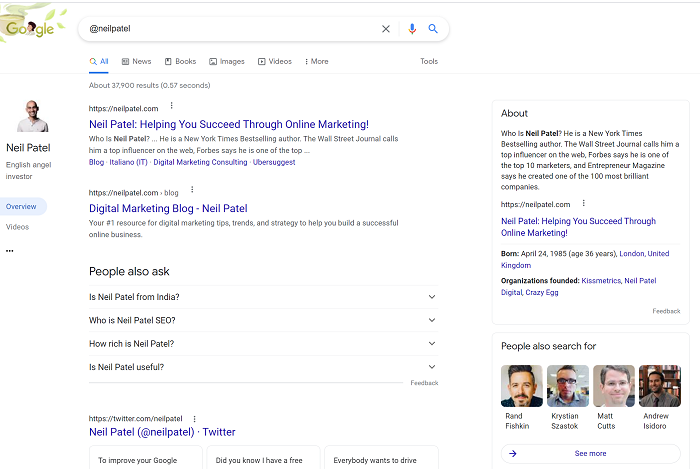
With the social media search Google secret, you can use the @ symbol followed by the handle of an account. Google will compile results for that user, including web pages and tweets.
You can also narrow your search by typing those terms followed by the site you want to search, like Twitter. This could show you the person’s account, mentions of their account, and accounts using similar handles or owned by people with the same actual name.
This can help you isolate mentions of competitors or brands you want to explore further.
Use Google to Search for Hashtags
Much like the above @ function, you can find much more than profiles with Google search functions.
Use the # symbol to aggregate hashtag results, including the social presence associated with the words or phrases.
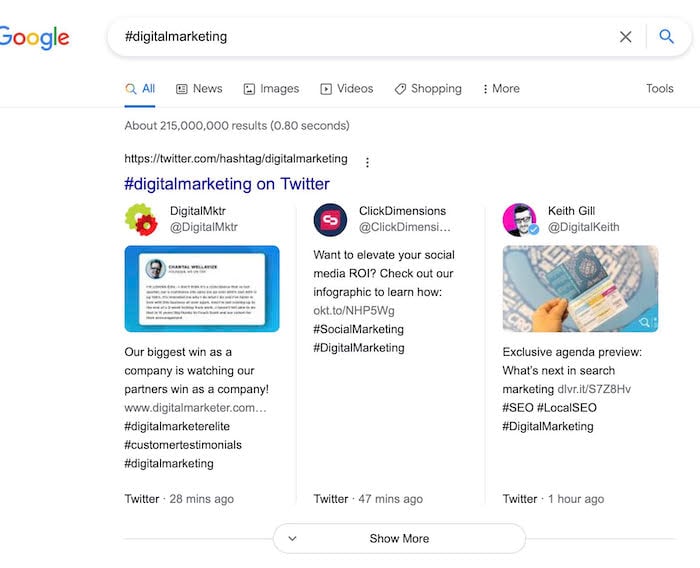
For example, if you search #digitalmarketing and change the search date to the past 24 hours under “Tools,” you’ll see the most recent posts across social media that discuss digital marketing.
If you want a tight lens, change the result type to verbatim using quotation marks—”#digitalmarketing”—to exclusively see the use of the hashtag.
This search functionality lets marketers see which keywords align with your brand’s message while simultaneously investigating how competitors use social media.
Google Lets You Access a Site’s Cache
From identifying how frequently your site is crawled to relaying information about a page that’s currently down, you can learn a lot from caches.
To access the saved copy of a website, simply use the cache: search command before a site’s URL.
You can view the most recent version of a site within the cache copy, so don’t expect to find a years-old draft.
Within the cached copy, you can view the full version, text-only version, or view source. You will also see the timestamp and snapshot taken by Google.
2. Google Makes Thousands of Updates Each Year
While in its infancy, Google didn’t make many updates to its algorithms annually. Now, the algorithm is updated countless times a year.
Why should you care about this (fairly open) Google secret?
Updates mean changes to how pages display in the search engine result pages (SERPs) and can impact your search visibility.
While these updates have historically ranged from removing spam to ad placement on the SERPs, there’s a significant update on the horizon impacting how marketers gather information about their intended audience.
Google plans to remove all third-party cookies from its engine. Used as a tool for tracking individual movement across the web, cookies have not only long been a marketer’s best friend but also a security threat.
While cookie removal is a massive update, tons of additional updates can impact your digital strategy in other ways.
To stay ahead of these updates, take steps to ensure that you build agile, editable sites and pages that can roll with the changes, setting you up for digital success.
3. Google Knows When Users Exit a Page [Bounce Rate]
Have you struggled to boost email sign up, increase site search traffic, or get more leads?
If you answered yes, the root cause of your problem may be your bounce rate.
Your bounce rate refers to the number of individuals who visit your landing page and leave without conducting any other interaction.
Bounce rates are important metrics because they allow you to understand audience on-page behavior.
And Google has a clear record of this behavior through Google analytics.
If you’re experiencing high bounce rates and struggling to achieve your marketing goals, don’t fret. There are several steps you can undertake to reduce your bounce rate:
Improve Content Readability
Does your content look like one big chunk?
If so, you need to break it up.
Ideally, your content should be quick and consumable. Here are a few tips for making your pages more readable:
Use images to break up the labor of reading.
Use quotes to underscore reliability and break up the text.
Use subheading.
Bold keywords.
Ask questions to engage readers.
End your landing page or content with a subheading titled conclusion.
Write Strong Meta Descriptions
Meta descriptions are HTML attributes that explain what a searcher can anticipate finding on a given page. Search engines use these descriptions to determine what your page is about.
Ideally, meta descriptions should be 155 characters long. If you exceed this length, the searcher will see an ellipsis (…) at the end of the description. This can result in a higher bounce rate since your site may not have been adequately described.
To optimize your meta descriptions, try to reach that ideal character length of 155 and include relevant keywords.
Use Interactive Content
Are you looking to engage site visitors? There’s no better strategy than using interactive content.
Interactive content entices users to take action rather than simply bouncing from your site. This way, you can lead visitors to explore your site to learn more about your organization.
Examples of interactive content include infographics, e-books, lookbooks, quizzes, and checklists, all of which create and maintain engagement.
4. Google Releases Their Own SEO Guides
While some things at Google may seem hidden, Google releases its own SEO guides.
These guides cover nearly everything you need to know about succeeding with SEO on Google.
5. Google Holds Secret Conferences
For the last decade, Google has hosted an event dubbed Google Camp during the summer.
Don’t let the cutesy name fool you—this isn’t a bootcamp for coders or developers.
It’s a star-studded meeting of the minds that occurs during the summer months.
Annually themed, the camp has covered humanitarian topics like global warming and education.
You can find former presidents and current starlets, fashion designers, and tech leaders attending these events.
And while admittance to this event is highly selective (not to mention expensive), attendees allegedly enjoy in-depth conversation and relaxation.
6. Google Is Loaded With Fun Easter Eggs
While Google may be the world’s most-used search engine, it is also arguably the world’s most fun search engine. Chock full of Easter eggs that range from solitaire to the functionality to create a heart-shaped graph, you can find a way to entertain yourself when taking a break from customer research. We break down our current three favorite Easter eggs below.
Animal Sounds
Whether you’re teaching your kids the nuances among varying animal sounds or simply want to have some nature-themed time, this secret feature is endlessly delightful.
To access Google’s animal sounds feature, enter the search phrase “animal sounds” into the search bar and let the fun begin.
Tic Tac Toe
If you’re in search of another distracting Google Easter egg and are craving nostalgia, you can try your hand at a classic game of X’s and O’s.
Simply enter the term tic tac toe into the search bar, and you’ll be on your way to a competitive game with Google AI.
Coin Flip
Found yourself sitting with a yes or no question that the flip of a coin can only decide?
If you don’t have a quarter on hand, don’t fret. Google has one for you. Simply enter the phrase flip a coin into the search bar, and you’ll have your answer.
7. Google Provides Directions Directly From the Search Bar
While you probably use Google Maps in your day-to-day life, you can also score directions to any location directly from the search bar. For example, simply type “directions to [destination] from [location]” into the search bar, and Google will provide step-by-step directions. You can even choose whether you’d prefer directions by car, public transit, or foot.
8. Google Enables Search Within Websites
If a website doesn’t include a search function, don’t fret. With Google, you can search a website’s content for a specific query. Simply add site:[website] to the beginning of your search, and you’ll be directed to results from that particular site rather than the entirety of the web.
9. Google Enables Search for Movies, Books, and News
While most Google users know how to conduct image and video searches, did you know you can further vary your search results by medium?
If you’re searching for a book, click the menu item entitled “More.” From here, you can select books, news, or movies and remove any other search clutter that gets in the way of your aim.
10. Define Your Number of Search Results
While we all aspire to land on Google’s first page, sometimes the information you need doesn’t land there. To view more search results, select “Settings” below the right-hand of your search bar on the results page. From here, you can adjust the number of search results that appear.
Google Secrets Frequently Asked Questions
Does Google Have Secret search functions?
Yes! While you may be using standard search queries in the search bar, Google possesses deeper functionality than meets the eye.
Does Google update its search algorithm, and should I care?
Yes, and yes. Google makes thousands of updates to its search algorithm annually. These updates can significantly impact how your site manifests on the SERPs.
How can I keep up with Google’s changing algorithm?
While the answer here is two-fold, we believe that the best offense is a good defense. While many of Google’s more extensive changes are publicized before they go into effect, some are not. By building an adaptive and agile site, you can prepare for whatever updates come your way.
Does Google Really Hold Secret Conferences?
Yes, they do. Every year, guests gather in the summer at a themed retreat focused on a humanitarian issue.
Yes! While you may be using standard search queries in the search bar, Google possesses deeper functionality than meets the eye.
”
}
}
, {
“@type”: “Question”,
“name”: “Does Google update its search algorithm, and should I care?”,
“acceptedAnswer”: {
“@type”: “Answer”,
“text”: ”
Yes, and yes. Google makes thousands of updates to its search algorithm annually. These updates can significantly impact how your site manifests on the SERPs.
”
}
}
, {
“@type”: “Question”,
“name”: “How can I keep up with Google’s changing algorithm?”,
“acceptedAnswer”: {
“@type”: “Answer”,
“text”: ”
While the answer here is two-fold, we believe that the best offense is a good defense. While many of Google’s more extensive changes are publicized before they go into effect, some are not. By building an adaptive and agile site, you can prepare for whatever updates come your way.
”
}
}
, {
“@type”: “Question”,
“name”: “Does Google Really Hold Secret Conferences?”,
“acceptedAnswer”: {
“@type”: “Answer”,
“text”: ”
Yes, they do. Every year, guests gather in the summer at a themed retreat focused on a humanitarian issue.
”
}
}
]
}
Google Secrets: Conclusion
Regardless of whether you’re a digital marketer or a business owner, it never hurts to learn more about the search engine that drives the majority of traffic to your website.
If we’re honest, we all want more legitimate site visitors, better optimized SEO, and high-converting web pages, right?
As you learn more about Google secrets, you can use them to your advantage.
That SEO guide? We would suggest getting very familiar with its contents.
And while you may not find yourself in Southern Italy at Google Camp, you will have a much better chance at finding your site ranking on the first page of Google’s SERPs.
Disclosure: This content is reader-supported, which means if you click on some of our links that we may earn a commission.
I’ve had days where I made ten thousand dollars on my blog. It’s not even out of the ordinary.
Now it took a ton of hard work and dedication to reach millions of readers. You need serious traffic to make that kind of money. It’s not something you should expect to achieve overnight.
That said, all that stands between you and this kind of success is your time and effort.
Plus, there are way more ways to make money blogging today than when I first started. Making an extra few hundred dollars a month is not that far off, if you are willing to put in the work.
In this guide, I’ll show you the exact way to make money from blogging by avoiding the mistakes I’ve made in my 10-year journey.
Sound good? Let’s begin.
Your 2-Minute Cheat Sheet
The very first thing you need to start making money is to come up with an idea and the name for your blog. Think through the topics you’d want to write about often.
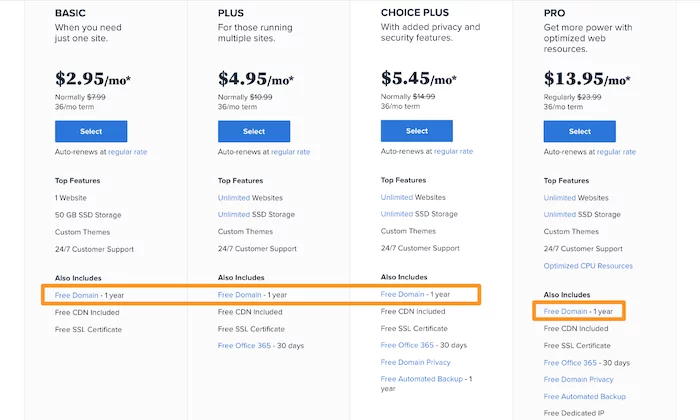
After that, sign up for the Basic plan with Bluehost. Even if you don’t have much of a budget, this is practically a steal at just $2.95 per month.
Set up your account, taking care to skip all the add-ons except for domain privacy and protection. A few extra dollars for better privacy and security is an investment.
And with this, you’ll have your own blog domain. Hurrah!
The next steps will have you installing WordPress (it’s a one-click install with Bluehost) and then finally writing and publishing your first blog post.
Once you’ve got a few posts up and have started to attract some traffic, you can work on monetizing your blog to make your first dollars.
For this, you’ll have to sign up for a Google AdSense and Amazon Associates account to make money through ads and affiliate marketing, respectively. You can also sell your own products and services after successfully driving high traffic to your site.
That was the basics. Let’s get into the details now.
Step 1: Figure Out Your Blog’s Niche
The first on the agenda is to decide what your blog is going to be about. Whether you want to talk about marketing, CBD, veganism, or just random life stories, figure it out.
Remember, your idea doesn’t have to be revolutionary, but you do need a unique voice.
Here are two tips for deciding on a blog niche:
Choose Something That You Enjoy
I know that this sounds like a cliche, but it makes no sense to blog about it if you don’t love the topic.
Never start blogging about something that you don’t love—it will show in your writing and your readers will know. Moreover, you won’t be able to consistently produce top-notch content to build your audience and later monetize from it.
Make a list of things that get you naturally curious and that you enjoy learning about. Or think about what your friends and family come to you when seeking advice.
Find Out Whether a Prospective Niche Has a Readership
The only way you can earn money through your blog is if you have enough site visitors.
Let’s assume you’ve already figured out your blog niche and want to write about arts and crafts.
You make a smart decision to niche down further and develop a blog exclusively dedicated to either paper art or scrapbooking. While you enjoy writing about both topics, you prefer to focus on one primarily.
But how do you choose between the two options?
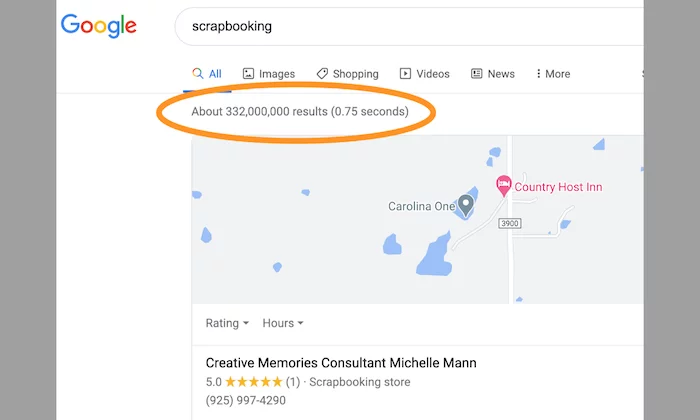
Answer: Do a quick Google search.
As you can see, there are far more results related to paper art as opposed to scrapbooking. Therefore, it makes more sense to write about paper art, which is what audiences are searching for.
I would also like to add that it’s better to avoid broad or generic topics. Don’t be afraid to get specific as long as you have takers for it.
For instance, if you want to create a food blog, don’t use words like “food.” Instead, use “barbecue” or “vegan.”
Get my point?
Step 2: Name Your Blog
Once an idea is in place, you need to work on naming your blog.
Does the name Stefani Joanne Angelina Germanotta ring a bell? Thought so.
But I bet Lady Gaga does.
Stefani Joanne Angelina Germanotta is Lady Gaga’s real name. She decided to go with a catchier and easier-to-remember alternative that aligns better with her music.
That’s the power of the right name.
Choosing a blog name is equal parts exciting and daunting. After all, this will be your brand name and dictate how people will remember you.
Don’t overthink it, and don’t name your blog something random or offensive.
Keep in mind the following questions when deciding on a name:
Does it reflect what your blog is going to be about?
Would your target audience like it?
Is the name easy to say and spell?
Is it short and concise?
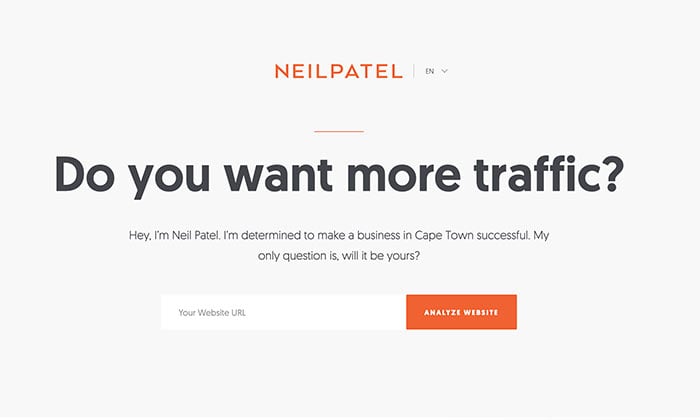
I chose my own name as my domain (NeilPatel.com) simply because Neil Patel is who I am, and it’s also my brand. You could do what I did or come up with something entirely different.
Whatever name you come up with, make sure it’s available as website domains.
You can use Bluehost’s domain name checker for this purpose. Type in each potential name in the search bar, and click Check Availability to know.
I’d recommend opting for a .com whenever possible. But they can get expensive, I know.
If all the good .coms are taken, don’t stress. think about your main URL keywords.
If you were aiming for talkCBDtome.com but somebody else got there first, try talkCBDto.me for something cheaper and every bit as easy to remember.
Don’t buy an available domain at this point. I have something up my sleeve to help you get it for free.
You need to sign up for a web hosting service to get your blog live, along with a registered domain name that will serve as your blog’s address.
I recommend Bluehost as its hands down one of the best web hosting companies—not to mention affordable—that assures excellent service and a free domain.
And did I mention that as a NeilPatel.com reader, you get an additional discount?
You’re welcome.
Head over to Bluehost.com, and click on the green Get Started Now button.
Next, sign up for the Basic plan. You can always upgrade later, but since you’re just starting a blog, it’s better to stick to the Basic plan.
Register the domain name you came up with without having to pay anything extra. Just make sure the drop-down is set to .com before you click Next.
Following this, you need to sign in using your Google account. You can also manually enter your personal credentials.
Scroll down to choose your registration term, which can either be a 36-month, a 24-month, or a 12-month agreement. To get the best deal ($2.95 per month), you’ll have to sign up for a three-year contract.
It still isn’t over yet.
You’ll find package options like Domain Privacy + Protection, Codeguard Basic, Bluehost SEO Tools, Microsoft 365 Mailbox Trial, and SiteLock Security Essentials.
In my opinion, you only need Domain Privacy + Protection to protect your contact information against scam callers and unsolicited emails. Ignore the others.
Finally, enter your payment information, read the terms and conditions, and hit submit.
This is the point where you’ll have your blog!
Complete all the remaining instructions to set up your account, and then move onto the next step.
Step 4: Install WordPress CMS
You have your web host, next you need blogging software.
I trust WordPress to run all my blogs as it is user-friendly, feature-rich, and free. Plus, you can install thousands of free plugins to make your blog more functional and customize it however you want.
After signing up for Bluehost, you will have a free domain and hosting account. Log in by filling in your credentials and then click on Install WordPress.
Next, select Do it yourself (FREE) and hit Install, followed by Check Domain. Lastly, acknowledge WordPress’s terms of service and finalize your install.
Ta-Da! You now have a fully functional WordPress blog ready to roll.
Step 5: Design Your WordPress Blog
To design a blog, you need to select an attractive and affordable WordPress theme.
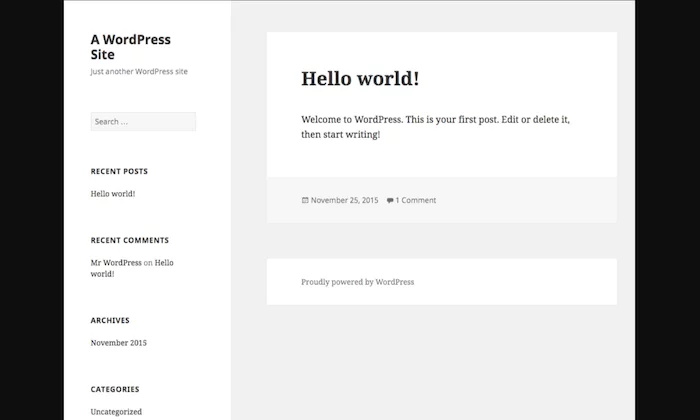
Why do you need this? Well, after signing up for WordPress, your blog will look something like this:
Not exactly what you’d call sleek and welcoming, right? The way your website looks can help drive more website traffic, which, in turn, will enable you to make more money.
Luckily, WordPress has thousands and thousands of themes for you to choose from. I’ve even done a roundup of some of the best ones. Here’s how you can select a WordPress theme:
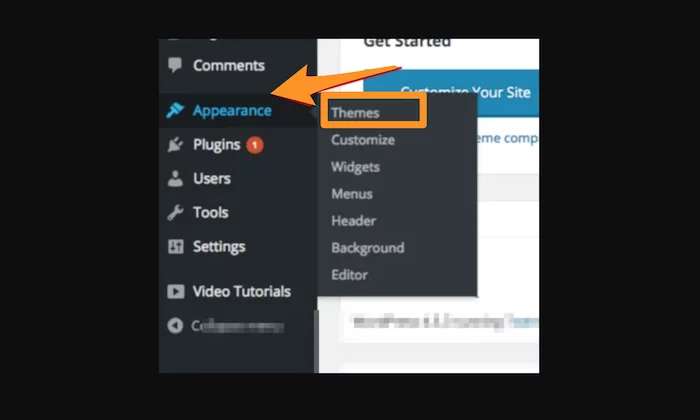
Log into your WordPress account.
Click on Appearance in the sidebar menu on your dashboard.
From the drop-down options, select Themes.
Go to Add New, located at the very top of the screen, to gain access to thousands of fancy WordPress themes. You can also click on Feature Filter to filter your search to see options more suited to your tastes.
You should choose a theme that fits your personal style, but at the same time, it should also be in sync with your blog niche.
Preview the theme to see what it will look like.
If you like the sneak peek of a specific theme, click on Install and then Activate.
With a nice new theme, your website will get a much-needed upgrade that makes it look appealing to visitors.
Step 6: Come Up With Interesting Blog Topics
If you want to be successful blogging, you need to keep doing what you can to attract more website traffic or encourage more email signups. The best way to do that is through what you’re already doing on your blog posts: offering your readers interesting content.
But what if you’ve exhausted your best ideas already on previous blog posts?
My tip is to make a list of questions you get often.
Trust me, within just 30 minutes, you’ll be able to come up with a bunch of new potential blog topics. Your priority should be to look at things from your reader’s viewpoint.
You can also focus on higher-level questions. The five below are ones I suggest you ask yourself to get in your readers’ minds.
Suppose you want to start a parenting blog for stay-at-home moms. Let’s go through those five questions with that example in mind:
Q1) What could be an intriguing or exciting talking point for your readers?
For stay-at-home moms, topics related to sleep training, family activities, and budget-friendly meal ideas could be a great place to start.
Q2) What are your reader’s pain points and challenges?
Common household challenges for stay-at-home moms could be meal planning, understanding developmental milestones, and so on.
Q3) What are your readers’ character traits?
Moms are typically patient and caring and appreciate a sense of humor about the hard work of raising children.
Q4) What niche topics would appeal the most to your readers?
A child’s mental, physical, and emotional development could be effective talking points for stay-at-home moms.
Q5) What topics would your readers hate about the niche?
Stay-at-home moms don’t like to be looked down on by others. So, you could write blogs about how society views them and their impact.
Similarly, you can use the above questions to come up with ideas according to your niche. While you’re at it, don’t forget to work out a catchy headline that will make the reader instantly click on your blog.
Step 7: Optimize Your Blogs for SEO
Search engine optimization or SEO is a crucial step to earn money via blogging. Here, you will optimize your website to rank higher in search engines for specific keywords and phrases.
If you’ve been following me for a long time, you may already know how SEO is my trump card.
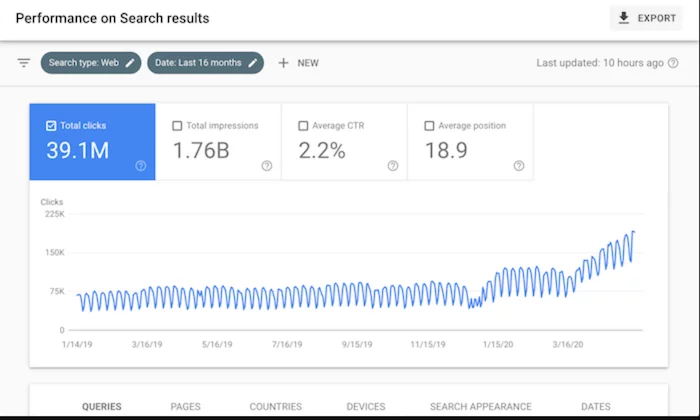
By incorporating particular keywords and phrases, I’ve successfully driven more than 30 million visitors to my website. Shocked?
That’s the power of SEO.
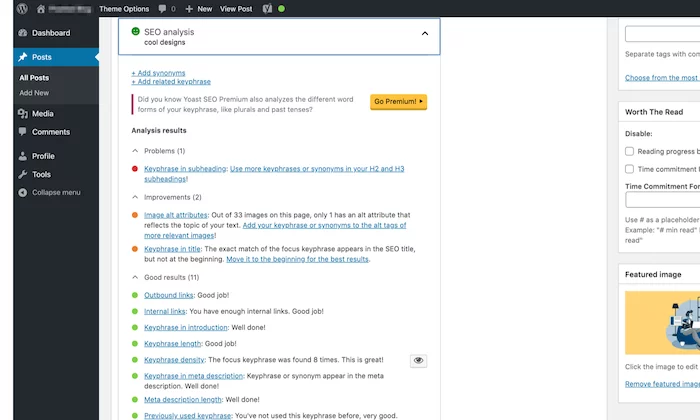
On WordPress, you can optimize your content and blog by downloading a plugin called Yoast SEO.
Go to the Plugins menu, and click on Add New. Search for Yoast SEO in the search bar, and then install the plugin.
Don’t forget to activate it to complete the installation process.
You’ll find that this plugin will give you all kinds of improvement tips and suggestions based on the keyword you select to help you optimize your content. I’d recommend incorporating as many suggestions as you can to improve SEO and content readability.
Step 8: Sign up for Google AdSense
Setting up ads is the best way to monetize your blog. But you need to be smart about it.
The biggest mistake people make is to bombard their sites with blinking ads. Avoid this at all costs.
Instead, focus on using targeted ads that appeal to your customers without annoying them.
To start earning money through ads, you need a Google AdSense account. Head over to the AdSense page, and click on Sign Up Now. If you don’t have an existing Google account, you have to set up a new one. If you already have a Google account, simply sign in.
Fill out all the relevant information before submitting your application. The AdSense team reviews every application, and if everything goes well, you’ll be in!
Next, follow the below steps to set up your account:
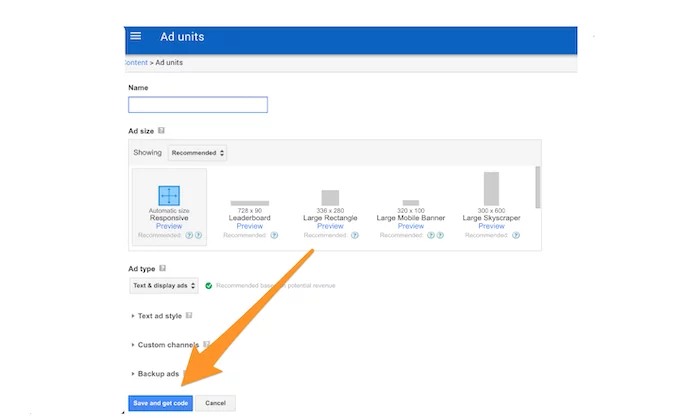
Go to your AdSense dashboard and click on My Ads > New ad unit.
Select the size of your ad and the type of ad. Once you’re done, select Save and get code.
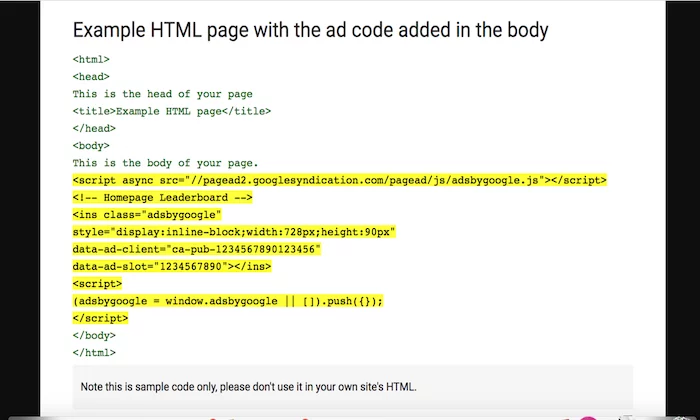
You’ll get a bit of code that you’ll then have to copy and paste between your page’s <body> tags. Here’s how it’ll look.
Once you’ve pasted the code, your ad will be live. Your AdSense dashboard will have all information about your earnings, so check it regularly.
While you can use ads on as many as you want, I would recommend starting with just one–maybe two max–to get an idea of how your audience responds to them.
If you see a higher bounce rate on your dashboard, you should consider repositioning your current ads for better results.
Step 9: Create an Amazon Associates Account
You might have already heard of affiliate marketing. If your goal is to earn passive income, leveraging the power of affiliates is your best bet.
You can start by signing up for Amazon Associates, which allows you to start earning right away through referral links, display ads, or Amazon-based shopping carts.
If your visitors decide to use your referral link or click on the display ads, you’ll get a small commission.
To sign up for Amazon Associates, all you need to do is visit the website and click on Join Now for Free.
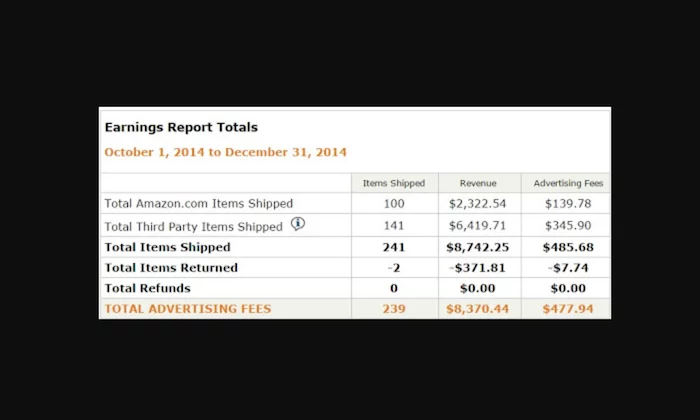
This can be pretty effective. Just check out these earnings of Brendan Mace for definitive proof.
Amazon Associates isn’t the only affiliate program.
You’ll be happy to know that there are plenty of companies with their own affiliate programs, some of which pay higher commissions than Amazon. Just make sure to research before signing up to be an affiliate for a brand.
That said, I’d also like to emphasize the importance of advertising only those products or services that you’ve used yourself or genuinely believe can help your audience.
Step 10: Offer a Product or Service for Sale (Optional)
Many people think that advertisements are the only source of income for bloggers. This might be true for a few, but you’ll also find many bloggers make quite a bit of money by selling a product or service.
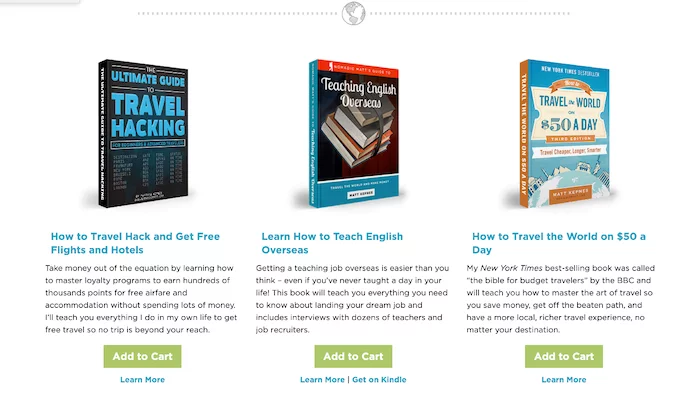
Of course, this will only work when you already have a loyal readership with steady website traffic like Nomadic Matt. Once you’re at this stage, you shouldn’t be afraid to take the leap.
Here are a few things that you can consider selling:
Training courses
Books
Video courses/webinars
Coaching services
Consulting services
Next, you have to figure out how you want to sell your product. Services like Shopify or WooCommerce plugins on WordPress, Amazon, or Etsy are great options for digital products. If you’re selling a physical product (like phone cases or clothes), you’ll have to set up a more comprehensive ecommerce store.
Finally, let your audience know about your product or service by sending them emails. You can also consider developing lead magnets like pre-recorded webinars, PDFs, and whitepapers to build your email list.
How to Make Money Blogging Frequently Asked Questions
Can you make money blogging?
Yes, there are a variety of ways to make money blogging; such as running ads, doing paid partnership posts, including affiliate links, etc.
What’s the first step to creating a successful blog?
The first step in creating a successful blog is picking a niche topic for your blog. Do market research and see what other blogs are already out there; you don’t want your blog to cover an area that is already dense with similar blogs. Also, try to pick a topic that has natural ties to money-making blog techniques, like a partnership or sponsored posts, or affiliate links.
How much do successful bloggers make?
As of 2020, successful bloggers can make up to 7 figures per year. But that’s only the very top bloggers in successful and popular industries, like marketing or parenting.
How long can I expect it to take for my blog to start making money?
Your blog may be able to earn money in as little as six months from when you start it.
Yes, there are a variety of ways to make money blogging; such as running ads, doing paid partnership posts, including affiliate links, etc.
”
}
}
, {
“@type”: “Question”,
“name”: “What’s the first step to creating a successful blog?”,
“acceptedAnswer”: {
“@type”: “Answer”,
“text”: ”
The first step in creating a successful blog is picking a niche topic for your blog. Do market research and see what other blogs are already out there; you don’t want your blog to cover an area that is already dense with similar blogs. Also, try to pick a topic that has natural ties to money-making blog techniques, like a partnership or sponsored posts, or affiliate links.
”
}
}
, {
“@type”: “Question”,
“name”: “How much do successful bloggers make?”,
“acceptedAnswer”: {
“@type”: “Answer”,
“text”: ”
As of 2020, successful bloggers can make up to 7 figures per year. But that’s only the very top bloggers in successful and popular industries, like marketing or parenting.
”
}
}
, {
“@type”: “Question”,
“name”: “How long can I expect it to take for my blog to start making money?”,
“acceptedAnswer”: {
“@type”: “Answer”,
“text”: ”
Your blog may be able to earn money in as little as six months from when you start it.
”
}
}
]
}
How to Make Money Blogging Conclusion
There’s a difference between simply having a blog and monetizing a blog. To make this transition successful, you’ll need to adopt a more proactive and focused approach.
You’ve got this!
Just remain focused and work consistently to keep improving your blog and build trust between you and your audience. And follow my steps above to get things started on the right track.
Remember to stick with what works, and you’ll have a successful formula.
Have you tried blogging yet? Let me know about your experience.
GDPR Cookie Consent Agreement
This website uses cookies to improve your experience. We'll assume you're ok with this, but you can opt-out if you wish.AcceptRejectRead More
Privacy & Cookies Policy
Privacy Overview
This website uses cookies to improve your experience while you navigate through the website. Out of these, the cookies that are categorized as necessary are stored on your browser as they are essential for the working of basic functionalities of the website. We also use third-party cookies that help us analyze and understand how you use this website. These cookies will be stored in your browser only with your consent. You also have the option to opt-out of these cookies. But opting out of some of these cookies may affect your browsing experience.
Necessary cookies are absolutely essential for the website to function properly. This category only includes cookies that ensures basic functionalities and security features of the website. These cookies do not store any personal information.
Any cookies that may not be particularly necessary for the website to function and is used specifically to collect user personal data via analytics, ads, other embedded contents are termed as non-necessary cookies. It is mandatory to procure user consent prior to running these cookies on your website.