
Can You Get Kabbage Business Funding in a Recession?

Is  There Any Kabbage Business Funding in a Recession?

Kabbage is one of several lending companies online. It provides small business funding in the form of loans and lines of credit. We look at the specifics and drill down into the details about the online lending option.

Kabbage Business Funding in a Recession: Background

Kabbage is located online here: https://www.kabbage.com/. Their physical address is:

925B Peachtree Street NE

Suite 1688

Atlanta, GA 30309.

You can call them here: (888) 986-8263. You can email them at: support@kabbage.com. Their contact page is here: https://www.kabbage.com/support/contact/. They have been in business since 2009, which is longer than most of the players in this space.

Kabbage is one of several lending companies online. It provides small business funding in the form of a line of credit.

Kabbage is a venture funded company. They are backed by investors which include SoftBank Capital, Thomvest Ventures, Reverence Capital Partners, Mohr Davidow Ventures, the UPS Strategic Enterprise Fund, ING, BlueRun Ventures, Santander InnoVentures, Scotiabank, and TCW/Craton.

The company offers perks for its customers. These include specials from Dun & Bradstreet, UPS, Vonage, and Adobe Creative Cloud. See: https://www.kabbage.com/customer-perks/.

Loans and Lines of Credit

First, they offer lines of credit.  This means it is revolving credit you can use as needed.  For most, amounts of up to $250,000 are available. You can qualify in as little as 10 minutes. Furthermore, terms are 6, 12, or 18 months. You have to be in business for more than one year, and your business revenue has to be $50,000 annually or $4200 per month over the last 3 months.

Kabbage Review: Credit Reporting and Score Requirements

In the course of this Kabbage review, I could not find anything concrete about a credit score requirement or credit reporting.  I did find other reviewers that had contradicting information. For example, one claimed there was no minimum interest rate requirement.  In contrast, another claimed that the minimum interest rate for application approval is 500. Another put the minimum at 560. Whatever the case, it appears that their minimum required credit score is much lower than others in the field. In addition, one reviewer stated that they do not report on-time payments to the credit agencies, but they may report late or missed payments.

The only thing concrete I could find from Kabbage themselves is that they do a one-time hard credit pull.  A hard credit check will affect your credit score. Also I found this information in the FAQs on the Kabbage website. It wasn’t just out there on a top page.

Kabbage Review: Approval and Receipt of Funds

Kabbage links to your bank or merchant accounts to understand your cash flow and decide what amount you can afford to borrow. Their lines of credit range from $1,000 to $250,000.

For lines of credit up to $200,000, if they are able to automatically get business information and verify your bank account, they can approve a loan in minutes.  Amounts over $200,000 must have a manual review. Sometimes, mistakes happen during the sign-up process. Also, they may send small deposits to help confirm your banking information for security purposes. In these cases, it may take longer to get access to funds.

Once everything is settled, they send funds to the account of your choice. If you choose to have your funds deposited to a PayPal account, it takes just a few minutes. However, loans that go to a business checking account can take up to three days to be deposited.  It just depends on your bank.

They retain access to your account.  This means they can review your revenue faster than other lenders.  Still, it also means they have access to your account for the duration and beyond unless you take action.

If you make a draw using the dashboard or app, you have to take a minimum of $500.  In contrast, if you use your Kabbage card there is no minimum draw.

Kabbage Business Funding in a Recession: Advantages

Advantages include fairly low fees. Kabbage perks are a nice touch not found with other online lenders.

Kabbage Business Funding in a Recession: Disadvantages

Disadvantages include how hard it is to find the actual, correct requirements to qualify for their loans.

Demolish your funding problems with our rock-solid guide about 27 killer ways to get cash for your business. You might turn out to not need Kabbage business funding in a recession.

A Viable Alternative to Kabbage Business Funding in a Recession – Building Business Credit

This is credit in a small business’s name. It doesn’t link to an entrepreneur’s consumer credit, not even if the owner is a sole proprietor and the only employee of the small business.

Thus, an entrepreneur’s business and consumer credit scores can be very different.

The Benefits

Due to the fact that small business credit is separate from individual, it helps to secure a small business owner’s personal assets, in the event of litigation or business bankruptcy.

Also, with two separate credit scores, a business owner can get two different cards from the same vendor. This effectively doubles buying power.

Another benefit is that even start-ups can do this. Going to a bank for a business loan can be a recipe for disappointment. But building small business credit, when done correctly, is a plan for success.

Consumer credit scores depend upon payments but also additional factors like credit usage percentages.

But for small business credit, the scores actually merely hinge on if a company pays its bills timely.

The Process

Establishing business credit is a process, and it does not occur without effort. A business must proactively work to establish business credit.

Nonetheless, it can be done readily and quickly, and it is much quicker than establishing consumer credit scores.

Vendors are a big aspect of this process.

Doing the steps out of sequence will cause repetitive denials. No one can start at the top with company credit. For example, you can’t start with retail or cash credit from your bank. If you do, you’ll get a denial 100% of the time.

Business Fundability

A small business must be fundable to loan providers and merchants.

That’s why, a company will need a professional-looking website and email address. And it needs to have site hosting bought from a supplier such as GoDaddy.

In addition, business phone and fax numbers should have a listing on ListYourself.net.

At the same time, the company phone number should be toll-free (800 exchange or comparable).

A business will also need a bank account devoted purely to it, and it must have every one of the licenses essential for running.

Licenses

These licenses all must be in the accurate, appropriate name of the company. And they must have the same company address and telephone numbers.

So bear in mind, that this means not just state licenses, but potentially also city licenses.

Demolish your funding problems with our rock-solid guide about 27 killer ways to get cash for your business. You might turn out to not need Kabbage business funding in a recession.

Working with the IRS

Visit the Internal Revenue Service web site and obtain an EIN for the company. They’re totally free. Pick a business entity like corporation, LLC, etc.

A business can begin as a sole proprietor. But they will more than likely want to change to a variety of corporation or an LLC.

This is in order to limit risk. And it will make the most of tax benefits.

A business entity will matter when it involves taxes and liability in case of a lawsuit. A sole proprietorship means the entrepreneur is it when it comes to liability and taxes. No one else is responsible.

Sole Proprietors Take Note

If you operate a company as a sole proprietor, then at least be sure to file for a DBA. This is ‘doing business as’ status.

If you do not, then your personal name is the same as the small business name. Hence, you can wind up being directly accountable for all small business financial obligations.

Additionally, per the IRS, with this structure there is a 1 in 7 possibility of an IRS audit. There is a 1 in 50 possibility for corporations! Steer clear of confusion and substantially reduce the odds of an IRS audit simultaneously.

Starting the Business Credit Reporting Process

Start at the D&B web site and obtain a free D-U-N-S number. A D-U-N-S number is how D&B gets a small business into their system, to produce a PAYDEX score. If there is no D-U-N-S number, then there is no record and no PAYDEX score.

Once in D&B’s system, search Equifax and Experian’s web sites for the small business. You can do this at www.creditsuite.com/reports. If there is a record with them, check it for correctness and completeness. If there are no records with them, go to the next step in the process.

In this way, Experian and Equifax will have activity to report on.

Vendor Credit

First you must establish trade lines that report. This is also referred to as vendor credit. Then you’ll have an established credit profile, and you’ll get a business credit score.

And with an established business credit profile and score you can begin to get retail and cash credit.

These kinds of accounts tend to be for the things bought all the time, like marketing materials, shipping boxes, outdoor work wear, ink and toner, and office furniture.

But first of all, what is trade credit? These trade lines are credit issuers who will give you initial credit when you have none now. Terms are often Net 30, rather than revolving.

Hence, if you get an approval for $1,000 in vendor credit and use all of it, you will need to pay that money back in a set term, such as within 30 days on a Net 30 account.

Demolish your funding problems with our rock-solid guide about 27 killer ways to get cash for your business. You might turn out to not need Kabbage business funding in a recession.

Details

Net 30 accounts have to be paid in full within 30 days. 60 accounts must be paid in full within 60 days. In comparison with revolving accounts, you have a set time when you must pay back what you borrowed or the credit you used.

To launch your business credit profile the right way, you need to get approval for vendor accounts that report to the business credit reporting agencies. Once that’s done, you can then make use of the credit.

Then pay back what you used, and the account is on report to Dun & Bradstreet, Experian, or Equifax.

Vendor Credit  – It Makes Sense

Not every vendor can help in the same way true starter credit can. These are merchants that will grant an approval with very little effort. You also want them to be reporting to one or more of the big three CRAs: Dun & Bradstreet, Equifax, and Experian.

You want 3 of these to move onto the next step, which is retail credit.

Retail Credit

Once there are 3 or more vendor trade accounts reporting to at least one of the CRAs, then move to retail credit. These are businesses which include Office Depot and Staples.

Only use your SSN and date of birth on these applications for verification purposes. For credit checks and guarantees, use the company’s EIN on these credit applications.

Fleet Credit

Are there more accounts reporting? Then move to fleet credit. These are service providers such as BP and Conoco. Use this credit to buy fuel, and to repair and take care of vehicles. Only use your Social Security Number and date of birth on these applications for verification purposes. For credit checks and guarantees, make certain to apply using the small business’s EIN.

Cash Credit

Have you been sensibly handling the credit you’ve gotten up to this point? Then move to more universal cash credit. These are businesses like Visa and MasterCard. Just use your SSN and date of birth on these applications for verification purposes. For credit checks and guarantees, use your EIN instead.
Kabbage Business Funding in a Recession Credit SuiteThese are normally MasterCard credit cards. If you have more trade accounts reporting, then these are in reach.

Monitor Your Business Credit

Know what is happening with your credit. Make certain it is being reported and take care of any inaccuracies ASAP. Get in the practice of checking credit reports. Dig into the particulars, not just the scores.

We can help you monitor business credit at Experian and D&B for 90% less.

Update Your Record

Update the relevant information if there are mistakes or the data is incomplete. At D&B, you can do this at: https://iupdate.dnb.com/iUpdate/viewiUpdateHome.htm. For Experian, go here: www.experian.com/small-business/business-credit-information.jsp. And for Equifax, go here: www.equifax.com/business/small-business.

Fix Your Business Credit

So, what’s all this monitoring for? It’s to challenge any mistakes in your records. Mistakes in your credit report(s) can be corrected. But the CRAs typically want you to dispute in a particular way.

Disputes

Disputing credit report mistakes typically means you send a paper letter with copies of any proofs of payment with it. These are documents like receipts and cancelled checks. Never send the original copies. Always mail copies and retain the originals.

Fixing credit report inaccuracies also means you precisely spell out any charges you challenge. Make your dispute letter as understandable as possible. Be specific about the problems with your report. Use certified mail so that you will have proof that you mailed in your dispute.

A Word about Business Credit Building

Always use credit sensibly! Don’t borrow beyond what you can pay off. Keep an eye on balances and deadlines for repayments. Paying on schedule and in full will do more to increase business credit scores than pretty much anything else.

Building small business credit pays off. Excellent business credit scores help a company get loans. Your loan provider knows the small business can pay its debts. They know the small business is for real.

The small business’s EIN attaches to high scores and lenders won’t feel the need to request a personal guarantee.

Business credit is an asset which can help your company for years to come. Learn more here and get started toward establishing business credit.

Kabbage Business Funding in a Recession: Upshot

Companies which will do best with this particular lender are already somewhat successful. Most businesses would be able to take advantage of the perks which Kabbage offers. However, smaller companies which are less successful would do well to look elsewhere. In particular, for a company looking for a lower end line of credit would more likely be better served getting a microloan.

So while you can probably get Kabbage business funding in a recession, there are other options out there.

And finally, as with every other lending program, whether online or offline, remember to read the fine print and do the math. Go over the details with a fine-toothed comb, and decide whether this option will be good for you and your company. In addition, consider alternative financing options that go beyond lending, including building business credit, in order to best decide how to get the money you need to help your business grow.

The post Can You Get Kabbage Business Funding in a Recession? appeared first on Credit Suite.
Crowdfunding Terms You Should Know in a Recession

Check Out These Crowdfunding Terms You Should Know in a Recession

Crowdfunding can seem to be a bit of a mystery. Why are people willing to part with their cash in this particular manner? There are a lot of crowdfunding terms you should know in a recession. They are thrown around all the time and they can sometimes get confusing. So consider this your primer on some basic crowdfunding terminology.

Because even if you do not think you will use this method of fundraising, you will probably encounter it all the same.

But before going any further, does crowdfunding ever actually, you know, work?

Crowdfunding Success, in a Nutshell

For some companies which crowdfund, the rewards are great. According to Crowdfunding Blog, the single most successful crowdfunding campaign was for the Pebble Time Smartwatch. And that was as of November of 2018. But before you run out and buy one, note that they are now a  part of FitBit.

As in, they went out of business in July of 2018. And this is a business which raised over $20 million in 2015. That is no typo. And in point of fact, Pebble holds three of the top six spots in the biggest crowdfunding successes of all time. Together, these three crowdfunding campaigns took in a staggering $43.39 million. This is about $8 million more than the town of Huntington, New York (population 203,264) budgeted for highways in 2018.

Hence there is one thing that should be clear to all. Runaway crowdfunding success is no guarantee whatsoever of actual success.

But now it is time to get to the crowdfunding terms themselves.

Crowdfunding Terms You Should Know in a Recession: Project

A project is what you are asking for money for. Projects can take a few months or even years. The more complex your project, then (usually) the longer it will take. The person starting the project is generally called the project runner or the project creator.

Projects can be for goods or for services.

Crowdfunding Terms You Should Know in a Recession: Donors

The people who donate to the project are called donors. Or sometimes they are referred to as contributors or backers.

On rare occasions, they may even be called investors. However, such a word connotes a far different relationship. Many crowdfunding platforms shy away from such a term. And this is for good reason. It is because investors and investments may come under the purview of the SEC. The Securities and Exchange Commission exists in order to protect investors. This is in ways not current available to donors 0r other contributors to the success of businesses.

Hence, unless the crowdfunding platform is specifically for investing in companies, more like angel investing, you are not too terribly likely to see the investor.

Crowdfunding Terms You Should Know in a Recession: Campaign

The act of requesting money on a crowdfunding platform is called a campaign. This is the soup to nuts of crowdfunding. So it covers everything from the first pitch to the final collection or perk distribution.

Crowdfunding Terms You Should Know in a Recession: Donor Levels

In general, donor levels refer to the amount of rewards which are on offer for a particular size donation. Note: I will get to rewards in a moment. Your donor levels might look something like this:

  • $10 fountain pen (100 available)
  • $20 includes $10 level plus a tee shirt (50 available)
  • $50 includes $20 level plus a framed picture (30 available)
  • $100 includes $50 level plus dinner with the project runner (10 available)
  • $500 includes all other perk levels plus a new car (2 available)

Donor levels are limited by your imagination and your capacity for handling complexity. After all, five separate donor levels mean you are keeping five separate lists. If you are well-organized, then this is possible. But it is not easy. Five separate donor levels are plenty, particularly for people running their first campaigns.

Truthfully, you will be a far happier person if you cut the number of donor levels to no more than three.

Of course, time and budget should be considerations for anyone. But that is not just the case for crowdfunding.

What frustrates you the most about funding your business in a recession? Tell us in the comments.

Crowdfunding Terms You Should Know in a Recession: Rewards (Also Known as Perks)

One basic about crowdfunding for creative projects is that you will need to provide incentives for your donors to open up their wallet. Crowdfunding to help someone with their medical expenses is a different animal. So let us get back to crowdfunding for business funds.

This is where perks come in.

Your rewards can be nearly anything. But it can quite literally pay to have them relate directly to your project.

For example, if you are crowdfunding to get enough money to back your new smart phone invention, then your rewards probably should not be your grandmother’s blueberry muffin recipe. And this is no matter how wonderful it may be. Instead, you could base your rewards around your invention. So this could be everything from offering a case to an extra battery or charger. Or you might even offer an app which only your donors can download.

A Word to the Wise about Rewards

Rewards are a very real part of crowdfunding and they can often be a part which project creators do not take into consideration. Sometimes, we think a product will go to market in, say, a year. But circumstances change, and now one year turns into two. So be it – this sort of thing happens all the time.

But it is an issue if your perks are dependent on your product going out the door. So if you need to fulfill perk promises to 10,000 people, you will likely find you need to do one of any of these things:

  • Delay your product launch
  • Hire someone to do fulfillment for you
  • Offer alternative perks (if you can)

Reneging is not an option, and it can get you on the wrong end of a lawsuit if you are not careful.

A fourth option is delaying perk fulfillment. Not every donor will go for that.

A For-Instance on Perk Level Complexity

Sending out so many perks is a major task. It can take months to get everything out the door.

Why does it take so long? Consider the degree of complexity. Let’s go with an easy number: 100. So let’s say you have 10 separate perk levels and they each have 10 slots. Once an eleventh person wants a certain perk level, they just plain can’t have it, as it’s gone. Are you with me so far?

Your ten separate perk styles may be of differing weights. So this means they will have different shipping costs. If any of your 100 donors are outside of the United States, then you will have to pay more to ship to them as well. Plus of course you have to make sure all of the addresses are complete and correct.

It becomes even more complex when your perks do not fit into such neat little buckets. This is where you have, say, eight perks. And you might have anywhere from 12 to 1,000 people who are supposed to be getting them. Plus some people may have donated twice and are waiting for two separate perks. Or maybe even more.

See how ugly and difficult this can get – fast?

What frustrates you the most about funding your business in a recession? Tell us in the comments.

Getting Around This Problem

The easiest way to get around these issues is to offer intangible perks. In our smart phone example, the exclusive app would fit the bill nicely. Your best bet is to make the intangible perk good for the largest number of donors possible.

Hence if your lowest level is $10, and you have 100 of those slots, then you could just give 100 people a download code. This is a lot faster than figuring out postage for all of those donors. Plus, with an intangible perk, technically the number of perks is effectively infinite. But scarcity gets people interested, so you might not want to make the downloads never-ending.

For the more tangible perks, leave them for far smaller groups, such as the 25 people who are at your two top donor levels. Mailing to 25 people is far easier than it is to mail to 10,000 people. And this is so even if the mailings are difficult.

But I Don’t Have Intangible Perks!

No? Then what do you call a coupon sent in email? See, there are ways to offer intangible perks even when the entire business operation is very, very tangible. Coupons have been around, seemingly, forever. People will gladly print them off or carry them in their smartphones for scanning.

Or there can be discount codes, which are virtually the same thing, except with no designing of a coupon to be cut out or scanned. Amazon, for example, gives these out all the time. And the vast majority of backers will know exactly how to use them.

Crowdfunding Terms You Should Know in a Recession: Rewards-Based Crowdfunding

Probably the best-known of all crowdfunding platforms is Kickstarter. Kickstarter is, by its own rules, just for project creation. That is, it is not for charitable donations. This puts it squarely in the camp of rewards-based crowdfunding. That is, the project exists for the purpose of getting a new market to product or the setting up of a new business.

This form of crowdfunding offers rewards (perks), which are either physical or intangible. It can also serve as a means of pre-selling a product before even a prototype has been made. However, until there is an actual available product, is it a sale, or not? While it is easy to try to dismiss such a concern as no big deal, well, not so fast.

Whether perk fulfillment is a sale or not just might matter.

Sales and the Law

In the United States, the sales of almost 100% of all goods are covered by the Uniform Commercial Code. This set of laws is identical virtually everywhere in the country except in the state of Louisiana. And even there, it is still rather close.

The UCC covers any number of concerns with products. These include merchantability, which asks if a product can reasonably be sold. And it also includes fitness for a particular purpose. But it does not cover liability in case a product injures a person. Still,  that can be another question, in case something like that happens.

Product Injuries

When a product injures someone (in the law, this is called product liability), it does not matter if the injured party directly bought the product or borrowed it from another or the like. However, at a certain point, it becomes such a tenuous and far-reaching relationship between product creator (that is, the manufacturer) and the final end user that questions as to cause and effect can arise.

While new products sold via crowdfunding are, without a doubt, sales, what about perks?

Are perks sales, or not? They do not seem to be gifts. After all, when was the last time you paid anything for a gift? Is it not the very definition of a gift that there is no cost?

Crowdfunding Terms You Should Know in a Recession Credit Suite

Consideration

In general, in contract law, a sale is an exchange of goods (or services) for a price or fee. This price or fee is referred to as a consideration. A consideration is either a fee or its equivalent, such as through barter. The consideration does not have to be equal in value to the sale price of the goods. That is, the transaction does not stop being a sale just because the buyer got a really good deal, or a really bad one.

Yes, selling your house for $1 is, technically, a sale.

If a perk is worth $1 but is only available at the $10 donation level, what then? But if it is a sale, then the UCC should apply, yes? If the perk injures someone, then the question does not really start to matter until the end user is extremely far-removed from the project creator.

These questions do not seem to have been litigated yet. It will be interesting to see what happens when, inevitably, they are.

Crowdfunding Terms You Should Know in a Recession: Equity-Based Crowdfunding

When businesses look to hand over percentages of ownership in exchange for current financial backing that is called equity-based crowdfunding. Kickstarter, for example, does not allow this. But there are platforms such as AngelList and Crowdfunder which do.

After the passage of the 2012 JOBS Act, smaller companies have more freedom to crowdfund and hand over equity shares. And this is without quite so many Securities and Exchange Commission (SEC) filings as were needed before. This federal law opened up crowdfunding more. And it made it a far more attractive option for startups in particular. The SEC, naturally, has an interest in this particular species of crowdfunding.

Crowdfunding Terms You Should Know in a Recession: Debt-Based Crowdfunding

This form of crowdfunding is also called peer to peer lending. Other names for it are P2P, crowdlending, and marketplace lending. Borrowers will set up campaigns in order to fulfill their financial needs. And then lenders will contribute toward the goal for an interest.

This particular method of online funding may come with other consequences. It could very well become a true “threat to the traditional banking system in the areas of consumer and business loans, as has already been demonstrated by the rapid success of [these] online lending marketplaces.” (Hollas, Corporate Finance Review, Volume 18).

As the United States economy changes over time, peer to peer lending may very well be the only way for some businesses to get funding. But look for regulators to start to step in, particularly if there are instances of fraud or more serious criminal activity.

Crowdfunding Terms You Should Know in a Recession: Litigation Crowdfunding

And speaking of criminal activity, there is also litigation crowdfunding. With litigation crowdfunding, a plaintiff will ask for a monetary donation for the purposes of funding a court case. If the plaintiff prevails, then investors may get more than their initial investment.

Unlike some of the other forms of crowdfunding, there are ethical considerations when it comes to litigation crowdfunding. Ethics problems include the possibility of unlawful interference in an attorney-client contract.

Lawyers and Ethics and Crowdfunding and Money

Another possible issue involves providing information to backers. In other forms of crowdfunding, backers understandably want advance information on a campaign. understandably, they want to know precisely what they are financially getting themselves into. But in the case of the law, such transparency can very well mean violating attorney-client privilege. If privileged communications are necessary to get donors to fork over cash, then this is an ethical violation for the lawyer.

Plus, what happens if the backers push for a greater return on their investments? Could a group of backers – or a crowdfunding platform – push for a settlement for sure money? Or could they push for a trial in the hopes of a big payoff? Either scenario is possible.

And there is even another possibility. What if the crowdfunding platform or backer group pushes to direct the course of discovery, or even motion practice?

And what happens if, somehow, it gets out at trial that a case is crowdfunded? What will a jury think? Will they see the plaintiff as greedy? Or will they see the case as more likely to win? Otherwise, the reasoning could go, why would people put their money on the line for it?

These questions go beyond dilemmas and interesting philosophical exercises. They could, if things go too far, end up being a part of disciplinary proceedings against a lawyer in an ethics investigation.

Crowdfunding Terms You Should Know in a Recession: Donation-Based Crowdfunding

In this form of crowdfunding, a charity solicits donations via a crowdfunding platform. There are either no perks or they are tiny. The best-known of these is probably GoFundMe. This is where project runners can either raise funds for themselves or for charities.

Donation-based crowdfunding also encompasses the far too common crowdfunding pleas we all see cropping up these days. These crowdfunding pleas are for everything from help paying medical or veterinary bills to attempts to get donors to fund dream vacations and honeymoons. Or they can even be to just fix the project runner’s car.

Without perks or presales, there are no UCC considerations. But there can be questions from state governments if a charity raises funds via crowdfunding and then someone just pockets the money. After all, the government wants to know if charities are on the up and up.

What frustrates you the most about funding your business in a recession? Tell us in the comments.

Crowdfunding Terms You Should Know in a Recession: Bootstrapping

In the absence of crowdfunding, startup founders often used bootstrapping to get their projects off the ground.

Bootstrapping is just the use of personal finances to fund a new company. The biggest advantage to bootstrapping is that a business owner does not have to give up any ownership in the company.

The biggest disadvantage, of course, is the loss of a life’s savings is a very real possibility. Crowdfunding in particular is meant as a means of minimizing bootstrapping. But it probably will never eliminate it entirely.

Crowdfunding Terms You Should Know in a Recession: Takeaways

Crowdfunding is an interesting method of raising money for a business. But it has its own rules and methods. There are potential pitfalls along the way. Crowdfunding can, at times, feel like the wild, wild west.

But at least with these crowdfunding terms you should know in a recession, you can be more prepared to handle anything crowdfunding throws at you. And as always, if you have any questions, please feel free to ask them in the comments section of this blog post.

The post Crowdfunding Terms You Should Know in a Recession appeared first on Credit Suite.
How do You Develop a Content Style Guide?

Do you have multiple writers writing for your website? Or are you a writer yourself working on different projects like website copy, emails, newsletters and more? The way you write matters when it comes to expressing yourself before your audience. That is why you need to know precisely what governs your style of writing. For …

The post How do You Develop a Content Style Guide? appeared first on ROI Credit Builders.

How to Build Your Personal Brand Using Content Marketing

Building a personal brand is not a quick process. It takes time, effort and consistency and even once it has been established it will inevitably evolve over time. How you manage that evolution and grow …

The post How to Build Your Personal Brand Using Content Marketing appeared first on Paper.li blog.

The 5 Best PPC Companies of 2020

Paid advertising offers a 200% ROI. So for every dollar you spend, you get two dollars in return. It’s no surprise that nearly 80% of marketers consider PPC profitable and beneficial for their businesses. 

But it’s not as easy as throwing ads up, seeing what sticks, and hoping people buy from you. 

There’s a reason PPC agencies exist — managing countless moving parts, and continuous algorithm updates take time. Plus… none of those things are easy to stay on top of, either. 

To make matters worse, choosing the best PPC company for your business presents a new set of challenges. So in this article, I cover my top recommendations, characteristics to look for, and what to expect working with an agency. 

Let’s get started!

The 5 top PPC companies in the world

PPC is an exciting type of digital marketing because you can quickly and directly evaluate your investment return. 

But whether you’re an excellent PPC manager looking to outsource or have no experience running pay per click advertising campaigns, choosing the right PPC agency isn’t always straightforward.

So to help you out, I put together this list of my top recommendations for different types of businesses. 

Let’s dive in!

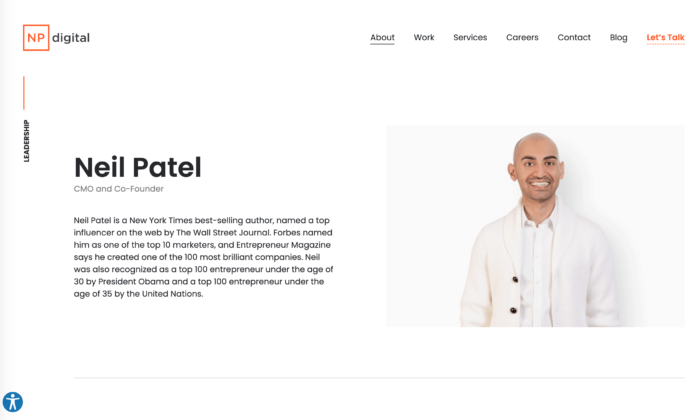
1. Neil Patel Digital — Best data-driven multi-channel PPC agency

Ads in search engine results aren’t the only type of PPC advertising. 

Other examples include social media, programmatic, and Amazon, each with their own set of quirks and best practices. 

At Neil Patel Digital, we specialize in running multi-channel PPC campaigns using first-party data from our partners. Furthermore, we take this information and use it to create strategic, high-profit campaigns that meet your audience where they are. 

All while helping those in your audience make an informed decision to buy. 

We’ve helped companies like Intuit, GM, and Facebook make more money authentically, using our data-driven approach to digital marketing. 

2. Directive Consulting — Best for B2B, SaaS, and enterprise businesses

If you’re a B2B, SaaS, or enterprise business looking for consulting services or a dedicated PPC management partner, Directive Consulting is an excellent option. 

They specialize in helping software companies around the world run high-ROI campaigns with a dedicated team running and optimizing things behind the scenes. 

Directive Consulting says one of their key differentiators is the predictability of their results. 

They prove it by showcasing numerous case studies outlining their results. In one example, they facilitated a 91.1% increase in lead generation in the first three months on top of decreasing their client’s cost-per-lead by 21.8%. 

So you can rest assured that you’re in good hands.

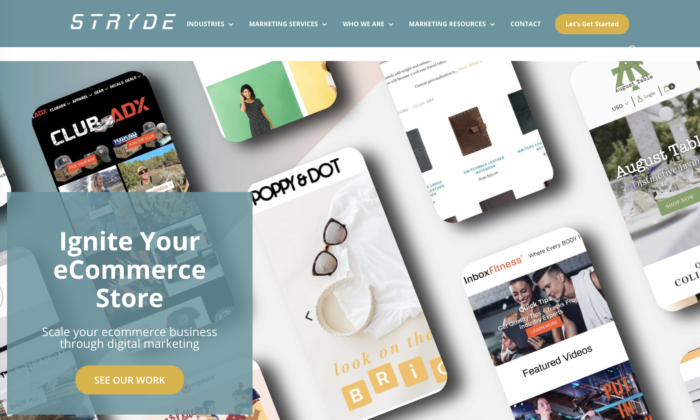
3. Stryde — Best for B2C and eCommerce businesses

B2C pay per click campaigns are vastly different from B2B campaigns. With different markets and trends, it’s essential to understand your industry’s specific ins and outs. 

And who better to do that than an agency specializing in eCommerce? 

Stryde is an eCommerce-specific digital marketing agency working with small and large companies all over the world. 

While they focus on other aspects of digital marketing like SEO and email marketing, PPC is a huge part of what they do. 

They helped Lime Ricke, a swimwear brand, achieve a 5.2x ROI. Furthermore, they helped  Lucy Ave, a women’s clothing company, obtain a 4.3 ROI. 

With repeatable and impressive results like these (and others outlined in their extensive portfolio), you know you’re making a smart choice.

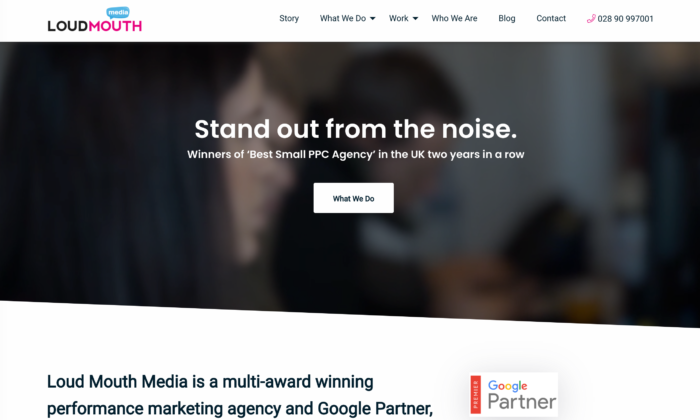
4. Loud Mouth Media — Best small agency producing big results

If you’re looking for an expert partner in search advertising or paid social, Loud Mouth Media has your back. They’re a small agency based in the UK specializing in PPC (specifically paid search and social) campaigns for businesses of all sizes. 

Loud Mouth Media is partnered with Google, Bing, and Facebook as well. So you know they’re always up-to-date with the latest trends and research across those platforms. 

They’re a small team of 23 expert marketers, creatives, and strategists producing impressive results for companies of all sizes around the world. 

And with numerous digital marketing awards under their belt and past clients like Volvo and BBC, their credentials and portfolio make them stand out as the best small PPC agency producing massive results.

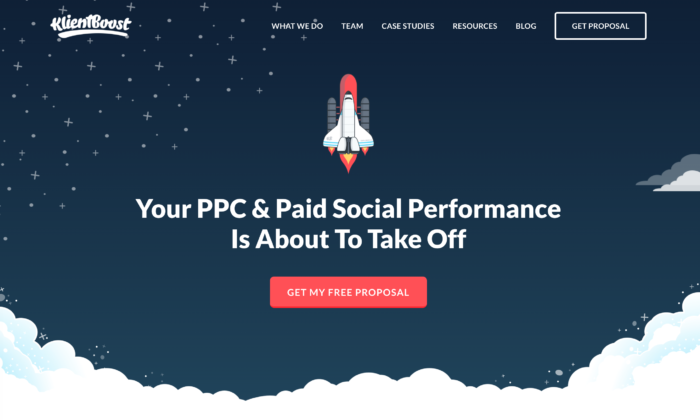
5. KlientBoost — Best for PPC management + landing page design

Strong PPC campaigns go beyond excellent ad copy, design, and targeting. Where you send your targeted traffic matters.  

Which… is why it’s crucial to have well-designed landing pages optimized to convert visitors into leads or customers. At KlientBoost, they understand the importance of conversion-focused landing pages. 

Their in-house team of developers, conversion designers, and top-notch marketers gives them the power to design excellent customer experiences from start to finish. 

They’ve produced repeatable results like:

  • 300% conversion rate increase for Juniper Networks
  • 315% increase in click-through rates for Lemon Stand
  • 97% decrease in cost-per-acquisition for Caresync

So, if you’re looking for a bit of help optimizing your landing pages and a dedicated PPC advertising team to target the right people and turn them into buyers, KlientBoost is for you. 

7 characteristics that make a great PPC company

Now you know my top PPC recommendations based on what you need. 

Let’s move on to what makes these PPC companies the best at what they do. We’ll also walk through what to look for on your hunt for the best option for your business. 

1. Extensive industry knowledge

The best PPC campaigns focus on the right audiences and the right keywords. But not all audience segments or keywords are equal. 

Understanding what works and what doesn’t comes from experience and in-depth industry knowledge. Without the two of those, you’re banking on intuition. 

Which… works sometimes, but that’s not what you should expect from a top PPC agency. 

Take a look at who’s a part of the agency’s team and take some time to evaluate their experience level and expertise in your specific industry. 

You can also look at their published case studies in different industries to see the types of results they produce for their clients. 

If you’re not confident in their knowledge in your industry, move on to an agency that feels like a better fit. 

2. Advanced analytics and reporting

Analytics and reporting are essential aspects of any PPC campaign. 

They help you get a better understanding of what segments and copy work well to shift your budget toward high-profit ads while reducing ad spend on those that don’t work. 

So your PPC agency must provide accurate and transparent reporting, so you always know where every dollar goes and the ROI it produces. 

Furthermore, top PPC agencies aim to collect as much information as possible regarding everything about your campaign. 

This insight helps them to adapt and produce higher ROI campaigns with first-party data directly from your business. 

You may not be able to find out much about this from an agency’s website. So it’s important to ask questions regarding the data and metrics they measure to influence their suggestions and future campaign strategies. 

3. Intent-driven keyword selection

The top PPC marketers know the best way to improve ROIs and reduce wasted ad spend is by focusing on transactional keywords rather than informational keywords for paid search marketing. 

Why? Because people searching for transactional terms are more likely to spend money. 

And good PPC strategists know this is the best way to get your business in front of the right people at the right time without wasting ad spend on irrelevant terms that aren’t going to turn into purchases. 

You may have a hard time learning about this from their website. So be sure to ask questions and gauge their knowledge around intent-based search queries before moving forward. 

4. First-party data sources and strategic partnerships

Search engines and social media platforms are continually updating their algorithms to be as human as possible to provide the best experience for their users. 

So the best PPC companies to partner with are on top of these continuous changes. 

Search and social partnerships provide those deep insights and industry trends non-partners don’t have. 

Furthermore, agencies with a pool of first-party data sources have a first-hand look at your audience’s attributes and behavior to make strategic decisions regarding your campaign before using your ad spend to test the market. 

Look for partnership badges for major search engines and social media platforms on their website. You can also look for an indication of first-party data sources. 

5. Mobile optimization

Fifteen years ago, mobile browsing and searching weren’t around. But today, mobile devices account for more than 50% of all searches made around the world.

But there’s something else a bit more interesting. Mobile devices account for 53% of paid clicks, which means there’s a huge opportunity (and need) to optimize your paid search strategy for mobile.

On top of that, there are nearly 3.5 million mobile social media users across the globe. So the opportunity for mobile-optimized paid social media campaigns is massive as well.

This makes an excellent case for mobile PPC campaigns. And the best PPC companies know this. So make sure the company you choose is prepared to strategize and optimize your campaigns for mobile devices

You may have to ask questions if you can’t find this information on their website. 

And if you’re not confident in their mobile capabilities, move on to a different PPC agency. 

6. Local PPC capabilities

90% of shoppers turn to search engines when looking for information on local businesses, and 33% perform these types of searches every day.

Pair that with the fact that 40% of total clicks go to the top three ad spots for transactional keywords, and you have a strong argument for local paid search marketing

So if your business operates in specific areas or you have a physical location to sell products or meet with potential customers, local paid search experience and capabilities are must-haves. 

Some PPC agencies specialize in local PPC, but that doesn’t mean those that don’t can’t produce impressive results. 

So be sure to ask questions to ensure you’re a good fit for each other. 

7. Multi-channel PPC services

If you’re looking for a specific type of PPC marketing, this isn’t necessarily a deal-breaker. 

But if you’re interested in cross-channel marketing, it’s easier to run all your campaigns through a single agency. 

And the more you work with them, the more in-tune they become with your business, industry, and specific campaign goals. Plus, you have the benefit of communicating and coordinating with one agency rather than managing several at the same time. 

Furthermore, you don’t have to worry about misaligned messaging from one platform to the next. 

So carefully consider where your target audience hangs out. Don’t forget to consider search engines, social media, paid shopping, and programmatic advertising on sites they frequently visit. 

Then, choose a PPC agency experienced in those areas.

What to expect from a great PPC company

If you’ve never worked with a PPC company before, it’s hard to know what to expect. So now that you know what to look for let’s talk about what working with one of the best PPC companies looks like. 

The details of each phase look different depending on the company you’re working with, but the general approach is typically the same. 

Phase 1: Discovery

The best PPC companies do everything they can to learn everything there is to know about your business and what you’re looking for. So, the first step to any new PPC project is discovery and onboarding. 

During this phase, you and your agency should hash out:

  • Your budget (including monthly ad spend)
  • The goals for your PPC campaign
  • What makes your business different from your competitors
  • How to improve your landing pages to increase conversions
  • Specific details about your business and target audience like where they hang out online, when they tend to shop, and where they live
  • What happens next

This is your chance to share everything you can possibly think of with your PPC agency. Even if it doesn’t feel relevant, it may be crucial to your success. So come into this phase as an open book with an open mind. 

Phase 2: Planning and testing

Once the agency understands your business, target audience, and marketing goals, it’s time to plan your upcoming campaign. This includes defining critical metrics and KPIs as well. 

This phase may also include running a small, low-budget pilot campaign to test different audience segments, copy, and overall execution. 

So, the more information you know about your target audience, the easier this will be. 

By the end of this stage, you’ll have a plan in place for full-scale execution and a deeper understanding of how you’re going to work together moving forward. 

Phase 3: Full-scale execution

Now it’s time to launch the full campaign. The specifics of this depend on the type of advertising and the agency you’re working with. 

Your project could be short-term, long-term, or ongoing. But during this time, you should get regular feedback and thorough reporting outlining everything about your campaign. 

And when your campaign comes to a close, you should have a clear picture of your results. 

Phase 4: Next steps

Lastly, your agency will walk you through the data they collected and explain what everything means. They’ll also probably provide suggestions and feedback on what they can improve if you want to continue working together. 

This stage should also cover what happens next. 

Strategy + creative + the right audience segments = high ROI

Hiring a top PPC company is a smart choice if you’re looking to save time, strategize with experts in your industry, and enjoy short-term results (when compared to something like SEO). 

But choosing a PPC agency you can trust is harder than it sounds. 

So whether you’re looking for advice or someone to take over and manage your campaigns, use these tips and recommendations when making your decision. 

Do you have any experience vetting and hiring a PPC agency? What criteria did you consider when making your decision?

The post The 5 Best PPC Companies of 2020 appeared first on Neil Patel.

New comment by hervan in "Ask HN: Who is hiring? (August 2020)"

Ubermetrics | Berlin, Germany | ONSITE | VISA | Frontend Developer (React) Hello HNers! A couple of years ago I felt encouraged by these job listings to pursue my career goals of relocating to a tech hub to work with cutting-edge tech. Now I’m glad to come back to this thread, this time from the …

New comment by tibble49 in "Ask HN: Who wants to be hired? (August 2020)"

Location: New York Remote: Yes (only) Willing to relocate: No Technologies: C#, VB, HTML, Javascript, Angular, CSS, PHP (but willing to learn anything, fast learner and love the challenge of learning a new tech or language) Resume: https://drive.google.com/file/d/1ZsFsgLNjZxeLoQhzlzy_BYPWG9C… Email: lindsey.tibbitts@gmail.com