
What Are Google Ad Grants?

Most of us have got a favorite non-profit, and usually with good reason. They might provide vital resources for your community or just be a cause close to your heart. Or they may have played an important role in your own life or that of a family member.

Non-profits need to be visible in today’s digital age — but that takes time, money, and expertise. Which is where Google Ad grants can help.

What Are Google Ad Grants?

If you’re a non-profit, Google Ad grants offer a set amount of funding towards Google advertising every month.

Why did Google launch its Ads grants program, and how do they work?

Google designed the grants program to help nonprofits flourish. The ads work just like regular PPC ads. Nonprofits use them to drive targeted traffic to their sites, just as any marketer or business owner would

And whether you realize it or not, you’ve probably seen some of these ads online; they show up beneath paid-for ads when you do a Google search.

But unlike Google’s PPC ads, there are some limitations. For instance, Google Ad Grant adverts are text only.

Google Ad Grants also have a strict eligibility criterion, and all non-profits must complete an application process. We’ll discuss the details of eligibility below.

Why Should You Apply for Google Ad Grants?

From high-profile nonprofits like Habitat for Humanity and the American Cancer Society to smaller organizations like the Elder Wisdom Circle and Travel to Impact, Google Ads Grants have many success stories.

For example, Habitat for Humanity achieved its marketing goals by combining Ad Grants and Paid Ads. This helped the organization to increase pickups.

The charity then sells the donated items to raise funds for its vital support programs. And to provide low-cost furniture and other goods for the local community.

Using free tools like Google Analytics and Tag Manager allowed Habitat for Humanity to measure its conversion values. As a result, the charity noted a substantial increase over the next six months.

The free ads also helped Habit to Humanity attract more donors and use remarketing campaigns to keep visitors engaged and encourage them to donate again.

But it’s not just the free advertising budget that nonprofits can benefit from. Other advantages of Google Ad Grants include their digital marketing resources.

Your digital marketing strategy is fundamental to success online. The same is also true for nonprofits that want to raise awareness and funds in the digital age.  

And if you’re new to digital marketing, Google has you covered. There’s a set of videos to talk you through the various elements of a successful digital campaign, such as:

  • Designing your social media strategy
  • Starting and building your campaign
  • Tracking your conversions

Your nonprofit can also use the ads to:

  • Get noticed online and raise awareness of your organization.  
  • Raise essential funds
  • Attract new volunteers
  • Achieve the aims of individual campaigns

How Much Money Does Google Ad Grants Offer?

  • The Google Ads Grant gives nonprofits $10,000 worth of advertising every year.
  • Your monthly budget equals $329 a day, and you can divide this between various campaigns.

If you’re tracking donations, purchases, and fees, then Google suggests using a maximizing conversion bidding strategy. You can read more about this on Google’s support pages.

Your organization can decide how to best spend the money itself. Or you can turn to one of Google’s Ad Grants certified professionals to guide you through the application.

How to Apply for Google Ad Grants

As with any other grant, there’s an application to fill out. But don’t let the process put you off applying. It isn’t nearly as complex as you might think.

In this next section, I’ll break this down into the following steps:

  • Check eligibility
  • Sign up for a Google nonprofits account
  • Activate your Google Grants account

Make Sure You’re Eligible for Google Ad Grants

The Google Ads grants are only open to eligible non-profits. This means your organization must:

  • Be in one of the 50 eligible countries. You can find a list of them online.
  • Sign up for Google Nonprofits.
  • Accept Google’s certifications, which cover non-discrimination and donation receipt/use
  • Have an established website that meets Google’s Ad Grants standards, including HTTPS security
  • Complete the activation process

Your next step is to establish a Google for Nonprofits account.

Sign Up for a Google for Nonprofits Account

To sign up to Google for Nonprofits:

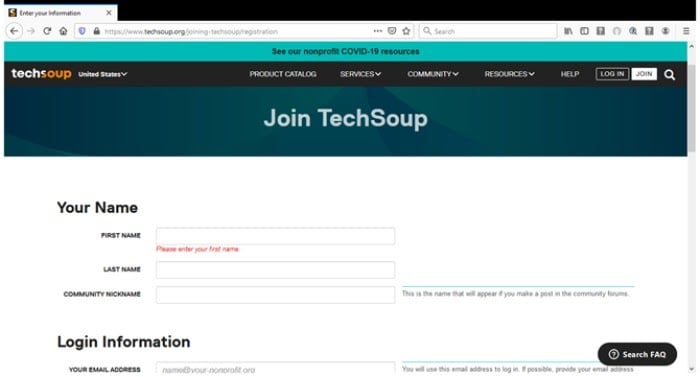
1. Register with TechSoup. If you’re not familiar with TechSoup, here’s what you need to know:

TechSoup is a nonprofit that offers a variety of tech resources from well-known brands like Microsoft and Intuit QuickBooks. It’s free to join, and all you need to do is complete a short application.
what are google ad grants techsoup

For nonprofits outside of the U.S., you may need to register through one of Google’s other partners. For example, in the UK, you’ll get taken to the charitydigitalexchange.org website.

Note: Verification from TechSoup can take up to 12 days.

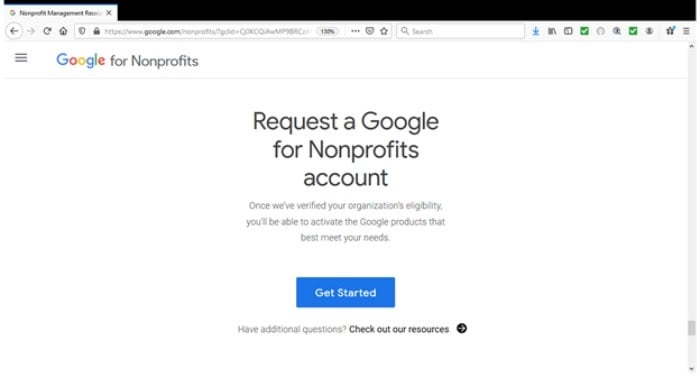
2. Request a Google for Nonprofits account by clicking ‘Get Started.’
Google ad grants Google for nonprofits account

Then, fill out the requested information, and wait for Google’s verification email.

Activate and Create Your Google Ad Grants Account

To activate your Google Ad Grants account, follow these steps.

  1. Fill out the eligibility form. You’ll find this when you log into your ‘Google for Nonprofits’ account and look under the ‘Google Ad Grants’ heading.
  2. Select the ‘Activate’ option.
  3. You’ll then see an eligibility form. Here, you’ll tell Google more about your organization and confirm your entitlement to a grant.
  4. Once you’ve completed the form, go back to your Google for Nonprofits account and click ‘activate’ again.
  5. Then, you should see a checkbox. Confirm you’ve filled the eligibility form out, and click ‘activate.’

That’s it. Activation typically takes up to three business days.

Note: Remember, your Google for Nonprofits/Ad Grants accounts need the same username.

What Can I Do With My Google Ad Grants Account?

Now you’ve established your Google Ads account, your nonprofit can start reaping the benefits, like launching your free ad campaigns.

Setting up your first ads may seem confusing. Let’s walk through it.

Create a Google Ad Campaign
Google ad grants Create Google Ad Campaign

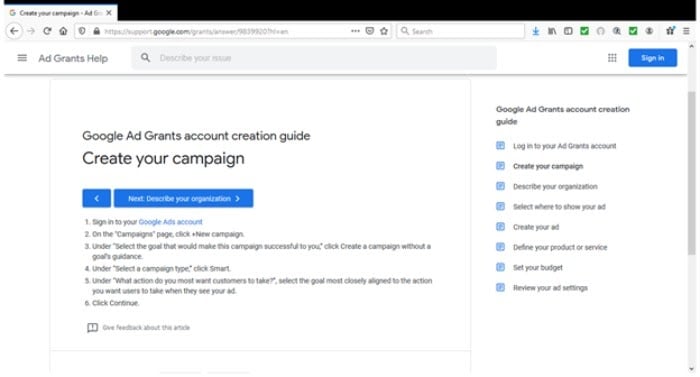
To create your Google Ads Grant marketing, just follow these steps.

  1. Login into your Google Ads account and go to the ‘campaigns’ page. Now, you’ll want to choose the ‘new campaign’ option.
  2. You’ll then see an option that says: “Select the goal that would make this campaign successful for you.” You’re looking for the ‘Create a campaign without a goal’s guidance’ option.
  3. Select your campaign type. Look for the ‘smart’ option.
  4. Decide what action you want customers to take, then click ‘continue.’
  5. Describe your business. This is pretty straightforward. Just enter your organization’s details, nonprofit URL, and any other information related to your nonprofit. Then press ‘save.’
  6. Head to the ‘Where are your customers? page. This allows you to customize your campaign to your local radius or specific areas. Choose the language and select your relevant business category.
  7. You should see a heading that says ‘what specific products or services do you want to promote in this ad?’. Here, you’ll detail the services your nonprofit offers. Or you can include the auto-suggested keywords. You’ll find these under the ‘suggested for you’ heading.
  8. Click ‘next’ and choose your budget. Remember to set it at the $329 daily maximum.
  9. Tap the ‘next’ button, which will take you to the review stage. Here, you can change your ads, before clicking ‘next’ once more.

Your campaign setup is complete!

Google Ad Grant Best Practices

If you’re creating the campaign yourself, the best thing you can do is take your time and consider Google’s best practices. But if you’re not comfortable with this part, remember there are certified professionals who can manage the advertising.

To get you started, here are some tips along with some Google recommendations:

Differentiate Your Organization

What makes your organization different? This is how you stand out from the crowd and encourage engagement and donations.  For example, does your organization:

  • Donate 100% of its profits?
  • Team up with local partners and projects?
  • Offer proof and updates on how your non-profit is spending its funds?
  • Highlight the good the donations are doing?

If you’re struggling to find your nonprofit’s unique selling point, there’s a useful article on identifying your non-profit’s USP online. And you can also learn more about one non-profit’s marketing approach.

Include a Call to Action

Perhaps the most important part of any online ad is the call to action. What do you want visitors to do next? Think about your goals and what steps you need visitors to take to reach your goals.

Choose Your Keywords Carefully

Begin by thinking of the search terms and keywords you’d use if you were looking for a nonprofit in your niche. Then, use a keyword planner tool like Ubersuggest to perform further keyword research. Use these terms in your ads.

Write Ad Groups and Ensure They Are Relevant

Develop a group of ads for rotation and include your target keywords in each group. You’ll also want to ensure that your ads are relevant to your intended audience.

For example, you may want to target them at attracting:

  • Volunteers
  • Donations
  • Click-throughs

Decide on Your Next Actions

What do your visitors do once they’ve visited your site? Do they donate? Sign up as a volunteer? Ask for information?

Use an analytics tool to determine this, and design future campaigns around relevant keywords.

For further tips for creating successful Google ads, visit their support page.

Track Your Google Ad Success

A recent survey found that 64% of marketing professionals would choose Google Ads over SEO. This is despite SEO’s positive return on investment (ROI) and the organic traffic it delivers.

Why?

Well, according to the survey, Google Ads are better for:

  • Conversion
  • Measurable data
  • Traffic volume
  • Effectiveness and scalability.

And there’s another huge plus to Google Ads: they’re easier to implement.

You can see how important these factors are to a marketing professional. But they’re every bit as important to your nonprofit too.

By tracking and analyzing the data of your nonprofit, you can also:

  • Optimize conversions to increase your results
  • Adjust your ads
  • Measure the success of individual campaigns and landing pages
  • Gain real-time and audience insights
  • See where your donors are located

There may come a time when you want to change your nonprofit ads. Just make sure your nonprofit complies with Google’s policies.

For example, Google doesn’t allow:

  • Single keywords, although there are exceptions.
  • Keywords with a 1-2 quality score
  • Overly generic keywords

Nonprofits must also keep their click-through rates (CTRs) at 5% every month (or risk having their accounts deactivated) and have valid conversion tracking if using smart bidding.

Note: It’s worth mentioning that Google policies are subject to change. Their Ad Grants Compliance Guidelines are available online. Keep up-to-date with these, and if you’re unclear on anything, check.

Conclusion

Google’s Ad Grants program allows qualifying nonprofits to gain visibility, attract more donations, and recruit staff and volunteers. Google Ad Grants is an ideal starting place for nonprofits that don’t have a digital marketing strategy or lack the budget to get started.

Aside from the generous $10,000 limit available to nonprofits, there are many other advantages to signing up with Google Ad Grants, such as access to technology tools, data tracking, and professional services to help grow your nonprofit.

Although it may seem complicated, Ad Grants are free to set up. And if you’re unsure of the correct strategy, consider hiring a PPC consultant to guide you.

Has your nonprofit applied for a Google Ad Grant? Tell us about your experiences or share some tips below.

The post What Are Google Ad Grants? appeared first on Neil Patel.

3 Key Reasons to Use Augmented Intelligence Tools in Digital Marketing

Do terms like “AI” and “machine learning” make you think of robots and science fiction?

These technologies are being used everywhere, and the age of AI is already in full swing.

AI and technology offer a solution to inefficiency. Deloitte has shown that 83 percent of early adopters of AI and cognitive technologies achieved either “moderate” or “substantial” benefits.

AI is somewhat part of augmented intelligence tools’ technology, but how is it used in marketing right now?   

What is Augmented Intelligence?

Gartner defines “augmented intelligence” as “a human-centric partnership model of people and artificial intelligence working together to enhance cognitive performance.”

What that means is that augmented intelligence isn’t just about creating super smart machines. It’s about creating technology that can help you and your brain do things better.

Augmented intelligence is sometimes also called intelligence automation (IA).    

How is Augmented Intelligence Different From Artificial Intelligence (AI)?

Artificial intelligence is all about computers making decisions. But augmented intelligence is about you making better decisions, with the help of a computer.

Let’s dive into some specific examples so we can see how this works:

Artificial Intelligence Examples

Artificial intelligence operates on its own, without help from humans.

That might make you think of autonomous killer robots, but the reality is usually a little less exciting.  

Ever used a grammar checker tool? Lots of those use AI to give you more sophisticated grammar recommendations.

Even Google Docs uses an AI grammar checker. Google’s engineers train the model using correct sentences. It’s then able to predict whether sentences are correct or incorrect on its own, without needing to be programmed with every single grammar rule.  

Know where else Google uses AI? In its search engine algorithms.

Updates like RankBrain and BERT have brought AI to the search engine, and SEOs have needed to update their strategies accordingly with AI SEO.  

Augmented Intelligence Examples

Now that we’ve seen how AI is used, how is augmented intelligence used? How are its applications different from AI?

Augmented intelligence is a pretty general term. You can use it to talk about basically any machine that helps humans enhance their capabilities and make better decisions, even something as simple as a compass or telescope.

But in practice, augmented intelligence is usually used to talk about automated systems that need direction or input from humans to function. Augmented reality tools, like Google Glass, are just one example.

Augmented intelligence can be used in a bunch of different fields. It can support financial professionals in making regulatory decisions, or help health care professionals make medical decisions.

The augmented intelligence tool gives recommendations, and then the human makes the final call. Feedback from humans helps the tool to learn and grow continuously.

Why would you want to use augmented intelligence when you could use “true AI?” Well, augmented intelligence allows us to do more with the technology we currently have, without needing to wait for AI to advance.

It also adds a human element to the decision-making process, which can be helpful for complying with regulation in some industries. Plus, with augmented intelligence, we can take advantage of new technologies while also continuing to use human talent.

But the best thing about augmented intelligence? When humans and machines work together, they can achieve better results than one or the other working alone.

For example, an experiment by a team from a Harvard Medical School hospital at the Camelyon Grand Challenge showed that an algorithm could accurately detect breast cancer 92% of the time, while a human pathologist accurately detected it 96% of the time. When the pathologist worked together with the algorithm, the results were accurate 99% of the time.  

Overall, augmented intelligence is just a different philosophy that can help us get the most from AI, without needing really sophisticated capabilities.  

How Can Augmented Intelligence Help Your Business?

The truth is, augmented intelligence can do huge things for your company.

There are tons of different ways to use augmented intelligence. There’s probably an IA application out there that can help you streamline and improve every single area of your business.  

Here’s an example: Augmented intelligence can help you sell things online.

Think about the last time you thought about buying something online. What were some reasons you might have hesitated before making a purchase?

You might not want to lay out money for certain items before trying them out in person. Furniture, glasses, clothes are examples of products users want to see how they look up close before you buy.

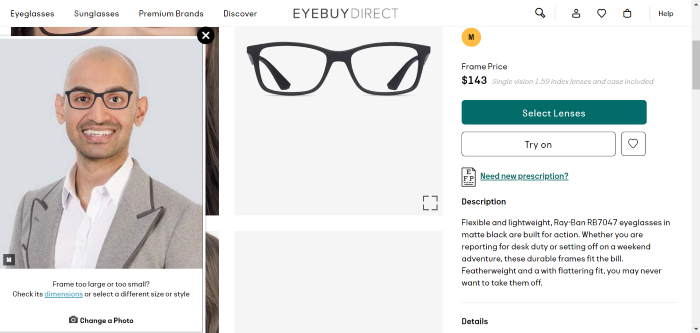
Enter augmented intelligence. With augmented reality (AR) applications, your customers can “try on” things virtually. Even if they’d prefer to shop from home, they can still get a feel for your merchandise.

Want to know how this works in practice? Check out some of the companies using augmented reality to sell furniture (Wayfair), glasses (EyeBuyDirect), and makeup (MAC Cosmetics).

Glasses virtual try on screenshot augmented intelligence 1

To use the virtual try-on tools, you can upload a photo or open your webcam, and the tool will show you what the product looks like in real life.

But sales isn’t the only area where augmented intelligence can help your business.

Want to make your product safer? Car companies are already using augmented reality to help drivers spot dangers on the road and avoid looking down at their phones.

Want to thrill your customers with a cool new feature? Google did that when they introduced internet searchers to AR animals.  

You can improve your customer service with augmented intelligence, too. Chatbots can help answer some more straightforward customer questions, freeing up more time for your human staff. IA can also help support your customer service reps when they need more information to help customers.

Finally, just like with sales, product, and customer service, augmented intelligence tools can take your marketing efforts to the next level.  

Here are three crucial reasons why you should use augmented intelligence tools to supercharge your marketing.

Augmented Intelligence Creates Positive Customer Experiences

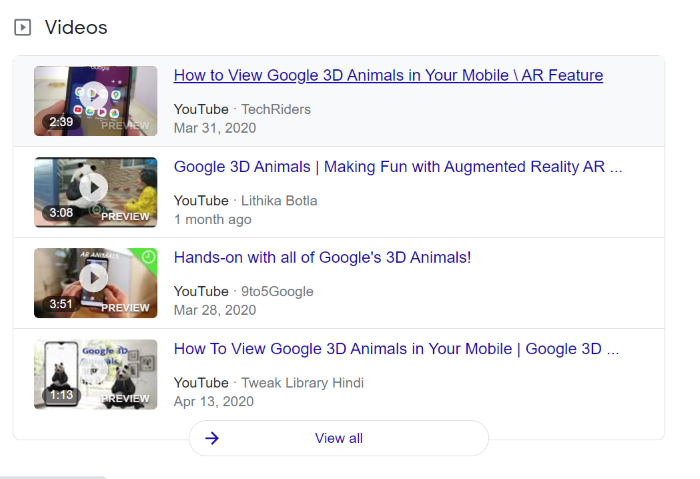
If you use augmented intelligence to create an extra cool or innovative product, your marketing will basically be halfway done for you. An awesome customer experience pretty much markets itself. Just look at all the videos people have made about Google’s AR animals:

video suggest augmented intelligence | 3 Key Reasons to Use Augmented Intelligence Tools in Digital Marketing

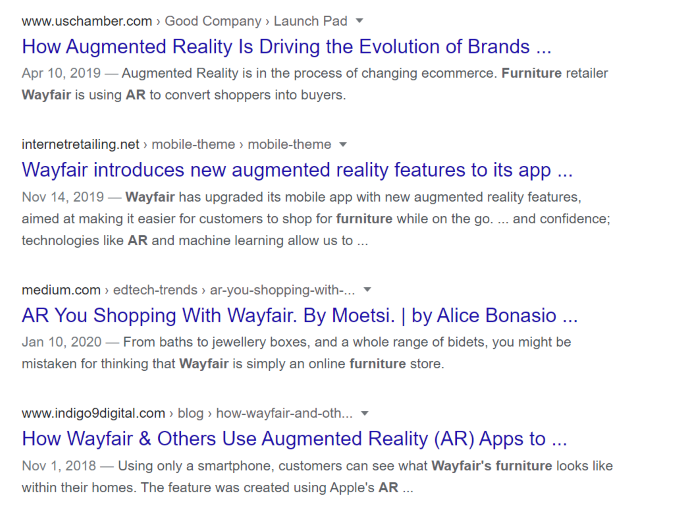
Check out all these articles people have written about Wayfair’s augmented reality feature for furniture:

SERP augmented intelligence | 3 Key Reasons to Use Augmented Intelligence Tools in Digital Marketing

If you make something interesting enough, you might end up getting lots of new backlinks and traffic without even trying.

Besides creating new product features, you can also improve your customer experience with augmented intelligence in other ways.

For instance, customers are more likely to be satisfied if they can get their questions answered faster with technology like automated chatbots, as mentioned above.

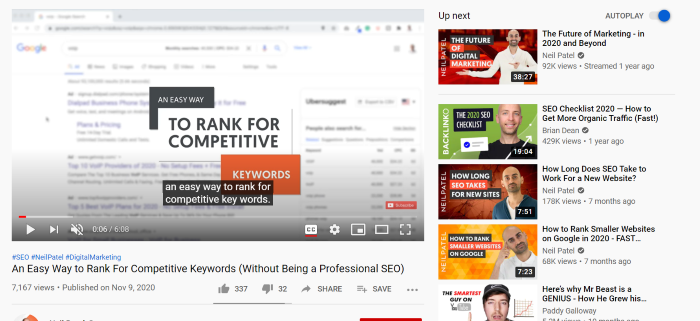
You can also use augmented intelligence to help personalize the customer experience. An example of this would be user recommendations. You’ve probably seen these on YouTube on the right-hand side:

youtube suggest augmented intelligence | 3 Key Reasons to Use Augmented Intelligence Tools in Digital Marketing

And on Amazon as suggested product examples:

amazon suggest augmented intelligence | 3 Key Reasons to Use Augmented Intelligence Tools in Digital Marketing

These websites use algorithms to make recommendations based on the videos you’ve already watched or products you’ve already shown interest in. When you click on a recommendation, you’re sending a signal to the algorithm that the recommendation was relevant.

Recommendations help you offer a better experience by helping your customers find things they might be interested in. They are also a way to convince customers to stay on your website for longer.

Augmented Intelligence Can Reduce Busywork

Another major reason why companies are interested in automation is that it saves time. According to WorkMarket’s 2020 In(Sight) Report, over half of employees think they could save 240 hours every year through automation.  

IA can help your marketing department save time in lots of different ways. If you’re currently using data for strategic planning, augmented intelligence tools can help.

You can use these tools to help clean data sets, forecast future trends with predictive modeling, or even keep an eye on competitors, social trends, and customer feedback. This can help you create more effective marketing plans more quickly.  

If you decide to use augmented intelligence in your marketing, you won’t be alone. According to a Forrester report, 46% of respondents say that marketing and sales teams are leading AI adoption.

It’s no wonder marketers are excited to adopt this technology. Hubspot found that using AI software cut the time one agency spent on reporting by 97 percent.

Augmented Intelligence Can Help Write Content

Here’s another way that augmented intelligence can help with your marketing: It can help you write better content, faster.

If you’re a marketer, you know that writing quality content takes serious time and effort.

A survey by Orbit Media Studios states that the average blog post takes almost four hours to write. That’s actually a 63% increase over 2014, when the average blog post took just under 2.5 hours.

If you’re wondering why the writing time has gone up so much, it’s because Google’s algorithm updates have started to favor long-form content.

Besides the actual writing, researching, adding photos, and publishing also take up lots of time, not to mention content planning and SEO.

Augmented intelligence can helpfully write text, but it can’t add much research, facts, or emotions to it.

AI’s writing style can be a little different from what we’re used to, so it needs human polishing.

AI text augmented intelligence | 3 Key Reasons to Use Augmented Intelligence Tools in Digital Marketing

That’s an excerpt from an article written by an AI, published in The Guardian.

As you can see, AI can write sentences, but you might need to edit or adjust them to fit your content needs.

Even if you don’t want a robot to write your articles, you can still use augmented intelligence tools to help you in your writing. Spelling and grammar checkers, like Grammarly, are a good example of this.

Augmented intelligence can also help you create better content by coming up with more relevant topics for your audience.

If you’re using augmented intelligence for data collection and analytics, you can use the knowledge you gain from that to help you write more data-driven, personalized content.

If you want to do a content audit to review the content that’s already on your website, augmented intelligence can help with that, too.

Augmented Intelligence is Becoming the Norm

It looks like AI, and automation in general, are here to stay. McKinsey predicts that “half of today’s work activities could be automated by 2055.”  

With “AI’s adoption increasing year-on-year,” marketing departments are leading the charge.

Augmented intelligence offers the perfect approach to AI, because it’s all about pairing AI’s strengths with human strengths.

Conclusion

As a marketer, you’re all about staying ahead of the competition.

To do that, you’ll need to have the best tools, including artificial intelligence.  

However, a lot of people are skeptical about AI. In fact, research by PwC shows that 67% of CEOs think AI and automation will have a negative impact on trust in their industry over the next five years.

With augmented intelligence tools, you don’t have to rely on AI alone. Instead, you can use AI’s strengths and human strengths together to get better results.  

If you’ve already started using augmented intelligence in your marketing, or if you’re thinking about using it soon, tell us about your experience in the comments.

The post 3 Key Reasons to Use Augmented Intelligence Tools in Digital Marketing appeared first on Neil Patel.

New comment by claudio-viola in "Ask HN: Who wants to be hired? (November 2020)"

Location: REMOTE | EUROPE | Remote preferred Willing to relocate: unlikely, but do contact me about it – Technologies: Javascript, Typescript, Node.js, graphql, Docker, kubernetes, jenkins, aws, cloud, devops, backend, agile, scrum, kanban, python, ruby, shell scripting, linux, chef, ansible, ci/cd – Résumé/CV: http://bit.ly/2HucTwp – https://www.linkedin.com/in/claudio-viola/

The post New comment by claudio-viola in “Ask HN: Who wants to be hired? (November 2020)” first appeared on Online Web Store Site.

The post New comment by claudio-viola in “Ask HN: Who wants to be hired? (November 2020)” appeared first on ROI Credit Builders.

InfluxData (InfluxDB) is hiring Rust and columnar database programmers (remote)

Article URL: https://boards.greenhouse.io/influxdb/jobs/2447843?gh_src=da842a8d1us

Comments URL: https://news.ycombinator.com/item?id=25148895

Points: 1

# Comments: 0

New comment by claudio-viola in "Ask HN: Freelancer? Seeking freelancer? (November 2020)"

SEEKING WORK | Location: REMOTE | EUROPE | Remote preferred Willing to relocate: unlikely, but do contact me about it – Technologies: Javascript, Typescript, Node.js, graphql, Docker, kubernetes, jenkins, aws, cloud, devops, backend, agile, scrum, kanban, python, ruby, shell scripting, linux, chef, ansible, ci/cd – Résumé/CV: http://bit.ly/2HucTwp – https://www.linkedin.com/in/claudio-viola/

The post New comment by claudio-viola in “Ask HN: Freelancer? Seeking freelancer? (November 2020)” first appeared on Online Web Store Site.

New comment by claudio-viola in "Ask HN: Who wants to be hired? (November 2020)"

Location: REMOTE | EUROPE | Remote preferred Willing to relocate: unlikely, but do contact me about it – Technologies: Javascript, Typescript, Node.js, graphql, Docker, kubernetes, jenkins, aws, cloud, devops, backend, agile, scrum, kanban, python, ruby, shell scripting, linux, chef, ansible, ci/cd – Résumé/CV: http://bit.ly/2HucTwp – https://www.linkedin.com/in/claudio-viola/

The post New comment by claudio-viola in “Ask HN: Who wants to be hired? (November 2020)” first appeared on Online Web Store Site.

How to Fund a Startup Business No Matter What

What do you need to know about how to fund a startup business? First, there is more than one way to do it!  It’s true. Regardless of what is happening around you, in most cases you can fund a startup business in some way.  It may very well take longer depending on your exact situation, but it is almost always possible. 

You Can Fund a Startup Business No Matter What is Going On

Fund a Startup Biz Credit SuiteThe thing is, virtually everyone assumes if they cannot get a business loan, they can’t fund a startup business.  That really isn’t true. There are all kinds of options for funding. Loans are only one of them. Furthermore, there are probably many more types of loans than you think. We put together a list of some of the most common, and less common, ways to fund a startup business in any situation. 

Fund a Startup Business: Traditional Loans

These are the loans that you go to the bank to get.  With a traditional loan, you are almost always going to have to give a personal guarantee.  This means they will check your personal credit.  If it’s not great, you are probably out of luck. That is where a lot of people stop, thinking they have hit a brick wall.

There are ways over that wall however.

Check out our best webinar with its trustworthy list of seven vendors to help you build business credit.

Fund a Startup Business: SBA Loans

SBA loans are traditional bank loans.  However, they have a guarantee from the federal government. The Small Business Administration works with lenders to offer small businesses funding solutions that they may not be able to get based on their own credit history. Because of the government guarantee, lenders are able to be a little less strict on personal credit score requirements. 

The trade-off is that the application progress is lengthy. There is a ton of paperwork connected with SBA loans. 

Fund a Startup Business: Private Loans

Private business loans come from companies other than banks.  These companies are sometimes called alternative lenders.  Many have popped up in the past decade as entrepreneurship has become more common.  The need for a financing option from somewhere other than traditional banks has spurred this growth. 

There are a few benefits to using private business loans over traditional loans.  The first is that they often have more flexible credit score minimums.  They still rely on your personal credit. Yet, they will often accept a score much lower than what traditional lenders require. Another benefit is that they will sometimes report to the business credit reporting agencies.  That helps build or improve business credit. 

The tradeoff is that private business loans typically have higher interest rates and less favorable terms.  Still, the ability to get funding and the potential increase in business credit score can make it well worth the cost. 

Examples of Private Lenders

The thing about private lenders is, you almost always have a time in business requirement. However, it can be as low as one year, even 6 months in some cases.  

BlueVine

The minimum loan amount available from BlueVine is $5,000 and the maximum is $100,000. Annual revenue must be $120,000 or more and the borrower must be in business for at least 6 months. Personal credit score has to be at least 600. It is also important to know that BlueVine does not offer a line of credit in all states. 

OnDeck

With OnDeck, applying for financing is quick and easy. Apply online, and you will receive your decision once application processing is complete. Loan funds will go directly to your bank account. The minimum loan amount is $5,000 and the maximum is $500,000.

There is a personal credit score requirement of 600 or more.  Also, you must be in business for at least one year. There is an annual revenue requirement of at least $100,000 as well. In addition, there can be no bankruptcy on file in the past 2 years and no unresolved liens or judgements. 

Fund a Startup Business: Crowdfunding

Crowdfunding sites allow you to pitch your business to thousands of micro investors. Anyone who wants a piece of the action can buy in. 

Investors pledge amounts ranging from as low as $5 to as high as they want. They may give $5, $80, $150, or even over $500. As a general rule, they can give as much or as little as they want.

Though not always necessary, most business owners offer rewards for investment. Typically, this comes in the form of the product the business will be selling. Different levels of giving result in different rewards. For example, a $50 gift may get you product A, while a $100 gift will get you an upgraded version of product A.

The two most common crowdfunding platforms are Indiegogo and Kickstarter. 

Check out our best webinar with its trustworthy list of seven vendors to help you build business credit.

Fund a Startup Business: Angel Investors

These investors are usually only in for a one-time deal. Many choose to spread their risk out over many people and many businesses to be certain they get a safe return on their investment.

Angels tend to be a lot more informal than most types of funding. They can be people you know. Or they can be people you connect with through networking or other means. 

Angels are not covered by the Securities Exchange Commission’s (SEC) standards for accredited investors. But a lot of them are accredited investors anyway. 

To become an accredited investor, an person has to have a minimal net worth of $1 million, and an annual income of $200,000.

There are a number of angels who aren’t millionaires. They could be friends or colleagues with home equity, or local professionals who are looking to invest. 

How Do You Find Angel Investors?

The best way to find these kinds of investors is to ask. You can also try an angel investors website or network. Try Gust, which used to be called Angel Soft. They keep a database of investors, companies, and programs. Startups can also search for business plan competitions and more.

Another option is to look at the biggest angel investor groups. Be aware, however, that these meetings are really only going to happen if you can get an introduction. 

According to Entrepreneur, in order from smallest to largest the top 10 Angel Investor groups are:

  1. New York Angels Inc.
  2. Alliance of Angels (Seattle)
  3. Pasadena Angels
  4. Hyde Park Angel Network (Chicago)
  5. Band of Angels (Menlo Park, CA)
  6. North Coast Angel Fund (Cleveland)
  7. Golden Seeds LLC (NYC)
  8. Investors’ Circle (San Francisco)
  9. Tech Coast Angels (Los Angeles) and
  10. Ohio Tech Angel Funds (Columbus, OH)

Focus and requirements may vary from group to group.  For example, some concentrate on local startups only. Do your research so you don’t waste yours and the angels’ time if it isn’t a good fit.

Fund a Startup Business While Keeping Your Day Job

Here’s an option that most don’t want to hear, but it is totally legitimate and sometimes, it’s just the best way.  If you do not have access to a ton of funds to launch a huge new business right away, consider keeping your day job and start your business small, as a side hustle. 

Not every business can start this way, but a lot can.  For example, a bakery or a cleaning business can easily start this way.  If you set up from the beginning to be fundable and build business credit, you can go even further.  More on that later. 

Fund a Startup Business: The Retirement Years

This is similar to keeping your day job in that you start small.  If you have retirement savings you could use that as loan security, or take a loan directly from retirement if your plan allows for that.  You can build your business slowly, a little at the time. While you’re doing so, you can work to build business credit and overall fundability 

Whatever You Do, Build Fundability from the Beginning

So, how do you do that?  How do you build fundability and business credit? The first thing you do is set up your business to be fundable.  When you do this, you will also be setting it up to be a separate entity from you as the owner, which is the first step in building separate business credit.  How do you build a fundable foundation? You need the following.

Contact Information Separate from the Owner

The first step in setting up a foundation of fundability is to ensure your business has its own phone number, fax number, and address.   That doesn’t mean you have to get a separate phone line, or even a separate location.  You can still run your business from your home or on your computer if that is what you want.  You don’t even have to have a fax machine.  

An EIN

The next thing you need to do is get an EIN for your business.  This is an identifying number for your business that works in a way similar to how your SSN works for you personally.  

Incorporate

You have to incorporate as an LLC, S-corp, or corporation. It gives credit to your business as one that is legitimate, and it separates your business from you as the owner.

Which option you choose does not matter as much for fundability as it does for your specific budget and liability protection need.  The best thing to do is discuss it with your attorney or a tax professional.  You are going to lose the time in business that you have.  When you incorporate, you become a new entity. Basically, you have to start over. You’ll also lose any positive payment history you may have.

This is why you have to incorporate as soon as possible.  Not only is it vital to fundability and for building business credit, but time in business is also important.  The longer you have been in business the more fundable you appear to be.  That starts on the date of incorporation, regardless of when you actually started doing business. 

Separate Business Bank Account

You have to open a separate, dedicated business bank account.  There are a few reasons for this.  First, it will help you keep track of business finances.  It will also help you keep them separate from personal finances for tax purposes. 

In addition, you cannot get a merchant account without a business account at a bank. That means, you cannot take credit card payments.  Studies show consumers tend to spend more when they can pay by credit card.

Licenses

For a business to be legitimate it has to have all of the necessary licenses it needs to run.  If it doesn’t, red flags are going to fly up all over the place.  Do the research you need to do to ensure you have all of the licenses necessary to legitimately run your business at the federal, state, and local levels. 

Website

These days, you do not exist if you do not have a website.  However, a poorly put together website can be even worse.  It’s the first impression you make on most, and if it appears to be unprofessional it will not bode well for you with lenders or customers. 

Fund a Startup: Build Business Credit 

Okay so, you need to know how to fund a startup, not how to set it up, right?  Here’s the thing. Once you have your business set up like this, you can start building business credit so that you have more options for funding your business.  

The main key to this is to use starter vendors that will issue net terms on your invoices and report those payments to the business credit reporting agencies.  Even if you are keeping your day job or starting small during retirement, you can use these vendors for the things you need in the everyday course of business. 

Things like office supplies, packaging, and even cleaning supplies can be purchased from such vendors on account using your business information.  As you get enough of these accounts reporting, you can apply for store credit, then fleet credit, and eventually, regular business credit cards that are not limited to specific types of purchases or specific stores.  Then, your business credit should be strong enough that you can qualify for a loan and launch your business on a bigger scale.

Check out our best webinar with its trustworthy list of seven vendors to help you build business credit.

Fund a Startup Business: There are More Ways than One

The truth is, there is more than one way to fund a startup business.  Depending on your specific situation, you will have to decide which option or combination of options will work best for you and your business.

The post How to Fund a Startup Business No Matter What appeared first on Credit Suite.

How to Create an E-Commerce Business Plan

If you ever plan on finding investors, partners, or employees for your e-commerce startup, you’ll need to know how to create a business plan. A lot of people make this process out to be more complicated than it needs to be. When you do it right, creating a business plan doesn’t have to be so difficult.

In this guide, I’m breaking down step-by-step everything you need to know about creating a powerful e-commerce business plan.

What is an E-Commerce Business Plan?

Have you ever thought about something you wanted to accomplish in your business? You’d likely jot down a few lines discussing strategies, costs, and methods behind the steps you would take to achieve those goals.

If you’ve ever done that, you’ve created a basic business plan, and there isn’t too much more to it than that. An e-commerce business plan is a strategy for how your business will work, how you’ll fund it, who your audience will be, and how you plan to succeed.

Understanding how to create a business plan is key. It requires research, understanding your audience, budgeting, and more.

The overall key to writing a business plan is to create something comprehensive enough, so you never have to wonder what step is coming next. As you navigate the sometimes challenging process of starting an e-commerce business, don’t leave anything to chance.

When you’re struggling or having a hard time envisioning the next step, you don’t have to worry because your business plan thoroughly outlines everything you’re going to do, when you’ll do it, and how much it’ll cost.

Another aspect of business plan writing is looking for investors or partners. You need to pitch your e-commerce business in a way that is easy to understand. Investors aren’t going to jump aboard something that lacks vision or appears unorganized.

Having a thorough business plan that gets straight to the point will show investors that you know what you’re doing and you have a concrete strategy for success.

How is an E-Commerce Business Plan Different From Other Kinds?

The way e-commerce businesses reach their customers is much different. At a brick and mortar store, for example, foot or vehicle traffic will contribute to a lot of free advertising for the business.

E-commerce stores, on the other hand, can very easily get buried in the SERPs, never to be seen by anyone if you don’t know how to get the word out. You need to keep these types of things in mind when putting together your business plan.

As for research and development of your business plan, standard businesses need to factor in local licenses, ordinances, building codes, and other factors that may influence where and how they can conduct business.

Luckily, e-commerce doesn’t have to worry as much about that, but it doesn’t mean you can ignore it either. It’s your responsibility to understand any restrictions or requirements that may prevent you from sourcing and selling your products.

Why E-Commerce Business Plans Are Important

Understanding how to create a business plan means nothing if you can’t see the importance behind it. While I believe there are more important aspects of starting a successful business, every e-commerce venture should have a stable foundation, beginning with a business plan.

Business Plan = GPS

You’re the driver of this business, but you’ll end up going in circles, wasting time and money, if you don’t know where you’re going. Having a solid business plan guides you through the steps of starting and growing a business. Think of the plan as the GPS of your business. If you ever get lost, you can fall back on your original plan.

It Helps You Generate Ideas

This process is much easier than it seems. It might seem like this looming dark cloud of horror, but once you dive in, the juices will start flowing, and you’ll find out that you probably have a lot of great ideas. This may be the first project of your new venture, so business plan templates and how-to guides can help.

It Can Help You Understand the Market

Getting your audience right is the most important aspect of an e-commerce business. If you’re trying to reach everyone, you’ll reach no one. A big part of your business plan needs to be the development of a customer avatar. This avatar is your perfect customer. They’re the ones that buy everything you sell because they love you and your brand.

It Helps with Funding

Whether you’re looking for funding or business partners, you’ll need a business plan. Having a strong strategy shows investors that you’re confident in what you’re doing, you understand the business, and investing with you is a smart choice for them.

It’s a Great Way to Keep Track of Accomplishments

What better way to look back and see everything you’ve dreamed of come to life? You can map out the next few years in a business plan and look back as everything comes together, and keep track of everything you’ve accomplished. A business plan acts as a “to-do” list for your new venture.

What Does an E-Commerce Business Plan Look Like?

If you’re wondering what a business plan should include, it might look a little different than you originally thought. The days of massive 15-page business plans are over; you don’t need a super complicated plan to find investors and sell your products.

Lean business plans are growing in popularity. This e-commerce business plan involves a one-page “pitch” of your business. You’ll document the problem you’re solving, your unique solution, your market, the competition, your team, and a little information about your company culture.

Part 1: Executive Summary

how to write a business plan executive summary

Think of an Executive Summary as an overview of your company’s goals and objectives. If you had to hand someone a piece of paper explaining as much about your business in 250 words or less, what would you say?

It should include information such as:

  • A description of your products and what you sell
  • Your goals as an e-commerce provider
  • Identifying your target audience
  • Explanation of your competition and how you stack up
  • Overall growth potential
  • Funding requirements

While you’re not going in-depth in any one area here, this is the most important aspect of the business plan because it’s your overview. When people think of your e-commerce brand, this is what they’ll think.

Part 2: Description of the Company

Who are you, what is your experience, and why should you have the right to sell products to other people?

The company’s description is a lot less about what you want it to “be like” and more of what “you’re like.” You’re pitching yourself, your experience, and your ability here.

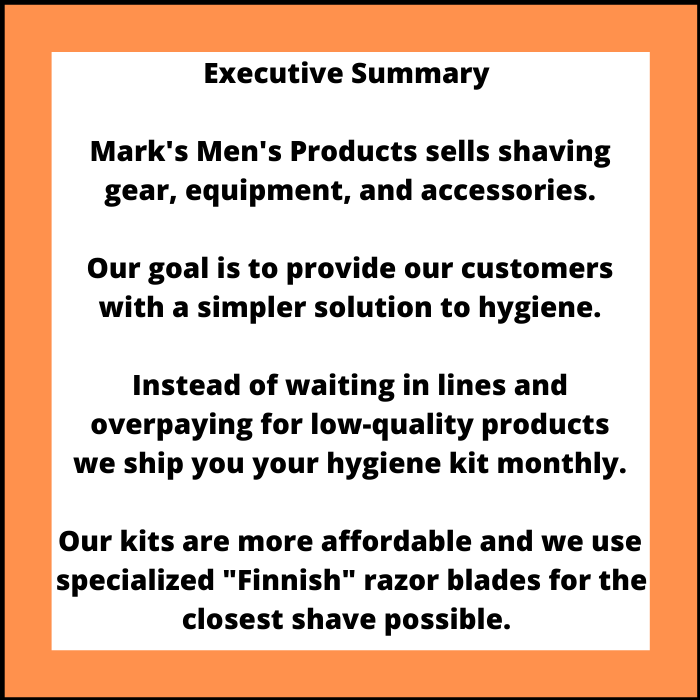
A great business example here might be:

how to write a business plan description

In this description, we covered what we’re selling and provide the credentials of the owner, which will create confidence in potential investors and partners.

Step 3: Market and Industry Research

If you don’t understand your audience or the industry you’re working in, you’re doomed. Researching the market is critical, and there’s a big difference between standard business and e-commerce here.

When you’re researching the market for a retail store, you’re very limited in who your audience is, so it’s a bit more cut and dry.

As for e-commerce, the world is your audience, but you need to narrow it down to a specific demographic to cater to your products and marketing to those people.

Ask questions like:

  • What problems do my customers have?
  • How can I solve these problems?
  • What products solve those problems?
  • When do people shop for these products?
  • How often do they purchase them?

Step 4: Operations Plans

Forget learning how to create a business plan; we all go into business to profit, right? Having an operations plan helps ensure you remain profitable by keeping all your costs in line. This section of the business plan discusses managing, staffing, preparing products, fulfilling orders, inventory management, customer service, and more.

This part is where you get to start outlining what a typical day will look like in your business. How will it run, how will people convert, and how will you fulfill those orders?

Start thinking about things such as:

  • What equipment and supplies do I need?
  • What is the chain of command; who is in charge?
  • Do I need to develop products, or am I reselling others?
  • What are my staffing needs?
  • Will my operations change or remain the same as I grow?

Make sure you keep your industry, market, and target audience in mind as you prepare your operations plan. You don’t want to venture off in the wrong direction as you dive deeper into it.

Step 5: Marketing Plans

It’s a no-brainer that you’ll have to market your business if you want to have success, but you need a plan. In e-commerce, you have a few different options, and the choices you make will determine a lot.

You need to highlight the methods you plan on using so partners and investors can see that you have a clear path to success. Some of your choices may be:

  • PPC (Pay-Per-Click)
  • SEO/Content Marketing
  • Guest Posting
  • Social Media

I recommend using a combination of all of these because they each have upsides and downsides. For example, SEO is a relatively low cost to get started, but it takes time, and if you don’t possess the knowledge yourself, you’ll have to hire an agency to do it for you.

PPC can be costly if you don’t know what you’re doing, but the results can come quickly because you’re leapfrogging over a lot of the competition.

Regardless of what marketing methods you choose for your e-commerce business plan, you need to highlight them and explain how you plan to use them.

Step 6: Costs and Revenue Predictions

Now you need to wrap up your business plan and put a nice bow on top. Based on everything you’ve included so far in your business plan, what are your costs versus your revenue? Keep in mind that first-year revenues aren’t always extravagant, but you need the potential to gain more revenue in the future.

As long as investors and partners see that you have the growth potential, they won’t worry too much about first-year losses. The goal should be to keep your costs as low as possible and your revenue as high as possible (makes sense, right?).

Predict the total cost of operation in your business in the first year or two and include that in the plan. Then, anticipate the revenue prediction as well and include that.

If you’ve followed everything in this guide, there should be a clear path that brings you to those numbers. You should know how much everything will cost to get started and operate the business for a year.

Based on your market and what your competition is doing, that’s where you get your first-year revenue predictions.

Make it transparent and keep it simple.

What Do I Do With an E-Commerce Business Plan?

Now that you know how to create a business plan, what are your next steps? What do you plan to do with the business plan? Most people will use their business plan to find investors, partners, and employees when they’re getting started.

If you’re thinking about pitching to investors, you’ll want to choose carefully because not all investors are the right choice for you. Even if someone is willing to give you what you ask, they might not be the right fit, and taking their money will lead you down the wrong path.

First, you want to look at an investor’s expertise. When they have experience in a certain area, it makes it easier for them to understand your potential, and they can offer guidance to help you succeed.

Second, in what stage is your business? Different investors specialize in different stages. Some invest in pre-seed, while others won’t even hear your pitch until you have revenue.

Third, how much do you think you need? What you think you need and what you need are two different things.

Lastly, how do you plan on involving your investors? Some investors will back you financially and offer nothing more, while others will demand consistent financial updates and reports while offering guidance and assistance. You need to determine how involved you want your investor to be in your operations.

Conclusion

Now that you know how to create a business plan, the rest is up to you. Remember that gathering information and understanding something is important, but it’s nothing if you don’t implement what you learn. Take the steps outlined in this guide and put them to work.

If this seems a little daunting, we have plenty of resources to help you. Your business plan doesn’t need to be this elaborate essay; you can complete it in a day with the right strategy.

What do you think is the most important part of creating a solid business plan?

The post How to Create an E-Commerce Business Plan appeared first on Neil Patel.

New comment by claudio-viola in "Ask HN: Freelancer? Seeking freelancer? (November 2020)"

SEEKING WORK | Location: REMOTE | EUROPE | Remote preferred Willing to relocate: unlikely, but do contact me about it

– Technologies: Javascript, Typescript, Node.js, graphql, Docker, kubernetes, jenkins, aws, cloud, devops, backend, agile, scrum, kanban, python, ruby, shell scripting, linux, chef, ansible, ci/cd

– Résumé/CV: http://bit.ly/2HucTwp

https://www.linkedin.com/in/claudio-viola/

New comment by nm-jan in "Ask HN: Who is hiring? (November 2020)"

Next Matter | Senior Software Engineer (Backend or Fullstack) | Full-time | REMOTE | Europe, Berlin, Dublin, Helsinki, Paris, Prague, Vienna, Warsaw | https://nextmatter.com

Next Matter is a remote-first software company distributed across Europe and headquartered in Berlin, Germany. We are a small, experienced team of technology and business professionals building a new operating system for companies (see more details at https://nextmatter.com).

To complete our team we are searching for a Senior Software Engineer (Backend or Fullstack; Python & Django proficiency is a must; Fullstack experience with Javascript & React is a plus).

Our tech stack:

* Python, Django & Postgres

* React & Redux

* Docker, Terraform & AWS

Beyond the opportunity to build a product and company hands-on from the very early days, we offer a flexible, remote working environment and a competitive compensation package including stock options.

Please apply via https://nextmatter.com/careers/ or by email to jan (at) nextmatter.com.

Looking forward to meeting you!