Brand awareness refers to how memorable your brand or company is to your target consumers. It’s how easily people recognize your brand when, for example, they hear your company name or see your logo.
How do you build brand awareness, especially if you’re a new company? Through a carefully crafted brand awareness campaign, that’s how.
Below, I’ll show you what brand awareness campaigns are and why they matter, and walk you through the steps to building your own successful branding campaign.
What Are Brand Awareness Campaigns?
A brand awareness campaign aims to improve your brand’s “recognizability” to your target audience. What does this mean?
You’re trying to ensure your ideal customers have the right impression of your brand. You want them to associate your company with a particular product or type of service. You’re trying to promote your unique selling point (USP) and what makes your business stand out from the competition.
Who actually uses campaigns for brand awareness? Honestly, every business can use them. Whether you’re a startup just trying to build a name for yourself in a crowded marketplace, or you’re trying to rebrand an old company, you can benefit from a brand awareness campaign.
Why Should You Create a Brand Awareness Campaign?
Brand awareness campaigns are worth it for three major reasons.
First, a campaign gives you some control over how people ultimately perceive your brand. Sure, you can’t tell people what to think, but you can certainly promote your brand in a way that nurtures positive associations.
Secondly, brand awareness helps to build trust between you and your target audience. Why does this matter? According to 53 percent of people in a recent study, trust is the second-most important factor in deciding whether to shop with a new brand (price comes first.)
The takeaway? Brand awareness campaigns help you build successful relationships with customers based on trust.
Finally, trust builds customer loyalty. On the one hand, loyal, happy customers will promote you to their friends and family, which brings you more customers in the long run. On the other hand, over time, your customer acquisition costs will decrease.
8 Tips for Building an Effective Brand Awareness Campaign
Daunted by the prospect of building a whole campaign from scratch? It’s actually surprisingly simple once you understand the eight key steps involved.
To start, look at your existing customer base. Who buys your products or follows you on social media? These are the people who already identify with your brand, so look at what they have in common. Think about what matters to them, what problems they have, and how your products help them.
Then, do some market research. Where else do your customers shop? Who are your biggest competitors? Chances are that your target audience also shops with your competitors, so spend time doing your research here.
Finally, analyze your results and build a profile for your ideal customer. What do you want them to associate your brand with? Your answer will inform your campaign.
2. Focus on the Platforms Your Audience Uses Most
A great brand awareness campaign isn’t just about who you target. It’s about where you target them, too. Where does your ideal buyer hang out? Are they watching videos on YouTube, or posting pics on Instagram? Again, this all comes down to researching your target audience and identifying where your campaign will make the most impact.
I suggest choosing one or two platforms and designing your campaign to suit those modalities. For example, if you opt for a Twitter campaign, choose a memorable hashtag and get tweeting. if you choose Instagram, create visually appealing posts and short, catchy Instagram Stories.
Rather than spreading your energy across multiple social media platforms, focus on the ones your target customers use most often.
3. Set Achievable Goals for Your Campaign
Next, set some concrete short-term and long-term goals. Decide:
what you want to achieve from your campaign
how the campaign fits into your wider, long-term plans for your brand
which strategies you will use to achieve your goal e.g., PPC ads, social media posts, influencer marketing, and so on
how you’ll track your progress
Without concrete goals, you risk running a campaign without direction or a clear purpose. Every successful marketing strategy begins with a set goal or outcome in mind, so spend time reflecting on what you hope to achieve.
4. Partner With Complementary Brands
A brand partnership means working with a complementary brand to create value, increase your exposure, and expand your audience reach.
You shouldn’t choose a direct competitor, but rather a company with a broadly similar target audience.
Take the IKEA and LEGO partnership, for example. On the surface, their target audiences look different. When you look a little closer, both companies are all about building cool things. You can imagine yourself building LEGO at an IKEA table, or placing a LEGO toy on IKEA furniture.
In other words, both brands conjure similar impressions, which is exactly what we’re looking for in a brand awareness campaign built between partner companies:
Choose a brand you can partner with to best show off your USP.
5. Be Active and Engaging Online
In a highly competitive marketplace, consumer engagement really counts. Whether you’re replying to tweets, answering customer support messages, or simply liking user-generated content on Instagram, every communication adds up over time.
Remember, while you’re trying to build your brand’s presence online, you’re also trying to set the right impression. Do you want to be known as a responsive and engaging company that cares about its target audience? Then, start communicating!
Also, make sure you’re creating regular content. If you can’t post daily, then at least get online four or five times per week to build some traction behind your social media accounts.
6. Highlight Your Brand Personality
The whole point of a brand awareness campaign is to influence how people perceive your brand, so highlight your company’s personality each time you post something new. Keep your brand messaging consistent, and you’ll bring your target audience one step closer to making the right associations with your business.
Warby Parker, for example, is a quirky eyewear company. To position their brand as fun, fresh, and engaging, they post content like cute animals wearing their glasses:
They also engage with customers by sharing user-generated content that most aligns with their brand:
In short, they see every post as an opportunity to promote their personality and build brand awareness. This is what you’re aiming for.
Remember, your business is unique, so use your campaign to highlight what makes it so special.
7. Improve the Customer Experience
For 80 percent of customers, the experience matters just as much as whatever products companies sell. Meaning, if you want to leave a positive, lasting impression on your customers, you should work on improving the customer experience.
Finally, on average, UX-focused companies are up to 60 percent more profitable than others.
In other words, your brand awareness campaign shouldn’t just be about talking up your company. It should be about showing customers how you can help them and why their needs matter to you.
Not sure how your current user experience stacks up? Encourage customers to leave reviews or send feedback so you can see how to improve your service offerings.
While it’s impossible to act on all feedback, take note of common themes and identify where there’s room for improvement. Although no one likes negative reviews, they’re actually a key tool for leveling up your business in the long run. After all, you can’t fix problems no one tells you about, right?
In short, you can quickly boost your brand awareness by prioritizing the customer experience and showing people how much you value their feedback.
8. Track Your Results
How do you know if your campaign is working? Well, you probably won’t unless you set some criteria for measuring your success.
The metrics you measure vary depending on the marketing strategy used. For example, if you run a campaign on Twitter, you might track things like the number of impressions, shared tweets, and hashtag mentions. If you decide to run paid ads, you could use Google Analytics to track your click-through rate (CTR) and conversions.
What’s important is that you measure your results and implement strategy changes if necessary.
2 Successful Brand Awareness Campaign Examples
OK, so that’s how you can create a campaign, but what does it take to make your campaign truly great? To find out, let’s check out two companies that nailed their campaigns.
1. Corona: Pay With Plastic
Corona is a hugely popular brand of beer, and it’s often associated with summer, drinking on the beach, and good times.
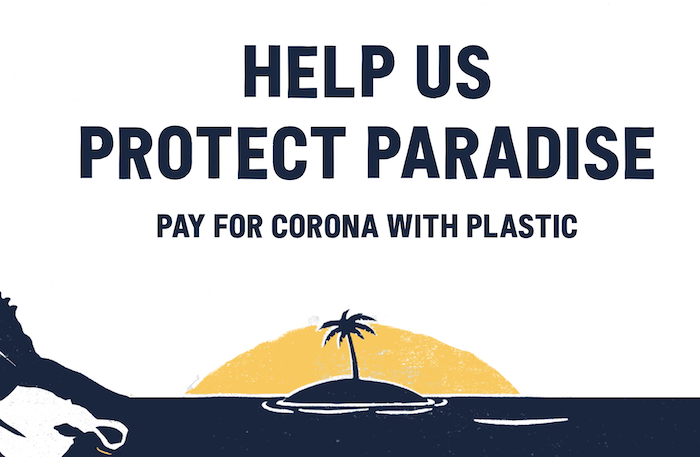
Back in 2019, to celebrate World Oceans Day, Corona launched a campaign, “Protect Paradise,” to help protect the environment. They encouraged customers to clean up their local beaches and hand over the plastic in exchange for free beer:
The results are positive brand associations based on social responsibility and protecting our environment. The Twitter campaign alone generated 14.1 million impressions and a 1 percent engagement rate, which is pretty impressive.
2. MoonPie: Super Bowl Commercial
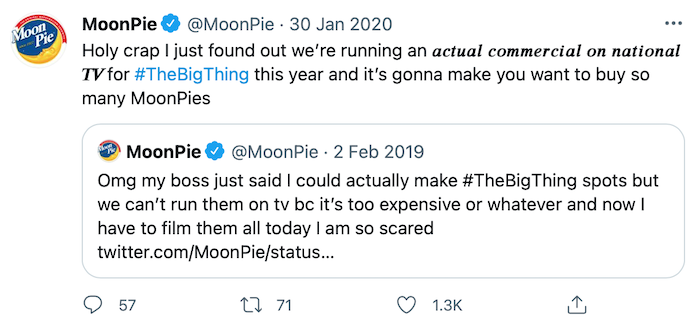
If there’s one thing I love about MoonPie, it’s their distinctive, instantly recognizable voice. Back in 2020, MoonPie ran a commercial for the Super Bowl, and they released the news to Twitter followers in a typically fun way:
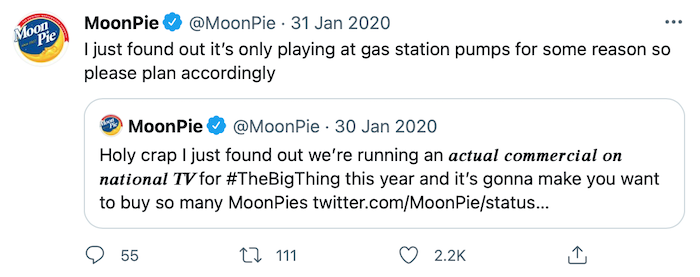
You’ll note there’s an emphasis on purchasing the product, too, which is a great example of blending voice with persuasive marketing. In the end, the commercial only ran at gas stations, but as expected, MoonPie turned the news into a funny tweet:
The upshot? You can use these types of campaigns to let your distinctive brand personality shine.
Frequently Asked Questions About Brand Awareness Campaigns
Now we’ve covered all the key points, let me leave you with some takeaway tips.
What Are Brand Awareness Campaigns?
A brand awareness campaign is designed to improve consumers’ awareness of your brand and what it stands for. It should boost your overall recognizability.
Why Should I Create Brand Awareness Campaigns?
Brand awareness campaigns can help you stand out from competitors, improve customer loyalty, and even reduce your customer acquisition costs over time. If you’re looking to grow your business and build customer relationships organically, building a campaign for brand awareness may help.
How Do You Create a Brand Awareness Campaign?
First, set a clear goal and identify your target audience. Then, focus on the platforms where your target audience hangs out the most and work on a few strategies at a time. Engage with followers and make them feel like valuable members of your community.
How Do You Track Your Brand Awareness Campaigns?
You can track your campaign’s performance using analytics tools like Google Analytics. You can also use the metrics tools offered by social media platforms. However you do it, just make sure you’re tracking your campaigns!
A brand awareness campaign is designed to improve consumers’ awareness of your brand and what it stands for. It should boost your overall recognizability.
Brand awareness campaigns can help you stand out from competitors, improve customer loyalty, and even reduce your customer acquisition costs over time. If you’re looking to grow your business and build customer relationships organically, building a campaign for brand awareness may help.
”
}
}
, {
“@type”: “Question”,
“name”: “How Do You Create a Brand Awareness Campaign?”,
“acceptedAnswer”: {
“@type”: “Answer”,
“text”: ”
First, set a clear goal and identify your target audience. Then, focus on the platforms where your target audience hangs out the most and work on a few strategies at a time. Engage with followers and make them feel like valuable members of your community.
”
}
}
, {
“@type”: “Question”,
“name”: “How Do You Track Your Brand Awareness Campaigns?”,
“acceptedAnswer”: {
“@type”: “Answer”,
“text”: ”
You can track your campaign’s performance using analytics tools like Google Analytics. You can also use the metrics tools offered by social media platforms. However you do it, just make sure you’re tracking your campaigns!
”
}
}
]
}
Brand Awareness Campaign Conclusion
A brand awareness campaign allows you to shape how potential customers perceive your company. With the right campaign, you can directly influence what people think when they hear your brand’s name, and you can ensure that customers remember your name for the right reasons!
In other words, it is the backbone of a successful marketing strategy, and it’s surprisingly easy to implement. However, if you’re still a little stuck on how to get started, check out my consulting services.
Have you created a brand awareness campaign yet? Which strategies did you try?
It is time to learn about the business credit reporting agencies. More specifically, Equifax reporting.
But let us start with some definitions and background on business credit.
Business Credit
This is credit in the name of a business. It is not tied to the creditworthiness of its owner or owners. Instead, business credit scores depend on how well a company can pay its bills. Hence consumer and business credit scores can vary dramatically.
Business Credit Benefits
There are no demands for a personal guarantee. You can quickly get business credit regardless of personal credit quality. And there is no personal credit reporting of business accounts. Business credit utilization is not going to affect your consumer FICO score. Plus the business owner is not going to be personally liable for the debt the business incurs.
Business Credit Details
Being accepted for business credit is not automatic. Building business credit requires some work. Some of the steps are intuitive, and some of them are not.
Fundability
Fundability is the current ability of our business to get funding. Some factors are within your control. Others (like your time in business) are not. Your online presence and data are one area which is at or close to 100% with your control.
Business Credit, Fundability, and Business Funding Applications
The better your business credit and fundability are, the more likely you are going to get approval for business financing. Today, let us concentrate on Equifax reporting.
There are Three Different Credit Bureaus – But What Differentiates Equifax Reporting?
What distinguishes the three biggest credit bureaus? And can you use that information to your advantage?
There are three main credit bureaus for business: Dun & Bradstreet, Experian, and Equifax. CreditSafe and FICO SBSS are also players in this space.
In the business world Equifax and Experian are up there, but it is Dun & Bradstreet which is the major player.
Dun and Bradstreet has more than 10 times the records of the next closest reporting agency. For more details, see dnb.com/about-us/company.html. Even when talking about Equifax reporting, it makes sense to start with Dun and Bradstreet. You are going to have to start the business credit building process with them anyway.
Dun & Bradstreet
Go to Dun and Bradstreet’s website and look for your business, at dnb.com/duns-number. What happens if you can’t find it? Then get a free D-U-N-S number. You are going to always need a D-U-N-S number to start building business credit. Go here to get a D-U-N-S number: dnb.com/duns-number/get-a-duns.html.
D-U-N-S Numbers
A D-U-N-S number is how Dun and Bradstreet gets your company into their system. And a D-U-N-S number plus 3 payment experiences leads to a PAYDEX score. A payment experience is a record of a purchase from a business which reports to a credit reporting agency. In this case, Dun and Bradstreet. Once you are in Dun and Bradstreet’s system, search Equifax and Experian’s sites for your business. You can do so at creditsuite.com/reports.
The company gets its data from a data sharing agreement with the Small Business Exchange, Net 30 type industry trade credit information, and from a wide variety of suppliers that provide products and services to businesses on an invoice basis.
Equifax combines financial data with industry trade credit data. They add in utility and telephone data and public record information (bankruptcies, judgments, and tax liens).
Here’s what that report says.
Company Identifying Information
The first section is devoted to identifying information about your company, namely your business name and address and telephone number. This section will also include your Equifax ID. An Equifax ID is how Equifax can tell your business from similarly-named businesses.
Credit Risk Score
The next section is about the Credit Risk Score. This score runs from 101 to 992. Higher numbers are better. This section also shows key factors.
Key factors are positives and negatives about your business, such as how old your oldest account is, and whether you have any charge-offs, and the size of your business.
Credit Utilization
The next section shows credit utilization. This is shown as a pie chart. It graphically shows which percent of your available credit line you are using. It also has identifying labels to show how much each percentage truly is. But it is only for your financial accounts.
The next part is your Payment Index. The score runs from 0 to 100. Higher numbers are better. It also shows Industry Median.
There is also a table explaining the numbers:
90+: Paid as Agreed
80-89: 1-30 days overdue
60-79: 31-60 days overdue
40-59: 61-90 days overdue
20-39: 91-120 days overdue
1-19: 120+ days overdue
Days Beyond Terms
This is a line graph. It shows the average days beyond terms by date reported. It is for non-financial accounts only. Plus it shows any recent trends, so if you’ve improved your payment habits, it will show up here.
Business Failure Score
The next piece is on your Business Failure Score. This score runs from 1000 to 1880. It shows its own key factors, like recent balance information.
Inquiries
The next section is devoted to inquiries. It shows the date, and whether it was an inquiry on a financial or non-financial account. This is a rather short part of the report.
Bureau Messages
The bureau messages part, appears to be a free form field. It seems its purpose is to add notes to a profile. These can be notes on the number of locations, or business aliases.
Bureau Summary Data
The bureau summary data section contains a wealth of information. It shows:
The number of financial and non-financial accounts
Date the credit became active
Number of charge offs
Total dollars past due
Most severe status in 24 months
Single highest credit extended
Total current card exposure
Median balance
Average open balance
It also shows Recent Activity, which includes:
The number of accounts delinquent
New accounts opened
Inquiries and
Accounts updated
Public Records
The public records section has information on:
Type Status:
Bankruptcy
Judgments
Whether judgments are satisfied or not
Liens filed and opened, or released
Number
Dollar and
Most recent date filed
If there are none reported, then the date field will indicate as much.
Additional Information
The final section appears to contain somewhat miscellaneous information, which probably doesn’t fit in well anywhere else. such as alternate company Names and DBAs.
It also contains:
Owners and Guarantor Names (name, type, date reported)
Business and Guarantor Comments (seems to be another free form field) and
Report Details (this shows the date the report was generated)
Improving Your Equifax Report
Now that you know what goes into it, you can see that some of the more important pieces of data Equifax looks into are:
public records
credit usage
and how you handle your financial and nonfinancial accounts
Improve your Equifax score by:
Clearing your debts as quickly as possible and not going delinquent
Keeping credit utilization within reason, as that makes it easier to pay your bills
And avoiding late payments
Whatever improves your Equifax report is bound to improve your reports at D&B and Experian. Paying off accounts pays dividends, as does avoiding bankruptcies.
Disputing Issues with Your Equifax Report
Equifax will not change your scores without proof. They are starting to accept more and more online disputes. Include proofs of payment with it. These are documents like receipts and cancelled checks.
Fixing credit report errors also means you specifically spell out any charges you challenge. Make your dispute as crystal clear as possible. If you need to snail mail anything in, then use certified mail so that you will have proof that you sent in your dispute. Correct Equifax issues at: equifax.com/small-business-faqs/#Dispute-FAQs. Be specific about the concerns with your report.
Monitoring Your Business Credit Scores and Reports at the Major Business CRAs
Add monitoring for all three big CRAs together for a year and it costs $468 for Dun and Bradstreet, $189 for Experian, and $224.40 for Equifax (with the special). So this is for a grand total of $881.40!
Monitoring Your Dun and Bradstreet, Experian, and Equifax Credit Scores and Reports
You can monitor your business credit at Dun and Bradstreet, Equifax, and Experian through Credit Suite, for considerable savings over what it would cost you at those different credit bureaus. And this is all in one place! Credit Suite offers monitoring through the Business Finance Suite (through Nav). See what credit issuers and lenders see so you can directly improve your scores and get the business credit and funding you need. See suitelogin.com and creditsuite.com/monitoring.
Equifax Data Breach
No blog post on Equifax reporting would be complete without at least mentioning the recent data breach. The company does seem to be better about making sure that consumers can get monitoring without having to jump through quite so many expensive hoops.
In addition, any pursuit of the company through Congress seems to have ground to a screeching halt. However, that may be due to the 2020 pandemic and election.
Will Equifax’s current and former management end up back in the hot seat again? Only time will tell.
Equifax gets much of its data from the Small Business Financial Exchange.
Monitoring reports from all three of the bigger business credit reporting agencies is expensive. But you can save 90% by monitoring your Dun and Bradstreet, Experian, and Equifax scores through Credit Suite.
It is time to learn about the business credit reporting agencies. More specifically, Equifax reporting.
But let us start with some definitions and background on business credit.
Business Credit
This is credit in the name of a business. It is not tied to the creditworthiness of its owner or owners. Instead, business credit scores depend on how well a company can pay its bills. Hence consumer and business credit scores can vary dramatically.
Business Credit Benefits
There are no demands for a personal guarantee. You can quickly get business credit regardless of personal credit quality. And there is no personal credit reporting of business accounts. Business credit utilization is not going to affect your consumer FICO score. Plus the business owner is not going to be personally liable for the debt the business incurs.
Business Credit Details
Being accepted for business credit is not automatic. Building business credit requires some work. Some of the steps are intuitive, and some of them are not.
Fundability
Fundability is the current ability of our business to get funding. Some factors are within your control. Others (like your time in business) are not. Your online presence and data are one area which is at or close to 100% with your control.
Business Credit, Fundability, and Business Funding Applications
The better your business credit and fundability are, the more likely you are going to get approval for business financing. Today, let us concentrate on Equifax reporting.
There are Three Different Credit Bureaus – But What Differentiates Equifax Reporting?
What distinguishes the three biggest credit bureaus? And can you use that information to your advantage?
There are three main credit bureaus for business: Dun & Bradstreet, Experian, and Equifax. CreditSafe and FICO SBSS are also players in this space.
In the business world Equifax and Experian are up there, but it is Dun & Bradstreet which is the major player.
Dun and Bradstreet has more than 10 times the records of the next closest reporting agency. For more details, see dnb.com/about-us/company.html. Even when talking about Equifax reporting, it makes sense to start with Dun and Bradstreet. You are going to have to start the business credit building process with them anyway.
Dun & Bradstreet
Go to Dun and Bradstreet’s website and look for your business, at dnb.com/duns-number. What happens if you can’t find it? Then get a free D-U-N-S number. You are going to always need a D-U-N-S number to start building business credit. Go here to get a D-U-N-S number: dnb.com/duns-number/get-a-duns.html.
D-U-N-S Numbers
A D-U-N-S number is how Dun and Bradstreet gets your company into their system. And a D-U-N-S number plus 3 payment experiences leads to a PAYDEX score. A payment experience is a record of a purchase from a business which reports to a credit reporting agency. In this case, Dun and Bradstreet. Once you are in Dun and Bradstreet’s system, search Equifax and Experian’s sites for your business. You can do so at creditsuite.com/reports.
The company gets its data from a data sharing agreement with the Small Business Exchange, Net 30 type industry trade credit information, and from a wide variety of suppliers that provide products and services to businesses on an invoice basis.
Equifax combines financial data with industry trade credit data. They add in utility and telephone data and public record information (bankruptcies, judgments, and tax liens).
Here’s what that report says.
Company Identifying Information
The first section is devoted to identifying information about your company, namely your business name and address and telephone number. This section will also include your Equifax ID. An Equifax ID is how Equifax can tell your business from similarly-named businesses.
Credit Risk Score
The next section is about the Credit Risk Score. This score runs from 101 to 992. Higher numbers are better. This section also shows key factors.
Key factors are positives and negatives about your business, such as how old your oldest account is, and whether you have any charge-offs, and the size of your business.
Credit Utilization
The next section shows credit utilization. This is shown as a pie chart. It graphically shows which percent of your available credit line you are using. It also has identifying labels to show how much each percentage truly is. But it is only for your financial accounts.
The next part is your Payment Index. The score runs from 0 to 100. Higher numbers are better. It also shows Industry Median.
There is also a table explaining the numbers:
90+: Paid as Agreed
80-89: 1-30 days overdue
60-79: 31-60 days overdue
40-59: 61-90 days overdue
20-39: 91-120 days overdue
1-19: 120+ days overdue
Days Beyond Terms
This is a line graph. It shows the average days beyond terms by date reported. It is for non-financial accounts only. Plus it shows any recent trends, so if you’ve improved your payment habits, it will show up here.
Business Failure Score
The next piece is on your Business Failure Score. This score runs from 1000 to 1880. It shows its own key factors, like recent balance information.
Inquiries
The next section is devoted to inquiries. It shows the date, and whether it was an inquiry on a financial or non-financial account. This is a rather short part of the report.
Bureau Messages
The bureau messages part, appears to be a free form field. It seems its purpose is to add notes to a profile. These can be notes on the number of locations, or business aliases.
Bureau Summary Data
The bureau summary data section contains a wealth of information. It shows:
The number of financial and non-financial accounts
Date the credit became active
Number of charge offs
Total dollars past due
Most severe status in 24 months
Single highest credit extended
Total current card exposure
Median balance
Average open balance
It also shows Recent Activity, which includes:
The number of accounts delinquent
New accounts opened
Inquiries and
Accounts updated
Public Records
The public records section has information on:
Type Status:
Bankruptcy
Judgments
Whether judgments are satisfied or not
Liens filed and opened, or released
Number
Dollar and
Most recent date filed
If there are none reported, then the date field will indicate as much.
Additional Information
The final section appears to contain somewhat miscellaneous information, which probably doesn’t fit in well anywhere else. such as alternate company Names and DBAs.
It also contains:
Owners and Guarantor Names (name, type, date reported)
Business and Guarantor Comments (seems to be another free form field) and
Report Details (this shows the date the report was generated)
Improving Your Equifax Report
Now that you know what goes into it, you can see that some of the more important pieces of data Equifax looks into are:
public records
credit usage
and how you handle your financial and nonfinancial accounts
Improve your Equifax score by:
Clearing your debts as quickly as possible and not going delinquent
Keeping credit utilization within reason, as that makes it easier to pay your bills
And avoiding late payments
Whatever improves your Equifax report is bound to improve your reports at D&B and Experian. Paying off accounts pays dividends, as does avoiding bankruptcies.
Disputing Issues with Your Equifax Report
Equifax will not change your scores without proof. They are starting to accept more and more online disputes. Include proofs of payment with it. These are documents like receipts and cancelled checks.
Fixing credit report errors also means you specifically spell out any charges you challenge. Make your dispute as crystal clear as possible. If you need to snail mail anything in, then use certified mail so that you will have proof that you sent in your dispute. Correct Equifax issues at: equifax.com/small-business-faqs/#Dispute-FAQs. Be specific about the concerns with your report.
Monitoring Your Business Credit Scores and Reports at the Major Business CRAs
Add monitoring for all three big CRAs together for a year and it costs $468 for Dun and Bradstreet, $189 for Experian, and $224.40 for Equifax (with the special). So this is for a grand total of $881.40!
Monitoring Your Dun and Bradstreet, Experian, and Equifax Credit Scores and Reports
You can monitor your business credit at Dun and Bradstreet, Equifax, and Experian through Credit Suite, for considerable savings over what it would cost you at those different credit bureaus. And this is all in one place! Credit Suite offers monitoring through the Business Finance Suite (through Nav). See what credit issuers and lenders see so you can directly improve your scores and get the business credit and funding you need. See suitelogin.com and creditsuite.com/monitoring.
Equifax Data Breach
No blog post on Equifax reporting would be complete without at least mentioning the recent data breach. The company does seem to be better about making sure that consumers can get monitoring without having to jump through quite so many expensive hoops.
In addition, any pursuit of the company through Congress seems to have ground to a screeching halt. However, that may be due to the 2020 pandemic and election.
Will Equifax’s current and former management end up back in the hot seat again? Only time will tell.
Equifax gets much of its data from the Small Business Financial Exchange.
Monitoring reports from all three of the bigger business credit reporting agencies is expensive. But you can save 90% by monitoring your Dun and Bradstreet, Experian, and Equifax scores through Credit Suite.
Dear recruiter, My name is Gloria Kambua and I am a Software developer having 2 years of experience and I am looking for a junior software engineer/developer role that welcomes a junior and at the same time looking for collaborative team to work with.
Grönska Stadsodling | UI Developer/Designer (mid-level) | Stockholm, Sweden (ONSITE) | Full-time | https://www.gronska.org/
At Grönska, we develop technology for vertical farming and operate one of Europe’s largest vertical farms. We’ve developed GrowOff, an indoor growing module for restaurants and supermarkets.
You will help craft the GrowOff end-to-end user experience, primarily developing responsive and mobile-first user interfaces (web and/or native apps) but also extending to user interactions with the hardware (IoT)!
This website uses cookies to improve your experience. We'll assume you're ok with this, but you can opt-out if you wish.AcceptRejectRead More
Privacy & Cookies Policy
Privacy Overview
This website uses cookies to improve your experience while you navigate through the website. Out of these, the cookies that are categorized as necessary are stored on your browser as they are essential for the working of basic functionalities of the website. We also use third-party cookies that help us analyze and understand how you use this website. These cookies will be stored in your browser only with your consent. You also have the option to opt-out of these cookies. But opting out of some of these cookies may affect your browsing experience.
Necessary cookies are absolutely essential for the website to function properly. This category only includes cookies that ensures basic functionalities and security features of the website. These cookies do not store any personal information.
Any cookies that may not be particularly necessary for the website to function and is used specifically to collect user personal data via analytics, ads, other embedded contents are termed as non-necessary cookies. It is mandatory to procure user consent prior to running these cookies on your website.