
How to Go Viral & the Science of Virality – Marketing Lessons from Internet Cats & Memes
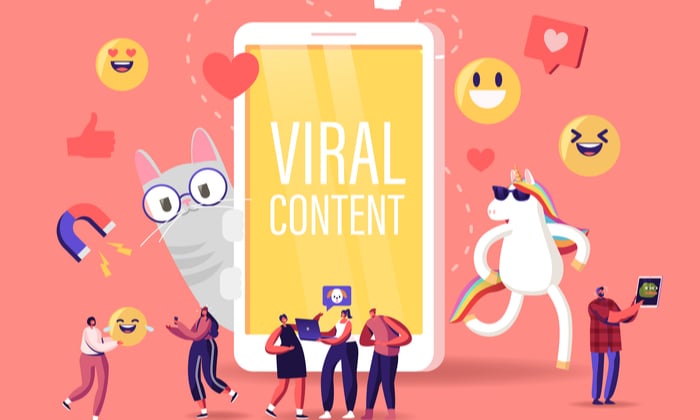
We marketers would like to believe we dominate the web, but we secretly admit to ourselves that cats and memes are the true rulers. It can be frustrating to pour hours of work and money into content, only to watch the next Evil Kermit or Sponge Bob meme pull more traffic. Is there a way to learn from the memes without pandering?
As it happens, a cottage industry is popping up. Specialists like Matthew Inman and Jack O’Brien are approaching viral content and how to go viral as a product in and of itself. Meanwhile, researchers like Jonah Berger are studying the science of virality and uncovering what makes memes tick. Leveraged properly, this knowledge can propel you to “the front page” of the web.
But beware. Make a wrong move and you could become the web’s next sacrificial lamb.
Meet Jonah Berger, Viral Scientist

Image by The Wharton School University of Pennsylvania
Professor Jonah Berger researches marketing at the University of Pennsylvania. But he’s not studying the science of advertising or market research. He’s asking a more modern question: “What makes ideas viral and products spread contagiously?”
Even New York Times writers assumed that, of course, the answer would be “to write anything about sex,” or “to title articles ‘How Your Pet’s Diet Threatens Your Marriage,’ and ‘Why It’s Bush’s Fault.’”
But when Jonah Berger and his colleagues analyzed New York Times articles sent via email for three months, they uncovered some unexpected results. While these three traits of viral content shouldn’t be all that shocking:
- surprising
- interesting
- intense
The next two discoveries might be a bit more eye-catching:
- positive
- actionable (practically useful)
Remember, this was an analysis of a news website, where the headlines are all doom and gloom and the stories are about other people, not us. While the intensity of emotions had a lot to do with whether the content was going to get shared, the most shareable content elicited strong positive emotions, like awe, and offered practical advice.
In fact, the power of awe was so overwhelming that one type of article outperformed all the others, to everybody’s amazement: science articles.
As Berger told the New York Times:
We anticipated that people would share articles with practical information about health or gadgets, and they did, but they also sent articles about paleontology and cosmology. You’d see articles shooting up the list that were about the optics of deer vision.
While stories that evoked intense feelings of anger or anxiety were more likely to be shared, stories that evoked feelings of sadness were not.
But the power of awe was one of the most measurable differences between viral content and non-viral content. Awe was distinct from surprise in the sense that “it involves the opening and broadening of the mind.” And it beat equivalent levels of anger and anxiety every time.
Jonah Berger isn’t the only one to suggest this. Will Natha is a former developer at BuzzFeed. Will Nathan didn’t perform any kind of study, but at WMILESN, he shared his sudden insight that viral content “represent[s] or uncover[s] something pleasurable that we could never have conceived with our own minds.”
But what is perhaps most interesting about all of this is that the most emailed articles actually tended to be longer than average. Berger was careful to caution that this could have been because the topics were more engaging in the first place, but it certainly flies in the face of the “everything above the fold” mentality prominent on the web.
How to Go Viral According to Matthew Inman, Creator of The Oatmeal
In 2009, Matthew Inman created a webcomic called The Oatmeal. By 2010, the comic was receiving four million unique visitors each month. In 2012, the site netted him $500,000. But the comic, quiz, and story site wasn’t how Inman got his start. Inman learned how to attract attention online a few years earlier, when he launched a dating site called Mingle2.
Inman’s dating site grew from zero to 2 million page views in 6 months. His secret? Viral marketing.
The site was instantly scooped up by a competitor, but he continued to market the site for them. In the first year, it was bringing in 40 million page views each month, with over a million registered users. How did he do it? With quizzes like this:
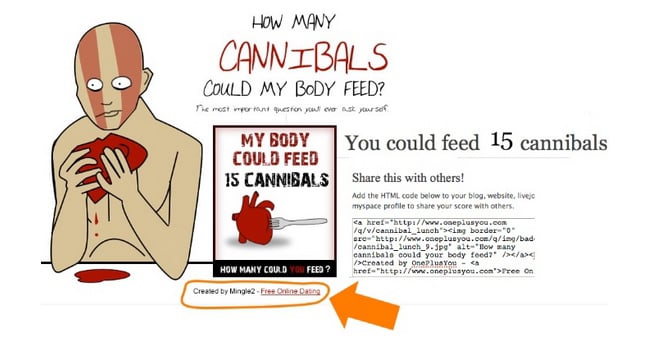
Inman’s quirky quizzes were designed to appeal to social news sites like Digg (now replaced by the larger descendent: Reddit). They spread like wildfire, and with badges that linked back to his dating site, they also skyrocketed it to the top of Google.
Inman’s linking tactics were eventually seen as underhanded by Google, and many of the sites he did work for were penalized. Inman doesn’t recommend using this spammy tactic, but the implications are clear. Viral content, executed properly, can build massive exposure.
The Oatmeal is evidence of this. The site uses none of Inman’s underhanded link-building tactics, relying instead on its ability to continue replicating through emails and social networks. What was the secret to his content’s success? Inman has called it “basically just comedy 101.” His slide show for Gnomedex explained:
– Find a common gripe
– Pick things everyone [your target influencers, anyway] can relate to
– Create easily digestible content
- lots of visuals
- not too text heavy
- top 10 lists
- read crappy magazines (How to get six pack abs by exercising only 5 seconds a day!)
– Create an infographic
– Talk about memes and current events
– Incite an emotion
But, in my opinion, the real gem of the presentation was this:
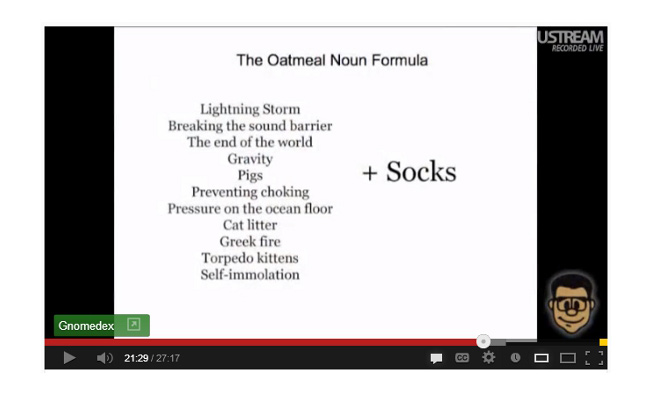
Which results in things like this:
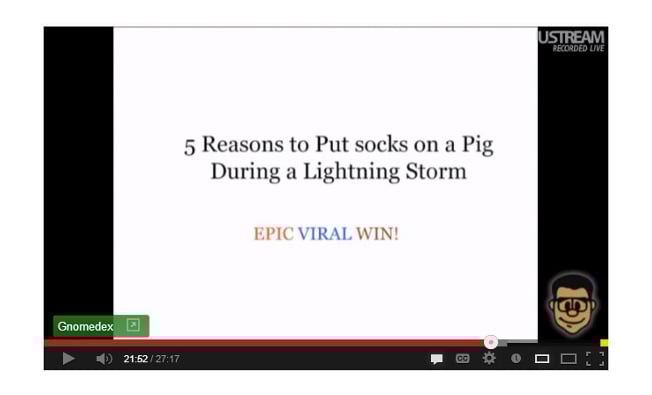
This formula may sound like it’s reserved for the comedians of the internet, but consider the work of New Yorker writer Malcolm Gladwell, the influential writer behind Blink and The Tipping Point. While Gladwell doesn’t abstain from humor, his articles are far more serious. But they often point out bizarre connections between subjects we might think of as unrelated. His article “Offensive Play: How different are dogfighting and football?” and his wildly popular TED video “Choice, Happiness, and Spaghetti Sauce” have a similar ring to them.
Inman’s tactics seem more akin to what we think of as viral. In contrast with Jonah Berger’s research results, he emphasizes short content, audience rapport, and visuals. But we can’t ignore the elements of surprise and positive emotion (humor). Inman’s work sometimes even goes so far as to elicit interest, discuss science, go on at length, and maybe even inspire awe.
So are we kidding ourselves and insulting the intelligence of our audience when we assume things need to be short and simple?
How to Go Viral According to Jack O’Brien’s, Founder of Cracked
Many people are aware of Cracked, which used to be one of the most popular humor sites on the web. What many people may not realize is that Cracked’s articles are, for the most part, and for lack of a better phrase to describe them, “guest posts.”
The site, which ranks in the top 1 percent of traffic on the web (according to Alexa), is built around a simple idea. Get enough people suggesting topic ideas, and some of them will be interesting. Weed out the chaff, put it into a list format, cite your sources, and make it hilarious.
Why the list format? According to Jack, “When a piece of content gets shared on a social media site, or forwarded in an email, the title is usually the only thing the reader has to go on when deciding whether or not to click. The lists say ‘here is what you’re going to get, and here’s how many of them you’ll be getting.’”
In line with Jonah Berger’s research, Cracked articles can actually be quite informative. Consider 6 Ridiculous Myths About the Middle Ages Everyone Believes. From this piece we learn that:
- Scientific progress wasn’t dead.
- They were perhaps too into bathing.
- Knights were so out of control even the Church had trouble controlling them.
- Prostitution was legal.
- When it came to household duties, men and women were equals by default.
- People who lived through birth could be expected to reach the age of 50 rather easily.
The post is about 2,500 words long, which is fairly typical for the site.
It has been viewed about 1.5 million times, and it’s been liked on Facebook about 17.8 thousand times.
Here again, we see the same properties. Humor. Surprise. Mind-expansion. Interest.
You might think a site like Cracked would have fairly loose guidelines, asking for little more than “make sure it’s funny.” But their Writer’s Workshop actually has very rigorous guidelines; guidelines that have made the site one of the most successful on the web. Some of the takeaways include:
- Keep the structure simple, like “What You Think You Know” “But Actually.”
- Read the article out loud.
- Read your sources and don’t say something that they didn’t say.
- Use trustworthy sources, not personal blogs, Yahoo Answers, or Wikipedia for anything but general knowledge.
- The editors will likely update the article to make it funnier and easier to read.
- Mine the sources for the most incredible information and ditch everything else.
- Spell check.
- Aim for 2000 to 3000 words.
- Start the intro with a joke or something clever. Don’t waste time introducing the subject.
- Keep biases out.
- Don’t be time sensitive.
- Don’t use other people’s jokes.
Notice that Cracked starts with things like interest and authoritative sources before emphasizing humor. Humor is merely a spice to dress an already interesting concept and make it even more shareable. Once again, we’re seeing the theme of awe. Start with a concept that will blow people’s minds, then find a way to make it even more interesting.
We’re seeing definite themes here. Viral content isn’t always short, it’s often actually very informative, and in many ways it’s not what we expect it to be. So, what about the memes? The amateur cat photos, the badly drawn recycled comics, the completely ridiculous videos? The things on the web like…
How to Go Viral According to Eric Nakagawa, Creator of I Can Has Cheezburger?
In 2007, a software developer named Eric Nakagawa posted a photo of a fat cat he found on the internet to his site. He attached a caption: “I can has cheezburger?” It was meant as a joke, and he went on to post similar cat photos with captions over the following weeks. As soon as he transformed the site into a blog, allowing people to leave comments, the site went viral.
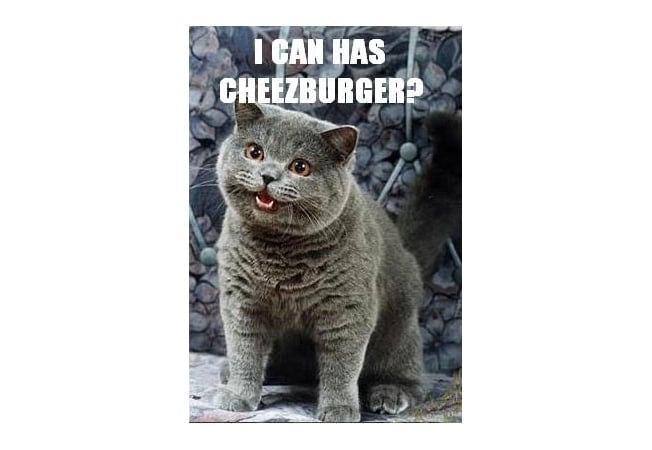
He started in January. In March, he saw 375,000 hits. By May, the figure was 1.5 million. Investors acquired the site for $2 million in 2007. The site is now a component of the Cheezburger Network, which also includes the wildly popular FAIL Blog (which popularized FAIL as an exclamation) and Know Your Meme.
Cheezburger’s success was as much a surprise to Nakagawa as it would be to anybody. The cause of the success apparently remains a mystery to him, but he has argued that the reason for its sustained success was community building. Readers rate and comment on posts, as well as create them through a user interface that allows people to make their own memes.
What was the cause of Cheezburger’s success? A hint at the answer comes from the underground internet forum 4chan, a place where the “I can has cheezburger” baby/internet-speak clearly drew its inspiration.
According to a study by Christian Bauckhage of the Fraunhofer Institute for Intelligent Analysis and Information Systems, this probably isn’t uncommon. After analyzing the history of 150 internet memes, collecting data from Google Insights, Delicious, Digg, and StumbleUpon, he concluded that internet memes spread through homogeneous online communities and social networks, not the internet at large.
It’s worth pointing out that what we tend to consider “social networks” don’t necessarily play a big part in the creation of memes. Memes become popular on sites like 4chan, Reddit, StumbleUpon, Imgur, and of course, YouTube.
All of these sites share a common theme: they are more or less anonymous for the majority of the users.
And this, perhaps, is a crucial part of what makes memes tick. They don’t start out on Facebook, where they would quickly spread through a tight-knit group of friends and then die. They start in online communities, where they are shared with large anonymous groups of people who share a common “internet culture.”
How to Go Viral According to Limor Shifman
But this isn’t all that makes a meme. According to a study of YouTube videos by Limor Shifman, memes often have:
- a focus on ordinary people
- flawed masculinity
- humor
- simplicity
- repetitiveness
- “whimsical” content
Shifman argues that these traits make memes seem “incomplete,” which, paradoxically, demands further dialogue and mimicking. Like this:
Original Video

Mimic
Memes are viral, but aren’t quite the same as “viral content.” A piece of viral content is shared. A meme is mimicked, emulated, and reproduced. Memes are a source of creative outlet for online communities, and their message and content can’t be controlled.
Resolving the Relevancy Paradox
It’s impossible to use a meme to target consumers because consumers control the message of a meme. And how relevant can viral content be if it needs to fit the restrictions of being hilarious, surprising, and awe-inspiring? Is it possible to resolve virality and relevancy, or are the two forever at odds?
We’ll get to that, but first we need to ask a controversial question.
Is Targeting Overrated?
The answer to this question depends on who you ask, how you define targeting, and the product you’re selling. Here, when I’m talking about targeted content, I’m talking about sales messages intended for people already interested in buying a product like yours. Here are some cases where targeting can be especially important:
- Consumers don’t think they need the product until, suddenly, they do, and they make a purchase very soon after this realization.
- Consumers need to buy the product only once, and retention is unimportant.
Without a doubt, targeting should play a part in any marketing effort. But there are reasons why less targeted efforts can sometimes be more fruitful:
- The audience is larger, so you can reach the people who don’t know they need the product yet.
- To the majority of people, highly targeted content is spam. While you should build a sales page around targeted content, building a brand around it is a mistake that will make most of your potential customers unreachable.
- Audience retention is virtually impossible with targeted content. Most people will not subscribe to a blog about a specific kind of product, even if the product is exceptional. Very few people are that obsessed.
So perhaps it’s okay to broaden things out a bit and appeal to a wider audience. If pure content sites like Gawker, Mashable, and The Wall Street Journal can earn a profit with advertisements, surely your business can earn a profit by selling products that you own.
When you’re on a tight budget, it makes sense to spend a small amount on a very targeted campaign, as opposed to a lot more on a mass-media campaign. The great thing about viral content, though, is that it can reach a wide audience with the same investment as a targeted audience, if it’s done right.
But surely there’s something to be said for relevancy. There’s no point in attracting an audience of followers who would never have any interest in your products or in chasing virality without any branding considerations.
How to Go Viral: Creativity Meets Relevancy
To produce relevant content that has any chance of going viral, you’ll need to get creative. Remember, viral content tends to be:
- Surprising
- Interesting
- Intense (ideally awe-inspiring)
- Positive
- Actionable
How can we address all of these and stay within the bounds of what could reasonably be called relevant? Let’s go down the list, shall we?
How to Go Viral: Surprise
Remember the Oatmeal noun formula? Suppose your topic of interest was shoes. What might we come up with if we combined it with some random nouns?
- What role did shoes play in the invention of the fire hydrant?
- 15 reasons shoes are better than peanut butter
- What would happen if jackrabbits wore shoes?
These ideas probably won’t lead to anything substantial, but tossing two or more ideas together and seeing what comes out is a tremendous creative exercise. In fact, according to some definitions, that is precisely the definition of the creative spark: finding concrete connections between seemingly disconnected ideas.
Obviously, if you know of anything about your own topic that would surprise people, you must share it. But if you want to be surprising on a consistent basis, you’ll need to distance yourself from your own subject of expertise every now and then. Seek knowledge from other disciplines, and think about how it might relate. Mix and match. That is where surprise comes from.
You probably don’t need to hear this, but you can go overboard with this. Mix and match excessively, and your content will come across with all the quality of a Mad Libs exercise. The ideas above may be funny, but you’ll be appreciated more if you find concrete connections between the unexpected.
How to Go Viral: Interest
What makes a subject interesting? It’s harder to answer that question than to answer a similar and more actionable one. How can you make a subject interesting? And the answer to that question is simple: ask interesting questions about it.
You can start with the five “W”s (and “How?”):
- Who chooses to wear what kinds of shoes?
- What can we learn about a person from the kind of shoes they wear?
- When did humans decide that they needed to start wearing shoes?
- Where do shoes come from? Where do they go when we throw them out?
- Why does our brand of shoe say more about us than our brand of t-shirt?
- How do shoe designers come up with their design ideas?
And we can make things more interesting by matching these up a bit:
Who cares about shoes so much that they buy dozens of pairs? What compels them to do so? When did this start, or has it been happening since the dawn of time? Where do they get the money to afford them? Why is this obsession a problem, or is it? How can somebody curb their shoe buying behavior?
Interesting questions may also be a bit controversial:
- Can you guess a man’s performance in bed by his shoe size?
- Does a bad pair of shoes say anything about you as a person?
- Is an obsession with shoes superficial?
- Is it really possible for shoes to “look gay?”
Rely on this too much, and you’ll be seen as a shock doctor, alienated from most of your target audience (though quite possibly loved by a small and rabid fan base). But avoiding controversial questions altogether will probably make you uninteresting.
I also think it’s important to mention that, while I’m going out of my way to demonstrate that it’s possible to make a subject like “shoes” interesting, I strongly believe that you should expand the topic of your content into broader categories like “fashion,” “sports,” “skateboarding,” or other topics that your target audience is likely to care about.
How to Go Viral: Intensity and Positivity
Viral content elicits emotion. The more intense that emotion, the more viral it is. If the emotion is positive, even better. Let’s take a look at some of the ways you can give posts an emotional spin:
Tell Stories
Transforming a post idea into a story idea is a great way to “emotionalize” your content. Stories are about people who face problems, struggle with them intelligently, and overcome them (or fail tragically). If your post doesn’t have a human element, personify your subject. Write about an organization or a subject as though it were a human. This isn’t always possible, but you’d be surprised how often it is.
Write in the Active Voice
Write your sentences about the nouns that are taking action, not the nouns that are being affected by actions. “James pounded out the website in less than a day,” is more engaging than “the website was pounded out by James in less than a day.” Content excites people when you write it this way.
Be Funny
Explaining humor in a single bullet point is next to impossible, but it’s closely related to surprise. Humor is often a form of surprise that occurs when you make nonsensical connections, which is one reason why the “Oatmeal noun formula” works so well. Furthermore, if somebody says something familiar to you in a surprising way, there’s a good chance you’ll laugh. Exaggerated content has a way of doing this as well. Finally, offensive or uncomfortable content can also be hilarious, but things can go south fast.
Get Outraged
Find a creative way to articulate something that angers you and your target audience. Combine this with humor for added effect.
Fear
Write about an imminent threat or tell a scary story. Don’t go overboard with this. Fear has a way of turning into sadness, which isn’t associated with viral activity. Besides, fear is all over the news and people are increasingly desensitized to it.
Build Suspense
This is closely related to fear, but I’m separating it for a reason. I love what Lee Child has written on the subject. Asking how to build suspense isn’t like asking how to bake a cake, it’s like asking how to make your family hungry. You delay gratification. You ask a question, build a mystery, and then solve it.
You do this with the structure of your entire layout, the structure of each section, and to some extent, the structure of each paragraph. (Less helpful for guides, obviously. At the same time, since guides are built to answer a question, suspense is almost built-in, to some extent). In short, suspense is much better than outright fear, because it keeps people reading to the end.
Be Cute
There’s a reason the internet loves cats, and this is a huge part of it. What’s better than a cute picture? A cute story.
Be Awe-Inspiring
As we’ve said, awe appears to be the most viral emotion out there, at least according to New York Times sharing behavior. When a piece of content blows your mind and changes your perspective, you almost have to share the experience.
How can you inspire awe? With a mixture of intense research and an open mind. You need to approach your subject from as many perspectives as possible and pull in insights from other fields in order to stumble upon that sudden burst of insight that can genuinely be called awe. Seek out new paradigms, and explain your topic in a way that most, if not all, of your readers haven’t heard before.
How to Go Viral: Actionable
Finally, shareable content is often actionable, practical, and personally useful. Most content marketers are already well aware of this, so I won’t go into extensive detail. Suffice it to say:
- Solve problems for your readers.
- Do your research and make sure you know the topic.
- Explain how the reader can use this information in their own life.
- Try to avoid ambiguity.
- Point readers to other resources for elaboration.
- Again, solve problems for your readers.
And that about wraps up this section.
The Role of Relationships in Viral Content
When we discussed memes, we pointed out that they tend to spread through more or less isolated online communities, rather than the web at large. And the fact of the matter is most online communities are actually fairly small: a network of friends, a forum, a blog, etc.
We like to think that viral content will actually spread the way a virus does, passing between strangers who don’t exchange words. In reality, it spreads only through the channels that connect people together.
Memes tend to propagate through the largest strictly online communities, the ones that can actually be identified as belonging to “internet culture.” Reddit, StumbleUpon, 4chan, and similar sites make up large communities of people who, while they are mostly anonymous, tend to share a common language. When a meme goes viral, it reaches the entire community, but it tends to stop there. There is spillover onto Facebook and the web at large, but at this point it’s no longer “viral.”
Marketers should, for the most part, avoid playing the meme game. The message of a meme can’t be controlled, and the marketer who tries to seem trendy by attaching a corporate message to an existing meme will almost always be vilified. Dos Equis may have seen an uptick in sales as a result of “The Most Interesting Man in the World,” but they clearly have no control over what the internet has done with him:

And things are almost certainly better that way. I can’t image the backlash that would result if Dos Equis hijacked its own meme and tried to use it to sell beer. Marketers who did the same with a community meme would find themselves in a world of hurt.
Viral content is different. It’s not necessarily designed for internet culture. It’s designed to be shared with people who care, or would care, about the subject matter. And that means you don’t necessarily want to start with the relationships between anonymous people in wildly popular internet forums and social news sites.
Launch your content in the online community that will love it most.
We aren’t as connected as we think. Remember the Milgram experiment that supposedly demonstrated how everybody was connected within 6 degrees of separation? That statement is an outright myth. In the real experiment, when the message got through, it was within 6 degrees on average. But the message made it through only 30 percent of the time. Seventy percent of the time, the message never even got through.
Even an intrinsically viral piece of content won’t go viral unless it reaches somebody influential. The easiest way to make that happen is to be connected with those influential people.
Relationship building deserves a guide of its own, but here are a few tips to make it work:
- Search Twitter, Facebook, LinkedIn, forums, Google+, and more for people with a large following.
- Google your topic and find the most influential bloggers on the subject.
- Identify a need that these influencers have, and figure out how you can help them with that need.
- Contact the influencer directly with a solution to their problem.
- Be helpful, but don’t conceal your motives, or you will appear manipulative.
- Flattery can help, but save it for after the reason you contacted them. Everybody knows you have an agenda of some kind, and they’d rather hear it upfront.
- Draw attention to your similarities and point to some of your previous work.
- Don’t be too formal and stiff. Don’t craft the email like an advertisement. Talk to them like a human being in the same manner they speak with other people online.
- Work on projects that are helpful for both of you.
- Involve influencers in the production of your viral content and give them credit.
- Stay in touch.
Do all of this on a regular basis with several influencers. The more influencers you work with, the more opportunities your content has to spread virally through as many communities as possible.
What a Minute, What About the Memes?
Did I waste an entire section on the nature of memes, only to tell you in this section that marketers should never get involved with them? Not quite. Instead, it’s crucial to understand that memes are a community phenomenon. I Can Has Cheezburger may have taken off because of a viral meme, but it kept moving because the site opened up and let other people share their own versions of the meme. Remember the key aspects of a meme?
- a focus on ordinary people
- flawed masculinity
- humor
- simplicity
- repetitiveness
- “whimsical” content
Memes demand to be mimicked because they are open-ended and easily adapted. They also tend to be created by ordinary people.
Most brands shouldn’t bother trying to create memes of their own, but they should make it easy for their surrounding community to create memes. They can also cultivate this type of audience by sharing memes they like but did not create themselves. Consider the success of QuickMeme. The site doesn’t create its own memes, but it makes it incredibly simple for visitors to create their own.
QuickMeme is one of the top 1,000 sites on the web according to Alexa.
What can brands learn from memes? They can build an online community by giving visitors the tools to create something of their own without too much effort. This encourages participation and keeps people coming back.
How to Go Viral Frequently Asked Questions
What are some of the top ways to create viral content?
Some of the top methods for creating viral is creating content that is useful, credible, humorous, and interesting.
Should marketers use memes to try to go viral?
Marketers should focus more on viral content than on trying to create viral memes. This is because the nature of memes means they are controlled by audiences and not brands.
Where should marketers post and share content they hope to go viral?
Marketers should post their content to social media channels, but they should also try to get their content in front of online niche communities that relate to their brand/the brand they’re trying to promote.
What qualifies as viral content?
Viral content is content that is shared widely and quickly in internet communities or on social media.
{
“@context”: “https://schema.org”,
“@type”: “FAQPage”,
“mainEntity”: [
{
“@type”: “Question”,
“name”: “What are some of the top ways to create viral content?
“,
“acceptedAnswer”: {
“@type”: “Answer”,
“text”: ”
Some of the top methods for creating viral is creating content that is useful, credible, humorous, and interesting.
”
}
}
, {
“@type”: “Question”,
“name”: “Should marketers use memes to try to go viral?
“,
“acceptedAnswer”: {
“@type”: “Answer”,
“text”: ”
Marketers should focus more on viral content than on trying to create viral memes. This is because the nature of memes means they are controlled by audiences and not brands.
”
}
}
, {
“@type”: “Question”,
“name”: “Where should marketers post and share content they hope to go viral?
“,
“acceptedAnswer”: {
“@type”: “Answer”,
“text”: ”
Marketers should post their content to social media channels, but they should also try to get their content in front of online niche communities that relate to their brand/the brand they’re trying to promote.
”
}
}
, {
“@type”: “Question”,
“name”: “What qualifies as viral content?
“,
“acceptedAnswer”: {
“@type”: “Answer”,
“text”: ”
Viral content is content that is shared widely and quickly in internet communities or on social media.
”
}
}
]
}
How to Go Viral: the Science of Virality Conclusion
Memes and viral content are not the same thing. Viral content is shared, while memes are mimicked. Viral content is surprising, intense, positive, interesting, and actionable, often because it is awe-inspiring and hilarious. Memes, on the other hand, are amateur, simple, funny, flawed, repetitive, and whimsical. Brands can take advantage of these two kinds of virality by learning the skills that make content shareable and by cultivating communities that create memes.
The path to mastery demands creativity, research, and curiosity. It’s not an easy path, but the financial costs are low. The payoff goes deeper than short-term ROI, offering companies an opportunity for long-term success.
Anything to add? Let’s hear it in the comments. And pass this along if you learned something new. Thanks for reading.
About the Author: Carter Bowles’s love for data is powering him through a degree in statistics while he contributes to Northcutt’s inbound marketing blog, and his own science blog. He lives in Idaho, of all places, with his beautiful wife and daughter.