Marketing Automation Consulting

Why aren’t more companies using marketing automation?

A recent survey from Liana Technologies found that 60 percent of respondents said they didn’t know how to use marketing automation. They listed a lack of know-how as the main reason they weren’t adopting marketing automation campaigns.

Half of those surveyed also listed a lack of strategy or personnel as yet another reason they weren’t moving forward with marketing automation. 

As you can see from the research, these companies need marketing automation consulting. 

10 Ways a Marketing Automation Consultant Can Help Grow Your Business

Marketing automation is often viewed as a nice-to-have option, something that could be helpful but really isn’t all that necessary for companies looking to grow. Marketing automation isn’t an extra; it’s a component that’s an essential part of your marketing. 

This isn’t always as clear until you breakdown the benefits that come with marketing automation. 
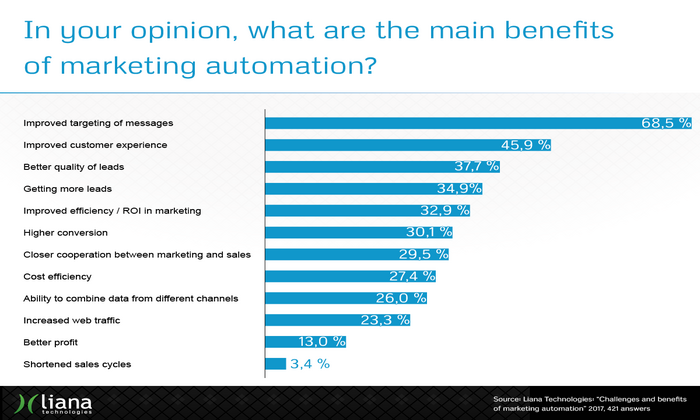
Here are ten ways a marketing automation consultant can help you grow your business. 

  1. More targeted marketing: Many companies force their customers into the same marketing funnel. They’re not focused on optimizing their funnel based on the buyer’s journey, so most of their prospects fall out of their marketing funnel. A marketing automation consultant helps you segment and target your customers properly. A good consultant will help you identify customers who are ready to buy, leads that need to be nurtured, and leads you can disqualify. 
  2. Improve customer experiences: According to Salesforce, 76 percent of consumers expect you to understand their needs and expectations. Another 84 percent said, “being treated like a person, not a number” is essential to earning their business. Marketing automation helps you achieve this at scale, so you’re able to provide the one-on-one attention and personalization customers expect.   
  3. Increased traffic: Big companies have embraced analytics, but most don’t know how to use their data. Most don’t have a data-driven culture, so it’s difficult for many organizations to have confidence in their marketing decisions. This isn’t just big companies, though; it’s most companies in general. This means it’s harder for companies to identify the traffic sources working well versus those that aren’t. With marketing automation tools like lead scoring and lead nurturing, you can identify your best performing traffic sources.
  4. Higher quality leads: When customers go through the same funnels, without segmentation, lead quality suffers. Your marketing automation consultant should help you outline the buyer’s journey and segment customers based on their place in the funnel. Doing this increases lead quality as customers are pre-qualified before and after they convert. This keeps the quality of the leads sent to sales high. 
  5. More leads: Once you’ve identified the list of marketing automation tools and workflows you need to generate high-quality leads, you can use those same automation tools to scale your lead generation campaigns. Your marketing automation consultant will help you increase lead production, using the lessons learned from your smaller campaigns. You’ll know which traffic sources perform best, how to improve lead quality, 
  6. Increased conversion rates: One of the hidden benefits of marketing automation is that the benefits are cumulative. Your marketing automation consultant will show you how to combine the strategy, tactics, workflows, and tools you’ve put together into a single system. Each component, when optimized, should produce increased conversion rates consistently in your campaigns over time.   
  7. Increased ROI: As your conversion rates increase, your ROI will continue to grow. A great marketing automation consultant will show you how to maintain your ROI as you continue to scale. You should see more revenue with less spend consistently over time.   
  8. Reduced expenses: As metrics like your return on ad spend (ROAS) and your conversion rate improves, you should see a decrease in costs (e.g., cost per lead, cost per action, customer acquisition costs). Your marketing automation consultant should monitor your returns and expenses, ensuring that both are moving in the right direction. 
  9. Data sharing between marketing channels: Your marketing automation stack should provide your team with the right data analysis tools. If you use analysis tools like Cyfe or Power BI, you’ll want to make sure that your team has access to data across marketing channels; your consultant should help you set this up, so your team has need-to-know access to data. Doing this will reduce operational silos, keeping everyone in your team on the same page; no more fights between sales and marketing for control. 
  10. Shorter sales cycles: Let’s say you’ve received two sets of leads. Set A has customers who are ready to buy now. They’ve done their homework, and they’ve decided your company is the best fit. Set B has interested customers; they won’t be ready to decide for another three to six months. Set A has a shorter sales cycle — your consultant helps you find and segment these customers as they come into your funnel.  

These benefits aren’t random one-offs; they’re outcomes your business needs to grow. The problem with growth is scaling. As you grow, it gets harder to manage all of this manually. 

How to Get Started With a Marketing Automation Consultant

Your marketing automation consultant should be a specialist with deep expertise in automation. They should also have experience across a broad range of marketing disciplines and channels, including:

  • Advertising (display, content,
  • Analytics
  • Branding
  • Content
  • Direct response
  • Email
  • Market research
  • Mobile 
  • Sales
  • Search (organic and paid)
  • Websites (e.g., conversion rate optimization, usability, etc.)

If you’re ready to get started with a marketing automation consultant, there are a few things you’ll need to prepare ahead of time. Upfront preparation makes it easier to get started; your consultant doesn’t have to waste a lot of time (and your money) getting you up to speed.

Both of you will be able to jump in right away. 

You’ll want to make sure that you have a list of:

  • Goals, KPIs, and objectives: For example, this could include a list of tools you’d like to integrate in your technology stack, as well as how you’d like these tools to perform. This could also provide your consultant with information on the specific outcomes you’d like to see due to automation (e.g., a 7 percent increase in productivity, shorter sales cycles, less double entry, improved utilization rates, etc.).
  • The tools and resources you’re using: You’ll want to make a list of the tools and resources you’re already using. Collect additional information on the number of users for each software, tool, or subscription. Make note of any API keys and special instructions. Also include a list of the software, tools, and resources you’d like to use.
  • Decision-makers and influencers: If you’re part of a team, you may find that some people aren’t all that excited to share their data. Others are interested in working with your consultant to automate essential marketing tasks. Sharing a list of decision-makers and influencers with your consultant makes their job easier. Right from the beginning, they know where everyone stands and who to talk to if they need help getting everyone on the same page.
  • Obstacles and challenges: You’ll want to outline the list of barriers and challenges that may prevent you from achieving the goals and objectives you’ve listed above. Maybe some of the services you use don’t offer an API or integrate with third-party services like Zapier. Maybe some of the tools in your list are outdated, or they’re unsupported legacy options (i.e., legacy software running on Windows XP).
  • Policies and procedures: If your company has specific policies, procedures, or guidelines for software purchases, you’ll want to share that with your consultant as well. You want to let your consultant know what’s allowed, required, forbidden, and unacceptable. You want to set your consultant up for success by giving them a clear set of guidelines to follow; this helps your company grow. 
  • Strengths and weaknesses: This step is uncomfortable but it’s also important; if your team, division, or company has problems in a specific area, spell that out for your consultant as clearly as possible. Does it take your company a long time to make important decisions? Is your organization good at finding great employees and contractors? Give your consultant a brief overview of your strengths and weaknesses. Getting people on board is easier when you know what you’re working with. 

Sharing this information upfront makes automation smooth and efficient.

If you’ve already answered these questions for your consultant, they’re able to focus their attention on helping you automate your marketing campaigns, projects, and tasks. 

Measuring the ROI of Marketing Automation Consulting Services
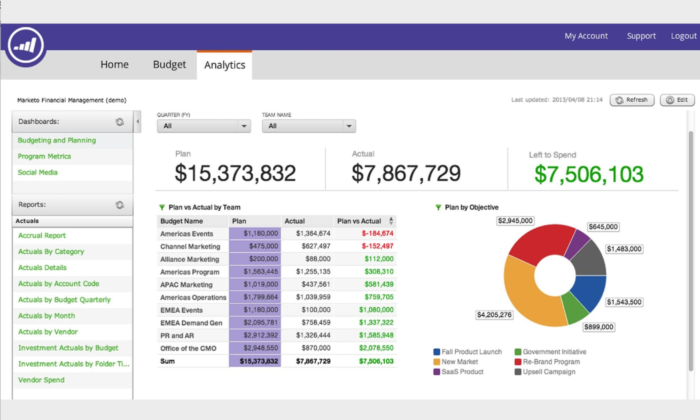
In general, consultants aren’t big on measuring ROI, but they should be. It’s reasonable to expect the same from your marketing automation consultant. If you’ve done the upfront work I’ve mentioned already, you should have everything you need to measure the ROI ahead of time. 

Remember the list of goals, KPIs, and objectives you wrote down earlier?

Your consultant should be able to help you refine your goals and objectives. If you haven’t already, you want to add some specificity to these goals. You’ll want to add specific numbers, facts. or figures to these goals. Use these figures as a general guide — you want to discuss these with your consultant making sure they’re realistic and achievable.

Here are a few examples you can use:

  • Increase productivity becomes — Increase our marketing team’s productivity by 16 percent
  • Improve lead quality becomes — Use lead scoring to achieve a 6 percent lift in marketing qualified lead volume
  • Identify top-performing marketing channels becomes — Identify top performing marketing channels by automating URL tagging for all current and future marketing campaigns
  • decrease customer acquisition costs becomes — Reduce customer acquisition costs on Google ads by a minimum of 11 percent

Measuring your ROI is pretty straightforward if you have a clear idea of your campaign goals and objectives. The easier it is for you to list a starting point, the easier it will be for your consultant to help you reach your goals and objectives.

4 Point Checklist For Finding the Right Marketing Automation Consultant
Choosing the right marketing automation consultant is simple if you’ve prepared ahead of time. From there, you can screen consultants the same way you would for any other consultant or professional. First, you outline your process, listing your goals and objectives, your current technology stack, decision-makers, influencers, etc. Second, you filter your providers through your process, ensuring each candidate meets the criteria you’ve set.

Here’s a shortlist of the criteria you can use to evaluate your consultants.

  1. They understand digital marketing. The best marketing automation consultants are marketers themselves. The ideal candidate is a marketing veteran who’s managed marketing campaigns from beginning to end throughout their career. You’re looking for someone who got their start as a marketer.
  2. They understand your business. Your marketing automation consultant should have an in-depth knowledge of your business — how it works, what you need, mistakes to avoid, etc. If you’re managing a retail or ecommerce company, your consultant should have experience managing marketing campaigns for retail or e-commerce companies. You’re looking for someone who has a native understanding of your business.
  3. They’re data-driven. Marketing automation requires a mix of art and science. You’ll need someone who loves to read through data but is skilled enough to explain it to the people on your team who aren’t data-driven. The ideal consultant can tell stories with data and helping your team make important decisions. 
  4. They’re proactive and knowledgeable. When it comes to automation, you shouldn’t be as knowledgeable as your consultant. They should be able to make recommendations and connections you weren’t even thinking of. They should be able to help you automate your campaigns in new ways; to increase your productivity by customizing your marketing stack.  

This checklist is pretty simple. 

A great marketing automation consultant should be able to handle everything we’ve covered so far comfortably. They should be able to break things down for you, showing you how to improve your plan, refine your goals and objectives, and add to your technology stack. 

They should be asking questions. 

If they’re good at what they do, they’ll have some questions and requirements of their own. 

Conclusion

While many organizations are switching to marketing automation, most don’t have a clear plan they can follow. Companies list a lack of know-how, strategy, or personnel as the reasons why they weren’t completely on board with marketing automation. 

That’s changing fast, though. 

More companies are investing in marketing automation. They’re taking the time to implement a strategy for their business. Marketing automation isn’t an extra; it’s a component that’s an essential part of your marketing, especially as your company grows. 

With the right consultant and a clear strategy, you’ll have the people, process, and technology you need to grow your business quickly. 

The post Marketing Automation Consulting appeared first on Neil Patel.

New comment by TJLeahy in "Ask HN: Who is hiring? (October 2020)"

Remote Go Developer

We are looking for a backend engineer to help craft the future of Teamwork Desk. We are a self-funded and privately owned Irish company with employees all over the world.

Check out our role here:

https://careers.teamwork.com/jobs/backenddesk

The post New comment by TJLeahy in “Ask HN: Who is hiring? (October 2020)” appeared first on ROI Credit Builders.

New comment by Dsuniga14 in "Ask HN: Who is hiring? (October 2020)"

Qualia | Fullstack ENGINEERING MANAGER | San Francisco, CA | Full-time, Salary + Options

Qualia (qualia.com) is a startup making web applications for real estate professionals. We have raised over 95M in total funding, have not stopped hiring throughout COVID and are actively looking to add 50 folks to the team before the end of the year.

We are making it easier to buy and sell homes by taking the process online.

Solving the real estate coordination problem makes for some really fun engineering and design challenges, and opportunities to make the process better for everyone involved.

About US:
– Well funded with years of runway
– Own 20% of a 40 Billion dollar industry
– Actively hiring during a world recession
– Personal and Career Growth opportunities
– 5X revenue Growth last 18 months
– All 3 Founders are Forbes 30 Under 30 Award recipients
– Recently named as one of the best startup employers in 2020.
-Named one of the “50 Future Unicorns” by CB Insights and Fast Company.

Contact David at David.Sunigaqualia.com!

Video Clip Blogging And Visitor Interaction

Video Clip Blogging And Visitor Interaction Or you desire to introduce that your Dalmatian has currently eleven adorable young puppies? If you desire, after that video clip blog writing is what you require. What is video clip blog writing and also why is it one of the most popular tasks in the Internet? Blog site … Continue reading Video Clip Blogging And Visitor Interaction

Virgin Islands Daily News: The United States Virgin Islands Newspaper

Virgin Islands Daily News: The United States Virgin Islands Newspaper Recap: The Virgin Islands Daily News is simply amongst the numerous papers in the United States Virgin Islands. Stress no extra due to the fact that the United States Virgin Islands have the Virgin Islands Daily News. It consists of information as well as details …

The post Virgin Islands Daily News: The United States Virgin Islands Newspaper first appeared on Online Web Store Site.

New comment by calicoenergy in "Ask HN: Who is hiring? (October 2020)"

Calico Energy | SR Backend/Fullstack AND SR Frontend Engineers | US Remote | Full Time with Equity | http://calicoenergy.com Calico Energy serves utility companies nationwide and offers an enterprise software product designed to enable the next generation of energy efficiency programs (and more) for existing buildings. 40% of the energy consumed in the US is …

The post New comment by calicoenergy in “Ask HN: Who is hiring? (October 2020)” first appeared on Online Web Store Site.

UserGems (YC S14) is hiring engineers

UserGems is growing! We are looking for a Senior Software Engineer and a Software Engineer to join our team. If you know anyone that would be interested, please send them our way.

More details about the roles: https://www.usergems.com/careers

This is a Remote position. Our headquarter is based in San Francisco and our European office in Salzburg (Austria), but most of our team is remote.


Comments URL: https://news.ycombinator.com/item?id=24836326

Points: 1

# Comments: 0

Daily (YC W16) Is Hiring WebRTC, Rust, GStreamer, and Android Engineers

Article URL: https://www.daily.co/jobs

Comments URL: https://news.ycombinator.com/item?id=24839738

Points: 1

# Comments: 0

Get a Recession Business Credit Line – Here’s How

It’s Probably True: You Need a Recession Business Credit Line

As a small business owner, you probably can’t put your hand on enough capital, at least not immediately. And if you are new, then it’s even harder. There will always be more ramp up costs than you think. So if you have ever wondered where to establish business credit, and how to actually get a credit line, it comes from really two areas. Those are business credit cards and loans. Your business needs a recession business credit line: here is how to get one (or more!)

For both types of credit line, it helps to have good business credit. And if you do not have what is considered a good business credit score, or if your company is new and has not yet established its own credit, then creditors will look at your personal credit score.

You want them looking at your business credit score.

But let’s start with recession-era funding.

Recession Period Financing

The number of US financial institutions as well as thrifts has been decreasing slowly for 25 years. This is coming from consolidation in the market in addition to deregulation in the 1990s, reducing barriers to interstate banking. See: https://www.fundera.com/blog/happened-americas-small-businesses-financial-crisis-six-years-start-crisis-look-back-10-charts

Assets concentrated in ever‐larger banks is problematic for local business owners. Big financial institutions are much less likely to make small loans. Economic downturns imply financial institutions end up being a lot more careful with lending. Luckily, business credit does not rely on financial institutions.

Let’s go over credit lines.

Your Business Needs a Recession Business Credit Line – But What Are Credit Lines?

A credit line, or line of credit (LOC), is an agreement between a borrower and a bank or private investor that establishes a maximum loan balance which a borrower can access.

A borrower can access funds from their line of credit anytime, so long as they don’t go over the maximum set in the arrangement, and as long as they meet any other conditions of the financial institution or investor like making prompt payments.

Advantages

Your business needs a credit line because credit lines deliver many distinct advantages to borrowers including versatility. Borrowers can apply their line of credit and only pay interest on what they use, in contrast to loans where they pay interest on the sum total borrowed. Credit lines can be reused, so as you acquire a balance and pay that balance off, you can use that accessible credit again, and again.

Details

Credit lines are revolving accounts similar to credit cards, and contrast other forms of funding like installment loans. In many cases, lines of credit are unsecured, much the same as credit cards are. There are some credit lines which are secured, and thus easier to get approval for

Credit lines are the most frequently sought after loan type in the business world even though they are popular, true credit lines are unusual, and hard to find. Many are also very difficult to qualify for requiring good credit, good time in business, and good financials. But there are various other credit cards and lines which few know about that are attainable for startup companies, poor credit, or even if you have absolutely no financials.

Your Business Needs a Recession Business Credit Line from The SBA

The majority of credit line varieties that most entrepreneurs imagine come from standard banks and conventional banks use SBA loans as their principal loan product for small business owners. This is because SBA guarantees as much as 90% of the loan in the event of a default. These credit lines are the hardest to get approval for because you must qualify with SBA and the bank.

SBA Loans

There are two fundamental sorts of SBA loans you can normally obtain. One type is CAPLines. There are in fact 4 types of CAPLines that can work for your small business.

You can also get a smaller loan amount more quickly using the SBA Express program. The majority of these programs offer BOTH loans and revolving lines of credit.

From the SBA … “CAPLines is the umbrella program under which SBA helps business owners meet short-term and cyclical working capital needs”. Loan amounts are offered up to $5 million. Loan qualification criteria are the same as with other SBA programs.

Seasonal Line

This one advances against foreseen inventory and accounts receivables. It was designed to assist seasonal businesses. Loan or revolving are on offer.

Contract Line

This one finances the direct labor and material costs of performing assignable contracts. Loan or revolving types are available.

Builders Line

This one was made for general contractors or builders constructing or renovating industrial or residential buildings. This line is for fund direct labor-and material costs, where the building project functions as the collateral. Loan or revolving types are on offer.

Working Capital

Borrowers must use the loan proceeds for short term working capital/operating needs. If the proceeds are used to acquire fixed assets, lender must refinance the portion of the line used to acquire the fixed asset into an appropriate term facility no later than 90 days after lender discovers the line was used to finance a fixed asset.

Your Business Needs a Recession Business Credit Line from SBA Express

You can get approval for as much as $350,000. Interest rates vary, with SBA allowing banks to charge as much as 6.5% over their base rate. Loans in excess of $25,000 will need collateral.

Approval Details

To get approval you’ll need great personal and company credit. Plus the SBA says you should not have any blemishes on your report. An acceptable bank score demands you have at least $10,000 in your account over the most recent 90 days.

You’ll also need a resume showing you have business sector experience and a well put together business plan. You will need three years of company and personal tax returns, and your business returns should show a profit. And, you’ll need a recent balance sheet and income statement, thereby showing you have the cash to pay back the loan.

Collateral

To get approval you’ll need account receivables, but just if you have them. As for the collateral to offset the risk, often all company assets will function as collateral, and some personal assets which also include your home. It’s not unheard of to need collateral equivalent to 50% or more of the loan amount. You also need articles of incorporation, business licenses, and contracts with all third parties, and your lease.

Your Business Needs a Recession Business Credit Line from Private Investors and Alternative Lenders

Private investors and alternative lenders also offer credit lines. These are easier to qualify for than conventional SBA loans. They also necessitate much less documentation for approval. These alternative SBA credit lines ordinarily require good personal credit for approval.

Unlike with SBA, many of them don’t require good bank or business credit approval. Most of these sorts of programs call for two years’ of tax returns. Tax returns have to show a profit. Rates can vary from 7% or greater and loan amounts range from $25,000 into the millions.

Loan amounts are normally based on the revenues and/or profits on tax returns. In some cases lenders may ask for other financials such as a profit and loss statement, balance sheets, and income statements.

Your Business Needs a Recession Business Credit Line from Merchant Cash Advances

Merchant cash advances have rapidly become the most popular way to get financing, in large part because of the simple qualification process. Businesses with $10,000 in revenue can get approval, with the business owner having scores as low as 500.

Some sources have now even begun to offer credit lines that accompany their loans. You must have at least $10,000 in revenue for approval. You should be in business for at least one year, however three years is better. Lenders usually want to see a credit score of 650 or better for approval.

Details

Loan amounts are usually about $20,000. Lenders routinely do pull your business credit, so you ought to have some credit already and sometimes lenders will want to see tax returns.

Rates differ, due to the risk for this program, and there aren’t a lot of funding sources who offer it.

Your Business Needs a Recession Business Credit Line from Securities as Collateral for Financing

You can get financing despite personal credit if you have some form of stocks or bonds. You can also get approval if you have somebody intending to use their stocks or bonds as collateral for financing.

Personal credit quality doesn’t matter as there are no consumer credit criteria for approval. You can get approval for as much as 90% of the value of your stocks or bonds. Rates are commonly lower than 2%, making this one of the lowest rate credit lines you’ll ever see. You can still earn interest as you typically do on your stocks and bonds.

Recession Business Credit Line Credit Suite

Demolish your funding problems with our rock-solid guide about 27 killer ways to get cash for your business. Get money even during the worst of a recession.

Credit Cards and Lines are Very Similar

Credit cards typically offer 0% intro rates for up to two years. This is also very useful for startups especially. And credit lines let you take out more cash at a more affordable rate than do cards. These are the main two differences that will have an effect on you between credit cards and credit line.

Investopedia even says that “lines of credit are potentially useful hybrids of credit cards.”

Both cards and lines are revolving credit. Credit lines are more difficult to qualify for as card approvals are typically very fast, many times automated, while at the same time line require an in-depth underwriting review. Lines usually offer lower rates, according to Bankrate card rates average 13% while lines average 4%.

Your Business Needs a Recession Business Credit Line from Unsecured Business Credit Cards

The majority of these cards report to the consumer credit reporting agencies. They all demand a personal guarantee from you. You can get approval typically for one card max as they stop approving you when you have two or more inquiries on your report.

Most credit card providers furnish business credit cards including Capital One, Chase, and American Express. These have rates similar to consumer rates and limits are also similar.

Some of them report to the consumer reporting agencies, some report to the business bureaus. Approval requirements resemble consumer credit card accounts.

Inquiries

Often, when you apply for a credit card you put an inquiry on your consumer report. When other lenders see these, they will not approve you for more credit since they have no idea how much other new credit you have lately obtained.

So they’ll only approve you if you have no more than two inquiries on your report within the most recent six months. Any more will get you refused.

Your Business Needs a Recession Business Credit Line from Our Credit Line Hybrid

With this form of business financing, you work with a lender who concentrates on securing business credit cards. This is a very unusual, very little know of program that few lending sources offer. They can usually get you three to five times the approvals that you can get on your own.

This is because they are familiar with the sources to apply for, the order to apply, and can time their applications so the card issuers won’t reject you for the other card inquiries. Individual approvals oftentimes range from $2,000 – 50,000.

The end result of their services is that you oftentimes get up to five cards that mimic the credit limits of your highest limit accounts now. Multiple cards create competition, and this means they will raise your limits, frequently within 6 months or fewer of first approval.

Approvals

Approvals can go up to $150,000 per entity like a corporation. With a hybrid credit line they actually get you three to five business credit cards which report just to the business credit reporting agencies. This is significant, something most lenders don’t offer or advertise. Not only will you get funds, but you build your business credit as well so in three to four months, you can then use your new corporate credit to get even more money.

Rates

The lender can also get you low introductory rates, often 0% for 6-18 months. You’ll then pay normal rates after that, typically 5-21% APR with 20-25% APR for cash advances. And they’ll also get you the very best cards for points. So this means you get the very best rewards.

Just like with just about anything, there are HUGE benefits in dealing with a source who specializes in this area. The results will be much better than if you try to go at it alone.

Recession Business Credit Line Credit Suite

Demolish your funding problems with our rock-solid guide about 27 killer ways to get cash for your business. Get money even during the worst of a recession.

Qualifications

You must have excellent personal credit right now, preferably 685 or better scores, the same as with all business credit cards. You shouldn’t have any negative credit on your report to get approval. And you must also have open revolving credit on your consumer reports now and you’ll need to have five inquiries or fewer in the most recent six months reported.

Fees

All lenders within this space charge a 9-15% success based fee and you only pay the cost off of what you secure. Bear in mind, you get a ton of extra advantages and about three to five times more cash in this program than you could get on your own, which is why there’s a fee, the same as all other lending programs.

You can get approval making use of a guarantor and you can even use a number of guarantors to get even more money. There are likewise other cards you can get utilizing this very same program but these cards only report to the consumer reporting agencies, not the business reporting agencies. They are consumer credit cards versus business credit cards.

Benefits

They furnish similar benefits which include 0% intro annual percentage rates and five times the amount of approval of a single card but they’re a lot easier to get approval for.

You can get approval with a 650 score and seven inquiries (or fewer) in the most recent six months and you can have a bankruptcy on your credit and other negative items. These are a lot easier to get approval for than unsecured corporate credit cards.

With all previous cards above, you have to have good consumer credit to get approval but what happens if your personal credit is not good, and you do not have a guarantor?

This is the time when building corporate credit makes a great deal of sense even when you have good personal credit, setting up your company credit helps you get even more money, and without having a personal guarantee.

Recession Business Credit Line Credit Suite

Demolish your funding problems with our rock-solid guide about 27 killer ways to get cash for your business. Get money even during the worst of a recession.

Your Business Needs a Recession Business Credit Line But You Can’t Get One? Then Start Building Better Business Credit

As with personal credit, it seems as if the companies which don’t need credit are the ones which are more likely to get it. But that is banks and creditors doing better and more responsible business for themselves – if your company is at risk of defaulting, they either want to give you more expensive terms, or not extend any credit at all.

Here are a few tips on building and improving better business credit.

Separate Your Company Credit From Your Personal Credit

One way is to change your business entity. That is, to either incorporate or become a limited liability company (LLC). Get a separate identification number from the IRS, too, in order to really demonstrate there is a difference.

Get a D-U-N-S Number from Dun & Bradstreet

A D-U-N-S number is necessary in order for D&B to start tracking your business’s credit. Dun & Bradstreet requires that you register on their site before they will give you a D-U-N-S number. Registration is simple and, once you have said yes to the Terms and Conditions, then the next screen is a dashboard. This is where you either ask for a D-U-N-S number or you can look up to see if your business is already in the listings. If your company is already in the listings, then click on your business name to make any needed changes.

Business Credit with a Personal Guarantee

Another means of establishing business credit is by going to your bank and establishing business credit lines or cards with personal guarantees. This means you are personally responsible in case the business defaults or any loans or bills go into collections. Hence if your company is in a high risk business or a seasonal one, you might find your car on the line.

Make sure when you get these kinds of business credit cards, they have the personal guarantee removal feature built right in. Keep your credit utilization at one third of your credit ceiling or less (that is, don’t use more than about one third of your total available credit). Make certain to pay on time every time.

Apply for Third Party Guaranteed Lending

You can use an SBA loan for funding. Repaying this kind of a loan will help you build your business credit score. Or you can apply for a business credit card from a specific store. Often, these store credit cards do not need a personal guarantee. Make sure to choose a store where your business makes a lot of purchases. And don’t forget about those timely payments!

Business Credit Cards and Loans

If your business credit score is good (or if it has improved), then go to your local bank and ask for a credit line. And if you use a particular bank for payroll, you can try that one. If not (or maybe you’re a one-person shop and you don’t really have payroll at all), then you can also take your request to the bank where you do all your personal banking.

Because they already know you, and if they have seen you pay your credit cards on time and keep a good balance in your accounts, they may be more interested in giving your small business a line of credit even without guarantees or a serious credit check. No matter which kind of lending institution you try, go in with good credit as that will make your terms more favorable and it can generally mean the difference between any credit line and none.

Your Business Needs a Recession Business Credit Line – Takeaways

Your business can get credit cards and financing, if you know where to look. Learn more here and get started toward establishing business credit. Keep your small business afloat with a credit line.

The post Get a Recession Business Credit Line – Here’s How appeared first on Credit Suite.

Analytics Consulting

Your analytics should tell you everything. 

Tools like Google Analytics are incredibly valuable for businesses. Once you’re setup, you’ll have everything you need to analyze your performance data properly. Instead, many companies have realized that their analytics tools have introduced a lot of unexpected problems. 

They’re not getting the kind of value they need. 

That’s the good news. Most companies think their data is clean; that they’re making good decisions with the data they have. Most of these companies are wrong; they just don’t know it yet. This is why companies need analytics consulting. They don’t know what they don’t know. 

Today, I’ll show you how to find the right analytics consultant for your business.  

4 Ways an Analytics Consultant Can Help Grow Your Business

Many companies make the wrong assumptions. Using a tool like Google Analytics, clients think all they have to do is drop the tracking code into their web pages, log into their account, and begin analyzing their data. It sounds easy, but it often isn’t. 

There’s more to it than that. 

This is why you need an analytics consultant. With the right consultant, you’ll have the education you need to grow your business. You’ll be able to pull insights out of your data using a variety of methods. Each of these strategies is important because they have a cumulative effect on your business. 

Here are four ways analytics consulting can help you grow your business. 

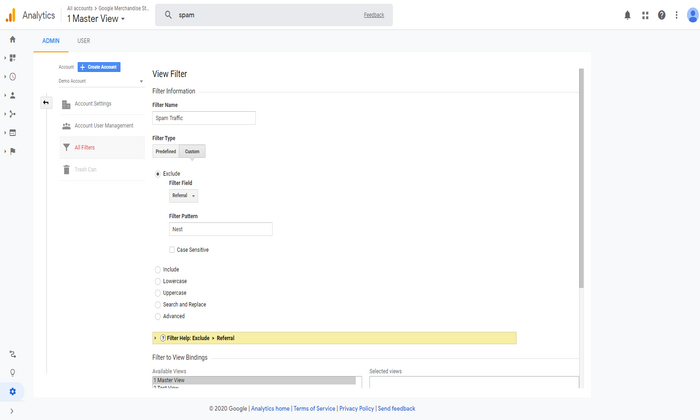
1. Exclude spam traffic via bots, scrapers, and spiders

How much of your traffic comes from real visitors? How much of it comes from bots, scrapers, and spiders? According to Imperva, almost half of all internet traffic is non-human. In 2014, Google introduced an obscure setting that enables you to filter out bots and spiders listed in IAB’s Interactional Spiders and Bots list. This low-key setting is buried in Google Analytics, but it’s incredibly important; many small businesses still aren’t aware of this setting. 

You’ll also need help to filter out referral spam.

Referral spam is basically fake website hits; these bots, scrapers, and spiders land in your site. Site owners send their spam to your site. They hope you’ll see these referrals in your Google Analytics account, clickthrough, and visit their site. 

This junk traffic poisons your data. 

It gives you false readings based on inaccurate data. Your site may be more or less profitable, depending on your visits-to-spam ratio on your site. This isn’t something many businesses watch for in their analytics reports. 

A good analytics consultant will consistently filter the variations of spam traffic (e.g., direct spam traffic, referral spam traffic, etc.) out of your reports, so you get a clear picture of your marketing performance. 

2. Help you analyze your data properly

A lot of companies don’t know how to analyze their data properly. According to Forrester, between 60 and 73 percent of a company’s analytics data goes unused. Companies collect lots of data on customer activity, but they aren’t using it, why?

There are lots of reasons. 

  • Companies don’t know what they have 
  • Companies aren’t aware of the value of their data
  • They don’t know how to evaluate or analyze their data
  • Their data isn’t available to those who can use it 
  • There’s too much data to go through and not enough time to use it

Think about it. 

Right now, your company has valuable data about your customers. This is data you can use to attract more customers, lower expenses, grow faster, jump ahead of competitors, etc. 

If you’re unaware of the data, you can’t use it. 

A good analytics consultant will help you analyze your data properly, showing you what you have and how you can use it to grow your business. 

3. Identify the list of problems you’re trying to fix

Your data isn’t as valuable without context. 

If you know the problem you’re trying to solve, you have a pretty good idea of the answers you’re looking for in your data. 

That’s the problem though. 

A lot of companies treat their analytics tools as a technology issue. They focus their attention on the obvious issues like hardware or software. They rarely treat their analytics as a question and answer tool. That’s exactly what it is, though. 

Target had the right idea when they started their analysis with a problem/question. 

Remember the story?

“If we wanted to figure out if a customer is pregnant, even if she didn’t want us to know, can you do that?” It’s a creepy story that shows the power of questions and problems. A great analytics consultant will help you discover the issues you’re trying to solve and the questions that need answers. 

4. Focus your attention on the metrics that explain why

Analytics tells you what happened — what visitors did when they arrived on your site, the ads they responded to, what they read most often, etc. It doesn’t tell you why visitors do the things they do. Understanding what is important, but it’s more important to understand why something happens. 

Focusing on the right metrics is the answer. 

The right analytics consultant will help you answer the “what” — basically looking in the rearview mirror. But they’ll also help you look ahead; They’ll dig deeper, showing you the why behind visitor and customer behaviors. 

Your analytics consultant should provide you with the education and support you need to squeeze more value out of your data.

How to Get Started With an Analytics Consultant

Avinash Kaushik has a three-step framework he uses to help analytics consultants support their clients. He calls it Data Capture. Data Reporting. Data Analysis. The nice part about this framework is the fact that it’s easy for both clients and consultants. 

Consultants can use each of these buckets to analyze your goals, objectives, and the results they want to accomplish with each. 

You’re basically goal setting with this framework.

Here’s a closer look at each of these three buckets and the goals for each of these. 

  1. Data Capture: Work in this bucket is focused on audits or updating data capture methods (e.g., updating, editing, or customizing tags). This step is especially important because it determines the quality of what comes afterward. If you’ve done a good job with your data capture methods, you’ll have accurate data and reporting you can use for your analysis. 
  2. Data Reporting: Your consultant sets up the reports you need on the intervals required. Your consultants help you identify the reports you’ll need, and they provide you with the reports you need regularly. 
  3. Data Analysis: This is what Avinash calls an open-ended assignment, but it’s one you’ve provided to your consultant. You’re asking them to answer specific questions for you — your consultant should be able to show you what to measure, what your data is saying, what to do based on your data, and why you should do it. 

Here’s what this means for you. 

You’ll want to find an analytics consultant or agency that can handle all three steps in this framework. This also means you’ll need a clear idea of problems you’re dealing with ahead of time. 

Measuring the ROI of Analytics Consulting Services

Many companies don’t understand analytics.

If you don’t understand analytics, that’s okay; you just need to know whether you’re generating a return on your analytics investment. According to Nucleus Research, analytics returns $13.01 for every $1 invested

Your consultant should be able to calculate your return on analytics investment

This obviously much easier if your consultant is focused on the data analysis bucket. Suppose they’ve made several data-driven improvements to your site over three to six months. Their recommendations have lead to an increase in revenue, profit, or a return on investment for you. They should be able to verify your return on investment using the worksheet I’ve linked above. 

The good news is the fact that analytics, as a discipline, is data-driven.

Checklist For Finding the Right Analytics Consultant

Choosing the right analytics consultant requires a very different set of skills. If you’re working with an independent analytics consultant, you’ll need to approach this in one of two ways. 

  1. Choose a consultant with all of the skills needed to perform across all three buckets (data capture, reporting, analysis). 
  2. Choose an agency with analysts and implementation specialists needed to generate the results you need. 

Here’s a list of the skills needed for each of the three roles in your buckets. Avinash breaks these skills down in detail in his web analytics consulting framework post

Here’s a quick summary. 

  • For the data capture bucket, your consultant should have the skills of an implementation specialist. They’re experienced with tag managers; they understand data dimensioning and working knowledge of tracking variables. 
  • With the data reporting bucket, your consultant should be familiar with report creation in your analytics platform; they should also have a master list of the custom reports you’ll need for various options. It’s also ideal if your consultant has a working knowledge of his own set of customizations. 
  • For the data analysis bucket, your consultant should be a web analyst. Your consultant should be comfortable with advanced statistics and analytical techniques. They should be experienced in descriptive, diagnostic, predictive, and prescriptive analytics. 

If you’re working with an independent consultant, they should be an industry veteran with the skills I’ve listed above. If you’re working with an agency, they should have employees with the skills for each bucket. If you have implementation specialists, you can handle data capture and possibly reporting. 

Just make sure they’re a fit for that role. 

Conclusion

Many companies aren’t familiar with analytics consulting. They’re not entirely sure how analytics impacts their organization. That’s okay, as long as the ROI is there. 

Using a tool like Google Analytics, many companies assume that all they need to do is customize the tracking code, drop it onto their web pages, log into their account, and begin analyzing their data. It should be that easy, but it isn’t. 

There’s more to it than that. 

With most companies, their analytics data goes unused, they collect lots of data on customer activity, but they don’t know how to squeeze value out of their data. Analytics consulting can help you evaluate your performance data properly. Choose the right team,  and your data will tell you what you need to know. 

The post Analytics Consulting appeared first on Neil Patel.