
How to Get Verified on Social Media

Getting verified on social media is one of the first steps to building a successful social media marketing strategy.

Whether it’s your personal account, your business account, or both, getting that little checkmark next to the profile name is massively important.

And not so that you look like one of the ‘cool kids.’

A verified social media account provides instant social proof and credibility when anyone looks up to you or your company online.

Verification can also help with networking and push your company to your industry’s forefront as a trusted option.

Getting verified on social media can be a challenge, and it might take some time, but it is definitely worth it.

But maybe you’ve already tried to become verified, and you were rejected.

Or perhaps you don’t know where to start.

Unless you’ve got a huge following like Beyonce, becoming a verified account takes some commitment and trial and error.
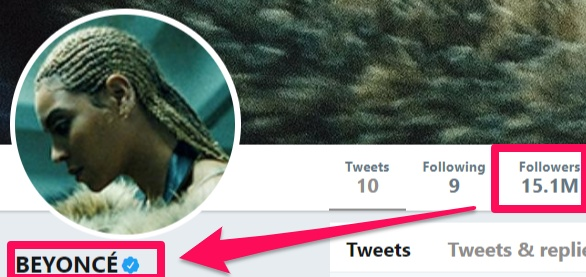
how to get verified on social media Beyoncé example

If you’ve tried to become verified before and you’ve been rejected, you’re probably not following the rules closely enough. For some sites, it’s a lot harder than others to show your worth.

But don’t give up.

I’m going to explain why your business isn’t verified on social media.

We’ll then walk through how to become verified on Facebook, Twitter, Instagram, LinkedIn, YouTube, Pinterest, and Snapchat.

Why Getting Verified on Social Media Matters

Twitter was one of the first social media platforms to introduce verification, and it took a while for it to become as important as it is today.

It began as a way for the platform to identify which Twitter accounts belonged to celebrities.

Now, getting verified on social media tells users which accounts belong to brands, companies, and influencers.

Basically, social media verification serves as an instant way to tell other users, “Hey, this account isn’t just your average Joe — pay attention to it!”

This is especially useful for trying to target younger users, who are the prime social-media demographic.

About 60% of Instagram users are between the ages of 18 and 29. Twitter is checked by 81% of Millennials every day.

Having that badge of proof means that your account is worth following, paying attention to, and interacting with. It’s how you know it’s really me on Facebook:
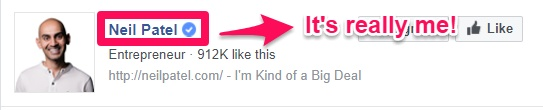
get verified on social media example neil patel

It immediately shows customers that any other accounts with that name are fake.

Which isn’t as huge of a problem for me as it is for mega-brands like Walmart. Check out this fake Walmart YouTube account:
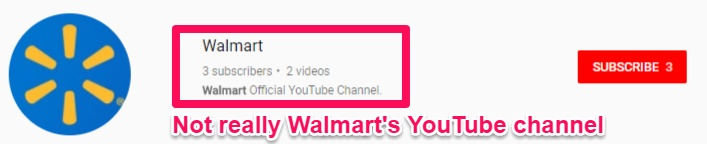
get verified on social media fake account

Looks pretty legit at first glance, right?

There’s an official Walmart logo as the profile picture, and the description even says, “Walmart Official YouTube Channel.”

But upon further inspection, the account only has two video uploads and three subscribers.

So this fake account was probably created to gain followers, create a scam, or even potentially destroy Walmart’s brand by impersonating the company.

Based on the videos on this channel, it was probably created to use the Walmart name to gain subscribers or views:
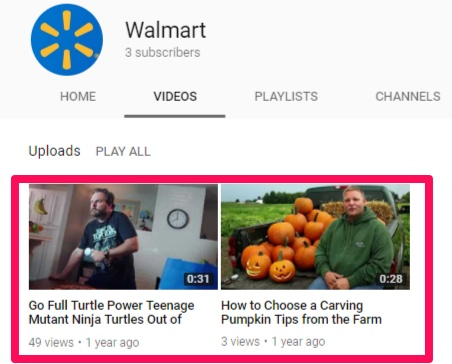
un verified on social media account example

See how much trouble it is to find out if the account is real or not? Since it has no checkmark, we can guess it’s probably not the real deal.

But not every brand or company is verified, including Walmart’s official YouTube page when I first wrote this article. (Today, they’ve jumped on the verification bandwagon.)

walmart unverified social media account example

So you can’t be sure until you evaluate things like the account’s number of followers and the kind of content on the page.

If it had a checkmark, there would be no guessing or research.

The benefits of verification are pretty easy to identify, and while the process can be easier said than done, it’s pretty painless overall.

The processes for getting verified are unique to each social media platform. So let’s go through the big ones.

Here’s how you can get verified on Facebook, Twitter, Instagram, LinkedIn, YouTube, Pinterest, and Snapchat.

1. How to Get Verified on Facebook

Facebook’s blue verification checkmark identifies media organizations, global brands, or public figures (like Khloe Kardashian).

The gray checkmark means that businesses (like Starbucks) or certain pages in specific locations are authentic.

Facebook for Influencers
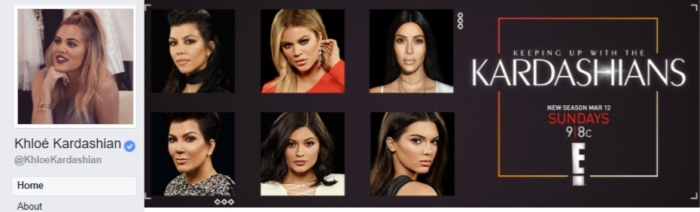
get verified on social media facebook example

To verify your personal account to become an influencer in your industry, begin by ensuring that your Facebook page is updated.

Add a recent profile picture and make sure your profile information is all filled out.

If you haven’t been posting regularly (on Facebook or any social media platform), you’ll need to wait until you’ve regularly posted for a consistent amount of time before trying to verify it.

You’ll also need to make sure your account is authentic, unique, complete, and notable, according to Facebook:
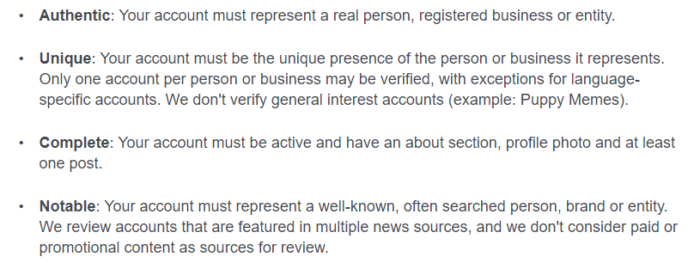
get verified on social media facebook requirements

If you’ve completed these steps already, head to Facebook’s Request a Blue Verification Badge form.

Select the kind of page you’re looking to verify and complete the form accordingly by providing an email address, official website link, and more:
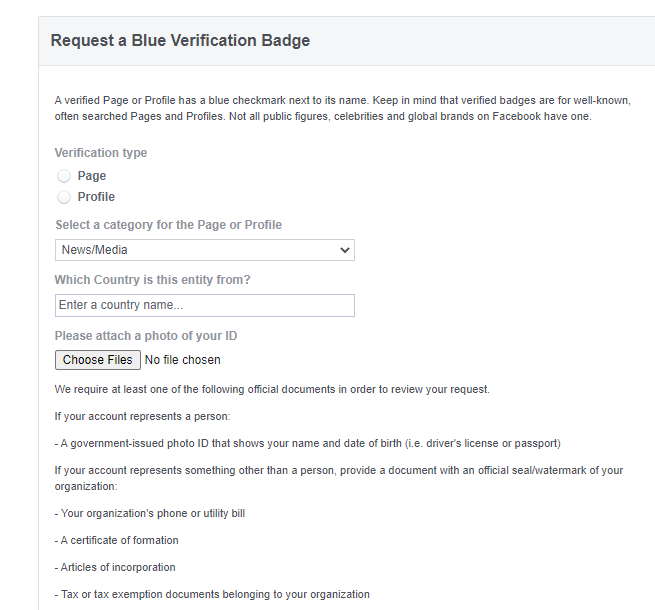
get verified on social media facebook requirements screenshot

Be sure you have a digital copy of your ID since Facebook will use this upload to verify that it’s really you.

Facebook will process the request within a few days, but it could take a few weeks, so be on the lookout for their reply.

Facebook for Businesses
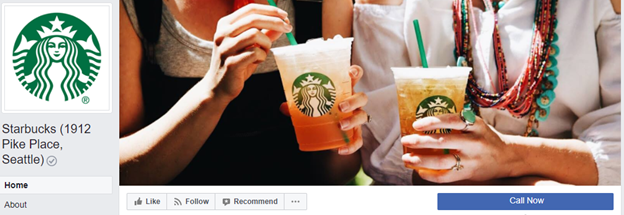
how to get verified on social media fakebook businesses

Business verification on Facebook confirms the account actually belongs to the business.

To verify your business’s Facebook account, head to your Business Manager, then look for security settings. Note that not all businesses need to be verified — and you might not be eligible. For example, if you use Monthly Invoicing to pay for ads, you won’t have to submit any documentation.

Once you find Security Settings, click on the Confirm Identity button. Submit a photo ID or upload the requested documentation. Enter your business details, then select your business from the list.

Then, select a phone number you can access from the list provided or select Use Domain Verification button. You can also select to have the verification code delivered by text or email.

Enter the verification code, and hit Submit.

You should expect to hear back from Facebook about verifying a business page within a few days. You will get a notification on your personal Facebook page when it’s been approved.

2. Get Verified on Twitter

According to Twitter, verification indicates an “account of public interest. Typically this includes accounts maintained by users in music, acting, fashion, government, politics, religion, journalism, media, sports, business, and other key interest areas.”

So if your account doesn’t fit into any of these areas, trying to verify it is pointless.

But if you do, Twitter gives some verification tips to increase your chances of getting verified.

For example, you have to have:

  1. A verified phone number
  2. A confirmed email address
  3. A bio
  4. A profile photo
  5. A header photo
  6. A website
  7. A birthday (if your account is not a company, brand, or organization accounts)
  8. Tweets set as public in Tweet privacy settings

Once you’ve met all these criteria, you can submit a formal verification request. (Note: Twitter sometimes puts their verification process on hold. If that happens, you’ll have to try back another time.)
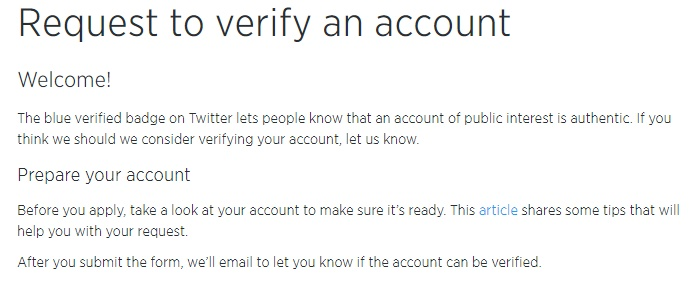
get verified on Twitter

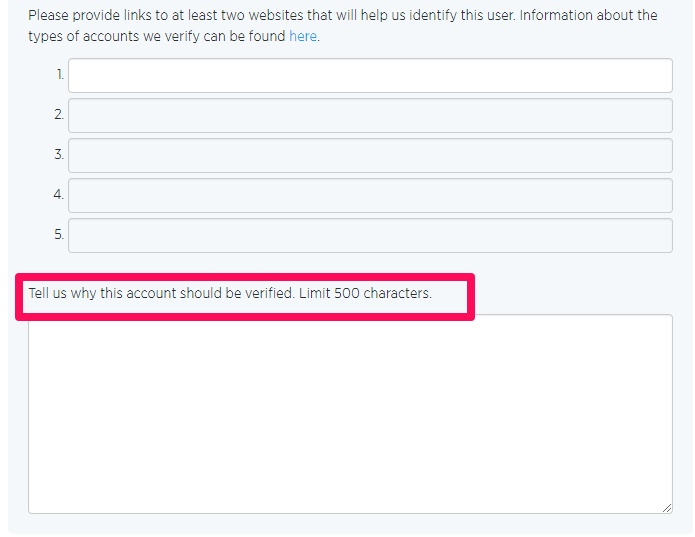
Be sure to fill out the form and include some backstory, in 500 characters or less, about why Twitter should verify your account.

You’ll also have to provide some website links that back up your claims.
pasted image 0 596

You can expect to hear back from Twitter within about a week.

3. Get Verified on Instagram

Out of all social media platforms, Instagram is probably the most selective when handing out verified badges.

According to Instagram, “Accounts representing well-known figures and brands are verified because they have a high likelihood of being impersonated.”

“We want to make sure that people in the Instagram community can easily find the authentic people and brands they want to follow.”

So becoming verified was pretty easy for someone like Justin Bieber:

pasted image 0 566

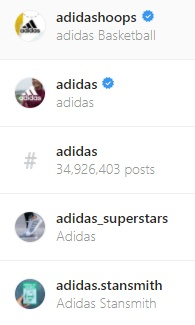
If you’ve already got a huge following or you’re a mega brand, Instagram will probably go ahead and verify your page without you having to do anything:
get verified on Instagram

But if you’re not, focus on these two key tactics in the meantime:

  1. Build your following and post engaging images.
  2. Add as much identity-supporting information as possible to your profile to make it appear, official, even though there’s no checkmark.

If you take the time to make your account legitimate without having the official Instagram seal of approval, people will notice.

And hopefully, after a while, Instagram will too.

4. Get Verified on LinkedIn

Since LinkedIn is like Facebook of the professional world, you might think that their verification process would be a lot like Facebook’s.

But it’s not. The LinkedIn verification process works a little bit differently.

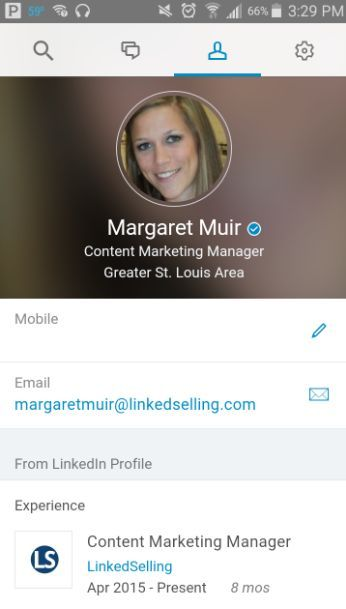
LinkedIn hands out check marks on the LinkedIn Lookup app.

These checkmarks prove that someone actually works for the company they’ve specified.
get verified on social media LinkedIn example

And this checkmark is miraculously easy to get.

All you have to do is request verification from LinkedIn and wait for a four-digit code to land in your business email address.

Then, enter the code into LinkedIn Lookup, and ta-da! You’re verified.

However, if someone doesn’t have a checkmark on LinkedIn, it doesn’t necessarily mean that their profile isn’t legit.

It probably just means they haven’t completed the verification process yet.

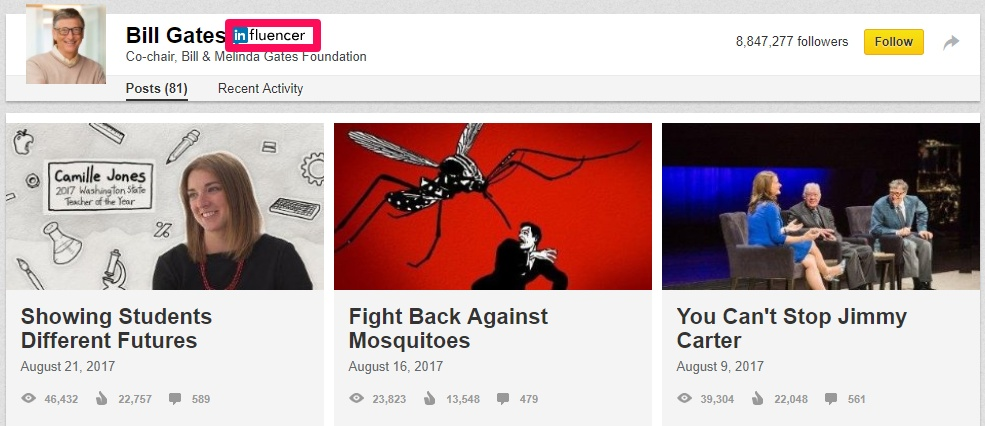
Another way to prove your credibility on LinkedIn is to get an invite to its Influencer program, like Bill Gates.
pasted image 0 605

Since LinkedIn doesn’t allow people to apply to the Influencer program, your chances of joining the club with Bill Gates aren’t super high.

But, LinkedIn will be more likely to notice you if you start publishing your content on their platform.

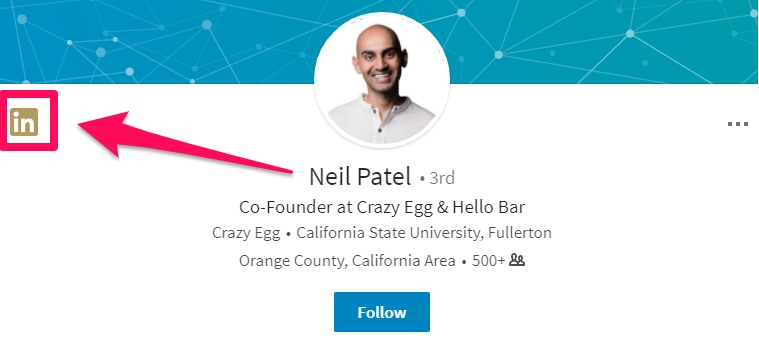
You can also get a gold LinkedIn logo by upgrading to a Premium Membership as I did.
pasted image 0 586
Anyone who pays for a Premium Membership gets this logo, but it makes things look a bit more official than those who don’t have it.

5. Get Verified on YouTube

Verifying your YouTube account and verifying your YouTube channel have almost nothing to do with one another, but they’re usually thought of as the same thing.

Here’s the difference between each kind of verification and why they’re both important.

Step 1. Verifying Your YouTube Account

Usually, this can be done once you first make a YouTube account.

YouTube will remind you at the top of your video manager page to give a cell phone number to tie to your account.

Once you’ve done this, and you should, YouTube will send you a verification code that you can enter in to prove that your account is real.

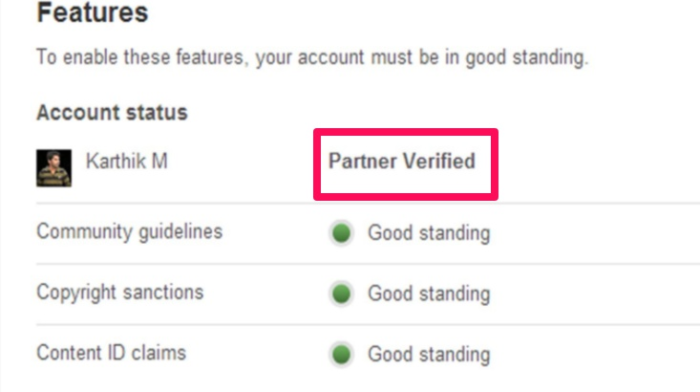
Completing this step is crazy important because you’ll get to enjoy these additional features:

  • Uploads longer than 15 minutes
  • Add customized thumbnails to your videos.
  • Live stream
  • Appeal content ID claims
get verified on social media youTube example

Step 2. Verify Your YouTube Channel

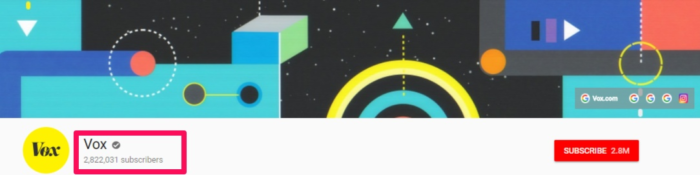
This is that the almighty little checkmark is placed next to a YouTube channel name.
get verified on social media vox youtube example

And tons of creators are trying to get it.

To get it, you’ll need at least 100,000 subscribers and then apply for verification.

They’ll look to see if your channel is authentic and complete and give you the badge.

6. Get a Verified Account on Pinterest

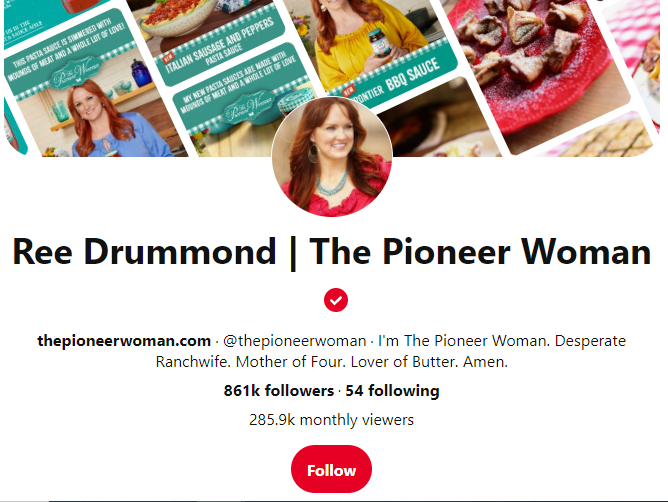
Being verified on Pinterest means that users will know that it’s really your company pinning to boards on the platform. It will display a red checkmark and your URL at the top of your page, like this:
get verified on social media pinterest example

To start, make sure that the Pinterest account is a business one and not a personal one.

Then, confirm your website.

Next, include a “Pin It” button on your site.

From there, change your profile picture to your business logo.

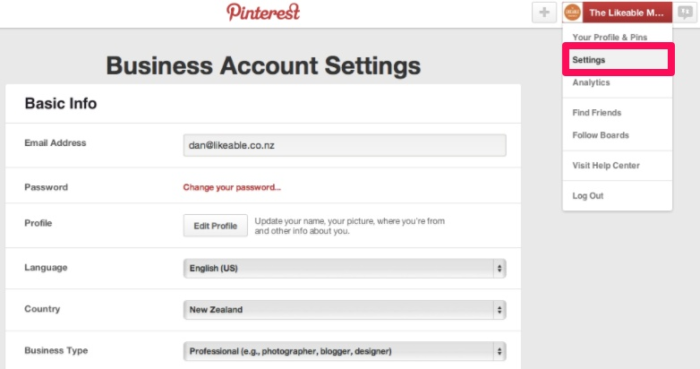
To start, select the “Settings” option:
get verified on social media Pinterest screenshot

Scroll down to the bottom of the page where you added in your website URL.

You’ll also want to connect your Instagram, Youtube, and Etsy accounts, if you have them.

Then, click the Verify Website button to the right:
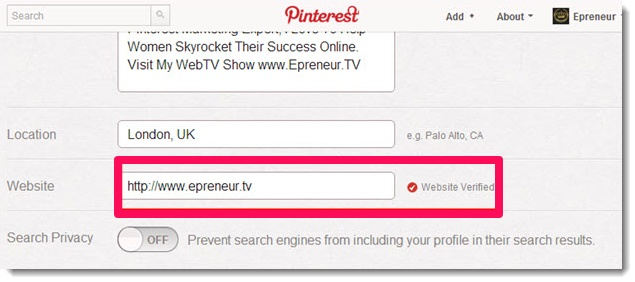
pasted image 0 570

Click that, and the following instructions will appear.
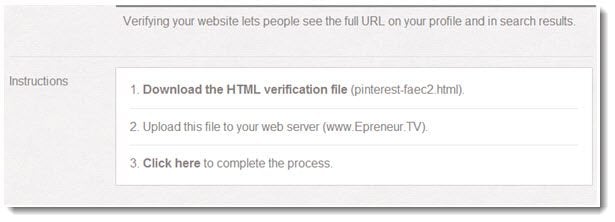
pint 4

Follow each step accordingly, and Pinterest will notify you in a few days if you’ve been approved.

7. Get Verified on Snapchat

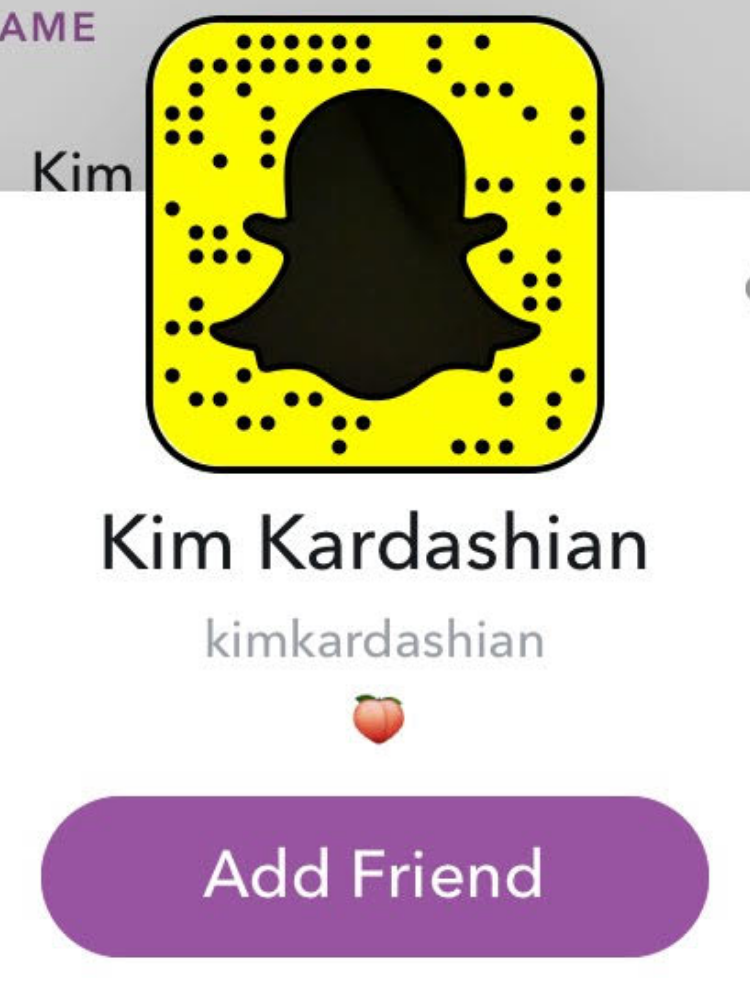
On Snapchat, verified users get something a bit different than the typical check mark.

They get an emoji of their choice.

For example, Kim Kardashian owns the 🍑 emoji:
pasted image 0 603

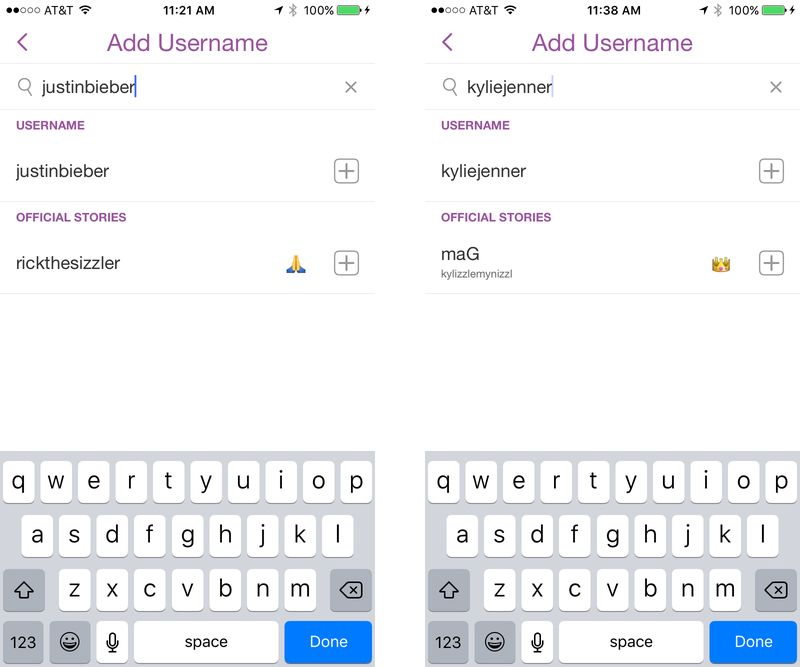
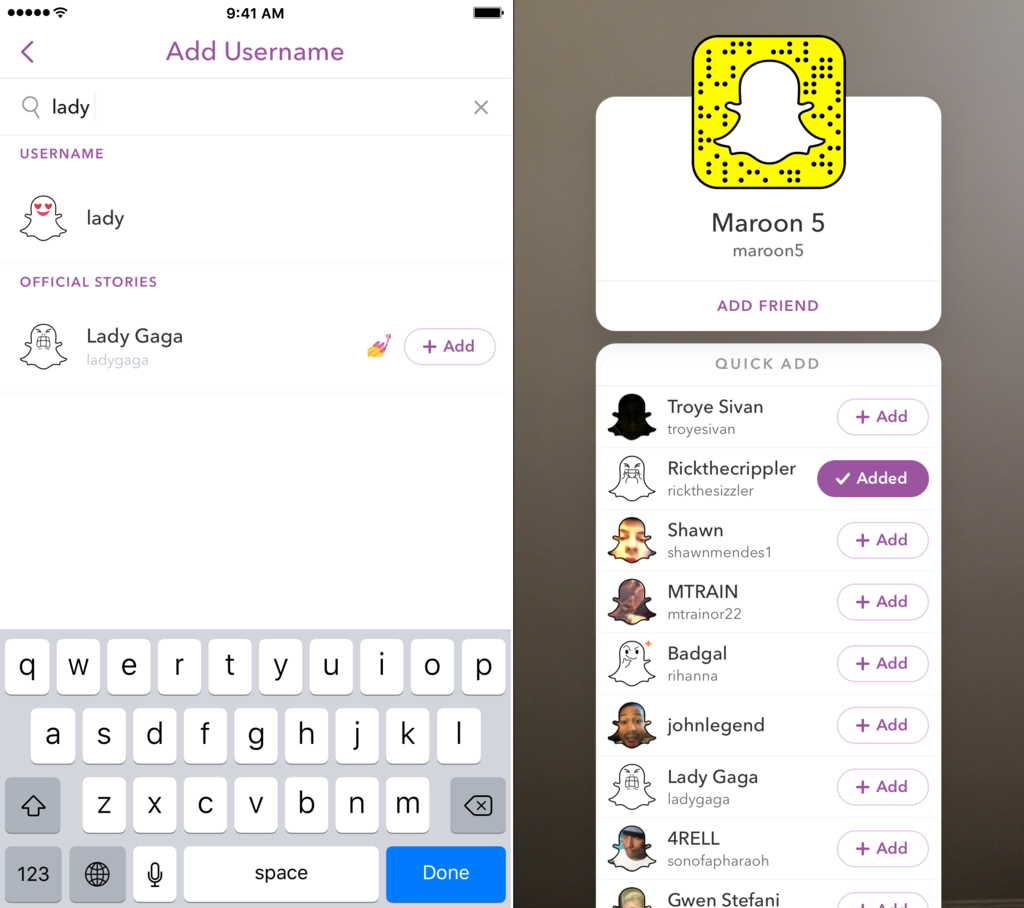
This is important because it’s virtually impossible to find a Snapchat user unless you know exactly what their account name is.

But with the use of emojis, finding any “verified” account becomes easy.

You don’t need to know their account name. You can enter their actual name.

Which is perfect for celebrity accounts like Justin Bieber or Kylie Jenner, since their account names are “rickthesizzler” and “kylizzlemynizzl.”
pasted image 0 598

Snapchat has recently taken this a step further by providing a list of related accounts to follow when you scan a code with your phone’s camera:
pasted image 0 561

It looks like this will be the status quo for verification on Snapchat for awhile.

If you have a substantial following on the app, reach out to Snapchat representatives and find out if your account is worthy of verification.

You’ll have to provide some proof of your identity if you’re lucky enough to get them to agree to verify your account.

If you aren’t a Snapchat VIP, it might not be worth taking these steps to verify your account.

But, you never know if Snapchat will say yes or no, so it doesn’t hurt to just ask.

You can contact Snapchat through their “Contact Us” web page.
pasted image 0 594

If they deny your request, you can always inquire about becoming verified at a later date once you’ve built an even larger following on their platform.

The more followers and connections you have on the app, the better chances you’ll have of Snapchat verifying you on the social media app.

8. Get Verified on TikTok 

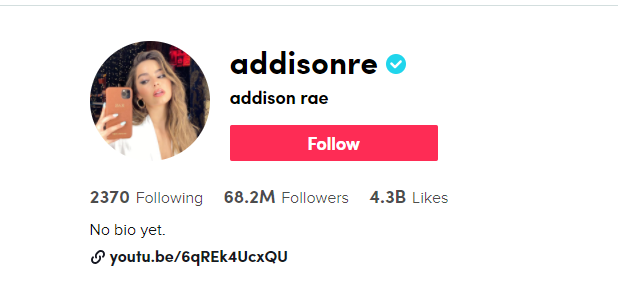
There are two different types of social media verification on TikTok: the blue check, for brands and organizations, and the yellow check, for public figures and famous creators.
get verified on tiktok

Currently, you cannot apply to be verified by TikTok, but that option may be available soon. If you have any questions, the sites suggest sending an email to verification_feedback@tiktok.com.

Conclusion

Getting verified on social media isn’t a one-size-fits-all task.

It actually isn’t even possible on all social media networks — Reddit, for example, does not verify any accounts.

If you’ve tried to become verified on social media platforms and were rejected, try to follow the platform’s requirements more closely.

Then, submit your request again once you’ve met all of the criteria.

If you do it right, you can get those check-mark credentials that everyone desires to help you build brand awareness.

Which social media platforms do you think are most important for verification?

The post How to Get Verified on Social Media appeared first on Neil Patel.

How to Create an Editorial Style Guide

As a digital marketer, you know just how important the tone and message of your blog are to the overall success of your business. A cohesive approach to your digital content, especially the content on your blog, is critical to your brand.

The best way to ensure your site is editorially cohesive is with an editorial style guide.

This article will walk you through the basics of an editorial style guide. You’ll learn the steps you need to follow to create your own style guide whether from scratch, with the use of a template, or with help from a freelancer.

What is an Editorial Style Guide?

An editorial style guide is a set of guidelines for the writers and editors on your team. These guidelines will include standards for grammar, spelling, sentence structure, and image use.

The goal of a style guide is to ensure your content stays consistent and high quality no matter who is writing or editing the article.

Why Does Your Website Need an Editorial Style Guide?

More than just a preferred list of grammar rules, an editorial style guide provides your content team with guidelines for the creation of useful, on-brand content. An editorial style guide ensures a standard baseline for quality and consistency. This will become more critical as your in-house editorial team grows.

Perhaps you think your website is too small, or you can always create your content now and flesh out the details later. The truth is, the sooner you can get your editorial style and processes nailed down, the less work for you and your team.

Without clear guidelines in place, your inbox will soon be flooded with questions from your writers and editorial staff. Your editorial staff may think that lack of guidelines gives them free reign over content. This may result in inconsistent and maybe even poor quality work that has your brand name all over it.

Elements of a Style Guide

There are specific elements all style guides should include, such as:

Grammar

Do you expect your writers to use the Oxford comma? Are there instances where you prefer the semicolon over the em-dash? These are the grammatical rules to call out in your style guide.

Other grammatical elements to take a stand on include where punctuation falls in relation to quotation marks (inside or outside), prepositions at the end of a sentence, and starting sentences with conjunctions.

Spelling

A subscription to services like Grammarly takes care of the majority of misspellings. There may be times where a word can be spelled correctly in two or more ways, so which one should your writers choose?

The most common spelling differences are those with American English versus British English variations. Examples include:

  • Center vs. centre
  • Theater vs. theatre
  • Color vs. colour
  • Criticize vs. criticise
  • Program vs. programme

You should consider where the majority of your audience lives when deciding on a spelling “style.” But the most important thing is to choose one style and be consistent.

Voice and Tone

The voice is the overall expression of your brand, while the tone is how that message is delivered. The tone will vary depending on the medium (e.g. social media post, blog post, newsletter, press release), but the overall brand voice will be your writers’ guiding light.

Is your brand voice considerate and simple like Uber or functional and expressive like Starbucks? Once you have found your brand voice’s sweet spot, it’s time to determine what your tone is and when that may change depending on the medium or circumstances. Perhaps your tone is casual and conversational in blog posts, but witty in social media posts.

You’ll want to include relevant examples here as Uber does in the Applications section of their style guide. These will help to solidify your stance while also giving your writers a handy guide to refer to should they need it.

Sentence and Paragraph Length

From witty one-liners to groupings of five to six sentences, there are many valid ways to form a paragraph. Here you want to outline your general preference and when exceptions should be made.

On academic websites, for example, longer sentences and paragraphs are the norm. This is because there is a lot of high-level information that needs to be delivered at once. On recipe or hobby blogs, however, shorter sentences and paragraphs can help to drive a point home.

Links

This section of your style guide should discuss how links on your blog should be formatted, but also how often to use links and to where (e.g. external versus internal content).

If you’re a medical or academic marketer, for example, you may require that links to outside sources meet a minimum quality standard. If that’s the case, you should provide explicit examples of websites and sources that you trust.

Resources

Your editorial style guide should be in-depth, but if it’s too long it can be difficult for your writers and editors to use effectively. One way to reduce your style guide’s length without compromising content is with resources.

The resource section of your style guide should include links to guides that you have properly vetted. These may include:

  • Academic style guides (e.g. APA or MLA)
  • Grammatical rules and guidelines
  • How-to guides and documentation for platforms your writers and editors will use
  • Database links

You want to set up your writers to be self-sufficient. An expansive resource section within your editorial style guide is a great place to start.

Images and Other Media in an Editorial Style Guide

If you encourage the use of images and other media in your website content, you’ll need to be explicit about formatting, attribution, content, and more. What do these elements cover?

  • Formatting: Specify minimum and maximum dimensions, image size requirements, and placement within an article
  • Attribution: Outline your expectations for how your writers should attribute content to the creator. This will vary depending on the copyright license, but compliance with copyright laws is a must.
  • Content: You should call out any limitations or restrictions you have on certain activities within imagery, such as drinking alcohol. Or maybe you have a style preference for feature images, such as overlay shots. This information is useful for your writers and editors.

There are very real potential consequences to improperly attributed imagery, so this part of your style guide should be very specific. It’s best to provide examples and even templates for your writers and editors to use.

Creating Your Editorial Style Guide

Now you’re ready to create your own style guide. Where should you begin?

Before you become overwhelmed with the process, let’s discuss three ways you can go about creating your own style guide.

Hiring a Freelancer to Create Your Editorial Style Guide

You can hire a freelancer for just about any blog or website-related task, so why not consider hiring a freelancer to create your style guide? Freelancers with experience in writing industry-specific content, including style guides, do exist. If you can find a freelancer with experience creating a style guide in your field, then even better!

There are various freelance recruitment platforms, such as Freelancer and Upwork. You can also reach out to your personal and professional network for recommendations.

An experienced freelancer can walk you through the process of editorial style guide creation. You should come to the table with some information prepared, though. For example:

  • Brand voice and tone (Casual? Authoritative? Academic?)
  • Your preference for tense and point of view
  • Any strong preferences you have (e.g. oxford comma, text formatting, image formatting)
  • Industry or company requirements

You hired the freelancer for their knowledge and expertise, so don’t forget to utilize it. If your freelancer has created an editorial style guide in your niche, then ask them for recommendations based on their previous work.

You may be surprised at the sections you didn’t even think to add, and others that you can cut. Using this previous experience can boost the quality of your style guide and prevent issues caused by ambiguity.

Creating an Editorial Style Guide From a Template

If a freelancer isn’t in your budget, you don’t have to go it alone. There are many style guide templates available for you to work with.

The best place to look for such templates is on marketing, branding, and design blogs.

TechWhirl offers a Word document template for download, and Lucidpress has its own template you can customize using their online editor. You may also have luck with template repositories like this one from Microsoft.

The important thing to remember is a template is a guide, not a rule book. You don’t need to include all of its sections, and you’re free to add any sections you feel necessary.

Creating Your Own Editorial Style Guide

If you prefer to create your own style guide from scratch, then consider the step-by-step process outlined below.

Start With a Solid Base

At this stage, it’s time to choose an established style guide as your base.

There are plenty of options as described below, including APA and MLA. By choosing one of these guides as your baseline, you make it easy to create the foundation of your style guide.

These established guides already include rules on grammar, structure, and formatting. You can then build upon those rules to create a robust editorial style guide for your website.

Establish Brand Voice and Set the Tone

Two critical elements of marketing content are often overlooked: brand voice, and tone. The reason these are so often overlooked isn’t because they’re unimportant, but because they can be difficult to distinguish.

The voice is your brand’s personality. This remains the same throughout the life of your brand.

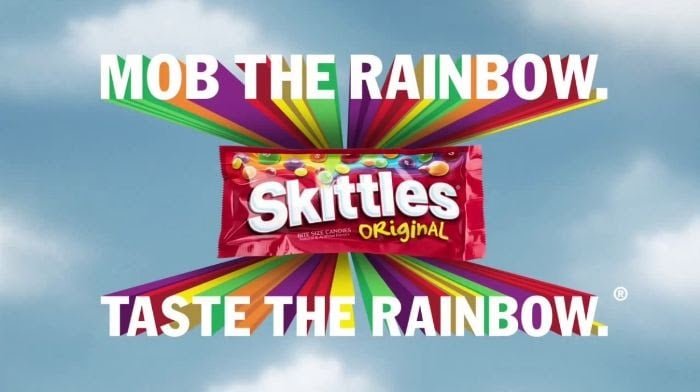
Skittles, for example, has a playful and upbeat voice. Their marketing campaigns are slightly fantastical with an eye towards bright colors, loud sounds, and catchy quips.

Skittles marketing campaigns as a proof of their use of an editorial style guide

The tone is the inflection on your brand voice that will change depending on the situation. Even if you have an army of writers, you can ensure your blog stays cohesive by setting a tone for your writers and editors to abide by.

Remember the Big Three: Tense, Voice, and Point of View

Now you know the tone of your content, it’s time to outline the “how-to.” How do you intend for your writers to speak to your audience? The answer will depend on the tense, voice, and point of view you prefer.

Writing tense refers to the three tenses: past, present, and future.

There may be reasons all three tenses are used on your website or blog. You should still pick a dominant tense for your writers to defer to in most circumstances.

Voice refers to active voice versus passive voice. That means putting the subject first (active) or putting the object first (passive). Active voice is the standard for most bloggers and marketers. It offers a more conversational tone readers find compelling.

Point of view refers to the perspective of the writer: first, second, or third person.

Bloggers and marketers will typically utilize first person (“I” statements) or second person (“You” statements). The point of view you choose will depend largely on your content niche and your overall tone.

It’s best to have a default recommendation for all three of the above. You may include exceptions to the rule, but be sure to provide specific examples if you do so.

Establish Standard Formatting

The way your content flows is largely dependent on its formatting. Some basic formatting guidelines to consider are headers and subheaders, bold and italic text, and hyperlinking text.

You may want to consider your content management system and any potential limitations when it comes to header tag guidelines.

If you are heavily relying on a style guide such as the APA, you can utilize their recommendations for text formatting. For example, italicizing terms that have a technical or special meaning.

Define Image Requirements

There are many good reasons to include imagery on your website. However, images can take up precious space, and they come with their own copyright risks. This is why you must define image requirements within your style guide.

On the technical side, you should define minimum and maximum image size. This will largely depend on your content platform, and it may vary by image type (featured image versus in-content image). With copyright infringement always being a risk, you also want to provide strict requirements when it comes to including images in content.

If you use a premium image repository, like Shutterstock, you may include account login details in this part of your style guide. You can also link to free image repositories such as Unsplash or Pexels.

Beyond that, you should clearly outline (with examples) the desired format for image references. What should be included, and how should it be formatted? Again, it may be helpful to fall back on your chosen style guide’s standard.

Incorporate Standards of Performance

How will your writers know when they hit the nail on the head or, conversely, miss the mark? This is where standards of performance come in handy.

Standards of performance are guidelines that your writers and editors can refer to when evaluating their content piece. The more objective your standards of performance, the better.

When it comes to establishing standards of performance, it helps to think of a grading rubric. For each standard, it’s possible to score anywhere from one to five points. What standards can you choose that will be easy to evaluate on a five-point scale? A few examples include:

The standards of performance will be beneficial to your writers, as well as your editorial staff.

Picking a Preexisting Editorial Style Guide as a Base

The likelihood is something will inadvertently be left out of your editorial style guide. This is why having a default style guide for your writers and editors to refer to is crucial.

These style guides have typical use cases, though they can be adapted for uses beyond the norm. Let’s look at the four most common style guides.

Associated Press (AP)

The Associated Press (AP) style guide is most commonly used by journalists. Its focus is on disseminating information clearly with simple formatting.

American Psychological Association (APA)

The American Psychological Association (APA) style guide is most commonly used in college in science and social science courses. It has a slightly more formal bent than the MLA, though not so formal as the Chicago Manual of Style.

This style guide is ideal for academic writing, including blogs or websites dedicated to discussing academic subjects.

Modern Language Association (MLA)

The Modern Language Association (MLA) style guide is most commonly used in college-level English courses, and it’s also the default for many bloggers, marketers, and content writers. This guide offers a more laid-back approach desirable to writers, editors, and readers alike.

Chicago Manual of Style

The Chicago Manual of Style is the most rigorous of the style guides. This style guide isn’t a popular choice for most bloggers due to its meticulous nature.

The key differences between the four style guides are largely related to formatting, though there are some grammatical and structural variations as well. There isn’t one style guide better than the other as they all have their strengths and weaknesses. The guide you choose will depend largely on preference, ease of use, and familiarity.

Picking a Platform to Host Your Editorial Style Guide

You’re ready to create your style guide, but where should you host it? You have a few options, and they each have their pros and cons.

Microsoft Word

A word document is perhaps the simplest option. The most obvious limitation of word documents is the inability to automatically update the guidelines. You would need to send the updated document out to all writers and editors as additions or changes are made.

Google Docs

If you like the idea of a simple document, then consider Google Docs. You will still have access to the basic content tools offered by a word document, but updates will be reflected live. You can also collaborate with members of your editorial team.

Sharepoint

Perhaps you want a more secure platform than Google. If that’s the case, then Sharepoint may be for you. Sharepoint is compatible with the Microsoft Suite, including Word. Using Sharepoint, you can upload an already existing Word document or create your own within the platform.

Just like Google Docs, your changes are reflected immediately and you can collaborate with as many team members as needed.

Confluence

If more robust collaboration is needed, especially when you’re just beginning to create your editorial style guide, you may prefer a platform like Confluence. This is a wiki-style platform that enables you to create your style guide with your team.

Resources to Create a Quality Editorial Style Guide

As you create your style guide, you’ll find yourself going down many rabbit holes. With this in mind, we’ve compiled a list of helpful resources to get you started on your research.

To familiarize yourself with institutional style guides, check out these resources on the AP, APA, MLA, and Chicago Manual of Style style guides.

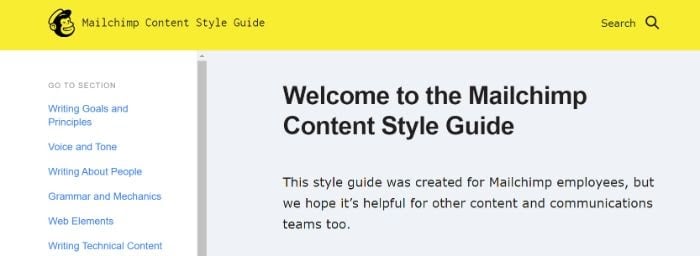
Are you finding yourself needing some inspiration? Take a look at the style guides created by institutions like Princeton and Rutgers. Your favorite companies and brands may also have their style guides publicly available, including Mailchimp, Google, and Atlassian

Mailchimps Editorial Style Guide

Conclusion

An editorial style guide ensures there is no ambiguity in your requirements. When utilized correctly, this style guide will help you to maintain a high standard of quality for your site and consistency across your written content.

It can also clear up any confusion or questions from your team and contractors, to cut down on the back and forth questions.

What unique elements will you be sure to include in your editorial style guide?

The post How to Create an Editorial Style Guide appeared first on Neil Patel.

WaystoCap (YC W17) Is Hiring a Full Stack Software Engineer

Article URL: https://waystocap.breezy.hr/p/1f311202d596-full-stack-software-engineer

Comments URL: https://news.ycombinator.com/item?id=25045000

Points: 1

# Comments: 0

The post WaystoCap (YC W17) Is Hiring a Full Stack Software Engineer appeared first on ROI Credit Builders.

The Supreme Court's Pennsylvania Cleanup

The Justices have a chance to clarify who writes election law.

The post The Supreme Court’s Pennsylvania Cleanup appeared first on ROI Credit Builders.

New comment by kennydust in "Ask HN: Who is hiring? (November 2020)"

Kredit | New York, NY | Remote (east coast)

Kredit is a new fin-tech startup looking to disrupt the debt collection space. We are looking for a .NET engineer with a focus on angular.

More on the company and job spec:
https://bit.ly/2JWrRlt

Just what is Business Credit?

The post Just what is Business Credit? appeared first on ROI Credit Builders.

Just what is Business Credit?

The post Just what is Business Credit? appeared first on ROI Credit Builders.

New comment by bleusink in "Ask HN: Who is hiring? (November 2020)"

BlueConic | https://www.blueconic.com | multiple positions | ONSITE in Boston, MA / Nijmegen, NL (depending on the position) and REMOTE for some positions BlueConic is the market-leading customer data platform, which gives marketers the power to liberate their data and use it to improve marketing outcomes. Our clients use BlueConic to unify individual-level data and …

The post New comment by bleusink in “Ask HN: Who is hiring? (November 2020)” first appeared on Online Web Store Site.

7 Marketing Lessons from Eye-Tracking Studies

With the ability to take a lot of guesswork out of conversion rate optimization, eye-tracking software and heat maps can reveal some startling insights into increasing conversions (and avoiding sales killers) that can benefit every business.

Here are 7 important eye-tracking studies that give a sneak peek into common browsing patterns and elements of human behavior that all marketers need to know.

1. Eye Tracking Shows We Must Avoid “Dead Weight” Visuals

You don’t have to be an expert in UX (user experience) to understand the importance of Fitts’s law.

While seemingly complicated at first glance, one of the fundamental lessons Fitts’s law communicates is that object “weight” (in the visual hierarchy) is a big determinant in what attracts eyes and mouse clicks.

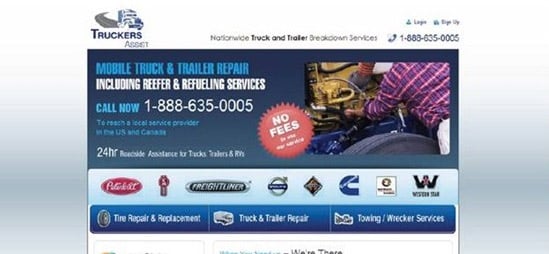
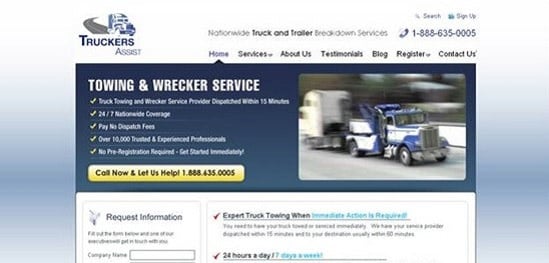
Consider this recent case study from TechWyse that examined the homepage of a truck service with a heat map:

tow truck case study 7 Marketing Lessons from Eye-Tracking Studies
eyes all over the place | 7 Marketing Lessons from Eye-Tracking Studies

As you can see from the first test, the non-clickable “NO FEES” button was hogging a lot of attention, but it is not a call-to-action and its information isn’t the most important on the page.

That’s no good.

Also, it is right next to one of the most important CTAs on the page (the phone number) and it stands out so much that it actually is drawing people away from other more important elements.

Take a look at the changes they made to alleviate this problem.

tow truck case study improvement | 7 Marketing Lessons from Eye-Tracking Studies
tower | 7 Marketing Lessons from Eye-Tracking Studies

Much better!

The “Call Now” button clearly is getting a lot of attention over every other section on the page, which is great because it is how customers get started contacting the business!

Lesson learned: When you are assembling a persuasive landing page, be sure the elements that “pop” are the ones that matter, and that you aren’t giving too much weight to visuals that don’t encourage customers to take action.

2. Eye Tracking Shows The Effect of Video on Search Results

Most marketers have seen those SERP (search engine results page) heat maps that show the top 3 rankings hogging all of the action… But what role do visual elements play in holding visitor attention?

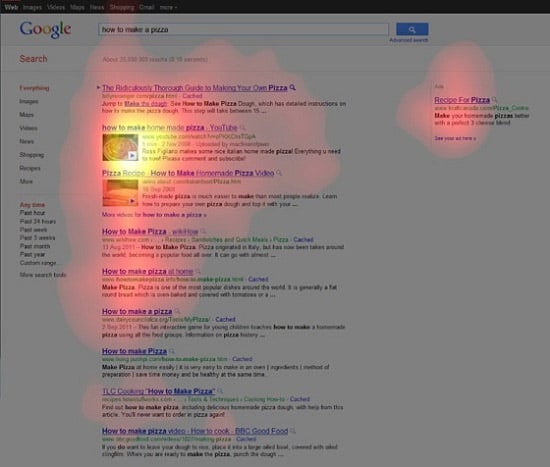
In an interesting heat map study published on Moz, videos were shown to be particularly powerful in capturing eyeballs through eye tracking, even when they weren’t the #1 result.

As you can see below, both direct video results (such as a hosted YouTube video) and embedded video results (videos embedded on a webpage) commanded more attention than a regular search listing, especially if they were near the top of the results.

direct video | 7 Marketing Lessons from Eye-Tracking Studies

Why video?

Video is usually is interpreted as a product video. However, instead of assuming, test to see if it impacts your search traffic for top keywords.

Lesson learned: If you want to stand out at the top of some competitive search results, you may want to test an embedded video rather than authorship for product pages.

3. The Power of Directional Cues’ Eye Tracking

Using visual cues to guide visitors to key areas of your site is nothing new, but just how effective is it?

According to studies such as the aptly named Eye Gaze Cannot be Ignored, it is incredibly effective. Human beings have a natural tendency to follow the gaze of others, and we have been coached since birth to follow arrows directing us to where we should be looking and going.

Consider the following eye tracking heat map example that included a page with a baby and a compelling headline for taking care of the baby’s skin.

baby face website study | 7 Marketing Lessons from Eye-Tracking Studies

It’s obvious that the baby’s face is drawing a lot of attention. (As a matter of fact, faces of babies and pretty women draw the longest gazes from all visitors.)

Unfortunately, from a marketing standpoint, this is a problem because the copy isn’t commanding enough attention.

Now look at the browsing patterns when an image of the baby facing the text was used.

baby face eye tracking | 7 Marketing Lessons from Eye-Tracking Studies

As you can see from the eye tracking heat map, users focused on the baby’s face again (from the side) and directly followed the baby’s line of sight to the headline and opening copy. Even the area of text that the baby’s chin was pointing to was read more!

Lesson learned: Visuals are an important part of a site’s overall design, but most pages can be optimized by including images that serve as visual cues for where visitors should look next.

4. Eye Tracking Studies Show The F-Pattern Works Across the Board

According to this study from the Nielsen Group, all across articles, e-commerce sites, and search engine results, people almost always browse in an F-shaped pattern that heavily favors the left side of the screen.

F pattern website reading | 7 Marketing Lessons from Eye-Tracking Studies

This coincides with additional research that shows people tend to view the left side of the screen overall far more than the right.

pixels from left edge | 7 Marketing Lessons from Eye-Tracking Studies

It is important to note all of these studies were conducted with English speaking (and reading) participants. The opposite was true for those users whose languages read from right to left.

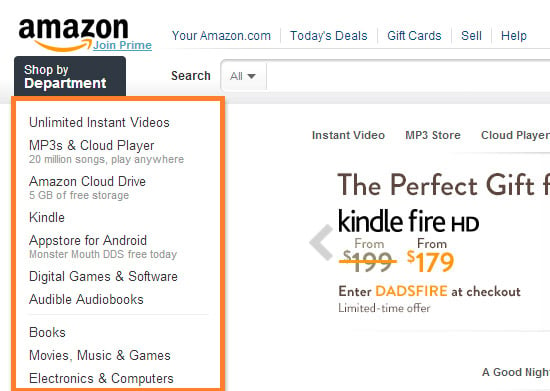
Is it any wonder that some of the most tested websites in the world (like Amazon) have placed a clear priority on the left sides of their homepages?

amazon on the left | 7 Marketing Lessons from Eye-Tracking Studies

Lesson learned: Web users tend to browse sites based on their reading habits. For English speaking people (and languages with similar reading patterns), the left side of the screen is heavily favored, and all sites tend to be browsed in an F-pattern.

5. Eye Tracking Shows “The Fold” isn’t That Important

Relying on the screen above “the fold” to do all of the heavy lifting is one of the biggest usability mistakes you can make. The idea that it is the only place web users will browse is a complete myth.

Multiple tests (including this one and this other one) have shown that users have no problem scrolling down below the fold. Surprisingly, they will browse even further down if the length of the page is longer.

1the fold isnt that important | 7 Marketing Lessons from Eye-Tracking Studies

KISSmetrics conducted an interesting A/B test on his homepage and found that a page with 1,292 words beat a page with 488 words by 7.6%. And it didn’t end there. The leads from the long-form version of the page were higher in quality than the leads from the variation.

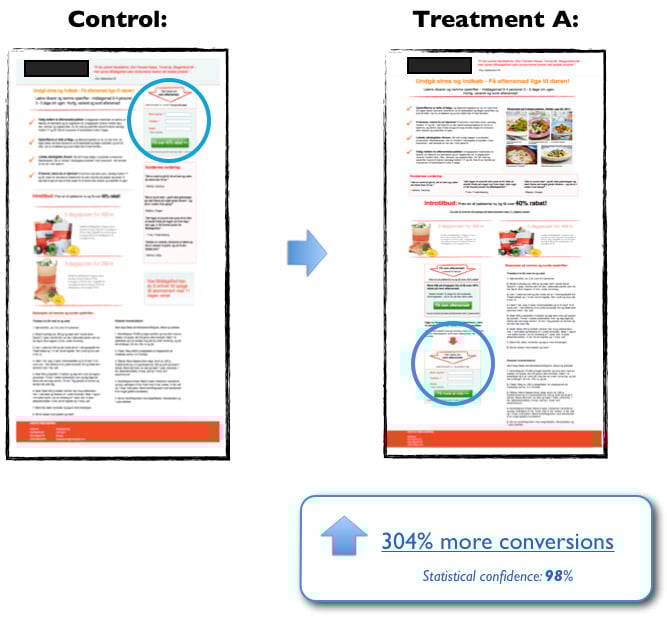
Another great test from the folks at ContentVerve showed that moving the call-to-action far below the fold actually boosted conversions by 304 percent.

moving call to action | 7 Marketing Lessons from Eye-Tracking Studies

Lesson learned: Although it’s dependent on the page you are testing, you shouldn’t be afraid of placing important elements below the fold (and testing them there), because it gives people time to read your copy before they take action.

6. Eye Tracking Proves That Newsletters Should Be Short and Sweet

Who’d have thought that eye tracking and email marketing could be best of friends?

According to this eye tracking study conducted by the Nielsen Group, people scan emails very quickly, and the only areas they give any appreciable amount of time to at all are the initial copy and headlines.

keep newsletters short | 7 Marketing Lessons from Eye-Tracking Studies

From the study:

Users are extremely fast at both processing their inboxes and reading newsletters. The average time allocated to a newsletter after opening it was only 51 seconds.

This means that you need to get to the point in your emails in under a minute. The message should be as compelling as that of an online article, but you don’t have as much time to capture attention as you might in an article.

This coincides with a study from MarketingSherpa that shows people prefer short, clear, and un-creative headlines for their emails. (Creative headlines can seem mysterious, and mystery in an inbox may equal spam.)

Truly a situation where the KISS principle applies!

Lesson learned: Once you’ve earned the right to appear in a prospect’s inbox, be sure to keep that privilege by crafting emails that are clear and get to the point quickly. You don’t have as much time to broadcast your message as you would in an online article.

7. Eye Tracking Proves The Power of Pre-Sale Prices

If you’ve ever seen this video by Dan Ariely, you know that sometimes seemingly “useless” price points actually are quite important for increasing conversions.

One common pricing element that fits the bill here is the “pre-sale” price. It isn’t literally used by customers because they don’t pay that price… But is it still “used” to evaluate the new price?

In an effort to answer this question, Robert Stevens of THiNK Eye Tracking conducted a test that examined how people look at prices and products on shelves.

price products on shelves | 7 Marketing Lessons from Eye-Tracking Studies

In the initial test, results weren’t too surprising. Most people spent time looking at prices and product packaging.

But if the pre-sale price was included, would people look at it?

pre sale price included | 7 Marketing Lessons from Eye-Tracking Studies

They did!

Better yet, Stevens also tested perception of the sale price to see if viewing the pre-sale price played a role.

These were his findings:

After consumers selected the smoothie of their choice, I asked them if their purchase was a good value for the money on a 7 point “like” scale (with 1 being very good value for the money and 7 being not very good value for the money).

Consumers who saw only the promotional item gave a mean score of 2.4. Consumers who saw the promotional item next to a full-price premium offer gave it 1.7, even though they purchased the same item!

Basically, humans are pretty bad at evaluating price without contextual clues (as argued by Ariely in this TED talk). We find it much easier to make decisions when we have something to base them on.

That’s why people often view a sale price as a better value when they can see what they really are saving. Without that contextual clue, the sale price is hard to evaluate because they don’t know what the product usually sells for.

Lesson learned: Sometimes “useless” prices like pre-sale prices can be used by customers to evaluate the value of a potential purchase.

About the Author: Gregory Ciotti is the marketing strategist for Help Scout, a Zendesk alternative made for small businesses that want help desk software with a personal touch. Get more data-driven content from Greg by downloading his free guide on converting more customers (with psychology).

The post 7 Marketing Lessons from Eye-Tracking Studies appeared first on Neil Patel.

Micro Startup Acquisition: The Definitive Guide to Buying and Selling Small Startups

The problem with selling your startup is the long exit time. Sometimes it can take as long as seven years before you can sell your business and hop on the next idea.

And the investors? They feel the same way.

Who wants to wait almost a decade to buy a startup when the face of tech is evolving at such a rapid pace? Plus, the price tag on those more established businesses often run into the billions.

That’s an expensive mistake if you make the wrong investment.

The solution? Micro startup acquisitions.

From Facebook to Microsoft, there is a massive trend to seek out tiny teams of five or less, buy them, and use the technology and talent to gain a competitive edge.

In this guide, we’ll discuss the benefits of buying and selling a micro startup, the trends changing M&R strategy, and the top tools you can use to sell (or buy) your startup.

But before we dive into that, we need to look into what micro startup acquisitions are and why you need to sit up and take notice.

Micro Startup Acquisitions: What Are They, and Why Should I Care?

Micro startup acquisitions are a move away from buying businesses with established products or even proven revenue streams.

Instead, larger tech companies like Twitter and Pinterest are making investments in small startups. These businesses usually consist of 2 to 3 people, and companies are taking bets on their products that aren’t even fully realized yet.

Why?

Companies are becoming more proactive and want to acquire complementary products earlier on in their road maps as a way to outwit the competition and obtain the best talent in the industry.

What does this mean for startups?

Your exit strategy timeline is A LOT shorter. Gone are the days of waiting 5, 7, or 10 years to sell, making it more affordable than ever to bootstrap your startup.

Hike Labs was founded in 2014, and by 2015, Pinterest had swooped in and acquired the San Francisco-based mobile publishing startup.

Micro Startup Acquisition Trends

Over the last couple of years, there have been clear trends in why big companies are choosing to invest in these small teams and use them as part of their growth strategy.

More deals are about gaining access to new capabilities or markets. While it’s a trend across sectors, it’s picking up steam in tech where companies are looking to deliver more complete solutions to consumers.

These acquisitions, which focus more on scope than scale, accounted for 90% of tech deals in 2019, which is a 40% increase from 2015. It’s a clear indicator that businesses want to expand their offerings and capabilities.

It’s Harder to Build the Right Product from Scratch

No one wants to be late to market.

Yes, the tech giants could develop the software these micro startups are making, but by the time it’s ready for market, a competitor might have rolled a similar product out and taken all the glory.

Or you could make the mistake of investing too much in the wrong idea, and there goes money, time, and resources down the toilet. It’s usually much cheaper to acquire a startup that has done the legwork than get an idea internally developed.

By acquiring micro startups, companies can mitigate both risks and reap the rewards.

For example, HR and finance SaaS vendor Workday bought Scout RFP (a San Francisco startup with a team of 8) for $540 million.

The startup built a cloud-based office procurement system that helps customers streamline supplier management. The acquisition is a step in the right direction for Workday to compete as a holistic enterprise resource planning solution.

The Micro Startup Talent Hunger Games

It’s no secret that attracting top tier talent can take your business to the next level.

These micro startup acquisitions aren’t only about products. Sometimes it’s the talent that attracts the bigger guys. Micro teams can amplify a company’s productivity while getting rid of the learning curve which comes with new hires.

The innovation and ability to push a startup idea into production mean the team has skills and knowledge that is invaluable to an established company.

For example, when Instagram bought Luma (its first acquisition), the tiny three-person team was part of the deal. The Luma team’s knowledge in video stabilization technology was critical in launching Instagram’s complementary app, Hyperlapse.

The Attractive Price Point of Micro Startups

A massive advantage of purchasing micro startups is the price.

It’s way cheaper to go small than fund a big, established company with hundreds of employees.

And the risk of it going under? A much softer blow.

If the investment goes the same way as Jay-Z’s Tidal music streaming app, it’s a much smaller amount to write off. Plus, you get to keep the team.

For example:

Microsoft spent $200 million to acquire Accompli and only $100 million for Sunrise. When you compare that to the $7.5 billion they spent on the acquisition of Github, or their purchase of Skype for $8.5 billion, that’s quite a bargain.

The same goes for Google acquiring Android for a measly $50 million in 2005 with key employees joining the company. As of 2020, the net worth of Android is estimated to be over $2.5 billion.

The Race for Artificial Intelligence With Micro Startups

Another major trend in micro startup acquisitions is artificial intelligence. Companies in almost every sector are looking to take advantage of machine learning and integrate it into their products.

When you combine this with the shortage of AI talent, there is a race to scoop up startups and their teams who are in the early stages of funding and research.

In 2019, Facebook quickly snapped up a visual search startup called GrokStyle, who developed an app that can automatically detect decor and home furniture from a photo. When asked about the acquisition, Facebook responded in a statement that “their team and technology will contribute to our AI capabilities”.

Tools for Acquiring or Selling Micro Startups and Other Businesses

Want to cash in on the micro acquisition boom? Whether you’re looking to sell or invest in a small business, there are various tools to help you swipe right and find your perfect match.

Micro Acquire

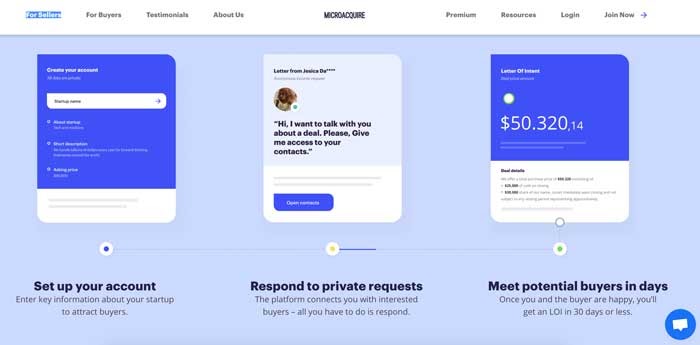
micro acquire

Micro Acquire is a marketplace that connects startups to buyers. The platform is free, private, and has no middlemen.

When you sign up, you’ll get instant access to over 10,000 trusted buyers with total anonymity.

The marketplace is designed to cut down on the time you need to sell your business and find startups to invest in. Once you’ve found a buyer or a seller, you’ll get a letter of intent (LOI) in 30 days or less.

Who Is It For?

Micro Aquire is for startups with an annual recurring revenue (ARR) of less than $500,000. It’s one of the best platforms for serial entrepreneurs to invest in small companies and grow them into booming successes.

Key Features

  • 30-day closing period.
  • Filter the listings to find a startup that ticks all your boxes.
  • Sell your startup by following a quick and simple selling process.
  • Each seller provides key metrics to give buyers an accurate idea about the sustainability of their business.
  • No middlemen. The sale is direct between the seller and buyer.

What Does It Cost?

  • Free: Micro Aquire is free for sellers and buyers with basic features.
  • Premium: For $290 per year, you’ll get the newest listings sent straight to your inbox before the other buyers on the free version. It gives you the chance to review, negotiate, and snap up a deal before anyone else. Plus, Micro Acquire won’t charge any commission from the sale.

Flippa

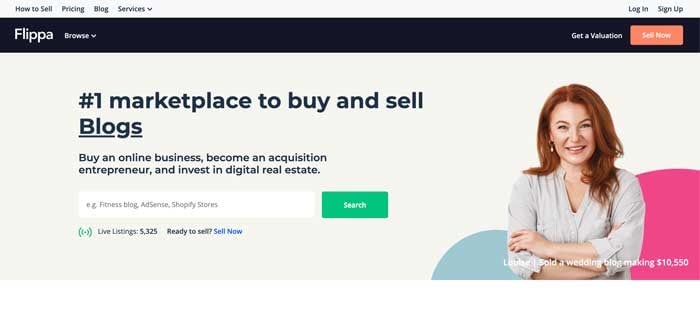
flippa

Flippa is a marketplace for buying and selling websites, apps, domains, and online businesses.

While it helps to streamline the negotiation and transaction process, it does have a history of scam listings.

If you decide to buy on Flippa, do your due diligence and put the listings under a microscope to make sure it’s legit to find those diamonds in the rough.

Who Is It For?

Flippa is an ideal marketplace for small to medium-sized businesses. You can find a range of sellers at any price.

You can buy or sell online businesses and products like:

  • Blogs
  • E-commerce stores
  • Affiliate sites
  • SaaS businesses
  • Apps
  • Shopify stores
  • Amazon FBA stores
  • Domains

Key Features

  • The easy-to-use site navigation makes it simple to list your business in under 10 minutes.
  • There are tons of filtering options to help you find a business that meets your needs and budget.
  • Choose the “Auction” feature to sell your business within 30 days or set it at a fixed price. Fixed price listings usually take 3-5 months to sell.
  • The “Broker-Matching Service” connects you to a personal broker who will manage the entire sales process from marketing to closing the deal on your behalf. You will need a net annual profit of at least $100,000 to qualify.
  • The “Self Service” feature gets you a Flippa account manager to help you with the sales process.
  • Use Flippa’s free Online Valuation Tool to get a sense of how much your business is worth.

What Does It Cost?

Flippa’s listing fees depend on what you’re selling:

  • Starter/template websites: $15
  • Domains: $10
  • iOS and Android Apps: $15
  • Established websites: $49

There is also a 10% success fee on each sale, and you can upgrade your listing with various packages starting at $295.

Tiny Capital

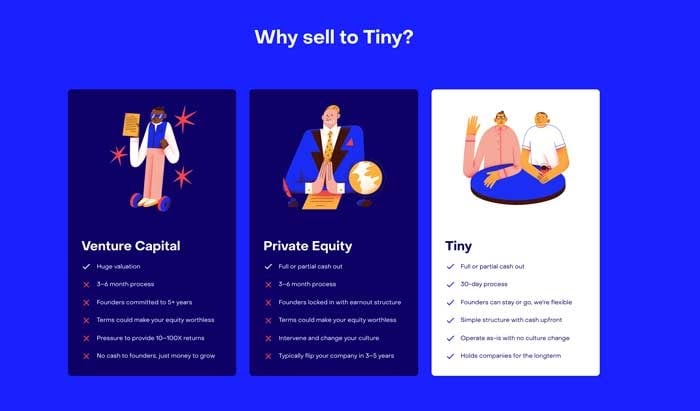
tiny capital

Tiny Capital is a different breed in the micro acquisition space. Unlike some of the other tools mentioned above, it’s a traditional venture capital firm, with a twist.

Instead of buying companies and becoming a micromanaging nightmare, Tiny has a hands-off approach.

Besides the required monthly and quarterly reports, founders rarely have contact with the firm, with some businesses only speaking to Tiny Capital founder, Andrew Wilkinson, once every six months.

Who Is It For?

Tiny Capital seeks to invest in profitable internet businesses within the information technology sectors.

Think your business would be a good fit?

You need to meet the following requirements:

  • 3-5 years in business.
  • A minimum of $500k per year in annual profit.
  • A high-quality team.
  • You have a simple online business with high margins that doesn’t require complex technology or large teams
  • Your business has a competitive advantage.

It’s the perfect micro acquisition option for founders who want a quick sales turn around (most deals are complete within 30 days) and an investor who is going to be seen and not heard.

Key Features

  • There is a simple selling structure where you can get a full or partial cash payment upfront.
  • Tiny Capital has a simple 30-day sales cycle that includes a 15-day due diligence process.
  • Founders can stay or go.
  • No culture change required.
  • No in-person meetings before or after the sale.

What Does It Cost?

There are no upfront costs with Tiny. All you need to do is contact the team, and you’ll get a response within 48 hours. If Tiny likes your business, you’ll get an offer within 7 days.

FE International

fe international

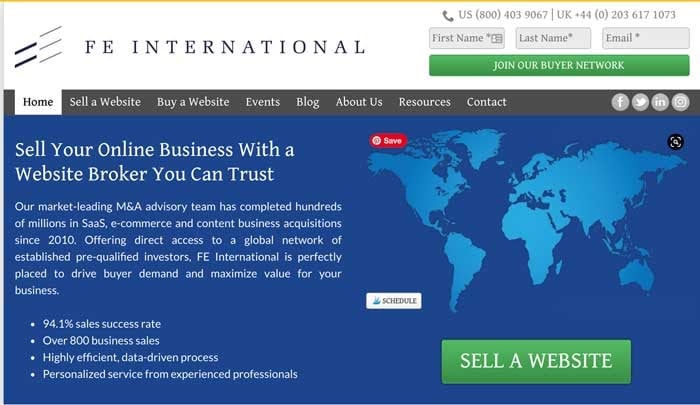
FE International is an acquisition advisory team for businesses earning five figures or more. With a 94.1% sales success rate, it’s one of the top tools for micro startup acquisitions.

As a full-service M&A (mergers and acquisitions service), the platform has integrated solutions for all the major elements of a successful acquisition. From valuation to exit planning to post-sale considerations, it’s all handled under one roof.

Who Is It For?

FE International specializes in selling websites in the SaaS, content, and e-commerce industries. It’s an excellent choice for startups within the 5 to 8 figure range who want top-tier support throughout the sales process.

Key Features

  • FE has a high sales success rate compared to its competitors.
  • It has a vetted investor network of 50,000 people, ensuring only qualified, seasoned professionals view information about your business.
  • Several brokers are always available to minimize disruptions in the sales process.
  • To help you get the best possible deal, FE International creates a thorough sales plan and marketing materials to attract qualified buyers.
  • FE brokers will approach several pre-screened and vetted investors and negotiate the best deal on your behalf.

What Does It Cost?

There are no listing fees for sellers or joining fees for investors. Brokers are paid a 15% commission fee on all sales, and there is a buyer transaction fee of 2.5% with a maximum threshold of $1,000.

Empire Flippers

empire flippers

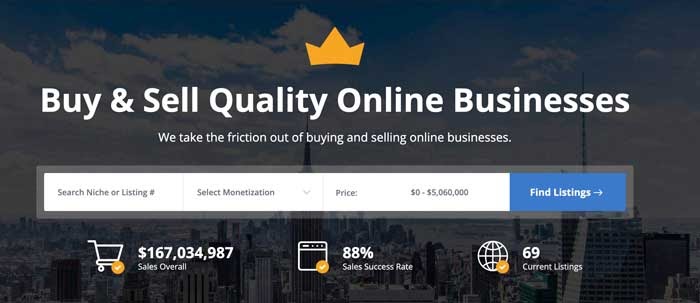
Since opening its doors in 2013, Empire Flippers has sold over $93,000,000 worth of websites and online businesses with an impressive 88% selling success rate.

Who Is It For?

Empire Flippers is interested in websites within the following categories:

There is an intensive seller vetting process to ensure only quality listings make it onto the marketplace, and there is a dedicated team for each step of the process.

To qualify for a listing on Empire Flippers, you must meet the following requirements:

  • Your business or website must have a 6-month solid track record of at least $1000 profit per month.
  • You must be using Google Analytics for the past 6 months.

Key Features

  • Empire Flippers has a dedicated migrations team to take care of transferring your new business to you.
  • Get an estimate on how much your business is worth on Empire Flippers before you start the vetting process.
  • New listings are sent out via email to a list of over 45,000 people.
  • If you list with Empire Flippers, you will need to agree to not list your business anywhere else for 2 months. Sellers also need to sign a 3-year non-compete agreement.

What Does It Cost?

Empire Flippers has a $297 listing fee for first-time sellers. But if your listing is declined, it is 100% refundable.

If you’re a repeat seller, you’ll only pay $97 to list your site.

Potential buyers must pay a refundable 5% deposit fee to gain access to a listings URL, P&L, and Google Analytics.

There are commission fees ranging from 8% to 15% depending on the final sale price.

Conclusion

The race is on for micro startup acquisitions.

Companies who understand the benefits of expanding their scope by adding complementary products and talent to their portfolio will reap the rewards.

Companies who forgo adding micro acquisitions as part of their mergers and acquisitions strategy are going to get left in the dust by competitors and struggle to find top-tier talent.

In short, there is no better time to be a desirable tiny startup.

Have you ever sold or acquired a micro startup? What has been your experience?

The post Micro Startup Acquisition: The Definitive Guide to Buying and Selling Small Startups appeared first on Neil Patel.