Presidential historian Jon Meacham compared President Biden to Abraham Lincoln Tuesday, arguing the upcoming midterm elections will be the most important choice that America has made since the lead up to the Civil War.
Appearing on “CNN Tonight” to promote his new book about Lincoln, he was asked by CNN co-host Alisyn Camerota to “tell us why you think that this is the most important election since 1850.”
Meacham responded that the upcoming elections are about a lot more than just particular policies.
“Well, I think it’s the most important election easily since that period because we are facing a stress test for the rule of law and democracies run not just on policies, not just about what a particular policy or tax rate is, it’s about an overall context of our mutual respect for each other as fellow citizens and a sanctity of law and custom that means that people who win elections legitimately get to serve in office,” Meacham said.
Meacham, who spoke at the 2020 Democratic National Convention, went on to mock former President George W. Bush while criticizing the Republican Party.
“When you deplete the trust in the system, which is what is unfolding today around the country, and I will confess, as George W. Bush might say, I misunderestimated the power of the ‘big lie’ here, but it’s burrowed in and democracies do not long endure if everything becomes about power at the expense of winning humbly and losing graciously,” Meacham said.
Co-host Laura Coates brought up the Confederacy and slavery before the Civil War and how Meacham compared them to Republicans who question the 2020 presidential election, noting how he wrote that both Lincoln and Biden had to deal with their own versions of the big lie, with Lincoln’s being that “slavery was a justifiable institution.”
She said there were moments where, if Lincoln had succumbed to pressure to placate the Confederacy, history would have turned out much differently and told Meacham, “You draw these analogies in a way, I think is not always so obvious but it’s fascinating to think of how and where we are today.”
Meacham said the main question we must answer “for the continuation of the constitutional experiment” is “do we put our own interests above everything else?”
“If we go entirely political, if it’s entirely – every moment is this battle where it is cataclysmic – then the system doesn’t endure,” he said, reiterating that Lincoln could have chosen a different path. But because he prioritized democracy over his political future, “Abraham Lincoln, flawed, fallen, and fallible, said no. And he said no, because he believed fundamentally that slavery had to die and the union had to endure.”
Republicans are gaining ground in the crucial midterm elections, with Republicans focusing on the economy and rising crime while Democrats have sought to make the campaign about abortion and a “threat to democracy.”
Kyrie Irving just wants Ben Simmons to shoot the basketball.
During the Brooklyn Nets-Milwaukee Bucks battle in Wisconsin on Wednesday night, Irving drove to the basket and dished off a pass to Simmons who was in the lane with him.
But, instead of going up hard to the hoop for some points, Simmons immediately looked to pass the rock.
The Nets would lose to the Bucks, 110-99, where Simmons went 2-for-7 from the field in 34:28 of playing time.
It may have been points for Brooklyn, but Irving has the same feelings as a lot of Nets fans right now. Since he made his Nets debut this season, Simmons has looked like a very timid player offensively.
Simmons has infamously been one to think pass first, too, as his final games with the 76ers in the playoffs showed that.
He’s been filling up the stat sheet elsewhere with the Nets, though, in terms of assists and rebounds. But the player that’s averaged at least 14 points per game with the Philadelphia 76ers hasn’t been putting the ball through twine too much to start the year.
Heading into this game with the Bucks, Simmons took just 13 total shots in three contests, making seven for a total 17 points. Simmons was averaging 28 minutes per game, so 4.3 average field goal attempts per game isn’t what head coach Steve Nash expected.
Simmons has also fouled out in two of the first three games, which isn’t like him. Nash spoke to The New York Post about how he wants “joy” to be found by Simmons again playing the game he’s been away from for some time.
“For me, it’s trying to take the risk off the table,” he said. “I’m not expecting him to be 100% in the short term, but I want him to try to find that [joy] and join him playing the game.”
Now, having players like Irving and Durant on the floor usually means diminished shot attempts. This is also Simmons’ first time on the court in an NBA setting since the 2020-21 campaign, having held out with the 76ers last year before being a part of the James Harden trade involving the Nets. Then, a back injury forced him to wait until this season to make his team debut.
As Simmons gets more minutes and more used to his new teammates, perhaps he will begin to shoot the ball more, especially in situations where he is close to the rim.
At least, that’s what Irving wants to see when he passes the ball to him.
Imagine if you were the next thought leader in your industry, like Seth Godin, Gary Vaynerchuk, or Tim Ferriss.
What do these notable figures have in common? They all have big reputations as credible resources in their fields. That credibility attracts profitable clients, speaking opportunities at conferences, and overarching success in business ventures.
Thought leader marketing is powerful.
However, thought leaders don’t spring up overnight. How can you go from getting educated by thought leaders to becoming one? How do you build your reputation to become recognized and even sought out in your niche?
In this post, I’ll show you how to use thought leader marketing strategies that will strengthen the reputation of your brand, increase business opportunities and establish you as a thought leader.
What Is Thought Leadership Marketing?
Contrary to popular belief, you don’t have to be a famous celebrity to be a thought leader.
Thought leadership marketing is the process of sharing valuable knowledge about your field with others to establish a reputation as an industry expert. Whether you are the CEO of a large corporation or an individual running a small business, thought leader marketing tactics build credibility.
One thing you should keep in mind: thought leader marketing is not simply a platform for self-promotion. If your content looks like a glorified advertisement, readers will notice. Instead, use your voice to educate others on topics within your industry.
For example, let’s say you own a company that sells cybersecurity software. Rather than write content espousing the differences between your software and the competition, create materials that discuss hardware vulnerabilities or tips to stop hackers. The key is to provide useful knowledge to readers in an easily understandable way.
Why Should You Use Thought Leadership Marketing?
By answering relevant questions and helping others freely, you are actually marketing thought leadership traits that give your business distinct advantages.
Not sure if thought leader marketing can give your business a boost? I’m here to show some of the top benefits you need to know.
1. Improve Brand Awareness and Exposure
With an overabundance of competition in most industries these days, brand awareness and exposure are the lifeforce of any company. After all, people can’t buy your product if they don’t know you exist.
By writing helpful, informative content about your industry, you gain exposure to potential clients who are actively searching for information related to your product or brand! Every question you answer increases awareness of your brand.
Every issue you help someone avoid or resolve boosts brand awareness.
Don’t just take my word for it: let the numbers speak for themselves.
A B2B study from LinkedIn found that 65% of buyers felt better about a company after reading its marketing thought leadership articles. Essentially, when you provide valuable insights, people see you in a better light.
Thought leadership content is also a great way to attract decision-makers.
In a survey of decision-makers by LinkedIn, 58 percent of respondents read one or more hours of thought leadership per week. This means investing in thought leadership content could get your business noticed by decision-makers at big companies.
2. Thought Leadership Marketing Attracts Business Opportunities
As more people discover your brand through your thought leadership content, you will attract more business opportunities.
When you’re a thought leader in your industry, it’s easy for people to associate that credibility with the rest of your business. The more you share your expertise with the world, the higher chance they’ll see value in buying your products.
Check out these statistics that prove thought leadership marketing can boost business:
Nearly half of C-suite executives share their contact information upon reading thought leadership.
Sixty-one percent of decision-makers are fine with paying premium prices to collaborate with a brand that leverages thought leadership marketing.
Invest in thought leader marketing to bring in more business opportunities than with traditional marketing strategies.
3. Attract Public Speaking Opportunities with Thought Leadership Marketing
A strong reputation means more people are willing to listen to the insights and advice you offer.
As you build brand awareness through paid ads, you’ll also attract opportunities to speak at conferences and events with your desired target audience.
Why is this important?
Thought leader marketing is all about developing a reputation as an expert. What better way to showcase your expertise than as a speaker in front of a live audience? When organizations advertise their conferences and events, they may also include your face, name, and credentials in their promotional content. Of course, this also means more publicity for your brand as a thought leader.
First impressions are everything. Consider this post by the Data Protection World Forum, which includes a headshot and the credentials of its speaker. When making first impressions, people tend to negatively rate plain or boring things and people. That’s why it’s important to put some effort into your image to look professional and presentable. Even if it seems like a minor promo, more publicity is always good publicity when it comes to establishing yourself as a thought leader.
How to Use Thought Leadership Marketing
So you know that marketing thought leadership can help your business grow. But how do you create thought leadership content that will stand out from the crowd?
Here are some tips you need to know:
1. Understand Your Audience
If you don’t know your audience, you might as well be flying blind. Your audience members are your current and future clients. By crafting a buyer persona, you can find out what your target audience needs, what they think, and what they are interested in.
A good tip is to create surveys or leverage social listening tools to get the answers. Check the comments on your social media posts (or posts by your competition) for focus points. Look for recurring questions that can be turned into helpful tutorials. Are multiple people experiencing similar issues? Your next marketing thought leadership article could help.
With this information, you can create thought leadership marketing ads that resonate with your buyer personas. As your business grows, reevaluate your buyer personas so they align with customer needs.
2. Include a Professional Photo
Just like your logo, your thought leadership marketing materials may be the first brand-related content decision-makers and consumers see.
Use a professional photo to make a good first impression.
Wear clothes that represent your personal brand. If your target base consists of B2B professionals or CEOs, you probably don’t want to use a photo in a t-shirt and jeans. Likewise, if you’re targeting skateboarders, a suit and tie may push your audience away.
Tim Ferriss, author of the book “The 4-Hour Workweek,” encourages viewers to read his content, such as books, gadgets, albums, and articles. He also seems relaxed and dressed in a casual shirt. The photo in his post below may seem simple, but it actually represents the life his audience could lead by following his teachings to work less and earn more.
3. Offer Information on Products and Services
Some of your thought leader marketing should provide insights into the products and services you offer.
This guarantees customers learn what to expect from your business.
Don’t be vague or timid here: you have a great product and your audience needs to hear about it! If you are unable to speak about your services with clarity, potential customers will move on fast.
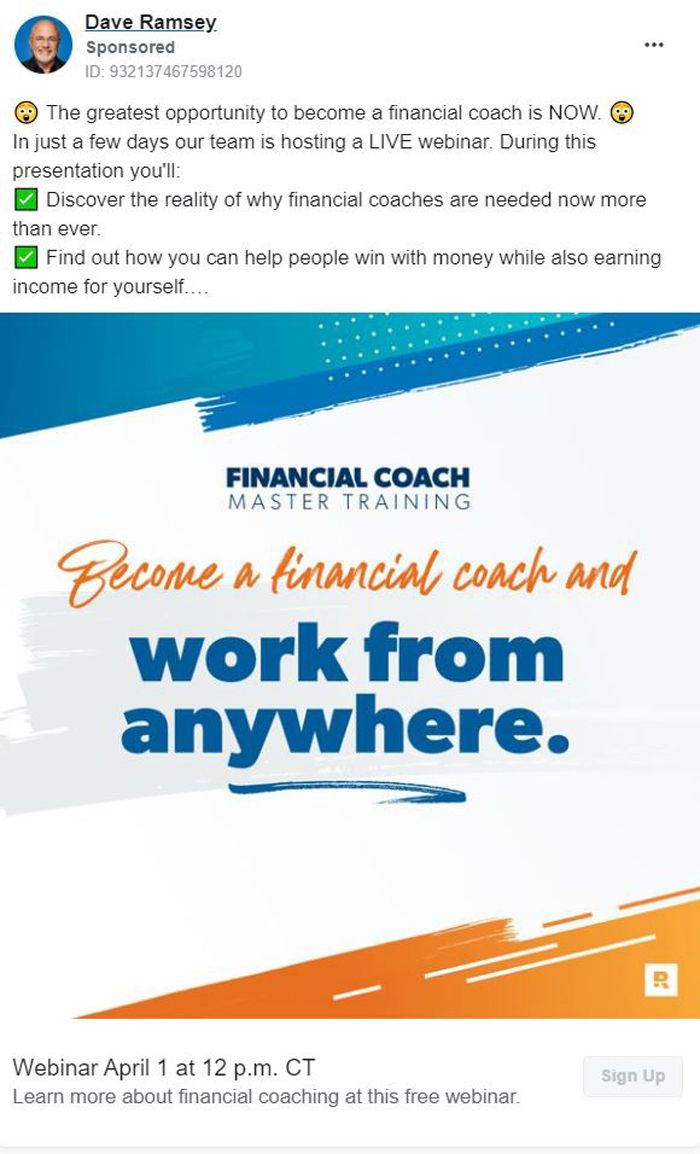
For example, Dave Ramsey’s ad for his live webinar features the benefits customers will get upon subscribing to his master training for aspiring financial coaches.
What are your competitors writing about? Which articles have the highest engagement? What keywords are they using in their content? Monitoring and analyzing the content of competitors can help you uncover opportunities for your own thought leader marketing.
How do you find competitor thought leadership marketing content? You can start by searching their social media accounts. Another way is to type in your industry’s keywords into a search engine like Google and see what the top results are.
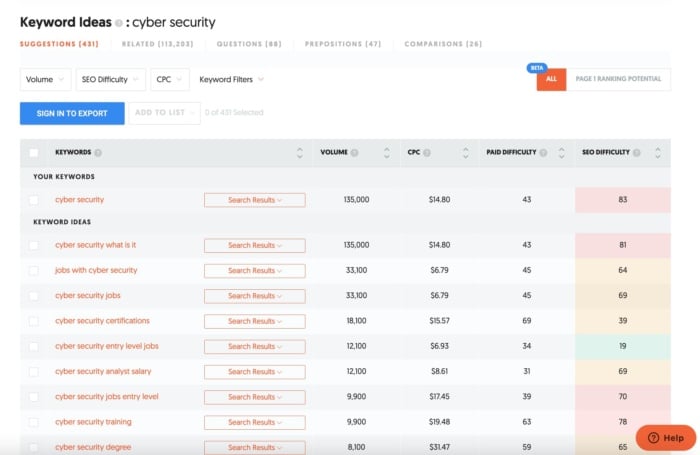
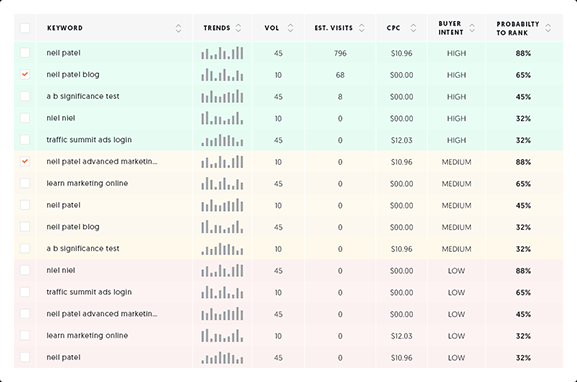
Not sure which keywords to search for? Try using my tool Ubersuggest, a great option for finding the best keywords by search volume, location, trending levels, and more. It even offers keyword ideas based on your searches. Ubersuggest lets you know which related content ideas are spreading, so you can spend more time writing pieces that matter to people the most. What’s cool is it actually shows you lists of published articles that have used the keywords you search for, along with how often they’ve been shared on social media.
The best part? Ubersuggest is fast. You can even add Ubersuggest as a free chrome extension, to make your monitoring mission even more accessible when you need it.
5. Offer Valuable Content
Offering valuable content to your audience is a sure way to move up the ranks of thought leaders in your field.
What is considered valuable content?
Solutions to problems that your audience members face.
Information on the latest innovations within your industry.
Discussions that spark conversations.
Helpful hints on aspects of the field you work in.
Sharing valuable content effectively introduces your brand and establishes yourself as a trusted expert.
Something that often gets overlooked is the need to update old content. What was fresh and relevant at one time can turn stale after a year or less. Create a habit of going back through older content to refresh outdated material.
6. Be Genuine
The last thing you want is for your audience to doubt your credibility as an expert. The fastest way you can do that is to turn every article into a sales pitch.
Some of the ways to be genuine have already been talked about above. By understanding your audience, you know what kinds of help they need. By creating quality content, you show that you genuinely know what you’re talking about.
There are a few other tips you can implement to be genuine in the eyes of your audience. Reply to comments, good and bad, on social media in a timely manner. Be consistent with your responses and your content, so you don’t give contradictory or confusing information.
Be yourself! Speak and write with your own authentic voice. Obviously you should be professional (don’t swear or verbally attack commenters), but talk about your content in your own way.
Give a behind-the-scenes look at your brand by sharing interesting or entertaining moments in your work.
Put yourself out there. Author Malcolm Gladwell posted a video that gave humorous behind-the-scenes insights for his upcoming audiobook. While he may not be selling a new audiobook (yet), it may generate hype for his upcoming work or encourage viewers to revisit his past bestselling works. By asking his audience to text him for updates, he engages with them on a personal level.
Examples of Successful Thought Leadership Marketing
Still not sure how to leverage thought leader marketing? Here are a few success stories to inspire your own:
1. Simon Sinek
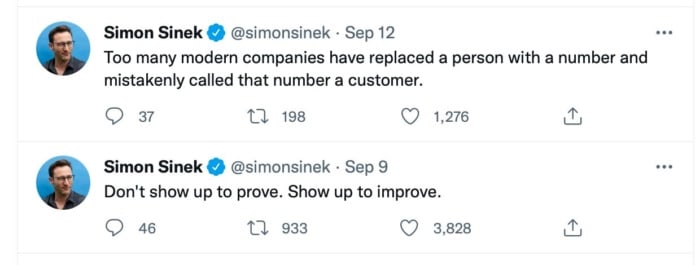
Simon Sinek is an inspirational speaker who covers topics like leadership and organizational structure. He regularly hosts online classes and workshops to help people feel safe, inspired, and fulfilled.
Simon’s Twitter feed is full of motivational quotes that are insightful and get straight to the point. These information appetizers are gateways to his live training sessions and online subscriptions.
2. Seth Godin
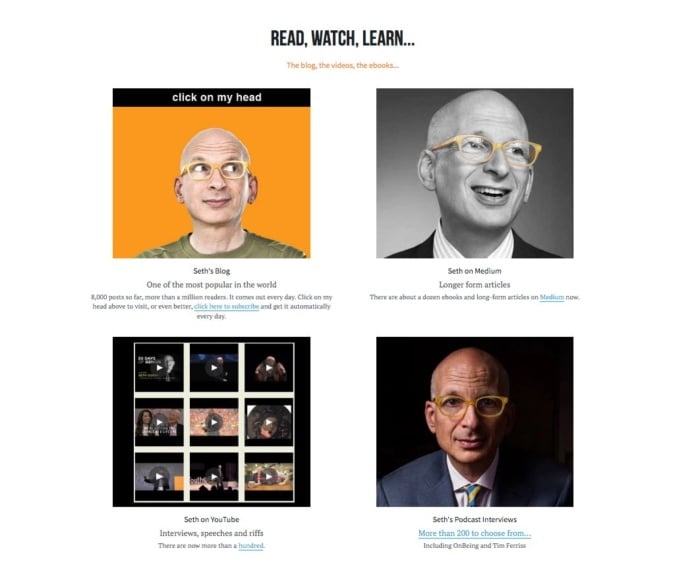
Seth Godin is an international bestselling author and renowned speaker. Over 35 years, he has seized the title of thought leader in the marketing world. His content is available in many formats, making his work digestible for all marketing professionals.
He boasts an impressive 8,000 blog posts, over 200 podcast interviews, videos, speeches, and more, all of which are easily accessible with just a click.
3. Grant Cardone
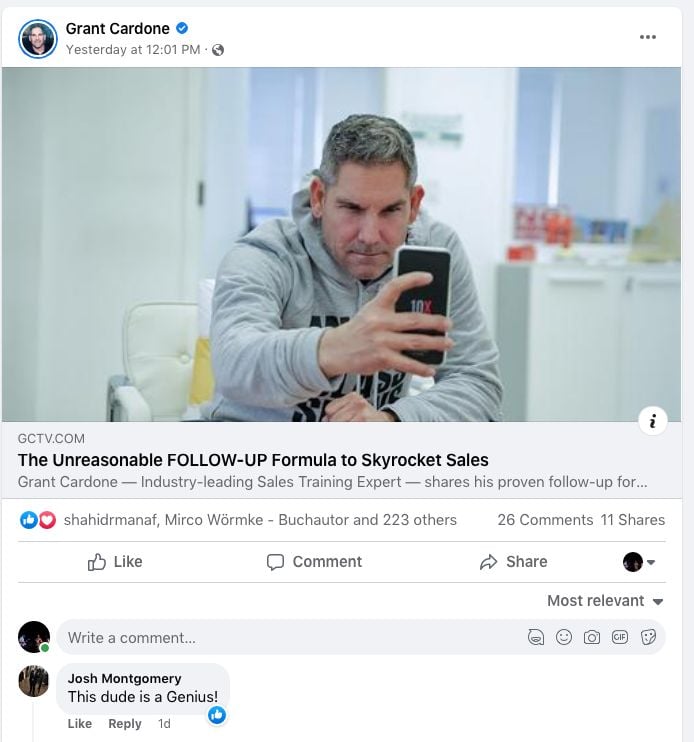
Grant Cardone specializes in the world of business, which is precisely why he has an impressive following on multiple platforms that perfectly aligns with the products and services he offers.
He showcases his credibility by sharing valuable content on social media regularly. That expertise is reinforced by his audience, which in turn convinces new viewers to keep tuning in.
Frequently Asked Questions
What is thought leadership in B2B marketing?
In B2B marketing, thought leadership is a vital tool for any business to increase brand awareness, strengthen credibility and attract new opportunities. It is the process of providing quality content about your industry to a larger audience.
What is good thought leadership content?
Good thought leader marketing content focuses on solutions to problems, as well as industry innovations. Thought leadership content should address a pain point that potential customers are feeling. The content should be updated regularly to maintain relevancy.
Conclusion
There is no doubt that thought leader marketing is a must for any business that wants to stay ahead of the competition. If you want to be a thought leader in your field, create quality content to boost brand awareness and attract more business opportunities.
Learn about your audience, figure out what they are searching for, and be the brand to help them find it.
As you attract more people to your personal brand, you can also acquire lucrative business opportunities and get invited as a speaker in conferences.
How will you use thought leadership marketing in your business?
Occasionally, Google rolls out their spam update which just ensures that the results on Google aren’t filled with spam.
Because if a user clicks on a spammy result, and if this continually happens, it creates a terrible experience and people would stop using Google.
They don’t give much detail on the spam update on their website, but luckily for you, we have two things that help us determine what the changes were.
The first thing we have is we track over 900 million domains on the web, so this allows us to see patterns.
The second, which is more relevant for this update is at our agency, NP Digital, we have 100 experimental sites that use AI-written content. The purpose of those sites isn’t to “game” Google, they are more so to figure out how Google perceives AI-written content. And I will go into more detail on what happened with those sites later in this post as the results were interesting.
This update didn’t specify if it was link spam-related or just overall spam.
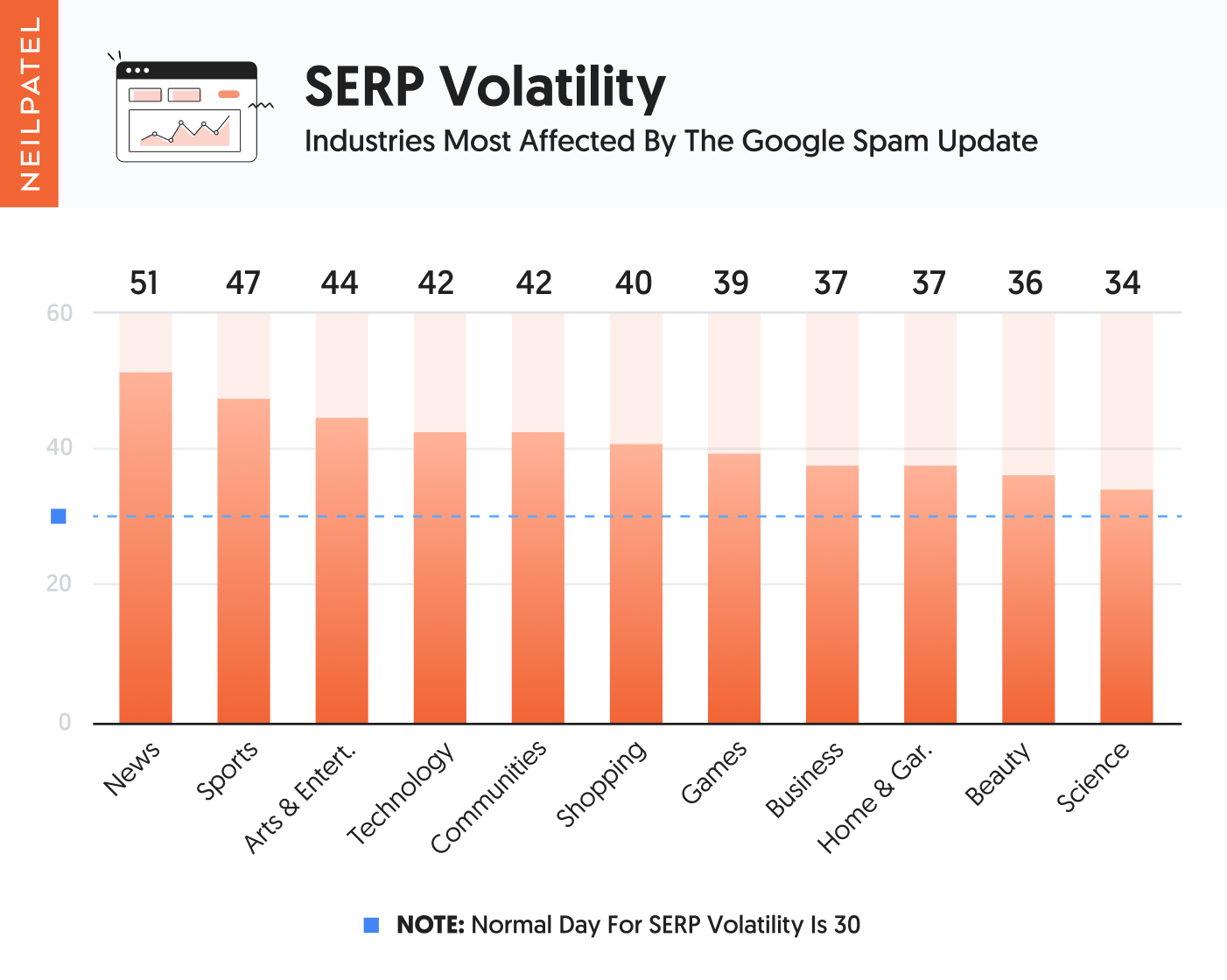
But when we look at the 900 million plus domains we track, here are the categories that got affected the most in a negative way globally.
As you can see from the chart above, news and sports sites got affected the most. Followed closely by arts and entertainment and technology and community sites.
Most of these sites are heavy content-based and not product oriented.
When we looked at the sites affected here’s what we found:
Thin content – most of them didn’t have amazing content… a lot of them had thin content. And to clarify that, by thin content, I don’t mean low word count, I mean content that really didn’t provide much value. In essence, the content was surface level and once you finished reading it you didn’t get many insights or any actionable points or value.
Poorly created meta tags – a lot of the websites affected had pages with duplicate meta tags or ones that were obviously written for search engines and not humans.
Keyword stuffing – shocking people are still keyword stuffing. Of the affected sites most of them didn’t keyword stuff, but roughly 3.89% of them did. Whether it was in their content on meta tags, they were using keywords in an excessive way that made the reading experience not ideal.
As you know there are many other factors in SEO. We just couldn’t find any other major patterns. From a surface level, some of the things they looked at seem kind of similar to the helpful content update.
We also looked at the backlinks of the sites that lost the most traffic we couldn’t find any patterns. Now, this doesn’t mean Google did or didn’t look at links as a factor of spam in this update, more so we just didn’t see any patterns.
Now here is where it gets interesting…
AI-generated content
Remember how I mentioned that we have 100 AI-generated websites? They are in a variety of industries, and they all have over 60 pages of content if not more that are all AI-generated, and of course, we manually built links (didn’t buy them, and you shouldn’t ever buy links) so that it would help the sites rank.
And in reality, we actually have over 681 AI-generated sites, but most of them don’t get enough SEO traffic. For example, when a site only gets 1,000 visitors a month from Google it is too hard to see patterns as visitor counts drastically change from day to day.
But 100 of the AI-driven sites generate at least 3,000 visitors a month from Google.
None of the sites sell anything or collect leads, they are just informational sites in different industries.
Now of the 100 AI content-generated sites, 53 have their content created purely through AI. And they also have their meta tags and even the headings within the article all created by AI.
Those pages don’t link out to other sites or even internal pages as AI content generation tools don’t really add links.
One thing to note is that most of the AI tools don’t really create content over 500 words unless you start adjusting the content or have the AI writer create content a paragraph at a time.
But for the first batch of AI sites (53 of them), we didn’t have humans modify or change up any of the content. We purely used the content that was created by AI in the form it was created including the meta tags the AI writer created.
Now in the second batch, we had 47 sites, on these sites we used AI to create the content, but then we had a human modify the content to ensure it was better and provided more value. Humans also added internal and external links, they modified the meta tags to be more user-friendly, and they added images and embed videos within the article when it made sense.
The one thing we didn’t do was increase the length much. Because from what we see from our Ubersuggest AI Writer most people just use AI-written content and don’t modify it much. When they do modify it, it tends to be slightly, and people really aren’t adding much in word count.
With our sites, we wanted to replicate what most marketers are doing with AI to get a sense of what Google is trying to solve.
Can you guess what happened to those sites?
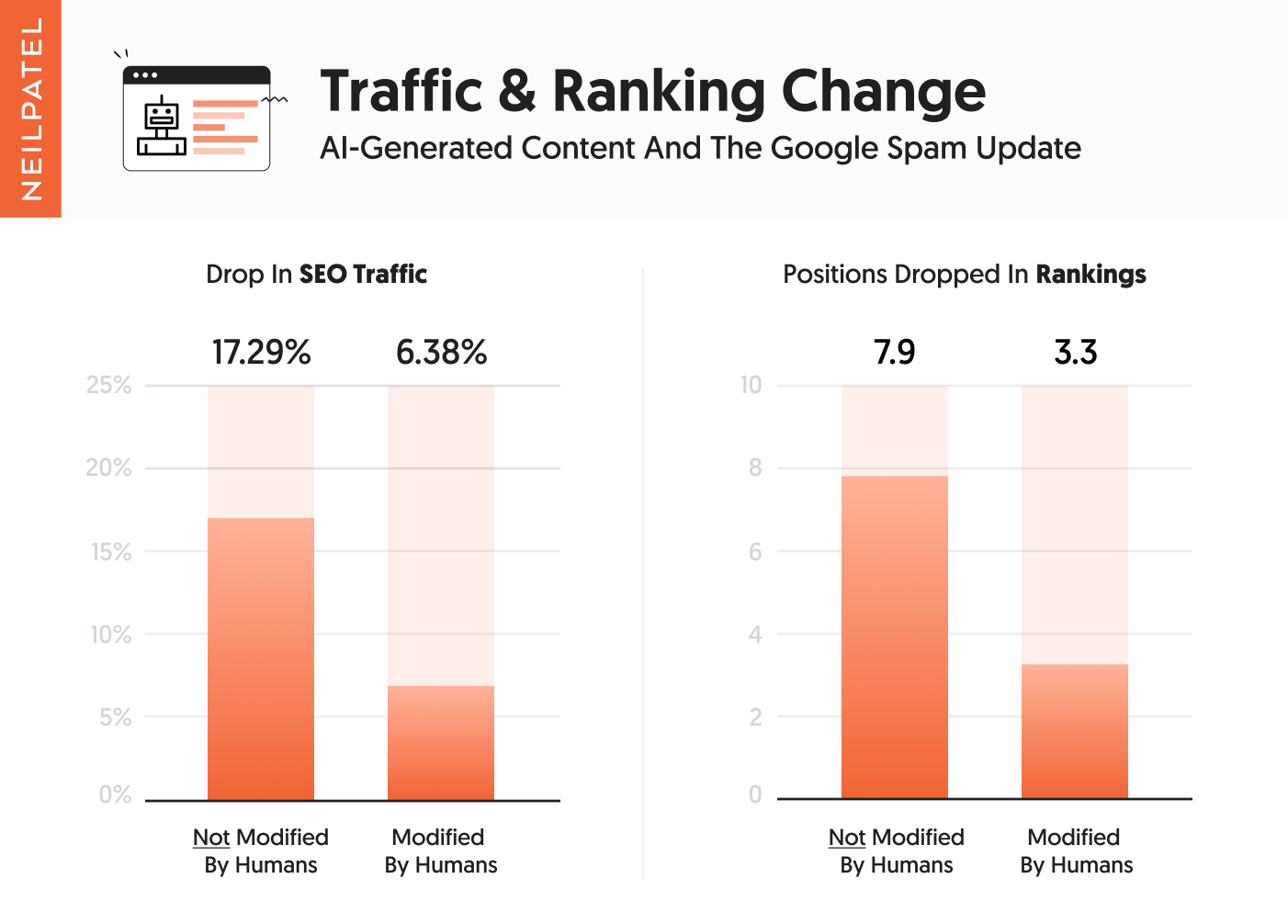
The first group of AI-written content, which had no human intervention when it comes to modifying the content didn’t perform as well as the ones that had human intervention.
In essence, they saw on average a 17.29% drop in traffic and their keyword rankings dropped on average by 7.9 positions. Keep in mind that may seem like a lot but none of them really had number 1 rankings for any popular term.
The second group saw a 6.38% drop in traffic and on average a drop in ranking position by 3.3 positions.
But then when we dug deeper because I was curious to see the results for each site, we noticed that not all the sites were hit by the update.
Of the first group of 53 sites, in which the content was NOT adjusted by humans, 14 of them were hit by the update and saw traffic dips between 31.44% and 73.18%. On average the 14 sites lost 51.65% of their traffic.
From the second group, which had humans slightly modify the content, 8 sites were hit. They lost between 29.52% and 81.43% of their traffic. On average those 8 sites saw a 42.17% drop in traffic.
Now what’s funny is some of the other sites in both buckets saw smaller traffic drops such as a few percentage points and a few even saw slight traffic increase from SEO traffic by up to 4% when you compare pre-update and post-update traffic as it took 48 hours for the update to roll out.
But here is where it gets interesting, in the first group of the 14 sites that were affected, 13 of them also saw traffic drops from the helpful content update. And from the second group, all 8 of the sites were hit by the helpful content update.
One thing to note is that there weren’t tons of days of data post update from when Google finished rolling things out to when I released this blog post. And I didn’t want to compare Sunday traffic with Wednesday traffic. As you need to look at Sunday versus last Sunday to remove biasedness. Nonetheless, the above stats are what we saw and the ranking drops also confirm that these sites were hit by the update.
Conclusion
From what we are seeing, the majority of this update focused on content, meta tags, and keyword stuffing. It doesn’t mean Google didn’t look at other factors such as links or duplicative content, but we saw the biggest patterns related to the factors I mentioned above and AI-generated content.
If you want to do well in the long run focus on the user, it really is the way to win. In the short run, you may not come ahead but in the long run, you will.
Just ask yourself questions like is this piece of content going to be helpful to users? Is using the same meta tags on all pages helpful? Is my website providing enough value that people will want to link to me?
In essence, you are just spot-checking yourself and doing what’s best for users.
Your agency has become the GOAT of pay-per-click (PPC), search engine marketing (SEM), social media marketing (SMM), or another digital marketing service.
Now you want to step into the world of SEO.
To provide SEO services to your clients, you need a strong team. After all, as Google’s algorithm grows increasingly complex, so does SEO.
Luckily, there’s a way you can offer SEO services without having all the expertise.
The answer is an SEO reseller.
Reseller SEO services can help your agency with every aspect of optimization. Simply put, SEO resellers handle your clients’ SEO campaigns on your behalf. That way, you can add to the range of services your agency already provides without the cost of building a team of SEO experts.
I know you’ve got big goals. Using reseller SEO services for agencies can help you reach them.
Let’s get you started with SEO reselling and discuss its advantages.
Why Are Reseller SEO Services for Agencies Needed?
Competition among SEO agencies is fierce. An SEO reseller will help you keep up.
Having industry-leading experts in your corner is key. You’ll be able to tap into a whole range of reseller SEO services, including:
Link building: The big money for SEO resellers comes from this. Outsourcing backlinking efforts to a reseller has major advantages, as link building is a labor-intensive process. Resellers use a variety of strategies—everything from outreach and guest posts to correcting broken links.
Website analysis and SEO audits: A fresh campaign often starts with an on-page SEO evaluation. SEO resellers can identify prospects for quick wins by assessing a site’s SEO health.
Keyword research: Allow SEO resellers to identify profitable keywords on your agency’s behalf rather than try to make sense of data from SEO tools on your own.
Content creation: To assist you in producing content at scale, several businesses additionally employ in-house copywriting expertise or vetted contractors.
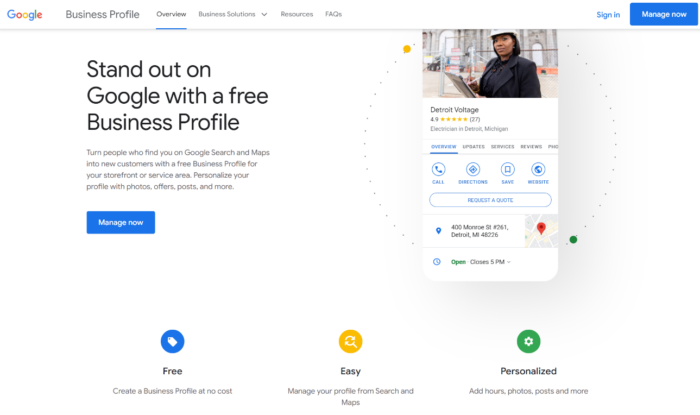
Local and international SEO: SEO resellers frequently assist with the detailed, manual aspects of local and international SEO, such as Google Business Profile page optimization.
Joining forces with an SEO reseller from the best SEO agency can propel your business to the next level. A successful long-term partnership is a great source of extra income. Sometimes, two agencies combine to form a larger agency that can handle all services in-house.
Using reseller SEO services for agencies enables you to:
Concentrate on what you’re good at while meeting your clients’ needs.
Gain new skills to support enterprise-level clients with specialty services
Build trustworthy partnerships with other agencies
This type of SEO outsourcing, which you may also know as white labeling, allows marketing agencies to sell an SEO reseller’s packages as if they were the agency’s own. You can either offer the service monthly or set your own terms.
There’s a stark difference between this version and private label SEO services. The latter is packaged depending upon the specifications of the reseller, whereas the former can be customized.
Alternatives for Reseller SEO Services
SEO reselling isn’t the end-all, be-all option for agencies. You can deliver on your clients’ goals with resources outside of reseller SEO services. Alternatives include creating an in-house team or working with freelancers.
Creating an In-House Team
Rather expand your in-house expertise? Hire out to build your own SEO dream team. You can simultaneously keep your core competencies and enhance your offerings this way. You’ll need a mix of SEO strategists, data analysts, editors, and writers to deliver desired results for high-ranking pages and high-quality backlinks.
After forming your team of trusted experts, ensure they understand the clients’ needs and pain points to pull off SEO results that are a win-win for everyone.
Working With Freelancers
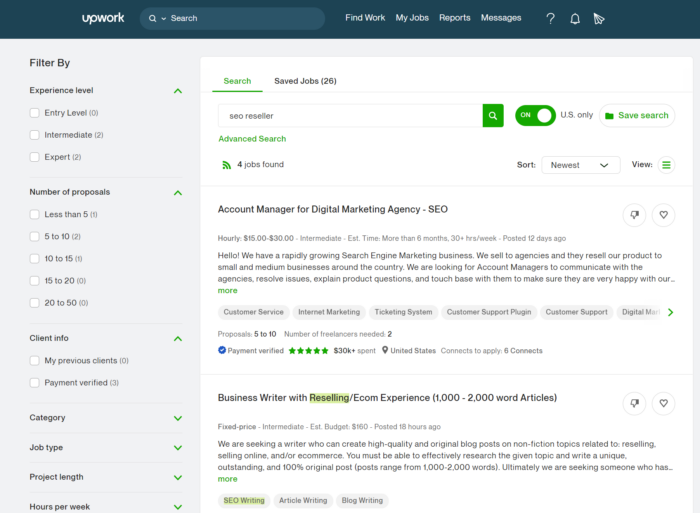
You can get the equivalent of on-demand reseller SEO services through quality SEO freelancers. They are your go-to niche experts.
Freelancers can help serve numerous clients, allowing you to have SEO experts on hand. A team of freelancers in your corner for technical SEO consulting can help increase your profitability.
Reseller SEO Services: Pros and Cons
You can outsource your clientele’s SEO work to an SEO reseller that can also handle all your marketing requirements. Using a reseller’s private label SEO services means that the best technology and tools drive your SEO campaigns. However, working with a reseller comes with positives and downsides.
Pros
Partnering with an SEO reseller can:
1. Help You Scale Business
SEO reseller packages help expand your service offerings. It allows you to scale your business without having to do the work yourself.
As a result, you may take huge projects from major brands and businesses without worrying about how you’ll complete them. This is a big win for your agency, as SEO projects can take six months to a year to yield winning results. Plus, you won’t have to take on the huge expense of hiring an in-house team.
2. Enhance Campaign Performance
By leveraging SEO resellers for their expertise, you’re working with individuals who know your clients’ needs and work accordingly to meet their goals. With results-oriented private label SEO services, you can better communicate clear campaign results to your clients and pivot strategies if needed.
3. Give You Access to Paid SEO Tools and Platforms
To run the most effective campaigns, you need data and insights that only certain SEO tools can provide. You gain access to premium tools and platforms by working with an SEO reseller. When running data-driven initiatives, you must gauge the effectiveness of SEO KPIs ranging from conversions to bounce rate and everything in between.
Carefully selecting reseller hosting plans plays a big role in site management and reporting data on KPIs. Additionally, access to SEO tools such as Ubersuggest and Google Analytics can help measure these metrics effectively.
If you can’t afford costly software and tools, you can navigate Ubersuggest for free as you figure things out. However, this does show why an SEO reseller is so valuable: They handle all this for you.
Cons
On the other hand, you can avoid the downsides of working with SEO resellers by keeping an eye out for:
Unreasonable Projected Results
If an SEO reseller makes far-fetched promises, that’s a sign you should consider working with someone else. An example would be promising that a client will rank between positions 1 and 3 within a week. Every client’s SEO needs are unique, and it can be challenging to forecast how fast results will set in.
No Onboarding
Trustworthy SEO companies want to be certain that their work is correctly portrayed and that they are collaborating with true experts. As a result, most SEO resellers, at the very least, include an onboarding procedure. It’s a bad sign if an SEO reseller doesn’t perform due diligence during the sign-up process.
Lack of Measurable Outcomes
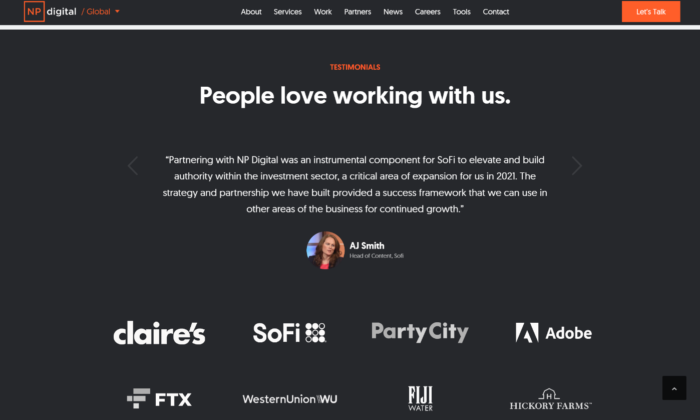
Your SEO partner should have results to show for their work. They offer a ton of case studies that showcase their skills and the outcomes they achieved for previous clients. It’s also crucial to pay attention to testimonials. If the SEO resellers you’re vetting fall short in these areas, it’s probably best to seek out a different agency.
How to Get Started with Reseller SEO Services for Agencies
A partner that aligns with you and your client’s goals is essential.
Some pointers for choosing a reliable SEO reseller start with researching their past work.
Fact check the data because it says everything you need to know about your partner’s track record.
Verify whether they provide the services you require and how effective they are at executing them. Find ratings and recommendations at Capterra and on Google Business Profiles.
Analyze the metrics they use to assess their performance. Research what they measure as successful to see if their metrics also meet your value standards.
With a full-service digital marketing agency, you will likely get more out of the partnership than just SEO services and their knowledge in your niche.
Picking the Right SEO Reseller for You
An SEO reseller will serve as an extended department of your agency.
To get the job done right for your clients, consider the following when picking an SEO reseller:
Seek testimonials and references from actual individuals: Research reviews from businesses who have used their services. The insights you glean from those companies offer a sneak peek at what you’ll likely experience.
Years of expertise: Longevity helps when it comes to the SEO game. A company that has had time to understand and adapt to the changes in the industry knows what it takes to run campaigns.
Trial of services: Get a trial run of their services—kind of like a test drive. See how things perform so you can verify the quality of what the reseller has to offer.
During the vetting process, note how resellers communicate and how knowledgeable their teams are on your niche. Asking for everything upfront will save you time, money, and unwanted surprises.
Frequently Asked Questions
What is SEO reselling?
SEO reselling provides private label SEO services to an agency for their clients’ SEO projects. These services are outsourced on behalf of an agency to benefit their clients with marketing, development, and design.
Who can use SEO reselling services?
Anyone can use SEO reselling services to help them flourish in their niche. However, I highly recommend SEO reselling services for small agencies, agencies that don’t specialize in SEO, or if you’re struggling to deliver heavy-hitting SEO services to your clients.
Can one agency use another agency for SEO work?
Yes, this is kind of how the process works. If an agency needs to strengthen its SEO offerings, it can seek out a full-service agency with more SEO experts or years of experience to get quality results for its clients.
How to pick an SEO reseller?
When picking an SEO reseller, I recommend you start by:
Gathering testimonials and references from companies who have worked with the reseller you’re interested in.
Taking note of years of business to see how they’ve grown in expertise over time.
Asking for a trial period of their services to ensure they’ll meet your clients’ needs.
SEO reselling provides private label SEO services to an agency for their clients’ SEO projects. These services are outsourced on behalf of an agency to benefit their clients with marketing, development, and design.
”
}
}
, {
“@type”: “Question”,
“name”: “Who can use SEO reselling services?”,
“acceptedAnswer”: {
“@type”: “Answer”,
“text”: ”
Anyone can use SEO reselling services to help them flourish in their niche. However, I highly recommend SEO reselling services for small agencies, agencies that don’t specialize in SEO, or if you’re struggling to deliver heavy-hitting SEO services to your clients.
”
}
}
, {
“@type”: “Question”,
“name”: “Can one agency use another agency for SEO work?”,
“acceptedAnswer”: {
“@type”: “Answer”,
“text”: ”
Yes, this is kind of how the process works. If an agency needs to strengthen its SEO offerings, it can seek out a full-service agency with more SEO experts or years of experience to get quality results for its clients.
”
}
}
, {
“@type”: “Question”,
“name”: “How to pick an SEO reseller?”,
“acceptedAnswer”: {
“@type”: “Answer”,
“text”: ”
When picking an SEO reseller, I recommend you start by:
Gathering testimonials and references from companies who have worked with the reseller you’re interested in.
Taking note of years of business to see how they’ve grown in expertise over time.
Asking for a trial period of their services to ensure they’ll meet your clients’ needs.
”
}
}
]
}
Conclusion
As you grow your business, reseller SEO services can yield success for you and your clients.
Providing cutting-edge SEO services requires collaborating with a dependable partner.
Find an SEO reseller with experience in your niche and results to back up their work. Doing the homework before you lock into the agreement is worth the research.
Working with real experts will help you get your clients where they want to be with campaign performance.
Offloading SEO tasks will make sure you don’t spread yourself thin. With the help of a partnering agency, you can grow SEO as another area of expertise.
As you gradually get stronger in SEO work, you will be able to sign more clients and earn more money for both of you.
If you’ve been planning to work with an SEO reseller, what are some things your clients need? Is SEO a new area of expertise for you?
Fernando Alonso believes Formula One and the FIA’s race regulations are set for a crucial moment after his Alpine team appealed the penalty which knocked him out of the points at the U.S. Grand Prix.
This website uses cookies to improve your experience. We'll assume you're ok with this, but you can opt-out if you wish.AcceptRejectRead More
Privacy & Cookies Policy
Privacy Overview
This website uses cookies to improve your experience while you navigate through the website. Out of these, the cookies that are categorized as necessary are stored on your browser as they are essential for the working of basic functionalities of the website. We also use third-party cookies that help us analyze and understand how you use this website. These cookies will be stored in your browser only with your consent. You also have the option to opt-out of these cookies. But opting out of some of these cookies may affect your browsing experience.
Necessary cookies are absolutely essential for the website to function properly. This category only includes cookies that ensures basic functionalities and security features of the website. These cookies do not store any personal information.
Any cookies that may not be particularly necessary for the website to function and is used specifically to collect user personal data via analytics, ads, other embedded contents are termed as non-necessary cookies. It is mandatory to procure user consent prior to running these cookies on your website.