Be Amazing– Use Recession Crowdfunding to Finance Your Business

Use Recession Crowdfunding to Finance Your Business and Tap into the Noble Spirit of Human Kindness

If you have ever wondered how to use recession crowdfunding to finance your business, then this one is for you! But before you commit to numbers, perks, a pitch, or anything of the sort, be sure to read this first. And, in particular, be sure to read this if that last sentence made no sense to you. Seriously!

And don’t despair – even in a bad economy, crowdfunding is still possible. People still want to believe in your dreams. But you will probably need to lower your expectations on funding totals when everyone is feeling the pinch.

Use Recession Crowdfunding to Finance Your Business: What Matters

Crowdfunding has become all the rage and there is no wonder. It is (usually) free money which you do not have to pay back. And you can get these funds without having to give up any ownership or control over your small business.

Plus it can help you to gauge the popularity of an idea or a prototype or invention. Because there is no sense in continuing if there is no interest in your handiwork.

Use Recession Crowdfunding to Finance Your Business: History

Before delving into how to do it, let’s first look at when and how crowdfunding came to be.

A History of Angels

In a way, crowdfunding is the child of angel investing. But what is an angel investor?

According to Investopedia: “Angel investors invest in small startups or entrepreneurs. Often, angel investors are among an entrepreneur’s family and friends. The capital angel investors provide may be a one-time investment to help the business propel or an ongoing injection of money to support and carry the company through its difficult early stages.” 

The term comes from Broadway theater. Angels were originally the investors who backed plays, and they still do so. Those people are also called patrons of the arts.

But it Goes Back Even Earlier

The Statue of Liberty was essentially a crowdfunded endeavor. And that was in 1885. But it goes back more than that, as war bonds are a species of crowdfunding. Plus in the 1730s, the London mercantile community saved the Bank of England by supporting the currency. This averted a confidence disaster.

Heck, even the bank scenes in It’s a Wonderful Life show a form of nascent crowdfunding, because the citizens of the town forego full payments to help each other out.

Back to the Present

And then we get to crowdfunding on the internet. Kickstarter, for example, was started in 2009. And ArtistShare goes back to 2003. Today, there are several crowdfunding platforms. They handle everything from inventions to artistic endeavors to medical bills.

Use Recession Crowdfunding to Finance Your Business: Decisions, Decisions

So let’s get started. But you will have to make a lot of choices before you even start a business crowdfunding campaign.

Use Recession Crowdfunding to Finance Your Business: How much?

Your first decision should be: how much do I need to crowdfund? If you need $1 million, you are going to have to crowdfund more than that.

Why? Because that is how crowdfunding platforms make their money. They take a percentage of whatever money you can raise. Therefore, you will need to take that into consideration. Crowdfunding percentage charges range from 4% to 10%.

Use Recession Crowdfunding to Finance Your Business: Will I succeed?

Another decision is about how successful you believe your campaign is going to be. If you are super confident that you will be 100% funded at the end of your campaign, then traditional funding will be for you.

But if you are not sure, then try something like GoFundMe’s flexible funding. With flexible funding, you, the campaign runner, can keep your donations even if your campaign fails. But for this privilege, you will have to pay a higher fee to GoFundMe.

Other crowdfunding platforms like Kickstarter do not offer this option.

Use Recession Crowdfunding to Finance Your Business: What should I offer for perks?

Yes, you will have to offer perks to your donors. Perks can take several forms. Consider buttons, tee shirts, book marks – all of those are possible physical perks.

Think about a perk format which can dovetail with your business. If you sell homemade jam, then maybe create a special flavor just for the campaign. And offer bigger and bigger-sized jars depending on donation amount. If you are a horseback riding stable, offer a free lesson or a postcard with a favorite horse’s picture on it, or the like. Does your business flip houses? Then consider offering a coupon to a local home supply company or the like. But do work with them beforehand, of course.

Physical versus Virtual Perks

Pro tip: physical perks are a pain! A lot of people love them, and they will attract attention. But physical perks also need to be shipped. International shipping is extremely expensive, even for small items. So if you offer physical perks, specify if you will allow international donor addresses.

And even if everything has to be shipped in America, you are still left with dealing with a database of names and addresses. And some of which might have typos or be incomplete.

Plus you often have to deal with a variety of available perks. Did Jane want the stuffed teddy bear or the bookmark? Did Alan want the pennant or the tee shirt? Do Jane and Alan live at the same address so maybe you can combine their perks?

What happens if a perk is lost or damaged in the mail?

Therefore, if you can do it, try for virtual perks. For a house flipping company, you might record videos about home decorating or repairs. Or for a bakery, you could offer downloads of recipes. And for a health club, maybe offer electronic coupons for a free month of membership.

Give the People what they (think they) Want

There is absolutely nothing wrong with just going ahead and asking your potential donors about what they might like for perks. They might surprise you. Of course, the final decision will be your own.

But this is an excellent means of investing your donors and potential donors in the process. This is far more vital than you may think. That is because, when the donors are invested in your process, they will be invested in you. And they will want very badly for you to succeed. This will stand you in good stead if you have delays. And it will also help you out, big time, when your company is up and running.

Furthermore, if you ever crowdfund again, treating your donors right and giving them a seat at the table will assure that they just might follow you to your next campaign.

Use Recession Crowdfunding to Finance Your Business: Your Campaign

Your campaign’s success will be far from guaranteed. But you can take advantage of a few known strategies. First of all consider these four feelings that you want to engender in donors. Use one or more of them as the centerpiece of your campaign as a starting point. We will start with two today and the other two in the next post.

Urgency

The first two and last two days of a crowdfunding campaign are nearly always the days with the biggest payoffs. Often, dragging out the campaign does not make you significantly more money.

So why not open a campaign for just a week? Do not let donors think they can contribute any old time they feel like it. If you give them the feeling that they had better act now, or else lose out, you will get more people to donate.

The fear of missing out is a very real thing.

Recession Crowdfunding Credit Suite

Demolish your funding problems with our rock-solid guide about 27 killer ways to get cash for your business. Get money even during the worst of a recession.

Scarcity

If you have thousands of something or other to offer as a perk, it will not be as desirable to your donors. But if you only have one or two of a particular perk, that will create a feeling in some people that they just have to have it. Scarcity can create a bit of anxiety in your donors. And you do want that.

So do this with your higher donation levels only. Therefore, you might want to set up a perk/donation level scheme which looks something like this:

Donation Level Number of Perks
Lowest 1,000
Second lowest 500 (this reward also includes the lowest level reward)
Middle 100 (this reward also includes the two lower level rewards)
Second highest 50 (this reward also includes the three lower level rewards)
Highest 10 (this reward also includes all of the other level rewards)

But be sure to remember: a lot of variation in physical perks will make fulfillment a lot harder. So do not work with more than maybe five separate types of physical perks. And even that is pushing it. After all, look at the complexity already inherent in five tiers (see the table, above).

Multiply that by all of the donors you get to your campaign. Larger platforms offer software for fulfillment purposes. It will nearly always be best to work with it.

But if you have to do it all yourself, then seriously consider no more than three tiers. Trust me. You will thank me later.

Novelty

If you are offering the same thing as a thousand other places, no one will want to make a donation. Your widget has to be lighter, hotter, cheaper, or more durable. Your food has to be lower in calories or higher in nutrition. Or at least it should be better-tasting.

Or your services have to be delivered better, by friendlier and more knowledgeable people. And they should come with a money back guarantee your competitors just plain do not offer.

Think about how services or goods can differentiate themselves. Why do some people prefer Macs? Why do others prefer PCs? And why do some people want to get their insurance from Progressive? But others want theirs from Liberty Mutual.

Consumer choice, particularly in the United States these days, is huge! So offering true novelty can be a way to try to get beyond all of that clutter. And it is a lot of clutter indeed. Have you been to a toothpaste aisle in a drug store lately? Yeah. It is just like that.

Cool factor

Is your product a form of art? Is it a new, gadget-like invention?

Then it might have a coolness factor. And then you can build your campaign around that. But do not be discouraged if it is not! These days, some of the most memorable ad campaigns are based around a product most people found dull not ten years ago – insurance.

Now is the time for us to get back into the nitty gritty of the crowdfunding campaign itself.

Use Recession Crowdfunding to Finance Your Business: Strategy

Here are a few words on strategy.

There’s the Windup and here’s the Pitch!

You will not get anywhere without a pitch video. Yes, even you, you camera shy business owner, you!

Your pitch video needs to be good. Use a professional to film it and write the script. Can’t afford professionals? Then try schools, both students and teachers. Your script does not have to be word for word. But you should have points you want to make and not ramble. A script will help you to focus on exactly what you need to say. This is absolutely not the time to wing it.

Taking time with a script will show in every frame of the finished product. And your professional film maker? They might be charging you by the hour. So it is a really good idea to spend some time on a script or at least an outline of one. Do this before your professional film maker goes on the clock.

Evidence, Your Honor

If you have physical evidence of your project, show it in your campaign video and on your campaign page. This means a picture of your health club’s sign. Or it could be a short video of your prototype robot.

A lot of people are understandably skeptical about crowdfunding. A picture and a tangible thing will go a long way to assuring them that your project is not vaporware.

Recession Crowdfunding Credit Suite

Demolish your funding problems with our rock-solid guide about 27 killer ways to get cash for your business. Get money even during the worst of a recession.

Your Mother Was Right

Manners matter. ALWAYS. Say please, thank you, and you’re welcome to everyone. Use these magic words in your pitch and in your communications with your donors. And even use them in the cover letters you send with your perks. This is because even virtual perks can come with a cover email. And they should, as that is another chance to connect with your donors.

Greed is Not Good

Do not get greedy! If you need $250,000 for your campaign, but you ask for $1,000,000, that does not do anyone any good. You will just look like you want to freeload off others’ generosity.

Instead, work hard to account for your expenses as clearly and transparently as possible. And by the way, if you misuse your funds, you might find yourself in an uncomfortable meeting with your state’s attorney general. So always, always, ALWAYS be honest!

If you need help, then hire an accountant or at least a bookkeeper. Much like with your pitch video, if you are low on cash, you can then try a local school.

Keep Your Feet on the Ground, and Your Head in the Clouds

Your stretch goals should be a mix of easily attainable and pie in the sky. If you are crowdfunding for $100,000, a fairly easy to attain stretch goal could be $125,000. Pie in the sky could be $300,000. Only you know your donors, or at least you know some of them. Be realistic about your prospects when it comes to your base. But for stretch goals, feel free to go just a little bit wild.

Make it abundantly clear what you will do with any extra cash if you are fortunate enough to get it. Will you buy the building your business is in? Hire five more people? Replace your old equipment? Open up a new market on another continent? Let your donors know what you are striving for.

This is also an excellent way to help get your donors to feel more invested in your project.

Grace is Amazing

Be gracious if your campaign fails. Even if you use GoFundMe’s flexible funding option, you still might not get enough to make a dent in your funding needs. And of course with most forms of crowdfunding, you have to give everything back no matter what.

But let’s look at how to handle this kind of a situation if you took advantage of the flexible funding option.

Make an executive decision about the funds. If you wanted $100,000 and you only got $500, then your best bet is to just return the money. This kind of a shortfall should also give you a reason to take a good, hard look at your pitch, your campaign, and even your idea. Maybe you are being overly optimistic. A bad failure in crowdfunding can have a way of throwing a bucket of cold water on your dream, yes. But sometimes, that is exactly what you need.

If you almost made it with $95,000, then thank everyone who donated. And see what you can do, even though you have a shortfall. But also tell them what you are doing! Maybe you really will buy your building next year, or hire four people instead of five. Once again, get your donors invested in what you are doing. It will make an enormous difference.

Timing is everything

Line up the biggest donors you can before you get started. Talk to your mother or your brother in law or your former high school football coach. And ask them to hold off on handing over their $1,000 or $10,000 donation until you start your campaign.

Also ask them (nicely!) to release their funds at a very specific time. Which time? The best times will always be the first or last day of the campaign.

Take advantage of the novelty factor of the first day of the campaign. Or take advantage of the urgency factor on the last day of your campaign.

Think about the busker (street musician) with a few of her own dollars in her hat, to encourage people to throw a few bucks for a song. Taking your cue from her, you want your biggest donors to show other donors that they have confidence in you and in your project.

Recession Finance Credit Suite

Demolish your funding problems with our rock-solid guide about 27 killer ways to get cash for your business. Get money even during the worst of a recession.

When You Care, You Share

Make sure to share your campaign on social media. And always ask your friends and family to do so, too. Tweet the link. Add it as a Facebook status. Make it a Tumblr post or a snap on Snapchat. Or write a blog post about it. Be proud of what you are doing! Tell the world!

Also, ask your network to circulate the link. The best way to get your network to help you out is by helping them in return. So if your cousin’s band is on Facebook, share their page, or tweet about it.

Be a cooperative member of your own personal community. And then your network will be far more likely to help you out when you ask.

Use Recession Crowdfunding to Finance Your Business: Takeaways

Finally, if your small business recession crowdfunding campaign is successful, consider donating a few bucks to others’ campaigns. Or at least donate a few dollars to charity. And this is because business goodwill and a good reputation are going to be priceless. Karma in crowdfunding matters. 

The post Be Amazing– Use Recession Crowdfunding to Finance Your Business appeared first on Credit Suite.

How to Update Local SEO When Your Business Moves To A New Location

Let’s say a lot of people from your area are checking out your business online, and in-store sales are through the roof thanks to your local search rankings.

Then comes a problem: You decide to move to a new location.

In addition to the logistical factors associated with moving your business, you also need to think about the successful local SEO strategy you worked so hard to build. Can you imagine all your efforts going down the drain and having to start a campaign from scratch?

This is where local SEO comes in. The goal of local SEO is to have businesses to rank for queries with a geographic component.

Let’s go through the steps you’ll want to follow to maintain local SEO gains after you relocate your business.

Why Is It Important to Update Your Local SEO For a New Location?

There’s no magic potion to help you transfer your local SEO gains when you move to a new location.

It may be easy to update the location on your Google My Business listing and assume it’ll automatically change the whole strategy.

Unfortunately, it doesn’t work that way.

Google pulls information from infinite sources across the internet. If you only update your business name, address, and phone number (NAP) in one place, you’ll create inconsistencies in your local SEO, as other sources will feed Google the wrong information.

All the local citations about a business need to be consistent across the internet, as two different NAPs will give Google the impression of two separate businesses.

As a result, your local SEO efforts will be disjointed, potentially lowering your local rankings.

In addition, customers looking for your business rely on NAP information. If it’s inconsistent, you may lose them as they won’t know exactly where to find you.

To avoid all these issues when you relocate, be proactive, and take control of all your local listings.

Take Precautionary Measures For a New Location

If your local SEO campaign is still new when you’re relocating, you likely won’t need to change your information in many places. Keep an inventory of every site where your business has a listing to make sure the information matches across the board.

What if the campaign has been in place for a few years?

Hopefully, you already have that inventory to refer to. If not, you’ll need to find all the sites where your business is listed and build that inventory as you go. Then you’ll know where to update your NAP and other information after the move, and prevent inconsistent listings.

The good news is, you don’t have to perform hundreds of search queries to find all your business listings. Tools like Moz’s Check Your Online Presence can do the heavy lifting for you.

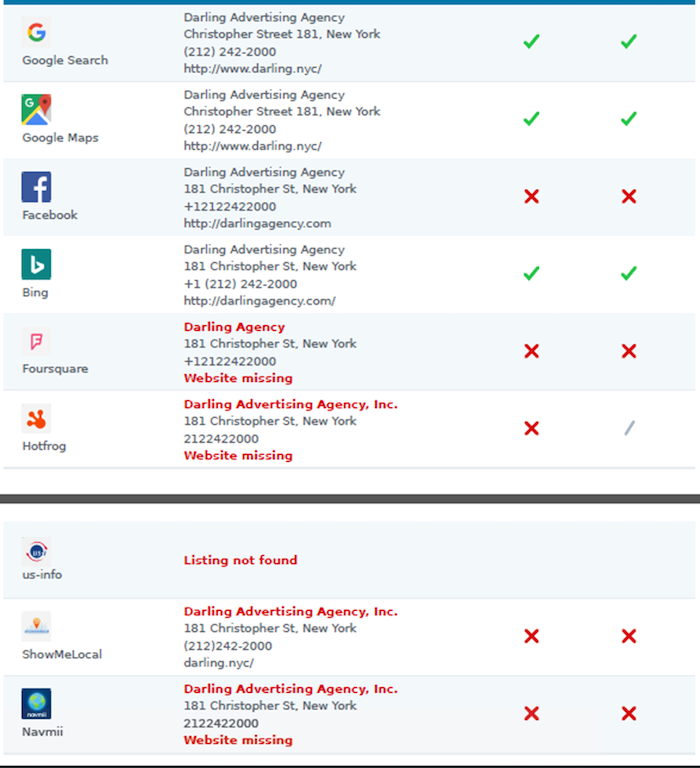
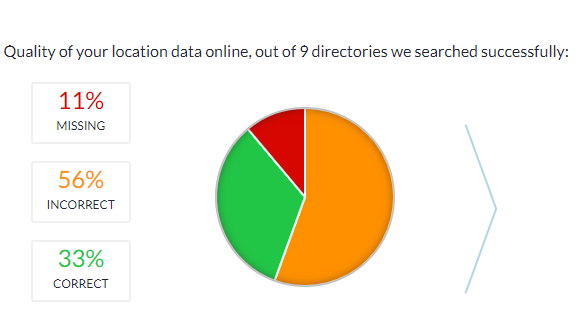
Check out these online presence results for the Darling Advertising Agency in New York:

local seo new location check

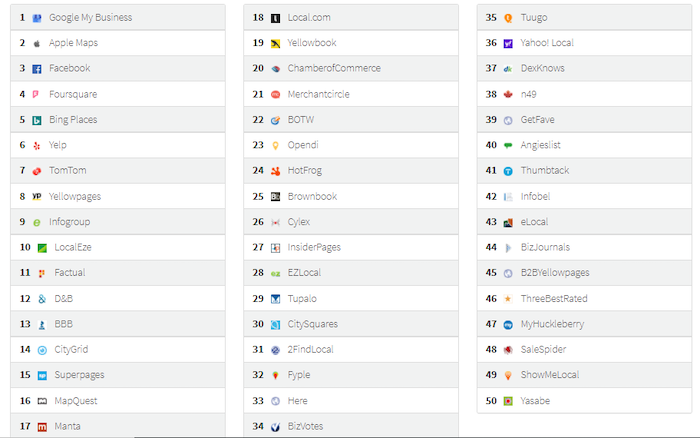
Those stats break down as follows:

local seo new location listings

If your search returns a lot of those red X’s, you have some work to do.

How to Correct Your Local Business Listings

Moving your business can be hectic, but set aside some time to manage your Local SEO to preserve your rankings and help customers find you in your new location.

1. Update Your Website With New Location Information

Just as your new space will be your physical location, your website is your virtual real estate. Keeping it updated is crucial to maintaining your traffic, both online and in person.

You likely have your NAP listed on your contact page, but if it appears anywhere else on the site, make sure you update every instance. That information may also appear in your site’s footer. The good thing about that is, you can update it once, and it will be correct on every page of your site.

You can also add an image or two of the new location to your contact page to help your customers know what to look for on their first visit to the new spot.

Also, consider writing a brief blog post about the move. You can include more images here.

Don’t forget about the schema markup! Rather than sifting through your site’s code, you can check all your site’s structured data with Google’s Structured Data Testing Tool.

You may also want to include detailed directions to the new store. The best way to do this is to embed a map on your contact page. Roughly 86% of people look up business locations on Google Maps. Embedding it on your site will save your customers from having to look it up themselves. Plus, it can help make your contact page more attractive and useful, like Third Rail Coffee’s page:

local seo new location example

The more information you can provide to your site visitors, and the easier you can make things for them, the more likely they’ll be to follow you to your new location.

2. Close the Previous Business Listing

Unless you’re moving to a brand-new location, there’s a chance another company previously occupied the spot.

Check for old listings. You may be surprised to find more than one listing already in existence. It’s pretty common since small businesses often move as they grow.

You’ll want to clear all these listings attached to your new location to prevent any confusion and to make sure your business is the only one showing up in searches attached to that location.

It’s especially important to clear out any old businesses because if you try to add a location already verified in Google My Business, it won’t appear because it will be flagged as a duplicate location in your account.

If this happens, you’ll see it listed as “Access needed,” which will tell you some other business verified this location previously.

Google has clear instructions on how to remedy the situation, but if all else fails, it might be easier to contact the other companies that occupied that location and ask them to remove their listing.

3. Change Your Google My Business Address to the New Location

Now that you’ve cleared any previous listings under your location, make sure your listing is updated.

Log into your Google My Business account, and check the pin marker to confirm it’s moved. In most cases, it’ll shift automatically. If it doesn’t, Google may send a postcard to verify the new location.

4. Update All Other Listings to the New Location

The older your business is, the more online listings it probably has, which means the more listings you need to update.

You can use a tool like Whitespark’s Local Citation Finder to find and update dozens of listings:

local seo directories new location

Some businesses have niche-specific directories such as Healthgrades for medical practitioners, HomeAdvisor for home improvement professionals, and Avvo for lawyers.

These listings carry a lot of weight so if they apply to your business, definitely make sure you keep them updated.

5. Review Your Listings For the New Location

Every few weeks, look for any duplicate listings that may have popped up. Mistakes happen all the time. Google may create a listing from old data so stay on top of things to keep such errors from affecting your rankings and confusing your customers.

What Next With Your Local SEO?

Once you’re settled in the new location, and your local listings are updated, you can start working on your local SEO again.

Solicit reviews from customers, keep your website updated, and use keywords consistent with the new place. This is critical if you’ve moved to a new town.

Connect with local people through your social media account to build rapport with your followers to help attract local customers. People want to visit businesses that are engaged with and care about their community.

Conclusion

Successful local SEO is all about attention to detail. Stay on top of your location information, wherever it appears online, and you’ll see less fluctuation in your rankings and foot traffic when your business moves.

You’ll also be better placed to compete with the businesses around you. More importantly, people will find your store, and you’ll hold onto those valuable customers.

Have you ever moved your business? Did it affect your local SEO?

The post How to Update Local SEO When Your Business Moves To A New Location appeared first on Neil Patel.

Apply for an Awesome Business Credit Card in an Economic Crisis

Apply for a business credit card now – even as our lives are on pause. This is actually an excellent time to get your business credit ducks in a row.

Yes, You Can Apply for a Business Credit Card, Even in an Economic Crisis

Apply for a business credit card today – yes, you can! We researched a considerable number of small business credit cards. We did the research for you. So here are our favorites. Applying for a business credit card is easy. You can do it even in an economic crisis.

Per the SBA, small business credit card limits are a whopping 10 – 100 times that of personal cards! So don’t use personal credit cards for business! Instead, use business only credit cards.

This means you can get a lot more cash with small business credit. And it also means you can have personal charge cards at stores. So you would now have a second card at the same shops for your business.

And you won’t have to have collateral, cash flow, or financials in order to get company credit.

Still asking yourself: what do I need to get a business credit card? And do I need a business credit card?

Recession Period Financing

The number of US banks and also thrifts has been decreasing gradually for a quarter of a century. This is from consolidation in the marketplace in addition to deregulation in the 1990s, lowering barriers to interstate banking. See: https://www.fundera.com/blog/happened-americas-small-businesses-financial-crisis-six-years-start-crisis-look-back-10-charts

Assets focused in ever‐larger financial institutions is troublesome for local business proprietors. Big banks are much less likely to make small loans. Economic recessions suggest financial institutions end up being much more cautious with lending. Thankfully, business credit does not depend on banks.

Get a Business Credit Card in an Economic Crisis: Card Benefits

Benefits vary, so make certain to choose the reward you prefer from this selection of options. It’s a great way to decide on applying for business credit card. This is how to get credit for a business.

We have the best business credit cards for new small business. But it’s beyond the best startup business credit card. And this will even work during an economic crisis.

Get a Business Credit Card in an Economic Crisis: Small Business Credit Cards with a 0% Introductory APR – Pay Zero!

Blue Business® Plus Credit Card from American Express

Take a look at the Blue Business® Plus Credit Card from American Express. It has no yearly fee. There is a 0% introductory APR for the first one year. Afterwards, the APR is a variable 14.74 – 20.74%.

Get double Membership Rewards® points on everyday company purchases like office supplies or client suppers for the initial $50,000 spent each year. Get 1 point per dollar afterwards.

You will need good to excellent credit to qualify.

Find it here: https://creditcard.americanexpress.com/d/bluebusinessplus-credit-card/

American Express® Blue Business Cash Card

Also take a look at the American Express® Blue Business Cash Card. Keep in mind: the American Express® Blue Business Cash Card is identical to the Blue Business® Plus Credit Card from American Express. But its rewards are in cash as opposed to points.

Get 2% cash back on all qualified purchases on up to $50,000 per calendar year. After that get 1%.

It has no annual fee. There is a 0% introductory APR for the initial twelve months. After that, the APR is a variable 14.74 – 20.74%.

You will need good to exceptional credit scores to qualify.

Find it here: https://creditcard.americanexpress.com/d/business-bluecash-credit-card/

Get a Business Credit Card in an Economic Crisis: Secure Company Credit Cards for Fair Credit

Capital One® Spark® Classic for Business

Take a look at the Capital One® Spark® Classic for Business. It has no annual fee. There is no introductory APR offer. The regular APR is a variable 24.49%. You can get unlimited 1% cash back on every purchase for your business, without minimum to redeem.

While this card is within reach if you have average credit, beware of the APR. But if you can pay on time, and completely, then it’s a good deal.

Find it here: https://www.capitalone.com/small-business/credit-cards/spark-classic/

 Exceptional Business Credit Cards with No Yearly Fee

No Yearly Fee/Flat Rate Cash Back

Ink Business Unlimited℠ Credit Card

Take a look at the Ink Business Unlimited℠ Credit Card. Past no yearly fee, get an introductory 0% APR for the initial one year. After that, the APR is a variable 14.74 – 20.74%.

You can earn unlimited 1.5% Cash Back rewards on every purchase made for your business. And get $500 bonus cash back after spending $3,000 in the initial 3 months from account opening. You can redeem your rewards for cash back, gift cards, travel and more via Chase Ultimate Rewards®. You will need excellent credit to get this card.

Find it here: https://creditcards.chase.com/business-credit-cards/ink/unlimited

Get a Business Credit Card in an Economic Crisis: Cards for Luxurious Travel Points

Flat-rate Travel Rewards

Capital One® Spark® Miles for Business

Have a look at the Capital One® Spark® Miles for Business. It has an introductory annual fee of $0 for the first year, which then rises to $95. The regular APR is 18.49%, variable due to the prime rate. There is no introductory annual percentage rate. Pay no transfer fees. Late fees go up to $39.

This card is excellent for travel if your costs don’t fall under typical bonus categories. You can get unlimited double miles on all purchases, with no limits. Get 5x miles on rental cars and hotels if you book with Capital One Travel.

Get an initial bonus of 50,000 miles. That’s the same as $500 in travel. Yet you only get it if you spend $4,500 in the initial 3 months from account opening. There is no foreign transaction fee. You will need a good to exceptional FICO rating to qualify.

Find it here: https://www.capitalone.com/small-business/credit-cards/spark-miles/

Bonus Travel Categories with a Sign-Up Offer

Ink Business Preferred℠ Credit Card

For an excellent sign-up offer and bonus categories, take a look at the Ink Business Preferred℠ Credit Card.

Pay an annual fee of $95. Regular APR is 17.49 – 22.49%, variable. There is no introductory APR offer.

Get 100,000 bonus points after spending $15,000 in the initial 3 months after account opening. This works out to $1,250 towards travel rewards if you redeem using Chase Ultimate Rewards.

Get three points per dollar of the initial $150,000 you spend with this card. So this is for purchases on travel, shipping, internet, cable, and phone services. Plus it includes advertising purchases made with social media sites and search engines each account anniversary year.

You can get 25% more in travel redemption when you redeem for travel with Chase Ultimate Rewards. You will need a great to superb FICO score to qualify.

Find it here: https://creditcards.chase.com/business-credit-cards/ink/business-preferred

Economic Crisis Recession Credit Suite

Learn more here and get started toward establishing business credit and qualifying for even better business credit cards, even during a recession.

No Yearly Fee

Bank of America® Business Advantage Travel Rewards World MasterCard® credit card

For no yearly fee while still getting travel rewards, have a look at this card from Bank of America. It has no yearly fee and a 0% introductory APR for purchases during the initial 9 billing cycles. Afterwards, its regular APR is 13.74 – 23.74% variable.

You can get 30,000 bonus points when you make a minimum of $3,000 in net purchases. So this is within 90 days of your account opening. You can redeem these points for a $300 statement credit towards travel purchases.

Get unlimited 1.5 points for each $1 you spend on all purchases, everywhere, every time. And this is regardless of how much you spend.

Also get 3 points per every dollar spent when you book your travel (car, hotel, airline) through the Bank of America® Travel Center. There is no limit to the number of points you can earn and points do not expire.

You will need superb credit scores to get this one (as in, 700s or better).

Find it here: https://www.bankofamerica.com/smallbusiness/credit-cards/products/travel-rewards-business-credit-card/

Hotel Credit Card

Marriott Bonvoy Business™ American Express® Card

Have a look at the Marriott Bonvoy Business™ Card from American Express. It has a yearly fee of $125. There is no introductory APR offer. The regular APR is a variable 17.24 – 26.24%. You will need good to excellent credit scores to get this card.

Points

You can get 75,000 Marriott Bonvoy points after using your card to make purchases of $3,000 in the initial 3 months. Get 6x the points for qualified purchases at participating Marriott Bonvoy hotels. You can get 4x the points at US restaurants and filling stations. And you can get 4x the points on wireless telephone services bought straight from US providers and on US purchases for shipping.

Get double points on all other eligible purchases.

Rewards

Also, you get a free night every year after your card anniversary. And you can earn an additional free night after you spend $60,000 on your card in a calendar year.

You get Marriott Bonvoy Silver Elite status with your Card. Also, spend $35,000 on qualified purchases in a calendar year and get an upgrade to Marriott Bonvoy Gold Elite status through the end of the following calendar year.

Plus, each calendar year you can get credit for 15 nights towards the next level of Marriott Bonvoy Elite status.

Find it here: https://creditcard.americanexpress.com/d/bonvoy-business/

Economic Crisis Recession Credit Suite

Learn more here and get started toward establishing business credit and qualifying for even better business credit cards, even during a recession.

Get a Business Credit Card in an Economic Crisis: Flexible Financing Credit Cards – Take A Look at Your Options!

The Plum Card® from American Express

Take a look at the Plum Card® from American Express. It has an introductory yearly fee of $0 for the first year. After that, pay $250 per year.

Get a 1.5% early pay discount cash back bonus when you pay within 10 days. You can take up to 60 days to pay without interest when you pay the minimum due by the payment due date.

You will need great to excellent credit to qualify.

Find it here: https://creditcard.americanexpress.com/d/the-plum-card-business-charge-card/

Get a Business Credit Card in an Economic Crisis: Reliable Credit Cards for Fair to Poor Credit, Not Requiring a Personal Guarantee

Brex Card for Startups

Look into the Brex Card for Startups. It has no yearly fee.

You will not need to provide your Social Security number to apply. And you will not need to provide a personal guarantee. They will take your EIN.

Nevertheless, they do not accept every industry.

Additionally, there are some industries they will not work with, and others where they want added documentation. For a list, go here: https://brex.com/legal/prohibited_activities/.

To determine creditworthiness, Brex checks a business’s cash balance, spending patterns, and investors.

You can get 7x points on rideshare. Get 4x on Brex Travel. Likewise, get triple points on restaurants. And get double points on recurring software payments. Get 1x points on everything else.

You can have poor credit scores (even a 300 FICO) to qualify.

Find it here: https://brex.com/lp/startups-higher-limits/

Get a Business Credit Card in an Economic Crisis: Terrific Business Credit Cards for Cash Back

Flat-Rate Rewards

Capital One ® Spark® Cash for Business

Have a look at the Capital One® Spark® Cash for Business. It has an introductory $0 annual fee for the initial year. Afterwards, this card costs $95 each year. There is no introductory APR deal. The regular APR is a variable 18.49%.

You can get a $500 one-time cash bonus after spending $4,000 in the first 3 months from account opening. Get unlimited 2% cash back. Redeem any time without any minimums.

You will need good to excellent credit to qualify.

Find it here: https://www.capitalone.com/small-business/credit-cards/spark-cash/

Flat-Rate Rewards and No Yearly Cost

Discover it® Business Card

Take a look at the Discover it® Business Card. It has no annual fee. There is an introductory APR of 0% on purchases for 12 months. After that the regular APR is a variable 14.49 – 22.49%.

Get unlimited 1.5% cash back on all purchases, with no category restrictions or bonuses. They double the 1.5% Cashback Match™ at the end of the first year. There is no minimal spend requirement.

You can download transactions| easily to Quicken, QuickBooks, and Excel. Keep in mind: you will need great to superb credit to get this card.

https://www.discover.com/credit-cards/business/

Bonus Categories

Ink Business Cash℠ Credit Card

Take a look at the Ink Business Cash℠ Credit Card. It has no yearly fee. There is a 0% introductory APR for the first 12 months. Afterwards, the APR is a variable 14.74 – 20.74%. You can get a $500 one-time cash bonus after spending $3,000 in the first three months from account opening.

You can get 5% cash back on the initial $25,000 spent in combined purchases at office supply stores and on internet, cable, and phone services each account anniversary year.

Get 2% cash back on the first $25,000 spent in combined purchases at filling stations and restaurants each account anniversary year. Earn 1% cash back on all other purchases. There is no restriction to the amount you can earn.

You will need outstanding credit scores to get this card.

Find it here: https://creditcards.chase.com/business-credit-cards/ink/cash?iCELL=61GF

Boosted Cash Back Categories

Bank of America® Business Advantage Cash Rewards MasterCard® credit card

Check out the Bank of America® Business Advantage Cash Rewards MasterCard® credit card. Get an 0% introductory APR for the first 9 billing cycles of the account. After that, the APR is 13.74% – 23.74% variable. There is no annual fee. You can get a $300 statement credit offer.

Get 3% cash back in the category of your choice. So these are filling stations (default), office supply stores, travel, TV/telecom & wireless, computer services or business consulting services. Earn 2% cash back on dining. So this is for the first $50,000 in combined choice category/dining purchases each calendar year. After that get 1% after, with no limits.

You will need excellent credit to qualify.

Find it here: https://promo.bankofamerica.com/smallbusinesscards2/

Economic Crisis Recession Credit Suite

Learn more here and get started toward establishing business credit and qualifying for even better business credit cards, even during a recession.

Get a Business Credit Card in an Economic Crisis: Unbeatable Cards for Jackpot Rewards That Never Expire

Capital One® Spark® Cash Select for Business

Take a look at the Capital One® Spark® Cash Select for Business. It has no annual fee. You can get 1.5% cash back on every purchase. There is no limit on the cash back you can earn. And earn a one-time $200 cash bonus when you spend $3,000 on purchases in the first three months. Rewards never expire.

Pay a 0% introductory APR for 9 months. Then pay 14.49% – 22.49% variable APR afterwards.

You will need good to outstanding credit to qualify.

Find it here: https://www.capitalone.com/small-business/credit-cards/spark-cash-select/

Get a Business Credit Card in an Economic Crisis: The Perfect Business Credit Cards for You

Your optimal company credit cards hinge upon your credit history and scores.

Just you can decide which advantages you want and need. So be sure to do your homework. What is excellent for you could be disastrous for someone else when you apply for business credit card.

And, as always, make sure to build credit in the recommended order for the greatest, fastest benefits. Apply for a business card and succeed in business. And while you’re at it – get business credit! The COVID-19 situation will not last forever.

The post Apply for an Awesome Business Credit Card in an Economic Crisis appeared first on Credit Suite.
How the Small Business Finance Exchange Can Affect Your Business in a Recession: 4 Things You Need to Know

As the novel coronavirus continues to affect our economy, the SBFE remains committed to its mission. Let’s take a look at the Small Business Finance Exchange in a recession – because the chances of our economy going into a recession look rather high right now.

The Small Business Finance Exchange Affects the Way Lenders Do Business

The Small Business Finance Exchange, in a recession, can change the face of business credit. You need to know how. Solid business credit is necessary to business growth always, whether there is a recession going on or not. It is also important to the protection of your personal finances. Without a strong business credit profile, you will have to rely on your personal credit when it comes to business financing.

This is bad is so many ways. It may not seem so if you have great personal credit. The problem comes when you do not have separate business credit. Then anything that affects your business affects your personal score.  If something doesn’t work out with the business, your personal credit score suffers.

It can work the opposite way also.  A bad personal credit score can affect your ability to get business financing.

The remedy is to ensure your business has its own credit score, and to be certain that score is complete and accurate.

The Small Business Finance Exchange, also known as the SBFE, helps with that.  Certain lenders and agencies have access to their data.  How do they get your information? Does it affect your business credit? How can it affect your ability to get financing for your business?

What is the Small Business Finance Exchange?

To fully understand the role of the Small Business Finance Exchange in a recession, you need to understand what it is. The SBFE is a not-for-profit entity that gathers data on small businesses from its members. The data is then used to compile comprehensive credit information. Lenders use this information to make credit decisions.

The Small Business Finance Exchange does not lend money. It also does not create or distribute credit reports.

How Does the Small Business Finance Exchange in a Recession Work?

Generally speaking, it works the same way in recession as it does in solid economic times.  The impact however, can change.  The model they use is self-dubbed a “give-to-get” model. Members provide information about their borrowers.  In return they can receive information from the exchange. This information can help them make future lending decisions.

Small Business Finance Exchange in a Recession

Keep your business protected with our professional business credit monitoring. It’s a worthwhile investment, saving you money even during a recession.

The process starts with members. The members report credit data from those companies that they do business with. This data will include payment history, among other things. This is one reason it is important to make payments on time.  When businesses use the Small Business Finance Exchange in a recession, your payment history prior to the recession can affect your business even more.

Next, the SBFE normalizes the raw data into usable information.  It then distributes this data to certified vendors. These include credit agencies that have a partnership with the SBFE. The distribution to certified vendors is step three.

Certified Vendors use the information to create comprehensive credit products for distribution to SBFE members only.

What Do Members Get?

Members can request data on any small business to whom they may extend credit, making the Small Business Finance Exchange in a recession hugely impactful. Since they gave information, they have information available to them.  That means if you work with member lenders, they have access to even more information that can affect their decision than what is on a standard credit report.

Practically, it looks like this. A lender reports credit information about its current borrowers to the Small Business Finance Exchange. When a new potential borrower comes along, they request a credit report.  This report does not come from the SBFE.  The request is to one of the credit reporting agencies such as Dun & Bradstreet or Equifax. Because of their membership with the SBFE, they receive an extended report that includes the data received from the SBFE as well as that from D&B.

How Does Using the Small Business Finance Exchange in a Recession Affects Your Business?

There is so much more to a business than how and when they make payments. Making consistent, on-time payments is essential. However, not doing so for a period of time does not always tell the whole story. The Small Business Finance Exchange uses its data to paint a more complete picture so that creditors can be better informed.

The result is that even if your payment history is not pristine, the use of information from the Small Business Finance Exchange in a recession can be a good thing for your business. Their mission is to be an advocate for the safe and secure growth of small business. They know that lenders need the most complete and accurate information available to make a viable credit decision.

The Small Business Finance Exchange in a Recession Can Help Your Business in 4 Ways

1. It Can Help You Build Business Credit.

Strive to do business with SBFE members. When you do, you know your information is being reported, which means you are building business credit. How do you know if your lender or vendor is a member?

Small Business Finance Exchange in a Recession

Keep your business protected with our professional business credit monitoring. It’s a worthwhile investment, saving you money even during a recession.

Ask them. If they are not, considered mentioning that they become a member. However, there are enough members in the network that it should not be hard to find one.

2. They Can Help You Grow Your Business.

By working with members, you ensure your complete information is being reported.  When creditors receive your information, you know they get a complete credit picture and not just one piece of it. If you are making your payments and working to build strong business credit, this can only help you.

3. You May Have Increased Funding Options.

The data available about your business from the Small Business Finance Exchange in a recession could open up additional funding opportunities that may not be available to you otherwise.

4. They Can Help You Make Wise Credit Decisions.

Small Business Finance Exchange in a Recession Credit Suite2

Small Business Finance Exchange in a Recession

If you are a small business that lends money to other businesses and has the ability to report that information, you can join the SBFE yourself. You will gain access to information about borrowers available exclusively to members. This information can help you make better decisions about your own business lending.

Who Can Become a Member?

Anyone who has the ability to report their small business lending information to the SBFE can become a member. The only way to gain access to the information that the exchange has in their Data Warehouse is to join.

Members include all types of lending institutions including banks, credit unions, and alternative lenders.

Certified Vendors

Certified vendors are agencies that have a partnership with the Small Business Finance Exchange. They distribute the data they receive from the SBFE. They do this by creating credit analysis products using the information that the Small Business Finance Exchange provides. Then they report the data to members who request a credit report on a business that is included.

Certified Vendors include Equifax, Dun & Bradstreet, and most recently, LexisNexis Risk Solutions. Of course, Equifax and Dun & Bradstreet are credit reporting agencies. LexisNexis sells lending risk insurance products.

While other credit agencies are available to lenders, when they are a member of the Small Business Finance Exchange, in a recession especially, they can get a double shot.  If they utilize one of these certified vendors, they get the benefit of the vendor’s own information plus data received from the Small Business Finance Exchange.  In a recession, this can be an essential link to risk mitigation and solid decision making.

What Goes Around Comes Around

As much as doing business with members of the exchange can help you, it can hurt you if you do not do things properly.

If you are doing business with SBFE members you eliminate the potential to not have any business credit. By default, members are reporting your information and therefore, you have business credit.

However, if you do not handle your business properly, the report members are getting about your business may not be favorable.

Members contract to report both positive and negative information.

How Do You Know If Data Related to Your Business is In the Warehouse?

If you are doing business with member entities, your data is there. How do you know if the companies you do business with are members? Ask them.

What Kind of Data do They Have on My Business?

They have identifying information related to your business. This would include your business name, DUNS number, EIN, address, and NAICS code.

They also have both positive and negative payment information. Bills paid to vendors, suppliers and business partners on time or early are all included. It also includes bills paid late, or not at all, to suppliers, business partners, and vendors.

The limits on your credit accounts, payment information on lease payments, and credit card payment history are also included.

What Action Do I need to Take?

The Small Business Finance Exchange, in a recession, can benefit small businesses. They want to see these businesses thrive and grow, and one way they do that is by offering comprehensive credit information to those who lend them money to do so.

As a small business, you are responsible for your business credit. You control what information ends up on your credit report.  What can you do?

  • Pay your bills consistently on time
  • Do business with SBFE members.
  • If the businesses you currently work with are not members, encourage them to join.
  • Join the SBFE if you are eligible. (Remember you cannot self-report your own information, but by joining, you can make better credit decisions for your business.)
  • Monitor your credit information

Small Business Finance Exchange in a Recession

Keep your business protected with our professional business credit monitoring. It’s a worthwhile investment, saving you money even during a recession.

A Word on Credit Monitoring

There are a couple of ways to monitor credit.  Remember though, that the Small Business Finance Exchange does not create or distribute any type of credit report.

You can request a report from one of the credit agencies such as Dun & and Bradstreet or Equifax.  Even though they are members of the SBFE however, you cannot see that information specific to the exchange unless you are a member as well. You cannot be a member unless you extend credit to small businesses.

Working with members of the Small Business Finance Exchange in a recession is still beneficial, but it doesn’t really help with credit monitoring.

You can also join a credit monitoring service. This will give you continuous access to the information on your report, including your credit score and what is affecting it.

Use the information. Look for ways to build your business credit and report any mistakes. Send the agency a detailed explanation of what is incorrect, what the correct information is, and copies of all supporting documents available.

How to Take Advantage of the Small Business Finance Exchange in a Recession

It is a good idea to work with SBFE members regardless of the economic client.  In a recession however, it can be even more beneficial for all the reasons already stated.  The most prominent reason is that, by doing business with SBFE member, you ensure lenders see the most complete picture of your credit possible.

If the recession has been hard on you and you have missed a payment or two, those negative marks could have a reduced impact. This is based on information lenders receive from the SBFE.  It may not make the bad things go away, but it can definitely add in other information that can help.

The Small Business Finance Exchanges in a Recession – Exists to Help Small Businesses

By offering a more complete credit picture to lenders, the SBFE ensures that more businesses have the financing available that they need to grow. As businesses grow, more businesses can be born.  This is how we come out of a recession.  Successful business begets successful business. And before you know it the economy is thriving again. It’s a win/win for everyone and the Small Business Finance Exchange, in a recession and out, is a superhero to all. Make your payments, do business with SBFE members, and your business can survive and even thrive during the recession.

The post How the Small Business Finance Exchange Can Affect Your Business in a Recession: 4 Things You Need to Know appeared first on Credit Suite.

Check Out 5 Great Recession Vendor Accounts To Build Your Business Credit

The novel coronavirus has changed our economy. And it continues to do so. You may be thinking you cannot qualify for any great recession vendor accounts to build your business credit. But you can! Let us show you how to get the credit and cash your business needs – now, more than ever.

Check Out 5 Great Recession Vendor Accounts to Build Your Business Credit

Are you looking for 5 great recession vendor accounts that build your business credit? We’ve got them right here. Get the easiest business credit card!

When you are first starting to build business credit, your first step should be vendor or trade credit. You want to get into good credit habits. So this is everything from not borrowing too much, to paying your debts back on time. And it includes staying on good terms with your sources of credit.

You will need to start a business credit profile and score with what are called starter vendors. Starter vendors are ones who will give your small business initial credit. So they will do so even if your company has no credit, no score, or no trade lines.

Note that most stores like Staples will not give you initial starter credit, so don’t even try applying with them.

Here are 5 great recession business credit vendors that build your business credit. You can get a starter business credit card. This is the vendor credit tier, and these are our top 5 business credit cards for new businesses.

Learn more here and weather any recession. Get started toward getting up to 7 vendors that build your business credit.

Great Recession Vendor Accounts that Build Your Business Credit: 1. Uline

You can find Uline’s website here. They sell shipping, packing and industrial supplies, and they report to Dun & Bradstreet and Experian. You must have a D-U-N-S number and an EIN before starting with them. They will ask for your business bank information. Your business address must be uniform everywhere. You need for an order to be $50 or more before they’ll report it. Your first few orders might need to be prepaid initially so your company can get approved for Net 30 terms.

Qualifying

You need the following to qualify:

  • Entity in good standing with Secretary of State
  • EIN number with IRS
  • Business address (matching everywhere)
  • D-U-N-S number
  • Business License (if applicable)
  • Business Bank account

Apply with Them

Here’s how to apply with them:

  • Add an item to your shopping cart
  • Go to checkout
  • Select to Open an Account
  • Select to be invoiced

Great Recession Vendor Accounts that Build Your Business Credit: 2. Crown Office Supplies

Crown Office Supplies is an additional true starter vendor. They sell a variety of office supplies and take helping clients seriously. They state, “just starting your business, or maybe have an existing business, but you have a question regarding office supplies… we are here to help!” And they report to Dun and Bradstreet, Experian, and Equifax.

There is a $99.00 yearly fee, though they do report that fee to the business credit reporting bureaus. For other purchases to report, the purchase must be at least $30.00. Terms are Net 30.

Qualifying

  • Here’s how to qualify:Your business entity must be in good standing with the applicable Secretary of State
  • You must have an EIN and a D-U-N-S number
  • Business address (it has to match everywhere)
  • Business license (if applicable)A business bank account
  • Corporation must be at least 60 days old
  • Membership fee is $99 per year upon approval

Apply with Them

Apply online.

Great Recession Vendor Accounts that Build Your Business Credit: 3. Grainger Industrial Supply

You can find Grainger Industrial Supply here. They sell hardware, power tools, pumps and more. They also do fleet maintenance. And they report to Dun & Bradstreet.

Qualifying

To qualify, you need the following:

  • A business license (if applicable)
  • An EIN number
  • A business address matching everywhere
  • A business bank account
  • A DUNS number from Dun & Bradstreet
  • Business entity in good standing with the applicable Secretary of State

If your business doesn’t have an established credit, they will require additional documents like accounts payable, income statement, balance sheets, and the like.

Apply with Them

Apply online or over the phone.

Great Recession Vendor Accounts that Build Your Business Credit: 4. Supply Works

Supply Works is a great recession vendor. Visit them at: www.supplyworks.com. They are a part of the Home Depot. They offer integrated facility management solutions. Virtual addresses are not accepted. They report to Experian. Terms are Net 30.

Qualifying

To qualify, you need to have:

  • An entity in good standing with Secretary of State
  • EIN number with IRS
  • Business address (it must match everywhere
  • D-U-N-S number
  • Business license (if applicable)
  • A business bank account

Apply with Them

Apply online or over the phone.

Great Recession Credit Suite

Find out why so many companies are using this to weather any recession and improve their business credit – and check out even more vendors (7!) to help you build business credit.

Great Recession Vendor Accounts that Build Your Business Credit: 5. Strategic Network SolutionsSmart Recession Credit Suite

Check out Strategic Network Solutions. Visit them at: https://stntsol.com. They offer technology training and tech support. A credit limit will start at $1000 for new businesses. It increases by an $500 increment if balances are paid in full and on time. They report to Experian and Credit Safe.

Qualifying

In order to qualify for business credit with Strategic Network solutions, you will need the following:

  • An EIN
  • To have your business entity squared away (corporation, partnership, LLC, etc.) and in good standing with the applicable Secretary of State
  • Business address (matching everywhere)
  • Business license (if applicable)
  • A D-U-N-S number
  • A business bank account

Apply with Them

Apply online.

Great Recession Vendor Accounts that Build Your Business Credit: Bonus: Marathon

Marathon Petroleum Company provides transportation fuels, asphalt, and specialty products throughout the United States. Visit them at: www.marathonbrand.com. Their comprehensive product line supports commercial, industrial, and retail operations. They report to: D&B, Experian, and Equifax. Terms are Net 22.

You can give a $500 deposit instead of using a personal guarantee if you have been in business for less than a year.

Qualifying

To qualify, you need:

  • An EIN
  • To have your business entity squared away and in good standing with the applicable Secretary of State
  • Business address (matching everywhere)
  • Business license (if applicable)
  • A D-U-N-S number
  • A business bank account

Apply with Them

Apply online.

Building Business Credit – Going Beyond 5 Great Recession Vendor Accounts That Build Your Business Credit

Getting vendor accounts for business credit means that you are on your way to getting good business credit. Get three or more vendor accounts. You want them all to be reporting with at least one bigger business credit bureau. And then you can start trying to get store credit.

Retail Credit

Once there are three or more vendor trade accounts reporting to at least one of the CRAs, then move onto revolving store credit. These are businesses such as Office Depot and Staples. These companies have even more of the goods you need.

You will always have to use your Social Security Number and date of birth for verification purposes. But use the small business’s EIN on these credit applications when it comes to credit check services small business.

Fleet Credit

Are there more accounts reporting? Then move to fleet credit. These are service providers such as BP and Conoco. Use this credit to buy, fix, and take care of vehicles.

Use your Social Security Number and date of birth for verification purposes. But make certain to apply using the company’s EIN for credit checks.

Cash Credit

Have you been sensibly managing the credit you’ve gotten up to this point? Then progress to cash credit. These are service providers like Visa and MasterCard.

Use your Social Security Number and date of birth for verification purposes. And apply using the company’s EIN for credit checks.

These are typically MasterCard credit cards. If you have even more trade accounts reporting, then these are attainable.

If it were all left up to you, how would you improve weathering any recession and working with 7 vendors to help you build business credit?

Monitor Your Business Credit

Know what is happening with your credit. Make sure it is being reported and deal with any inaccuracies ASAP. Get in the habit of taking a look at credit reports; so dig into the details, and not just the scores.

So we can help you monitor business credit at Experian and D&B for 90% less than it would cost you at the business credit reporting agencies.

Update The Details

Update the details if there are mistakes or the information is incomplete. So at D&B, you can do this at: https://iupdate.dnb.com/iUpdate/viewiUpdateHome.htm.

And at Experian, go to: http://www.experian.com/small-business/business-credit-information.jsp.

Finally, for Equifax, go to: http://www.equifax.com/business/small-business.

Challenging Mistakes

What’s all this monitoring for? So it’s to challenge any errors in your records. Errors in your credit report(s) can be fixed. But the CRAs normally want you to dispute in a particular way.

Get your PAYDEX report for DNB small business at: http://www.dnb.com/about-us/our-data.html.

You can get your company’s Experian report at: http://www.businesscreditfacts.com/pdp.aspx?pg=SearchForm.

And get your Equifax business credit report at: http://www.equifax.com/business/credit-information.

Disputes

Disputing credit report errors typically means you send a paper letter with copies of any evidence of payment with it. So these are documents like receipts and cancelled checks. But never mail the originals. Always send copies and keep the original copies.

Disputing credit report errors also means you precisely spell out any charges you dispute. Make your dispute letter as understandable as possible. Be specific about the concerns with your report. Use certified mail so that you will have proof that you sent in your dispute.

Dispute your or your company’s Equifax report by following the instructions here: http://www.equifax.com/small-business-faqs/#Dispute-FAQs.

You can dispute errors on your or your business’s Experian report by following the directions here: http://www.experian.com/small-business/business-credit-information.jsp.

And D&B’s PAYDEX Customer Service telephone number is here: https://www.dandb.com/glossary/paydex/, to help you with disputes. It’s the only way they’ll let you dispute a DNB.com credit report.

Takeaways for 5 Great Recession Vendor Accounts That Build Your Business Credit

Always use credit responsibly! Don’t borrow more than what you can pay off. So monitor balances and deadlines for payments. Paying off punctually and in full will do more to increase business credit scores than nearly anything else.

Establishing small business credit pays. Great business credit scores help a company get loans. Your lender knows the company can pay its financial obligations. Because they know the small business is authentic. The company’s EIN links to high scores and loan providers won’t feel the need to require a personal guarantee.

And soon you’ll be able to move onto the top ten business credit cards – and beyond! Because no matter how it feels right now, the COVID-19 situation and recession will not last forever.

COVID-19 5 vendors Credit Suite

Discover this new way to weather any recession and find 7 (!) vendors to help you build business credit.

The post Check Out 5 Great Recession Vendor Accounts To Build Your Business Credit appeared first on Credit Suite.
3 Ways to Fix Business Credit in a Recession

Learn How to Fix Business Credit

Do you need to repair your business credit? Is your business credit score nothing to write home about? Was it good once but now, not so much? Here are three easy and effective ways to fix business credit and get back on track.

Recession Period Funding

The number of American financial institutions as well as thrifts has been decreasing progressively for 25 years. This is coming from consolidation in the marketplace in addition to deregulation in the 1990s, decreasing obstacles to interstate banking. See: https://www.fundera.com/blog/happened-americas-small-businesses-financial-crisis-six-years-start-crisis-look-back-10-charts

Assets concentrated in ever‐larger financial institutions is problematic for small business proprietors. Big financial institutions are much less likely to make small loans. Economic recessions mean financial institutions come to be a lot more mindful with financing. Thankfully, business credit does not rely on financial institutions.

Fix Business Credit: 1 – Make Sure Your Credit Scores Are Accurate

Perhaps the easiest way to repair business credit is to assure that all of the reporting on it is correct and complete. This can help you locate feasible issues and stay informed on your business credit profile. So the first thing you want to do is, request your reports.

Business Credit Reporting Agencies

FICO SBSS

FICO’s SBSS (Small Business Scoring Service) Score will be generated when you apply for a loan. The lender will send your company’s documents and information to FICO. Then FICO will collect more data from the credit reporting agencies (Equifax, Dun & Bradstreet, and Experian).

Dun & Bradstreet’s PAYDEX

A PAYDEX Score works as Dun & Bradstreet’s dollar-weighted numerical rating of how your company has paid the bills during the last 12 months. Get your PAYDEX report here and you can contact their Customer Service department here.

Equifax

Order your business’s Equifax report here.

Experian

Order your company’s Experian report here.

Monitor Your Business Credit

Know what is happening with your credit. Make certain it is being reported and attend to any errors as soon as possible. Get in the habit of checking credit reports and digging into the details, and not just the scores.

We can help you monitor business credit at Experian and D&B for 90% less.

At Equifax, you can monitor your account at: www.equifax.com/business/business-credit-monitor-small-business.

Update Your Information

Update the data if there are inaccuracies or the info is incomplete. At D&B, you can do this at: https://iupdate.dnb.com/iUpdate/viewiUpdateHome.htm. For Experian, go here: www.experian.com/small-business/business-credit-information.jsp. So for Equifax, go here: www.equifax.com/business/small-business.

Fix Business Credit

So, what’s all this monitoring for? It’s to dispute any mistakes in your records. Errors in your credit report(s) can be taken care of. But the CRAs normally want you to dispute in a particular way.

Get your small business’s PAYDEX report at: www.dnb.com/about-us/our-data.html. Get your company’s Experian report at: www.businesscreditfacts.com/pdp.aspx?pg=SearchForm. And get your Equifax business credit report at: www.equifax.com/business/credit-information.

Disputes

Disputing credit report errors generally means you send a paper letter with copies of any proofs of payment with it. These are documents like receipts and cancelled checks. Never mail the originals. Always mail copies and retain the originals.

Fixing credit report mistakes also means you specifically spell out any charges you challenge. Make your dispute letter as crystal clear as possible. Be specific about the problems with your report. Use certified mail so that you will have proof that you mailed in your dispute.

Dispute your or your small business’s Equifax report by following the instructions here: www.equifax.com/small-business-faqs/#Dispute-FAQs.

You can dispute errors on your or your company’s Experian report by following the instructions here: www.experian.com/small-business/business-credit-information.jsp.

And D&B’s PAYDEX Customer Service phone number is here: www.dandb.com/glossary/paydex.

Disputing Charges with Your Creditors

Much like you disputed the charges to the reporting agency, you may also need to dispute them to the creditor itself. Again, you will need to make your case in writing and enclose copies of any proof of payment. Be specific about what you are disputing.

Fix Business Credit: 2- Understand Your Scores

Understanding your scores is a great way to start to fix business credit. This way, you spend your time on activities which are most likely to help you. That is, you can get the best bang for your buck. Even in a recession, fixing business credit scores is easier if you understand your scores in the first place.

Dun & Bradstreet’s PAYDEX Business Credit Score

A PAYDEX Score from Dun & Bradstreet ranges from 0 to 100. This score has a basis in payment information which is on report to the agency. Or it is on report to data-gathering firms partnering with the CRA. https://creditreports.dnb.com/m/business-glossary/paydex-score.html

D & B uses this data, along with a credit score and Financial Stress Score, so as to advise just how much credit a lending institution should extend to your company.

Getting a PAYDEX Score

To get a PAYDEX score, you must file for a D-U-N-S number by using Dun & Bradstreet’s site. The number is at no cost. Plus the CRA will need to have reports of your payments with four or more merchants.

Your firm’s PAYDEX score reveals if your payments are usually made promptly or in advance of schedule. As you might expect, a higher number is better.

PAYDEX Score Details

The scores break down as follows:

  • 80 – 100: A low risk of late payments
  • 50 – 79: A medium risk of late payments
  • 0 – 49: A high risk of late payments

D&B Business Credit Scores

Your company’s credit score ranges from 1 to 5. 1 is the best score. This matches your firm with other companies with similar payment histories. The score demonstrates just how usually those business often tend to pay immediately.

This information can actually assist loan providers to acknowledge your business’s standing. But it does not really reflect all of the payment documents from your business.

Financial Stress Score

The Financial Stress Score also runs from 1 to 5. It matches your company with various other business sharing comparable financial and business characteristics.

These resemblances are in areas such as size or amount of time in business. This score shows how often those businesses have a tendency to pay on schedule. As before, 1 is the very best score. This score is a more thorough examination of the business landscape, versus an evaluation of your company’s actual payment history.

An awesome PAYDEX score for your business is 80 – 100.

Experian Credit Scores

Experian’s scoring system is called Intelliscore Plus. http://www.experian.com/business-information/credit-risk-management.html

What is the Intelliscore Plus Credit Score?

The Intelliscore Plus credit score is a statistically based credit-risk analysis. The key function of Intelliscore Plus is to aid companies, investors, and possible future loan providers make wise judgments about who they should or should not do business with.

Like an auto dealer uses a consumer’s FICO score to quickly figure out just how much of a credit risk a potential customer might be, the Intelliscore Plus credit score can provide understanding on just how much of a credit risk a company or business owner may be.

Intelliscore Plus Credit Score Range

The Intelliscore ratings vary from 1 to 100. So the higher your rating, the lower your risk class. The chart below details each Intelliscore Plus credit score range as well as its associated meaning.

Score Range/Risk Class

  • 76 – 100 Low
  • 51 – 752 Low – Medium
  • 26 – 503 Medium
  • 11 – 254 High – Medium
  • 1 – 105 High

Computing an Intelliscore Plus Credit Score

In the credit world, Intelliscore Plus is considered one of the most trusted tools in successfully forecasting risk. Among the ways Intelliscore Plus maintains this claim to fame is by acknowledging the major variables that reveal if a firm is likely to pay their debts.

Though there are over 800 industrial and owner variables constituting an Intelliscore Plus credit score, the variables can be broken down into these essential factors:

Payment History

The bureaus call this recency yet in the real world, it’s nothing more than your current payment status. This includes the number of times your accounts become delinquent, the number of accounts that are currently overdue, and your overall trade balance.

Frequency

Just like payment history, frequency accounts for the quantity of times your accounts have been sent out to collections, the amount of liens as well as judgments you may have, and any bankruptcies connecting with your business or personal accounts.

Frequency can likewise consist of information associating with your payment patterns. Were you regularly slow or late with payment? Did you start paying expenses late, yet over time, quit doing so? These elements will certainly all be considered.

Monetary

This particular aspect focuses on exactly how you use credit. As an example, just how much of your readily available credit is presently in operation? Do you have a high ratio of overdue balance in contrast with your credit limits?

If you will start a company or are fairly new to this game, the listing above may seem a bit overwhelming. If you haven’t begun or do not have a lengthy history of business-based deals, exactly how will Intelliscore Plus rate you?

Intelliscore Plus handles these scenarios by using a blended model to develop your score. This suggests that they consider your personal credit score when determining your business’s credit score.

Fix Business Credit in a Recession Credit Suite

Find out why so many companies are using our proven methods to improve their business credit scores, even during a recession.

Equifax Business Credit Scores

The Equifax Credit Risk Score comes from a model which they use to place specific risks. Equifax uses these information in its computations, consisting of the depth of the credit information Experian can get the length of your small business’s credit history, as well as your business’s payment delinquency history. http://www.equifax.com/business/equifax-risk-score

http://www.equifax.com/assets/USCIS/efx-00178_efx_risk_score.pdf

http://www.equifax.com/assets/USCIS/efx-00164-9-13_efx_bni.pdf

Equifax then segments some 5 different scorecards with each other, by using statistical analysis. In order to improve their accuracy, Equifax recommends combining their Credit Risk Score with their proprietary Equifax Bankruptcy Navigator Index.

The Bankruptcy Navigator Index helps forecast the likelihood of your company going bankrupt in the next 24 months. Equifax bases its predictive model on over 270 million separate accounts.

Equifax shows three separate business determinations on its commercial credit reports. These are the Equifax Payment Index, your company’s Credit Risk Score, and its Business Failure Score.

Equifax Payment Index

Comparable to the PAYDEX rating, Equifax’s Payment Index, which has its measurement on a range of 100, demonstrates how many of your company’s payments were made punctually. These consist of both data from credit companies and vendors.

However it’s not implied to anticipate future behavior. That is what the other two ratings are for.

Equifax Credit Risk Score

Equifax’s Credit Risk Score assesses how likely it is your business will come to be drastically delinquent on payments. Scores range from 101 to 992, and they review:

  • Available credit limit on revolving credit accounts, e. g. credit cards
  • Your business’s size
  • Evidence of any type of non-financial transactions (e. g. vendor billings) which are delinquent or were on charge off for two or more billing cycles
  • Length of time since the opening of the earliest financial account

Fix Business Credit in a Recession Credit Suite

Find out why so many companies are using our proven methods to improve their business credit scores, even during a recession.

Equifax Business Failure Score

Finally, Equifax’s Business Failure Score takes a look at the risk of your small business closing. It ranges from 1,000 to 1,600, reviewing these aspects:

  • Total balance to total current credit limit average utilization in the previous three months
  • How much time since the opening of the oldest financial account
  • Your company’s worst payment status on all trades in the previous 24 months
  • Documentation of any non-financial transactions (e. g. vendor billings) which are overdue or have gotten on cost off for two or more billing cycles.

Equifax Scoring Analysis

For the credit risk as well as business failure scores, a rating of 0 means bankruptcy.

An outstanding Equifax score for your firm is as follows:

  • Payment Index 0 – 10
  • Credit Score 892 – 992
  • Business Failure Score 1400 – 1600

FICO Business Credit Scores

FICO uses its SBSS (Small Business Scoring Service) Score to incorporate consumer bureau, monetary, application, and business bureau information. FICO then validates their SBSS models for purchases such as Credit line transactions, Term Loans, and Commercial Card obligations which go up to $1 million. Their idea is to evaluate how your business repays all kinds of loans. http://www.fico.com/en/node/8140?file=6045

Business credit providers make use of the FICO SBSS score as a device to make a decision whether they should authorize a loan to your small business at all.

The SBA employs this score as well, to authorize or approve company loans. It has a basis in your company and consumer credit history and not simply your company’s financial health.

The score factors in the examination of the risks inherent in your company’s credit applications. With SBSS, lending institutions make their determinations in a matter of hours, as opposed to days. Lenders are more confident in their lending judgments, and your business gets swifter decisions on your loan applications.

The SBA’s Participation

The FICO Small Business Score or SBSS score is the main figure that the SBA considers while establishing to approve a loan, especially when it involves the SBA’s 7(a) loans.

Computing a FICO SBSS Score

The FICO SBSS Score reveals the likelihood or possibility of you, the candidate, covering your month-to-month bills promptly. The score runs from 0 to 300. A higher score means reduced risks and typically creates more favorable credit terms. The score comes from your company and personal history of credit use along with your business’s financial data. Variables also involve your company’s age, as well as its years or complete time in business.

As of 2014, all SBA 7(a) loans must go through a business credit score pre-screen, as well as for SBA loans, you might perhaps not get an approval if you had a score less than 140. However the cutoff was generally set to 160, and frequently, a score under 160 meant a rejection. A lot of lending institutions will only approve scores above 160 or 180, to lend as much as $1 million. However a score lower than 160 or 180 can still qualify you for a smaller sized loan.

The formula for the FICO SBSS Score is as follows:

  • The last year of PAYDEX scores from Dun & Bradstreet
  • Amounts and types of any judgements against your firm
  • The amounts and kinds of any liens against your business’s real or personal property.
  • Your company’s available resources
  • Your company’s profit
  • And other, less distinct monetary information

If you have no record of company credit and had a small or quick time in your business, then the possible highest FICO SBSS score you can perhaps expect is 140.

Fix Biz Credit novel coronavirus Credit Suite

Find out why so many companies are using our proven methods to improve their business credit scores, even during a recession.

Usage and Sorts of SBSS Model Lenders

A FICO SBSS rating includes the choice to opt for particular models which are market-specific for enhanced and much better decision making. For instance, one model is an agricultural leasing and lending model. Another model was made especially for Canada. Additionally, the insights of the SBSS score provide support for the SBRI (Small Business Risk Insight, from Dun & Bradstreet) and the SBFE (Small Business Financial Exchange) data databases.

Confirming the SBSS models is necessary for credit lines, commercial cards, as well as term loans of as much as one million dollars. If you are requesting one million dollars or less from bank financing, then there are chances that your SBSS score will be under review.

The Kind of Information in the Score

The SBSS offers the credit issuers of businesses various information blends to guarantee that they can evaluate your company’s credit risks. For instance, a particular issuer of credit can choose only to examine a principle proprietor’s application information, or the credit provider can select to include one or multiple business bureaus’ data.

Or the credit issuer can only decide to prioritize one aspect over another. This intelligent score originates from various business bureaus on an automated basis, in any type of order or whatever priority the issuer of the credit likes. For that reason, if the loan provider selects the score of Dun & Bradstreet’s PAYDEX as its default, the SBSS will pull that set of information.

SBSS Credit Offer Index: Exactly How It Works and Why It Is Important

The Credit Index is an element of the FICO SBSS Credit Score for your business, made to help credit issuers understand your capacity. It works as the standards against all the businesses with similar profiles.

The SBSS Credit Offer Index includes economic application info, business credit bureau documents, and credit bureau information for consumer. It gives a percentile ranking of the present versus other smaller sized businesses with identical or comparable attributes and total requested money from all those companies.

The Updated SBSS

Reporting agencies like D&B power the newer FICO SBSS Score model. The SBFE information may be used to anticipate charge-offs, bankruptcy, or three plus cycles overdue or delinquency over a duration of two years.

SBA Credit Scoring

The SBA’s tool has a basis in FICO. Their idea is to accelerate their credit choices for loan approvals. The tool uses several data sources and over one hundred combinations of business and consumer analytical models. They use a designated cutoff. https://www.sba.gov/offices/district/mo/st-louis/resources/small-business-loan-credit-scoring

Their total stats on their over $60 billion profile show that companies with scores at, or over the assigned cut-off will have very good payment history. So when you fix business credit, you might just want to fix your personal credit as well.

Fix Business Credit: 3 – Improve Your Payment History

Fixing credit issues means you need to fix bad habits and not repeat them. Mostly importantly, this means paying your bills on time and as completely as possible. A bonus to paying on time and in full means you pay considerably less interest on your debts.

Your payment patterns and history are a driving force in your overall credit score. Over time, paying your invoices on schedule will help establish your company as one that pays their financial obligations. This will inevitably help push your score up as well as show other firms you are a low risk.

Fix Business Credit: Bonus – Keep Your Debt-to-Income Ratio in Check

The more debt you have on your plate, the more invoices you have, and the less disposable income you have. If your total debt approaches or surpasses your income level, then you’re probably to be seen as high-risk.

Keep your financial obligations in check and consistently pay them off to keep a healthy balance between what you make and what you owe.

Fix Business Credit: Bonus – Use Your Credit

Keeping your financial obligations low remains sound recommendations. Still, opening and sensibly capitalizing on business credit accounts can help you increase your available credit and fix business credit.

Bonus – Improve Your Personal Credit Score, Too

Why is your personal credit score important to your business credit score? Your personal credit is fair game when it pertains to your Intelliscore Plus score.

Running a company is difficult work, but don’t let your individual finances suffer. Stay on top of your personal monthly bills. Also, stay clear of unnecessary credit inquiries. And avoid compromising your personal credit for company demands.

Fix Business Credit: Takeaways

Check your business credit scores and stay on top of your bills. Dispute errors and monitor your profiles so you’re never caught unawares.

The post 3 Ways to Fix Business Credit in a Recession appeared first on Credit Suite.
Get a Credit Line for Your Business During a Business Contraction

So, you’re finally doing it. You took the plunge and you started your own small business. But there is so much you need! Whether it is renovations for your location or payroll or the ramp-up costs for getting manufacturing started, all of those things need money. You need to get a credit line for your business, even though we’re in the midst of a business contraction.

Because you are not made of money.

But your business is new, so its credit score is not so hot. As a result, you are probably wondering how to finance a business with bad credit.

But let’s step back a little, because you should also be thinking about where to establish business credit.

Fight the Business Contraction and Get a Credit Line For Your Business

Recession Period Financing

The number of United States banks as well as thrifts has been decreasing progressively for a quarter of a century. This is coming from consolidation in the market along with deregulation in the 1990s, lowering obstacles to interstate banking. See: https://www.fundera.com/blog/happened-americas-small-businesses-financial-crisis-six-years-start-crisis-look-back-10-charts 

Assets focused in everlarger banks is problematic for local business owners. Big banks are much less likely to make small loans. Economic downturns indicate banks end up being a lot more mindful with financing. Luckily, business credit does not depend on banks. And it doesn’t matter what happens with COVID-19.

Get a Credit Line for Your Business: What a Credit Line Is

A credit line, or line of credit (LOC), is an arrangement between a borrower and a financial institution or private investor which sets a maximum loan balance that a borrower can access.

A borrower can access funds from their line of credit anytime, so long as they don’t go over the maximum set in the agreement, and as long as they meet any other requirements of the financial institution or investor for example, making on time payments. This is the same whether the economy is going through a business contraction or not.

The Advantages

Credit lines offer many unique benefits to borrowers including convenience. Borrowers can use their line of credit and only pay interest on what they use, unlike loans where they pay interest on the total amount borrowed. Credit lines can be reused, so as you acquire a balance and pay that balance off, you can use that accessible credit again, and again.

Details

Credit lines are revolving accounts similar to credit cards, and compare to other kinds of financing such as installment loans. In many cases, lines of credit are not secured, much the same as credit cards are. There are some credit lines which are secured, and thus easier to qualify for.

Credit lines are the most routinely requested loan type in the business world even though they are preferred, true credit lines are uncommon, and hard to find. Many are also very hard to qualify for, requiring good credit, good time in business, and good financials. But there are other credit cards and lines that few people know about that are available for start-ups, poor credit, as well as if you have absolutely no financials.

Try the SBA During a Business Contraction

A lot of credit line types that most business owners imagine come from conventional banks and traditional banks use SBA loans as their prime loan product for small business owners. This is because SBA guarantees as much as 90% of the loan in the event of a default. These credit lines are the most difficult to qualify for because you must qualify with SBA and the bank.

Get a Credit Line for Your Business with SBA Loans and CAPLines, Even During a Business Contraction

There are two fundamental sorts of SBA loans you can normally get. One form is CAPLines. There are actually 4 types of CAPLines that can work for your small business.

You can also get a lower loan amount more rapidly using the SBA Express program. A lot of these programs offer BOTH loans and revolving lines of credit. 

From the SBA … “CAPLines is the umbrella program under which SBA helps business owners meet short-term and cyclical working capital needs”. Loan amounts are offered up to and including $5 million. Loan qualification prerequisites are the same as with other SBA programs.

Seasonal Line

This one advances against expected inventory and accounts receivables. It was developed in order to help seasonal businesses. Loan or revolving are available. 

Contract Line

This one finances the direct labor and material costs of executing assignable contracts. Loan or revolving types are offered.

Builders Line

This one was made for general contractors or builders constructing or renovating commercial or residential buildings. This line is for finance direct labor-and material costs, where the building project serves as the collateral. Loan or revolving kinds are available.

Working Capital

Borrowers must use the loan proceeds for short term working capital/operating needs. If the proceeds are used to acquire fixed assets, lender must refinance the portion of the line used to acquire the fixed asset into an appropriate term facility no later than 90 days after lender discovers the line was used to finance a fixed asset.

SBA Express

You can get approval for as much as $350,000. Interest rates differ, with SBA enabling banks to charge as high as 6.5% over their base rate. Loans above $25,000 will need collateral.

Approval Details

To get approval you’ll need good personal and business credit. Plus the SBA states you should not have any blemishes on your report. An acceptable bank score requires you have at least $10,000 in your account over the very last 90 days. 

You’ll likewise need a resume showing you have industry experience and a well put together business plan. You will need three years of business and personal tax returns, and your business returns should show a profit. And, you’ll need a recent balance sheet and income statement, therefore showing you have the cash to repay the loan.

Collateral

To get approval you’ll need account receivables, but only if you have them. As for the collateral to counterbalance the risk, usually all business assets will function as collateral, and some personal assets including your home. It’s not unusual to need collateral equivalent to 50% or more of the loan amount. You also need articles of incorporation, business licenses, and contracts with all third parties, and your lease.

Get a Credit Line for Your Business from Private Investors and Alternative Lenders During a Business Contraction

Recession Business Credit Lines Credit SuitePrivate investors and alternative lenders also grant credit lines. These are a lot easier to qualify for than conventional SBA loans. They also call for much less documentation for approval. These alternative SBA credit lines ordinarily demand good personal credit for approval.

Unlike with SBA, many of them don’t demand good bank or business credit approval. Almost all of these types of programs call for two years’ of tax returns. Tax returns have to show a profit. Rates can vary from 7% or greater and loan amounts range from $25,000 into the millions. Loan amounts are generally based upon the revenues and/or profits on tax returns. At times lenders may ask for other financials including a profit and loss statement, balance sheets, and income statements.

Business Contraction Recession Credit Suite

Check out how our reliable process will help your business get the best business credit cards and lines, even during a recession.

Merchant Cash Advances in a Business Contraction

Merchant cash advances have quickly become the most popular way to get financing, in large part because of the effortless qualification process. Businesses with $10,000 in profits can get approval, with the business owner having scores as low as 500. 

Some sources have now even begun to offer credit lines that accompany their loans. You must have at least $10,000 in revenue for approval. You ought to be in business for at minimum one year, however three years is better. Lenders commonly want to see a credit score of 650 or higher for approval.

Loan amounts are ordinarily around $20,000. Lenders frequently do pull your business credit, so you must have some credit already and sometimes lenders will want to see tax returns. 

Rates vary, due to the risk for this program, and there aren’t a lot of funding sources who offer it.

Securities as Collateral for Financing

You can get financing regardless of personal credit if you have some type of stocks or bonds. You can also get approval if you have someone wishing to use their stocks or bonds as collateral for financing. 

Personal credit quality doesn’t matter as there are no consumer credit criteria for approval. You can get approval for as much as 90% of the value of your stocks or bonds. Rates are commonly below 2%, making this one of the lowest rate credit lines you’ll ever see. You can still earn interest as you typically do on your stocks and bonds.

Credit Cards and Lines are Very Similar

Credit cards often offer 0% intro rates for up to two years. This is also extremely valuable for startups in particular. And credit lines let you take out more cash at a much cheaper rate than do cards. These are the main two differences that will affect you between credit cards and credit line. 

Investopedia even says that “lines of credit are potentially useful hybrids of credit cards.”

Both cards and lines are revolving credit. Credit lines are harder to qualify for as card approvals are generally very quick, many times automated, while line require an in-depth underwriting review. Lines usually offer lower rates, per Bankrate card rates average 13% while lines average 4%.

Business Contraction Recession Credit Suite

Check out how our reliable process will help your business get the best business credit cards and lines, even during a recession.

Unsecured Business Credit Cards During a Business Contraction

A lot of these cards report to the consumer credit reporting agencies. They all call for a personal guarantee from you. You can get approval typically for one card max as they discontinue approving you when you have two or more inquiries on your report.

Most credit card companies furnish business credit cards including Capital One, Chase, and American Express. These have rates similar to consumer rates and limits are also similar. 

Some of them report to the consumer reporting agencies, some report to the business bureaus. Approval requirements resemble consumer credit card accounts.

Inquiries

Typically, when you apply for a credit card you put an inquiry on your consumer report. When other lenders see these, they will not approve you for more credit since they have no idea how much other new credit you have recently obtained. 

So they’ll only approve you if you have no more than two inquiries on your report within the most recent six months. Any more will get you declined.

Grab Our Hybrid Credit Line During a Business Contraction

Check out our credit line hybrid. It’s available for all business owners. Get the benefit of 0% rates cards offer, and the cash out capability of a credit line. Get approvals to $150,000. Pay 0% rates for 6 – 18 months, with normal card rates afterwards. No documentation, no tax returns or bank statements are necessary. This program is ideal for startups, high-risk industries, and those who desire low payments. It also works if you don’t want to supply financials.

Our credit line hybrid is a superb choice during this time of economic uncertainty.

With this form of business financing, you work with a lender who concentrates on securing business credit cards. This is a very unusual, very few know about program which few lending sources offer. They can in most cases get you three to five times the approvals that you can get on your own.

This is because they are familiar with the sources to apply for, the order to apply, and can time their applications so the card issuers won’t decline you for the other card inquiries. Individual approvals frequently range from $2,000 – 50,000.

The end result of their services is that you frequently get up to five cards that simulate the credit limits of your highest limit accounts now. Multiple cards create competition, and this means they will raise your limits, generally within 6 months or less of first approval.

Approvals

Approvals can go up to $150,000 per entity such as a corporation. They actually get you three to five business credit cards that report solely to the business credit reporting agencies. This is huge, something most lenders don’t offer or advertise. Not only will you get cash, but you build your business credit as well so in three to four months, you can then use your new company credit to get even more money.

Details

You get credit with no security, assets, or collateral. Lender has no collateral to collect in case of default. Because there is no collateral, and they don’t look or care about your cash flow, the only thing that matters is your personal credit.

With a 650 you will get just personal cards. But with a 680 credit score, you will get both company and personal cards.

Rates

The lender can also get you low introductory rates, usually 0% for 6-18 months. You’ll then pay normal rates after that, typically 5-21% APR with 20-25% APR for cash advances. And they’ll also get you the best cards for points. So this means you get the best rewards.

Like with anything, there are substantial benefits in working with a source who specializes in this area. The results will be far better than if you try to go at it on your own.

Business Contraction Recession Credit Suite

Check out how our reliable process will help your business get the best business credit cards and lines, even during a recession.

Qualifications

You need to have excellent personal credit now, ideally 685 or better scores, the same as with all business credit cards. You shouldn’t have any negative credit on your report to get approval. And you must also have open revolving credit on your consumer reports right now.

Balance/Limit Ratios

They consider your balance/limit ratios on existing revolving accounts. The lower the ratio, the higher the amount of approval. A 30% ratio is a requirement. This looks at overall percentage, and individual percentage on each account.

Credit inquiries are a big factor tying into approval. More than six inquires in six months will be too much. Lenders do not want to see the person is applying for new credit, especially no other revolving accounts.

Guarantors Welcome

Use a guarantor or a credit partner to boost the numbers. Generally these people want a piece of the business in trade for their help. Creditors want to know you’ll pay them back. Most sources will charge 9 to 12% success-based fees. Only pay the fee off what you secure.

Fees

All lenders in this space charge a 9-15% success based fee and you only pay the cost off of what you secure. Bear in mind, you get a number of additional benefits and about three to five times more cash using this program than you can get on your own, which is why there’s a fee, the same as all other lending programs.

You can get approval using a guarantor and you can even use a number of guarantors to get even more money. There are also other cards you can get making use of this very same program but these cards only report to the consumer reporting agencies, not the business reporting agencies. They are consumer credit cards versus business credit cards.

Benefits

They furnish similar benefits including 0% intro annual percentage rates and five times the amount of approval of a single card but they’re a lot easier to qualify for. 

You can get approval with a 650 score and seven inquiries (or fewer) in the most recent six months and you can have a bankruptcy on your credit and other derogatory items. These are a lot easier to get approval for than company credit cards.

With all preceding cards above, you must have good consumer credit in order to get approval but what if your personal credit is not good, and you don’t have a guarantor? 

This is when building company credit makes a ton of sense even when you have good personal credit, setting up your company credit helps you get even more money, and in the absence of a personal guarantee.

Establishing Company Credit During a Business Contraction

Business credit is credit in a business name, in association with the business’s EIN number, and not the owner’s Social Security Number. When carried out properly, you can obtain company credit without any personal credit check and no personal guarantee. This is a thing all other cards above can’t provide.

You can get three types of business credit cards. First is vendor credit, which offers net 30 terms to launch a business credit profile. Then is retail credit, where you will get credit cards with high limits at most shops. 

Next is fleet credit. It’s credit to fuel, service, and maintain business vehicles. And then there’s cash credit, which includes Visa, MasterCard, and American Express cards that you can use anywhere. You can obtain these without any credit check or guarantee. Limits are regularly $5,000 – $10,000 to begin, and can exceed $50,000.

Credit Lines in a Business Contraction: Takeaways

You can get a credit line for your business, if you know where to look. Learn more here and get started toward building company credit, even during a business contraction. The COVID-19 situation will not last forever.

The post Get a Credit Line for Your Business During a Business Contraction appeared first on Credit Suite.
Empower Your Business with 0 Interest Business Credit Cards in a Recession

Get Epic 0 Interest Business Credit Cards in a Recession

Do you know how to get 0 interest business credit cards in a recession? We break down the many choices out there to show you the best corporate credit cards with 0% interest.

Even during the time of the novel coronavirus, it’s still possible to get good business credit cards. You do not have to settle!

Per the SBA, corporate credit card limits are often 10 – 100 times that of personal cards! This means you can get a lot more cash with business credit. 

And this also means you can have personal credit cards at retail stores, and now have a second card at the same shops for your company. And you will not need collateral, cash flow, or financials to get small business credit.

0 Interest Business Credit Cards in a Recession: Benefits

Features vary, so make certain to pick the perk you prefer from this selection of possibilities.

0 Interest Business Credit Cards in a Recession – Pay Nothing!

Blue Business® Plus Credit Card from American Express

Check out the Blue Business® Plus Credit Card from American Express. It has no yearly fee. There is a 0% introductory APR for the initial one year. After that, the APR is a variable 14.74 – 20.74%.

Get double Membership Rewards® points on day to day business purchases like office supplies or client dinners for the first $50,000 spent each year. Get 1 point per dollar afterwards.

You will need great to excellent credit scores to qualify.

Find it here: https://creditcard.americanexpress.com/d/bluebusinessplus-credit-card/ 

American Express® Blue Business Cash Card

Also have a look at the American Express® Blue Business Cash Card. Note: the American Express® Blue Business Cash Card is identical to the Blue Business® Plus Credit Card from American Express. But its rewards are in cash as opposed to points.

Get 2% cash back on all qualified purchases on up to $50,000 per calendar year. Then get 1%.

It has no annual fee. There is a 0% introductory APR for the initial one year. Afterwards, the APR is a variable 14.74 – 20.74%.

You will need great to superb credit to qualify.

Find it here: https://creditcard.americanexpress.com/d/business-bluecash-credit-card/ 

Alternatives to 0 Interest Business Credit Cards in a Recession: Outstanding Business Credit Cards with No Annual Fee 

No Yearly Fee/Flat Rate Cash Back

Ink Business Unlimited℠ Credit Card

Take a look at the Ink Business Unlimited℠ Credit Card. Beyond no yearly fee, get an introductory 0% APR for the first twelve months. After that, the APR is a variable 14.74 – 20.74%. 

You can earn unlimited 1.5% Cash Back rewards on every purchase made for your small business. And get $500 bonus cash back after spending $3,000 in the initial three months from account opening. You can redeem your rewards for cash back, gift cards, travel and more via Chase Ultimate Rewards®. You will need exceptional credit to get approval for this card.

Find it here: https://creditcards.chase.com/business-credit-cards/ink/unlimited 

Check out how our reliable process will help your business get the best business credit cards, even during a recession.

Alternatives to 0 Interest Business Credit Cards in a Recession: Dependable Credit Cards for Fair to Poor Credit, Not Calling for a Personal Guarantee

Brex Card for Startups

Look into the Brex Card for Startups. It has no yearly fee.

You will not need to supply your Social Security number to apply. And you will not need to supply a personal guarantee. They will take your EIN. 

However, they do not accept every industry. 

Likewise, there are some industries they will not work with, and others where they want more paperwork. For a list, go here: https://brex.com/legal/prohibited_activities/.

To determine creditworthiness, Brex checks a company’s cash balance, spending patterns, and investors.

You can get 7x points on rideshare. Get 4x on Brex Travel. Also, get triple points on restaurants. And get double points on recurring software payments. Get 1x points on everything else.

You can have poor credit (even a 300 FICO) to qualify.

Find it here: https://brex.com/lp/startups-higher-limits/ 

Check out how our reliable process will help your business get the best business credit cards, even during a recession.

Alternatives to 0 Interest Business Credit Cards in a Recession: Irresistible Cards for Jackpot Rewards That Never Expire

Capital One® Spark® Cash Select for Business

Check out the Capital One® Spark® Cash Select for Business. It has no annual fee. You can get 1.5% cash back on every purchase. There is no limit on the cash back you can get. Also earn a one-time $200 cash bonus once you spend $3,000 on purchases in the initial three months. Rewards never expire.

Pay a 0% introductory APR for 9 months. Then pay 14.49% – 22.49% variable APR after that.

You will need great to superb credit to qualify.

Find it here: https://www.capitalone.com/small-business/credit-cards/spark-cash-select/ 

Alternatives to 0 Interest Business Credit Cards in a Recession: Terrific Cards for Cash Back

Flat-Rate Rewards

Capital One ® Spark® Cash for Business 

Check out the Capital One® Spark® Cash for Business. It has an introductory $0 yearly fee for the first year. After that, this card costs $95 annually. There is no introductory APR deal. The regular APR is a variable 18.49%.

You can get a $500 one-time cash bonus after spending $4,000 in the first three months from account opening. Get unlimited 2% cash back. Redeem at any time without minimums.

You will need great to excellent credit to qualify.

Find it here: https://www.capitalone.com/small-business/credit-cards/spark-cash/ 

Flat-Rate Rewards and No Yearly Fee

Discover it® Business Card

Have a look at the Discover it® Business Card. It has no yearly fee. There is an introductory APR of 0% on purchases for year. After that the regular APR is a variable 14.49 – 22.49%. 

Get unlimited 1.5% cash back on all purchases, with no category restrictions or bonuses. They double the 1.5% Cashback Match™ at the end of the first year. There is no minimal spend requirement.

You can download transactions| easily to Quicken, QuickBooks, and Excel. Keep in mind: you will need good to exceptional credit to get this card.

https://www.discover.com/credit-cards/business/

Bonus Categories

Ink Business Cash℠ Credit Card

Take a look at the Ink Business Cash℠ Credit Card. It has no annual fee. There is a 0% introductory APR for the first one year. Afterwards, the APR is a variable 14.74 – 20.74%. You can get a $500 one-time cash bonus after spending $3,000 in the initial 3 months from account opening.

You can earn 5% cash back on the first $25,000 spent in combined purchases at office supply stores and on net, cable and phone services each account anniversary year. 

Get 2% cash back on the first $25,000 spent in combined purchases at gasoline stations and restaurants each account anniversary year. Earn 1% cash back on all other purchases. There is no limitation to the amount you can get.

You will need superb credit to receive this card.

Find it here: https://creditcards.chase.com/business-credit-cards/ink/cash?iCELL=61GF 

Boosted Cash Back Categories

Bank of America® Business Advantage Cash Rewards MasterCard® credit card

Take a look at the Bank of America® Business Advantage Cash Rewards MasterCard® credit card. Get an 0% introductory APR for the initial 9 billing cycles of the account. After that, the APR is 13.74% – 23.74% variable. There is no yearly fee. You can get a $300 statement credit offer.

Get 3% cash back in the category of your choice. So these are gas stations (default), office supply stores, travel, TV/telecom & wireless, computer services or business consulting services. Get 2% cash back on dining. So this is for the first $50,000 in combined choice category/dining purchases each calendar year. After that get 1% after, with no limits.

You will need excellent credit scores to qualify.

Find it here: https://promo.bankofamerica.com/smallbusinesscards2/ 

Alternatives to 0 Interest Business Credit Cards in a Recession: Flexible Financing Credit Cards

The Plum Card® from American Express

Check out the Plum Card® from American Express. It has an introductory yearly fee of $0 for the first year. Afterwards, pay $250 annually.

Get a 1.5% early pay discount cash back bonus when you pay within 10 days. You can take up to 60 days to pay without interest when you pay the minimum due by the payment due date.

You will need excellent to superb credit to qualify.

Find it here: https://creditcard.americanexpress.com/d/the-plum-card-business-charge-card/ 

Check out how our reliable process will help your business get the best business credit cards, even during a recession.

Alternatives to 0 Interest Business Credit Cards in a Recession: Secure Business Credit Cards for Fair CreditBusiness Credit Cards for 0% APR in a Recession Credit Suite

Capital One® Spark® Classic for Business

Take a look at the Capital One® Spark® Classic for Business. It has no annual fee. There is no introductory APR offer. The regular APR is a variable 24.49%. You can earn unlimited 1% cash back on every purchase for your company, without any minimum to redeem.

While this card is within reach if you have average credit, beware of the APR. Yet if you can pay on time, and completely, then it’s a good deal.

Find it here: https://www.capitalone.com/small-business/credit-cards/spark-classic/ 

Alternatives to 0 Interest Business Credit Cards in a Recession: Company Credit Cards for Extravagant Travel Points

Bank of America® Business Advantage Travel Rewards World MasterCard® credit card

For no yearly fee while still getting travel rewards, take a look at this card from Bank of America. It has no annual fee and a 0% introductory APR for purchases during the first 9 billing cycles. Afterwards, its regular APR is 13.74 – 23.74% variable.

You can earn 30,000 bonus points when you make at least $3,000 in net purchases. So this is within 90 days of your account opening. You can redeem these points for a $300 statement credit towards travel purchases.

Earn unlimited 1.5 points for every $1 you spend on all purchases, everywhere, every time. And this is regardless of how much you spend.

Likewise earn 3 points per every dollar spent when you book your travel (car, hotel, airline) through the Bank of America® Travel Center. There is no limit to the number of points you can get and points do not expire.

You will need superb credit to get this one (as in, 700s or better).

Find it here: https://www.bankofamerica.com/smallbusiness/credit-cards/products/travel-rewards-business-credit-card/

Your Best 0 Interest Business Credit Cards in a Recession and More

Your absolute best 0 interest business credit cards in a recession will hinge upon your credit history and scores. Just you can determine which features you want and need, so make sure to do your research. And, as always, make certain to build business credit in the recommended order for the best, fastest benefits.

The post Empower Your Business with 0 Interest Business Credit Cards in a Recession appeared first on Credit Suite.
Check Out Our Fundation Group LLC Recession Funding Review and Make Your Best Business Financing Decision Today

Will Our Fundation Group LLC Recession Funding Review Help Satisfy Your Need for Business Funding? We Put It to the Test

Fundation Group LLC is one of many lending companies online. They provide term loans and lines of credit. Foundation confirmed the information we found about them online. We look at the specifics and drill down into the details. So check out our Fundation Group LLC recession funding review.

Fundation Group LLC Recession Funding Review: Background

Fundation Group LLC is located online here: http://www.fundation.com/. Their physical address is located in Reston, VA. Plus you can call them at: (888) 390-0064. So their contact page is here: https://fundation.com/about/.

Their capital base has come from Goldman Sachs; Garrison Investment Group; and Midcap Financial, LLC.

Fundation Group LLC Recession Funding Review: Term Loans

Funding as soon as one business day. Up to $500,000 is available; terms go up to 4 years. Payments are twice per month. No specific collateral is needed. They want a personal guarantee. Fundation will take out a UCC-1 blanket lien for most borrowers.

They do not seem to have a time in business requirement anymore. Fundation also does not seem to have an annual revenue or personal credit requirement anymore.

Fundation Group LLC Recession Funding Review: Fees

Rates are risk-based; the higher the risk, the higher the rate.

Interest rates are not listed; they will be determined based on several factors. There are no prepayment fees.

Cost of Loans

Several factors are considered when Fundation decides on the cost of a loan. These factors include time in business and seasonality. They also include financial metrics. So these metrics include profit margin and amount of debt.

Fundation Group LLC Recession Funding Review: Lines of Credit

Up to  $150,000 is available. The new balance after each draw is amortized in equal installments over 18 months. Payments are monthly. No specific collateral is needed. They want a personal guarantee. Fundation will take out a UCC-1 blanket lien for most borrowers.

They do not seem to have a time in business requirement anymore. Fundation also does not seem to have an annual revenue or personal credit requirement anymore.

Fundation Group LLC Recession Funding Review: Fees

There are no prepayment fees. Just pay the outstanding balance plus accrued interest if you prepay
your loan or line of credit.

Keep your business protected with our professional business credit monitoring. It’s a worthwhile investment, saving you money even during a recession.

Fundation Group LLC Recession Funding Review: Advantages

Advantages include no apparent time in business requirement. Their maximum loan amount is fairly high.

Fundation Group LLC Recession Funding Review: Disadvantages

Disadvantages are they want personal guarantees for pretty much everything and will take out a UCC blanket lien.

A Fantastic Alternative – Establishing Business Credit

Business credit is credit in a small business’s name. It doesn’t attach to an owner’s individual credit, not even when the owner is a sole proprietor and the solitary employee of the small business.

As such, a business owner’s business and individual credit scores can be very different.

The Advantages

Because business credit is distinct from personal, it helps to protect a small business owner’s personal assets, in case of a lawsuit or business bankruptcy.

Also, with two distinct credit scores, a small business owner can get two different cards from the same merchant. This effectively doubles buying power.

Another benefit is that even startup ventures can do this. Visiting a bank for a business loan can be a formula for disappointment. But building small business credit, when done right, is a plan for success.

Personal credit scores depend upon payments but also other factors like credit utilization percentages.

But for small business credit, the scores actually only depend on whether a business pays its invoices punctually.

The Process

Establishing company credit is a process, and it does not occur without effort. A company has to actively work to establish company credit.

However, it can be done readily and quickly, and it is much quicker than establishing consumer credit scores.

Vendors are a big aspect of this process.

Performing the steps out of sequence will cause repetitive denials. Nobody can start at the top with small business credit. For example, you can’t start with retail or cash credit from your bank. If you do, you’ll get a rejection 100% of the time.

Business Fundability

A company must be fundable to credit issuers and vendors.

For that reason, a company will need a professional-looking web site and e-mail address. And it needs to have site hosting from a company like GoDaddy.

And, company phone and fax numbers must have a listing on ListYourself.net.

In addition, the company telephone number should be toll-free (800 exchange or the equivalent).

A small business will also need a bank account devoted strictly to it, and it needs to have all of the licenses essential for operation.

Licenses

These licenses all must be in the perfect, appropriate name of the company. And they must have the same business address and phone numbers.

So keep in mind, that this means not just state licenses, but potentially also city licenses.

Keep your business protected with our professional business credit monitoring. It’s a worthwhile investment, saving you money even during a recession.

Dealing with the Internal Revenue Service

Visit the IRS web site and acquire an EIN for the small business. They’re totally free. Select a business entity such as corporation, LLC, etc.

A company can get started as a sole proprietor. But they will most likely wish to switch to a kind of corporation or an LLC.

This is in order to minimize risk. And it will make best use of tax benefits.

A business entity will matter when it pertains to tax obligations and liability in case of litigation. A sole proprietorship means the business owner is it when it comes to liability and taxes. No one else is responsible.

Sole Proprietors Take Note

If you operate a company as a sole proprietor, then at least be sure to file for a DBA. This is ‘doing business as’ status.

If you do not, then your personal name is the same as the small business name. Therefore, you can end up being directly responsible for all small business debts.

Plus, according to the Internal Revenue Service, by having this arrangement there is a 1 in 7 probability of an IRS audit. There is a 1 in 50 probability for corporations! Prevent confusion and noticeably reduce the chances of an IRS audit at the same time.

Setting off the Business Credit Reporting Process

Begin at the D&B web site and obtain a totally free D-U-N-S number. A D-U-N-S number is how D&B gets a business into their system, to produce a PAYDEX score. If there is no D-U-N-S number, then there is no record and no PAYDEX score.

Once in D&B’s system, search Equifax and Experian’s websites for the company. You can do this at www.creditsuite.com/reports. If there is a record with them, check it for accuracy and completeness. If there are no records with them, go to the next step in the process.

By doing this, Experian and Equifax will have something to report on.

Vendor Credit

First you must build trade lines that report. This is also referred to as vendor credit. Then you’ll have an established credit profile, and you’ll get a business credit score.

And with an established business credit profile and score you can begin to get retail and cash credit.

These sorts of accounts have the tendency to be for the things bought all the time, like marketing materials, shipping boxes, outdoor work wear, ink and toner, and office furniture.

But first off, what is trade credit? These trade lines are credit issuers who will give you initial credit when you have none now. Terms are often Net 30, rather than revolving.

So, if you get approval for $1,000 in vendor credit and use all of it, you must pay that money back in a set term, such as within 30 days on a Net 30 account.

Keep your business protected with our professional business credit monitoring. It’s a worthwhile investment, saving you money even during a recession.

Retail Credit

Once there are 3 or more vendor trade accounts reporting to at least one of the CRAs, then move onto retail credit. These are companies like Office Depot and Staples.

Just use your SSN and date of birth on these applications for verification purposes. For credit checks and guarantees, use the business’s EIN on these credit applications.

Fleet Credit

Are there more accounts reporting? Then move to fleet credit. These are companies like BP and Conoco. Use this credit to buy fuel, and to fix and maintain vehicles. Just use your SSN and date of birth on these applications for verification purposes. For credit checks and guarantees, make sure to apply using the company’s EIN.

Cash Credit

Have you been sensibly handling the credit you’ve up to this point? Then progress to more universal cash credit. These are companies such as Visa and MasterCard. Just use your SSN and date of birth on these applications for verification purposes. For credit checks and guarantees, use your EIN instead.

These are frequently MasterCard credit cards. If you have more trade accounts reporting, then these are doable.

Fundation Group LLC Recession Funding Credit SuiteMonitor Your Business Credit

Know what is happening with your credit. Make certain it is being reported and deal with any mistakes ASAP. Get in the practice of taking a look at credit reports. Dig into the particulars, not just the scores.

We can help you monitor business credit at Experian and D&B for 90% less.

Update Your Data

Update the details if there are inaccuracies or the details is incomplete.

Fix Your Business Credit

So, what’s all this monitoring for? It’s to contest any mistakes in your records. Mistakes in your credit report(s) can be corrected. But the CRAs normally want you to dispute in a particular way.

Disputes

Disputing credit report errors typically means you send a paper letter with duplicates of any proofs of payment with it. These are documents like receipts and cancelled checks. Never send the originals. Always send copies and retain the original copies.

Fixing credit report inaccuracies also means you precisely itemize any charges you contest. Make your dispute letter as understandable as possible. Be specific about the issues with your report. Use certified mail so that you will have proof that you sent in your dispute.

A Word about Building Business Credit

Always use credit responsibly! Don’t borrow beyond what you can pay off. Track balances and deadlines for repayments. Paying punctually and fully will do more to boost business credit scores than pretty much anything else.

Building business credit pays. Great business credit scores help a business get loans. Your credit issuer knows the business can pay its financial obligations. They know the company is bona fide.

The business’s EIN attaches to high scores and loan providers won’t feel the need to demand a personal guarantee.

Business credit is an asset which can help your business for years to come. Learn more here and get started toward growing company credit.

Fundation Group LLC Recession Funding Review: Upshot

A company needing higher amounts will likely do better with Fundation. But there are negatives.

Entrepreneurs will find they have to give up a personal guarantee and, on top of that, have a UCC blanket lien held by Fundation. A company that fails and ends up going out of business could be particularly harsh for an entrepreneur – so companies which are unsure of the chances of their success would do well to seek out other types of funding, where they either hand over a personal guarantee or a UCC blanket lien but not both.

And finally, as with every other lending program, whether online or offline, always remember to read the fine print and do the math. Go over the details with a fine-toothed comb, and decide whether this option will be good for you and your company. In addition, consider alternative financing options that go beyond lending, including building business credit, in order to best decide how to get the money you need to help your business grow.

The post Check Out Our Fundation Group LLC Recession Funding Review and Make Your Best Business Financing Decision Today appeared first on Credit Suite.
Best Small Business Loans

Disclosure: This content is reader-supported, which means if you click on some of our links that we may earn a commission.

Unless you’re independently wealthy, most small business owners need a loan at one point or another. From paying for startup costs to expansion projects, equipment, or unexpected incidents, quick access to funding will make it easier for your company to grow. 

Whether you’re launching a brand new venture or own an established business, there are so many different small business lending options out there to consider. 

Which small business loan is best for you? This guide contains everything you need to know on the subject.

The Top 6 Options For Small Business Loans

  1. Fundbox
  2. Funding Circle
  3. Accion
  4. Lendio
  5. OnDeck
  6. Kiva

How to Choose the Best Small Business Loans For You

Small business loans come in all different shapes and sizes. So as you’re evaluating different options, there are specific considerations that must be examined. I’ll explain each one in greater detail below. 

Lender

When most people think about getting a loan, they automatically assume that a bank is their only option. But in addition to small local banks and national bank chains, there are lots of other lenders that can provide your small business with capital.

You can explore credit unions, crowdfunding sites, P2P lenders, loan marketplaces, nonprofit lenders, and even alternative lending solutions. 

The qualification requirements and loan terms will vary from lender to lender. 

Loan Type

Most lenders offer multiple types of loans for small business owners. Some common small business loan types include SBA loans, lines of credit, installment loans, short term loans, equipment loans, commercial real estate loans, and merchant cash advances. 

In some cases, you’ll need to provide the lender with more information about what you’ll be doing with the funds. For example, an equipment loan couldn’t be used to purchase inventory, and a commercial real estate loan couldn’t be used to buy a new vehicle. 

Lines of credit are great options to have since they can be used for lots of different purposes. We’ll talk more about these different loan types in greater detail shortly. 

Capital Required

The loan amount you’re seeking also needs to be taken into consideration. There’s a big difference between $5,000, $50,000, and $5 million. 

Certain lenders are better for microloans and small amounts, while others are known for lending large sums of cash. 

Take a look at the minimum and maximum amounts available before you apply for a loan. Generally speaking, you shouldn’t apply for more than you need (unless it’s a line of credit). Otherwise, you’ll have higher interest payments. 

Minimum Qualifications

In most cases, you won’t qualify for every type of loan. So pay close attention to these terms before you apply, or you’ll just be wasting your time (and potentially hurt your credit).

Some lenders will only loan money to companies that have been in business for a certain number of years. There are also some cash flow requirements, annual revenue requirements, and business owner credit score requirements for certain loans.

Loan Terms

The loan terms are crucial when you’re evaluating different options. How soon will you need to pay the money back? What interest rates will you be paying?

Make sure you look beyond the dollar amount and take a deeper look at the terms.

Businesses with bad credit won’t have access to the lowest interest rates and loan terms. So you’ll definitely want to shop around until you’re comfortable with the options presented to you. 

The Different Types of Small Business Loans

There are tons of different small business loans out there. But I want to quickly highlight the most popular options to give you a better understanding of how they work.

SBA Loan

SBA loans are backed by the Small Business Administration. This federal agency helps businesses gain access to better funding resources. 

These loan amounts typically range from $50,000 to $5 million with terms from 10-25 years. 

SBA loans usually have great rates (since the SBA reduces the lender’s risk), but they can be tough to qualify for. The process to apply and get approved for an SBA loan can be slow. 

Business Line of Credit

Lines of credit are great for those of you who need flexibility. Instead of receiving a lump sum of cash, you can borrow up to your credit amount as needed. 

Business lines of credit can range anywhere from $1,000 up to $500,000. 

It’s usually easy to qualify for a line of credit if you’ve been in business for more than a year and have $50,000+ in annual revenue. Interest rates vary based on the lender, your credit score, and other qualification terms. But you’ll only pay interest on the amount you borrow on the revolving line. 

Term Loan

Term loans are funded quickly. In some instances, you can receive cash within 24 hours of getting approved. It’s common for term loans to be used for working capital, equipment, operations, and more. 

Some of these loans are short term and must be paid back as early as 12-24 weeks. Others have repayment terms in the 1-5 year range.

Term loans typically have fixed interest rates or flat fees, so your payments won’t increase throughout the lifetime of the loan. 

Merchant Cash Advance

With a merchant cash advance program, small businesses can borrow against future earrings to secure capital. These loans are repaid with a daily percentage of your credit card sales, as previously agreed upon with the lender. 

Most merchant cash advances can be used for a wide range of needs. Similar to a term loan, you can usually get access to funds quickly as well.

It’s easy to get approved for a merchant cash advance, but the interest rates are usually high. 

Equipment Financing

The name is pretty self-explanatory here—the money from equipment financing must be used to purchase equipment. But it’s worth noting that the term “equipment” is pretty broad.

In addition to things like conveyor belts, forklifts, and machinery, other types of equipment like accounting software, or payment processing systems would also fall into this category. 

Equipment financing is usually secured by the equipment you’re purchasing. If you fail to repay the loan, the lender can seize the equipment.

Business Credit Card

Credit cards and loans are obviously not the same. But a business credit card can potentially be a great option to finance certain purchases. 

Some cards offer businesses introductory promotions like 0% APR financing within the first year of opening an account. So you can potentially buy something at 0% interest by putting it on your new credit card (assuming it’s less than your credit amount). But beyond the introductory offer, credit cards will have significantly higher interest rates than other types of loans. 

You can read my reviews of the best business credit cards here. 

Secured Loans

A secured loan requires some type of collateral in order for you to qualify. This is common for high-risk businesses. If the business defaults on the loan, the lender will seize the collateral. 

Since secured loans don’t pose as much of a risk to lenders, the interest rates are usually low. 

Unsecured Loans

An unsecured loan is the exact opposite of a secured loan. Businesses can borrow money without having to put up any collateral. 

In order to qualify for an unsecured loan, your business usually needs to have a long track record of profitability and success without any liens or outstanding debts. If the lender thinks you’re a high risk to default on the loan, they might require you to secure the loan with collateral. 

Crowdfunding Loans and P2P Loans

These types of loans are sourced from a pool of investors. You can get these loans from crowdfunding websites with small amounts collected from the general public or get them from alternative lending platforms where individuals offer P2P loans as a source of income. 

If you can’t qualify for a traditional loan, you might consider a crowdfunding or P2P borrowing option. 

#1 – Fundbox Review — Best For Short-Term Loans

Fundbox is used by 100,000+ businesses across a wide range of industries. 

Technically, they offer business lines of credit. But the repayment period on the amount you borrow gets paid back over a 12 or 24-week plan, which falls into the short-term loan category. 

Using Fundbox is simple, and you’ll get fast access to cash whenever you need it. To apply, you just need to connect your bank account and accounting software, so Fundbox can view your financials. 

You’ll only pay for funds that you draw from your line of credit, so you can use Fundbox multiple times for various short-term loans. There’s no penalty for early repayments.

Before you withdraw funds, Fundbox gives you a transparent calculation of the principal, interest amount, and weekly payments due. So you can plan accordingly and know exactly how much you owe each week for the duration of the loan. 

Fundbox is perfect for short-term situations when you need a little extra cash. It’s commonly used for late invoices payments, unplanned expenses, and to float small businesses during periods of slow sales. 

Apply online, and get a decision within minutes. Funds can be transferred to your account as soon as the next business day. 

#2 – Funding Circle Review — Most Versatile Loan Options 

Funding Circle is an industry leader in the small business lending category. It’s a popular choice for businesses that want fast and affordable loan options. 

With a single application, Funding Circle will provide you with multiple loan types and options to choose from.

Loan types and funding solutions provided by this lender include:

  • SBA loans
  • Business term loans
  • Merchant cash advances
  • Business lines of credit
  • Invoice factoring
  • Working capital loans

You can get a decision in less than 24 hours and gain access to funds within three days of getting approved. Funding Circle has term loans from $25,000 to $500,000 and SBA loans from $20,000 to $5 million. 

I also like Funding Circle because the platform makes it easy for you to manage your loan online. Apply on their website by filling out an application—it takes just six minutes to complete. 

#3 – Accion Review — Best For Startups

Accion is a nonprofit organization dedicated to helping small business owners and entrepreneurs fund their startups. 

In fact, Accion is the largest nonprofit lending network in the US. 

Accion offers term loans of up to $250,000 at an affordable rate. You can apply online or over the phone to get a tailored solution that fits your unique needs. 

Here are some of the business types that Accion commonly lends money to:

  • Women owned businesses
  • Minority owned businesses
  • Food and beverage businesses
  • Small businesses
  • Startups
  • Veteran owned businesses
  • Business owners with disabilities
  • Green businesses

Accion also has a wide range of small business resources available to help you achieve success in your industry. With 25+ years of experience in the small business lending space, I strongly recommend Accion to startups and other businesses in the categories listed above. 

#4 – Lendio Review — Best Small Business Loan Marketplace

Lendio isn’t a small business lender. But it’s one of the most popular online marketplaces for business loans. 

If you want to compare loan options from 75+ lenders with a single platform, look no further than Lendio.

This marketplace has facilitated $10+ billion in funding to 216,000+ small businesses. There is a wide range of loan types available through Lendio’s network of lenders, including:

  • Startup loans
  • Term loans
  • Commercial mortgages
  • Short term loans
  • SBA loans
  • Merchant cash advances
  • Business lines of credit
  • Business credit cards
  • Equipment financing
  • Accounts receivable financing
  • Business acquisition loans

I also like Lendio because they provide additional resources for small business owners, like financing calculators and bookkeeping guidance. 

Just fill out some quick information about your business online to get loan offers from lenders in the Lendio network. 

#5 – OnDeck Review — The Best For Revolving Credit

OnDeck has delivered $13+ billion to businesses across the globe. They offer term loans of up to $250,000 and business lines of credit up to $100,000.

I like OnDeck because it’s so simple. After you complete an application online or over the phone, a dedicated loan advisor will go over your options with you. OnDeck offers funding as early as the same business day.

Your line of credit from OnDeck is a great option for working capital. Only withdraw what you need, when you need it, and just pay interest for the amount borrowed.

Repay your line of credit over a 12-month term agreement with automatic weekly payments and no prepayment penalties.

To qualify, you must be in business for at least a year with a minimum personal FICO score of 600 and an annual revenue of $100,000+.

OnDeck periodically reviews your credit profile. So you can automatically qualify for higher credit line limits without having to apply for an increase. You’ll also benefit from a consolidated weekly payment on all withdrawals, so you won’t have to worry about making multiple payments. 

#6 – Kiva Review — Best 0% Interest Small Business Loans

If you need a microloan and you’re not in a rush to get it, Kiva will let you borrow up to $15,000 at 0% interest—no strings attached.

As a global nonprofit, Kiva has helped 2.5+ million entrepreneurs raise $1+ billion.

The only downside of Kiva is that it takes quite a bit of time to actually get the loan. So it’s not ideal for businesses that need cash fast.

First, you need to fill out an online application that can take up to 30 minutes to complete. Then you need to prove your creditworthiness by convincing your friends and family to loan you money, which is about a 15-day process. Finally, you can go public on Kiva and make your loan visible to 1.6+ million lenders across the world (an additional 30 days). 

On the positive side, you’ll have up to 36 months to repay your loan at 0% interest. It’s tough to beat that deal. 

But if you’re looking for large sums of cash as fast as possible, this won’t be the best choice for your business. 

Summary

If your small business needs money, there are lots of different small business loan options for you to consider. 

Which one is the best? 

The answer depends on a wide range of factors, like the amount you need, the loan type, lender, and more. Regardless of your situation, you can find the best loan options for your business based on my recommendations in this guide. 

The post Best Small Business Loans appeared first on Neil Patel.