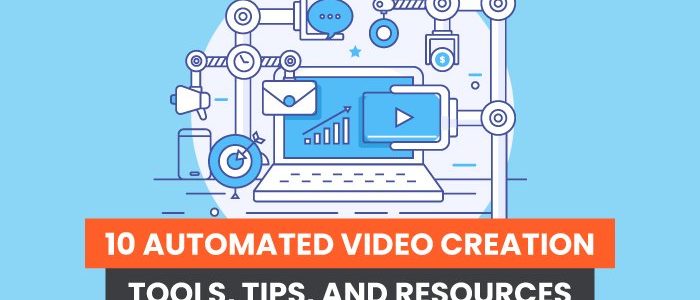
10 Automated Video Creation Tools, Tips, and Resources

Video content creation can be a massive headache. I get it.

Even for seasoned marketers, creating compelling content is a challenge. The real uphill battle is trying to create that level of content regularly.

That’s why we’re taking a closer look at automated video creation and some of the best tools your brand can use to expand its content strategy.

Here’s the thing—automated content doesn’t have to be terrible. When you produce an hour-long, high-quality interview, you’ve also produced several pieces of smaller, high-quality content.

All you have to do is repackage those valuable tidbits and present them to your audience.

Here’s how.

What Is Automated Video Creation?

Automated video creation is the act of using video editing software to automatically create short, interesting videos you can use for marketing and promoting your content.

Let’s say you recorded a podcast this week and released it to your audience. You received decent engagement, but you quickly noticed a problem. Many of your viewers aren’t watching the entire podcast.

Some viewers love to sit and consume two hours of content at once. Others want minute-long highlight clips, and simply aren’t interested in long-form content. By identifying key moments and topics discussed in your podcast, you can create bite-sized clips and videos that are more digestible. Plus, having long-form content that’s well produced arms you with plenty of future clips to use.

That’s where automated video creation comes in. Make no mistake, there’s a big difference between linking your podcast in your Instagram Bio and posting a 45-second highlight video with top-notch editing.

If you’re making several pieces of long-form content every week (interviews, podcasts, etc.), sifting through hours of content to find highlights and memorable moments can quickly become time-consuming.

By automating that process, you can regularly create custom, high-quality videos. As a result, you’ll add variety to your content, while being able to test unique marketing strategies quickly. For example, you can rapidly A/B test different format styles, or try two highlights against each other to see what resonates with your audience.

5 Tips for Automated Video Creation

Before we dive into specific automated video creation tools, it’s important to understand how your automated video creation journey should unfold. Savvy marketers always develop a clear plan of attack for marketing initiatives, so we’re walking you through the general checkpoints of the automation process.

1. Determine Your Automated Video Creation Priorities

Before you choose a platform, establish your video creation objectives. If you want to test a specific format, find platforms that support that testing. Beyond that, determine what features will serve your team best.

If your marketing team has little to no experience with automated video creation, a tool that prioritizes ease of use can make the video creation process easier. Marketing teams with plenty of video creation experience might need automation tools that offer more customization.

2. Decide on a Platform

As you narrow down your search, take a closer look at how each platform functions. Some platforms offer limited features aimed at supporting brands with little to no video marketing budget. Other platforms want to support your marketing efforts from start to finish.

While many of these platforms sound similar, they focus on different elements that can elevate your content creation.

3. Upload Your Content

So, you’ve established your video creation priorities, and you’ve chosen your platform. Now you can actually create your content. Upload your video and let the tool start to work its magic.

If you’re focused on automating as much of the experience as possible, you won’t need to do much other than confirming certain edits. On the other hand, choosing a platform with plenty of depth means you’ll be able to customize your content fairly easily.

4. Choose Your Visual Elements

When customizing your video content, visual elements like text animation effects can elevate the quality. Other effects like overlays and moving graphics can be implemented without much trouble, as long as you’re using the right automated video creation tool. Make sure your visual elements are consistent with your brand presentation.

5. Publish Your Content

Once you’ve customized your content and created a high-quality video, it’s time to send your content live. With some tools, you’ll even be able to publish your content directly after editing. Instead of signing into each of your brand’s social media platforms, automation means you can post on all of them at the same time.

10 Tools for Automated Video Creation

Now that you understand the process, it’s time to look at the automated video creation tools available. While many of these tools function similarly, they each have distinct features that make them unique.

1. Moovly

Moovly prides itself on being a user-friendly, in-browser automated video creation tool. In addition, they offer a tool that doesn’t demand constant software updates or even any design skills.
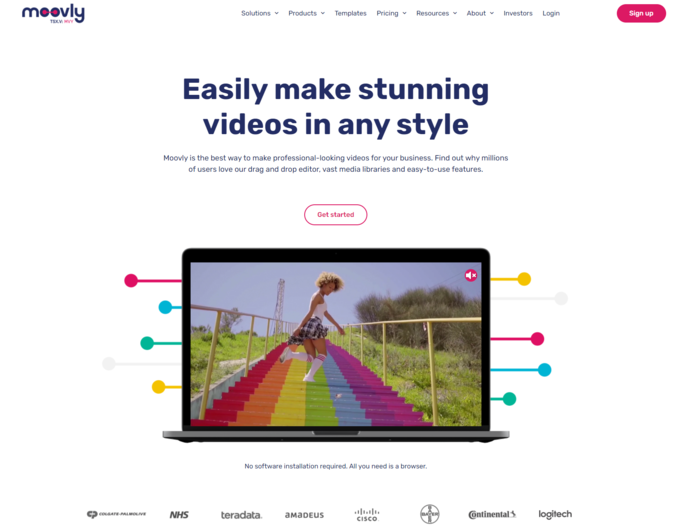
Tools for Automated Video Creation - Moovly

Looking for support with your footage-based videos? They can help. Want to experiment with cartoon or doodle styles? Moovly can create those videos, too. If you’re looking for a lightweight solution with plenty of customization options, Moovly might be the right tool for your brand.

2. Adobe

Adobe’s priority when it comes to video creation is efficiency. Using AI technology, they save users time and effort when editing. Some of the more interesting features include auto reframing, where Adobe automatically reframes the subject of a video shot in widescreen when exporting to social platforms.

Their AI also uses color match, changing your content’s color and light values, based on your customized reference point. To be clear, they aren’t just copying a specific color reference point onto your clips. Instead, the AI analyzes every selected clip and tweaks them until they properly match your reference point.

3. Wibbitz

Wibbitz is an automated video creation tool that speeds up production by offering a variety of useful templates and one-click solutions. One feature marketers will appreciate is the easy customization options. Wibbitz provides users with access to logo watermarks, video intros and outros, text overlays, and a full-spectrum color palette.

This automated video creation platform lets you maximize your reach by converting your best videos into impactful social media videos.

4. Kamua

Another browser-based tool, Kamua claims their product will have you working nearly 90 percent faster, without any previous video editing experience. They also feature automatic captioning in over 60 languages, saving you from having to transcribe hours and hours of content.

Kamua’s AutoCut feature actually automates video edits, by finding cut points in your content and letting you decide what to keep. Plus, their AutoCrop feature instantly turns your YouTube videos into TikTok videos.

5. Typito

If you’re limited by a modest marketing budget, Typito could be a great automated video creation tool. Not only is it free to start with, but each of their pricing plans are designed with reasonable budgets in mind.
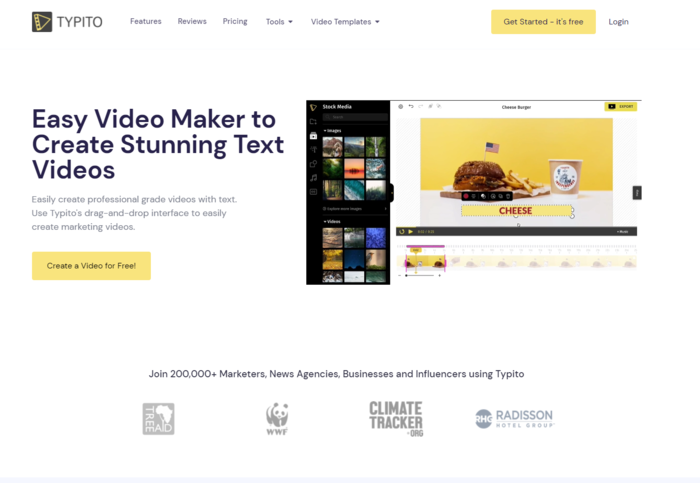
Tools for Automated Video Creation - Typito

Of course, it’s worth figuring out exactly what Typito is offering. They provide an easy drag and drop editor and a brand kit, along with 600,000 free images and over 500 free templates.

6. Rocketium

Rocketium understands the digital media landscape is constantly shifting. That frequent change demands an approach to marketing that’s as flexible as it is accurate. That’s why Rocketium aims to accomplish two goals. Eliminating repetitive creative work is their first goal, saving brands the hassle of creating completely new content for new campaigns.

From there, Rocketium aims to make targeted marketing even easier. They use an AI copywriter to help you craft the right visual for different products and unique target audiences. Teams with demanding content calendars should take a look at this tool.

7. Animaker

Developing unique creative content within an automation tool might not sound optimal, but tools like Animaker prove it’s certainly within their power. Armed with their templates, you can make a video in five minutes, according to their official website.

8. OFFEO

OFFEO’s appeal can be broken down into four subsections. Their near limitless supply of assets means that users will have access to hundreds of templates. Being easy to use and browser based, OFFEO lets you animate your content, leveraging the skill of their professional designers to provide you with high-quality animation.

9. Magisto

As an end-to-end video marketing tool, Magisto aims to support users at every stage of the marketing process. When it comes to creation, you can expect the support of a computerized video editor.

Magisto lets you host and distribute video content on your website using their native player. Take those optimized videos and then use engagement analytics to gain clarity about your marketing initiatives.

10. InVideo

For the truly budget-conscious, InVideo offers some fantastic automated video creation support, absolutely free. While there are certain features locked behind paid subscriptions, there are plenty of tools available to users on the free plan.
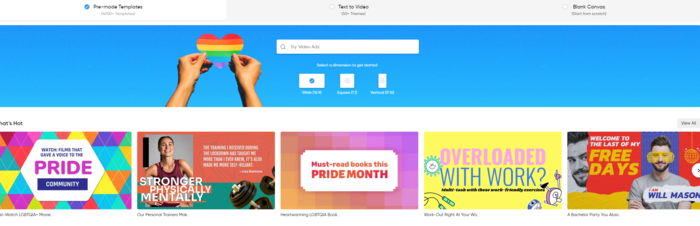
Tools for Automated Video Creation - InVideo

You can export 60 videos per month, with a maximum duration of 15 minutes. Transcription is automatic, as well as over 4,500 handcrafted templates. You’ll even have access to branding presets, intros, outros, and team sharing.

If you’re on the fence about automated video creation tools, feel free to try InVideo out and see how it improves your marketing efforts.

Automated Video Creation FAQs

Can you automate video editing?

Absolutely, you can! With the help of AI, you can begin automating your video editing, as much or as little as you’d like.

How can I add subtitles to a video automatically?

There are plenty of tools that can do this for you, some offering support in over 60 languages.

Do I need video editing experience?

While it’s certainly a positive, there are several user-friendly platforms that don’t require any previous editing or design experience.

Do I have to pay for an automated video creation tool?

Not always! Some tools are completely free; the only drawback is they lack some key features.

{
“@context”: “https://schema.org”,
“@type”: “FAQPage”,
“mainEntity”: [
{
“@type”: “Question”,
“name”: “Can you automate video editing?”,
“acceptedAnswer”: {
“@type”: “Answer”,
“text”: “Absolutely, you can! With the help of AI, you can begin automating your video editing, as much or as little as you’d like.”
}
}
, {
“@type”: “Question”,
“name”: “How can I add subtitles to a video automatically?”,
“acceptedAnswer”: {
“@type”: “Answer”,
“text”: “There are plenty of tools that can do this for you, some offering support in over 60 languages.”
}
}
, {
“@type”: “Question”,
“name”: “Do I need video editing experience?”,
“acceptedAnswer”: {
“@type”: “Answer”,
“text”: “While it’s certainly a positive, there are several user-friendly platforms that don’t require any previous editing or design experience.”
}
}
, {
“@type”: “Question”,
“name”: “Do I have to pay for an automated video creation tool?”,
“acceptedAnswer”: {
“@type”: “Answer”,
“text”: “Not always! Some tools are completely free; the only drawback is they lack some key features.”
}
}
]
}

Automated Video Creation Conclusion

No matter what industry you’re in, there’s no getting around the fact that audiences want quality content. If your brand doesn’t produce something new and exciting on a regular basis, you run the risk of losing your audience’s attention.

Instead of trying to constantly reinvent the wheel, consider using an automated video creation platform to break in-depth content down into digestible clips and share them on social media.

It might seem like a simple solution, but it’s a powerful way to offer more consistent content, expand your reach, and potentially create a genuine moment of engagement with your audience.

Why do you want to automate your video creation? How do you think it will help your brand?

Flexport (YC W14) Is Hiring

Article URL: https://techcrunch.com/2016/06/07/flexport/

Comments URL: https://news.ycombinator.com/item?id=27731056

Points: 1

# Comments: 0

Fly.io (YC W20) Is Hiring Site Reliability Engineers

Fly.io takes container images and converts them into fleets of Firecracker VMs, running on our own hardware around the world. It’s easy on Fly to run applications close to users, no matter where they are in the world. Try it out! If you’ve got a working container already, it can be running here in less than 10 minutes:
https://fly.io/docs/speedrun/

We’ve got a lot of fun ops challenges here. We’re HashiCorp stack (Nomad, Consul, and Vault), plus Firecracker, plus WireGuard, which is what our network fabric is built on. Our users drive Fly.io through a Rails-based GraphQL API. We host a heavy-duty Prometheus-style metrics cluster, an ElasticSearch cluster for logging, a monitoring system using Sensu Go, BGP4 peering with Bird… the list goes on.

We’re hiring SRE-types to help us manage and keep this stuff running smoothly. The role includes:

* Intense observability and monitoring, so that Kurt only gets paged during his on-calls when something important happens.

* Coordinating deployments of new infrastructure across a fleet of servers with custom kernel and networking configurations.

* Enabling us to quickly ship new features to prod with canaries or blues and greens or whatever the cool kids are doing, because some of what we deploy right now is scary enough to slow us down a bit.

We’re a small, almost entirely technical team. Ops and dev are tightly integrated, and devs don’t throw things over the wall expecting ops to magically keep them running.

We’re remote, in Chicago, Montreal, Colorado, Virginia, Utah, Wisconsin, and London.

We all share an on-call rotation, which is a company value that won’t be changing any time soon.

We’re weird about hiring. We’re deeply skeptical both of resumes and interviews. We’re believers in aptitude and of discovering and developing talent. Regardless of your background, we’re interested in hearing from you; you can’t waste our time. More about the role and our hiring process here: https://preview.fly.dev/blog/fly-is-hiring-sres/

Or just reach out: jobs+servers@fly.io.


Comments URL: https://news.ycombinator.com/item?id=27732580

Points: 1

# Comments: 0

The Ultimate Guide to Customer Acquisition: Examples, Tips, and Resources

Customer acquisition is a huge pain point for many business owners. Even more difficult is developing a consistent way of bringing in new business.

Your goal should be to put together a system that acquires customers almost on autopilot. That’s easier said than done, though.

This guide should help get you started.

What Is Customer Acquisition?

Customer acquisition is your business’s process of bringing in new customers. The goal of every business is to create procedures that make acquiring new customers simple and systematized. Unfortunately, many small businesses and freelancers have a hard time developing a process for bringing in new clients.

An important piece of the puzzle is a business’s ability to measure its customer acquisition cost. In the digital marketing realm, this is often referred to as “CPA” or “cost-per-acquisition.”

It applies across the board, whether you’re using paid advertising, organic reach, print, radio, TV, or anything else. You should know how much you need to spend to acquire a customer. Once you determine that, it becomes much easier to scale up your marketing because you know you can pump more dollars into your campaigns and get XYZ in terms of customers out the other end.

What Is the Purpose of Customer Acquisition?

The purpose of customer acquisition is self-explanatory. Without a customer, you don’t have a business. Without consistent customers, you don’t have a stable business.

A little caveat here is businesses should also focus on customer retention, which is different from an acquisition. Retention is your effort to keep the customers you already have rather than going through the vicious cycle of constantly needing to acquire new ones. Increasing your retention by only five percent can increase your profits by as much as 95 percent.

When you combine customer acquisition and retention, you have a sure-fire recipe for success. Here’s why:

  1. It helps you make the money you need to cover costs and pay employees, allowing you to reinvest in the business and drive better results for your clients.
  2. It shows steady growth and success to partners, investors, and outside influencers.

Being able to continually drive new business towards your company keeps everyone happy, but it’s not the end goal. The goal is to retain the customers you have as long as you can. Although it costs money to acquire new ones, it doesn’t cost anything to keep them.

Customer Acquisition Versus Lead Generation

There may be some confusion about the difference between the two, but it’s actually simple: Lead generation is one step of the customer acquisition funnel. A person or entity must first become aware of your business before they can buy anything from you. This generally happens as a result of lead generation.

For example, let’s say your business is running a Facebook ad. This usually happens to cold traffic (people who have never heard of you). They see your ad and pause to look for a second. They’ve now become a lead and are no longer cold traffic because they are aware of you.

Maybe they click the ad, fill out a form, and end up having a conversation with you. All of these are steps in the overall customer acquisition funnel. Lead generation is simply one step.

How to Create a Customer Acquisition Plan

Now let’s talk about some of the actionable steps you can take to develop the best customer acquisition strategies.

1. Identify Your Customer Avatar

The first step for every business (before they’re even a business!) should be to create a customer avatar or buyer persona. This is your ideal customer: who they are, what they like, their problems, and their demographic information.

It’s a great strategy for a business to know who their customer is as early as possible. For example, if you sell anti-aging cream, you have a very clear audience who would be interested in that product. Your audience might be women ages 40+ who have a developed skincare routine but are looking for a little extra help. They might be middle to upper-middle class and can’t afford surgery or cosmetic procedures, but they can afford your cream.

If you know exactly who your target is, you’ll have a much easier time acquiring them because your ad copy, text, images, and products will speak their language.

2. Determine Goals

Once you have your customer avatar, jot down some goals and objectives. What are you trying to achieve with your marketing efforts? Here are some examples:

  • Awareness: Are you trying to spread awareness of a cause, shed light on something, or make yourself known to a specific audience?
  • In-person: Does your business require people to physically come into a brick-and-mortar location?
  • Phone call: You might need to convert the online traffic into a phone inquiry.
  • Form: Is your traffic still in the early stages of learning about you? If so, you might just want them to complete a form.
  • Conversion: If the traffic you’re targeting already knows who you are, you might simply be trying to get them to convert into a sale.

Regardless of what your goal is, you need to have one. The clearer the direction you take, the easier it will be to convey the proper message and get your audience to do what you want them to.

3. Choose a Platform or Avenue

Once you’ve figured out who your audience is and what you want them to do, you need to determine what method to use to reach them. There are many different customer acquisition channels, both online and offline. Here are some of the most popular:

Content Marketing

Content marketing is a great long-term way to develop customer relationships and drive traffic to whatever it is you’re looking to accomplish. Best of all, there’s no right or wrong way to do it because you can put together content based on your niche.

Just keep in mind that content marketing isn’t as simple as blogging on your website and expecting people to find it. You need to understand basic SEO and realize that this is a long-term strategy and can take months before you see results.

Social Media

Acquiring customers on social media offers a few different avenues. You can use paid ads, which I’ll discuss shortly, or you can do it the slow way by building up an organic following, posting regularly, and reaching out to people to start conversations.

I like using social media in the most natural way possible, and that’s by “being social.” Start conversations, send messages, and provide value to people. They will respond. Seventy-three percent of marketers find social media “somewhat effective” or “very effective” in their business. It all starts with a conversation.

Paid Advertising

Whether you choose PPC on Google or social media ads like Facebook, paid advertising is a great way to get your business in front of the right audience right away. Keep in mind that Google Ads have a 100 percent ROI, but that does require you to understand how to do it right.

4. Set a Budget

You need to have a budget and customer acquisition cost formula if you plan to have success. Marketing can quickly run more expensive than you expected if you don’t have a set budget in place ahead of time.

Start with a small budget and work your way up as you start to experience success.

5. Optimize and Tweak

Once you’ve had a chance to compile data on how people are receiving your ads, pieces of content, etc., you can optimize and tweak as necessary. For example, if you find that a specific demographic is converting the best on a social media ad, you might want to allot more ad spend to those people and take some away from the people who aren’t converting.

3 Examples of Successful Customer Acquisition

One of the best ways to understand how to implement and measure customer acquisition is to see other companies do it successfully. Here are some examples you can piggyback off of:

Shopify: Interactive Content

Examples of Successful Customer Acquisition - Shopify

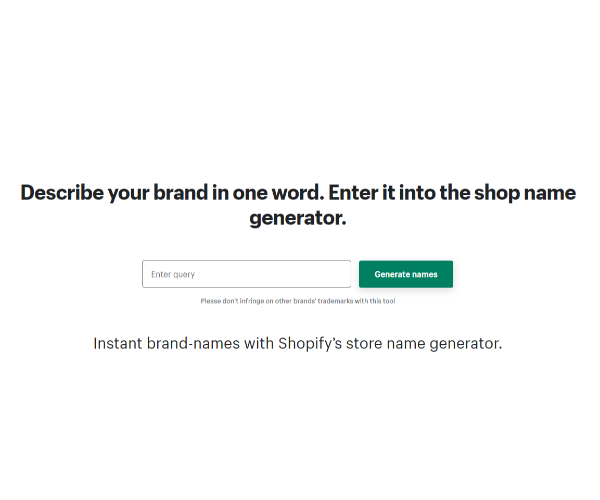
Shopify is the e-commerce giant responsible for thousands of successful e-commerce stores. One great way that they drive customers towards the site is with interactive content such as business name generators, quizzes, and even product choice suggestions. This is not only fun, but it keeps you on the site longer, which looks good to Google.

The content you create needs to be interesting and unique. The internet is a highly competitive environment, and you can’t just post anything and expect people to read it and react.

Turbotax: Free, Free, Free

Examples of Successful Customer Acquisition - Turbotax

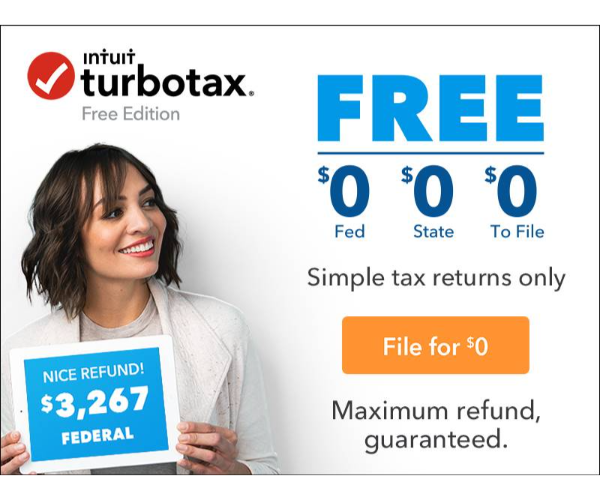
Turbotax is a great example of using multiple platforms to convey your message. We’ve likely all seen their ads somewhere when they talk about how their service is free for individuals and always will be. If you understand neuro-linguistic programming, you know that “free” is a big buzzword.

Make sure you’re offering enough value to your customers in exchange for what you’re asking. Advertising has changed, and it’s no longer as simple as telling people what you do. You need to provide value.

Swagbucks: Referral Marketing

Examples of Successful Customer Acquisition - Swagbucks

One of the best ways to get more customers is to have your customers get them for you. Referral marketing is a powerful method because it doesn’t cost much, and you’re rewarding the customers you already have, which can help increase customer retention.

This method is especially useful at the beginning of a business’s life when you’re trying to grow your network and establish credibility. Offer something to your customers for every lead they bring your way.

5 Tips to Improve Your Customer Acquisition Strategy

Here are some bonus tips to help you nail down your customer acquisition:

1. Master the CTA

Your call-to-action (CTA) needs to be perfect once you know your audience and have traffic. At this point, it becomes all about what you’re doing to convert the traffic you have. Conversion rate optimization becomes the key, and it usually starts with having a crystal clear and persuasive CTA.

2. Track Everything

You should be tracking every little detail about your prospective customers. Most importantly, focusing on the right metrics will take things to the next level. Demographic information, heat maps, abandoned carts, retargeting—all of these are important. This data can help you understand more about your audience so you can further optimize the ads for future success.

3. Make Sure the UX Is Perfect

If you’re getting traffic, the ads are working, and everything seems to be going well, but you still don’t have customers, there could be another reason. Make sure your site is fully functional, mobile-optimized, fast-loading, and easy to use.

4. Be Patient

It can take as long as a week to build up enough data on Google ads. If you change or cancel an ad before that time, you might be shooting yourself in the foot. The same applies to content marketing. It takes a long time for Google to recognize your content and index it properly.

5. Diversify

I believe in spreading yourself around and making sure you’re reaching as many people as you can. If you think some of your audience would respond to a different method of customer acquisition, set a budget for it, and give it a go.

Customer Acquisition FAQs

Below, see some of the most frequently asked questions about customer acquisition.

What is a good customer acquisition cost?

A good customer acquisition cost is whatever you need to be profitable. It will vary from business to business. All that matters is that you’re not spending more to acquire a customer than they will pay you. Keep in mind operating costs as well.

How do you manage customer acquisition?

Many businesses have people in charge of this or an entire department. Of course, it can be difficult for small businesses, so it might make more sense to outsource it.

Is it more cost-effective to keep a customer than to acquire a new one?

Acquiring new customers has been deemed the “startup killer” for a reason. It’s much cheaper to retain than acquire, but you can’t have one without the other. Make sure you’re focusing on both.

What is acquisition rate?

Find this number by dividing the total number of people who opted into your campaign by the total number of people who saw it.

{
“@context”: “https://schema.org”,
“@type”: “FAQPage”,
“mainEntity”: [
{
“@type”: “Question”,
“name”: “What is a good customer acquisition cost?”,
“acceptedAnswer”: {
“@type”: “Answer”,
“text”: “A good customer acquisition cost is whatever you need to be profitable. It will vary from business to business. All that matters is that you’re not spending more to acquire a customer than they will pay you. Keep in mind operating costs as well.”
}
}
, {
“@type”: “Question”,
“name”: “How do you manage customer acquisition?”,
“acceptedAnswer”: {
“@type”: “Answer”,
“text”: “Many businesses have people in charge of this or an entire department. Of course, it can be difficult for small businesses, so it might make more sense to outsource it.”
}
}
, {
“@type”: “Question”,
“name”: “Is it more cost-effective to keep a customer than to acquire a new one?”,
“acceptedAnswer”: {
“@type”: “Answer”,
“text”: “Acquiring new customers has been deemed the “startup killer” for a reason. It’s much cheaper to retain than acquire, but you can’t have one without the other. Make sure you’re focusing on both.”
}
}
, {
“@type”: “Question”,
“name”: “What is acquisition rate?”,
“acceptedAnswer”: {
“@type”: “Answer”,
“text”: “Find this number by dividing the total number of people who opted into your campaign by the total number of people who saw it.”
}
}
]
}

Summary of The Customer Acquisition Guide

There are many ways to approach customer acquisition, and while most of the methods lead to the same place, there is no one-size-fits-all solution. You need to figure out what marketing method works best for your business and how you can implement it consistently.

Most importantly, understanding your customer and their objective is crucial. Once you’ve done that, the rest falls into place.

What customer acquisition methods do you use in your business?

5 Surprising Things the Top Ranked Sites on Google Have in Common

5 Surprising Things the Top Ranked Sites on Google Have in Common (And What You Can Learn from Them)

What separates the heavyweights of the search engine rankings from everyone else? That’s a question every good SEO constantly asks themselves as they look to outrank sites that seem to dominate Google for every relevant keyword (like Wikipedia or WebMD).

Unsurprisingly, these sites have more than a few things in common. It’s not just their age or authority either—factors that other sites can’t hope to match. There are plenty of similar qualities that help top sites stand apart from their competitors that you can copy and improve today.

Let’s review five of the most important and surprising factors and explain what you can learn from them and how you can use that to improve your own site.

1. Backlinks Reign Supreme

Let’s get the least surprising commonality out of the way first. The top-ranked sites on Google all have a serious number of backlinks. As we all know, high-quality backlinks almost always mean high rankings.

Research from Backlinko finds the first result on Google has an average of 3.8 times as many backlinks as the rest of the results on the first page.

The big boys have it made when it comes to acquiring more backlinks, too. They continue to get more backlinks over time as a result of their position in Google.

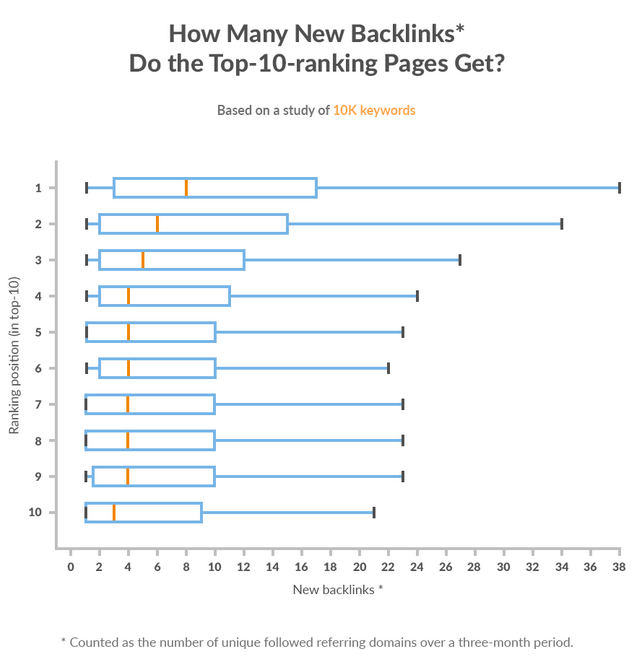
Research by Ahrefs finds that the top three results generate more new referring domains than the rest of the pages on Google. Pages ranked first and second get significantly more new referring domains. Those pages ranking first get between backlinks at a faster rate of between five percent and 14.5 percent per month.

top ranked sites Ahrefs study

It’s not just a large number of backlinks that are important. They need to be high quality, too. What does a quality backlink look like? It comes from an authoritative domain, is placed within its content, and has topical relevance to your website.

Let’s say you have a car blog. A link from another high-ranking car blog carries more weight and is of higher quality than a link from a major health website because it’s much more relevant to your niche.

You shouldn’t discount internal links, either. The biggest websites (and news outlets in particular) almost always put a lot of effort into making sure every new piece of content links back to several previous posts.

Great internal linking makes it significantly easier for Google to crawl your website and index your information. The easier your site is to crawl, the more likely Google will find and rank your content. They may not have the same power as backlinks, but internal links can still result in higher rankings.

All this is to say that you need to build backlinks in a scalable way if you want your site to compete with the biggest brands in your industry.

2. Provide High-Quality Content

Most top-ranking websites are well known for the quality of their content. Okay, some major sites don’t publish high-quality content all of the time, but every high-ranking site does produce exceptional content, at least some of the time.

Don’t forget, high-quality content doesn’t necessarily mean it’s longer or more detailed than everyone else’s. It might contain unique research that other companies can’t hope to copy. Or it could break a story. Or it could be designed better. Or it could go viral. There are lots of ways to create amazing content.

Doing so matters when it comes to SEO because high-quality content helps boost several ranking factors. It’s a magnet for backlinks, it reduces your bounce rate, and it should result in a higher clickthrough rate (CTR).

The top-ranked sites don’t just rely on the objective quality of their content, though. They also take steps to optimize it to perform better in Google. That means including keywords in header tags, throughout the content, in the page title, and in the URL.

Creating high-quality content isn’t easy, especially when there’s no objective way to determine how good your content is. That’s the job of your users. That being said, there are still steps you can take to make it more likely your users think highly of your content.

The first is to make sure it’s written by an expert. This is a pretty simple task for some top-ranking sites like media outlets. Journalists, by default, are experts on certain topics. However, there’s nothing stopping you from writing about your expertise or hiring expert writers, either.

You could even use a strategy adopted by some health websites, where content is written by a professional writer and then fact-checked by a medical professional. Doing so has the double benefit of having content written by an excellent writer while also being medically accurate.

3. Focus on User Experience

Top-ranking sites on Google put a premium on the user experience and do everything they can to keep customers coming back. This means having a great design, high-quality content as discussed above, an intuitive layout, and a great browsing experience in general. Yes, some of the highest-ranking sites may serve up ads on their pages, but they don’t ruin your browsing experience with them or use intrusive popup ads, either.

A great user experience is one of the reasons these sites are top of Google, after all. Google announced that user experience metrics would be used to rank sites, beginning in 2021. How your site loads, what it looks like, and how users interact with it contribute to your rankings, along with other factors like HTTPS, safe browsing, mobile friendliness, and the presence of interstitials.

Google puts such a big emphasis on your site’s user experience because it aligns with its goal of giving customers the best possible browsing experience. The search giant finds over half (52 percent) of users will be less likely to engage with a brand after a bad mobile experience. So why would it rank you if you have a high bounce rate?

Improving your site’s user experience and aligning it with the experiences provided by the top-ranking sites won’t just improve your rankings; it also makes commercial sense. Ad network Ezoic generated a 186 percent increase in earnings per 1000 visitors by improving the UX of a publisher.

4. Make Sure Your Page Speed Is Competitive

You’ve never had to wait for the New York Times to load, have you? That’s because top-ranking sites know the importance of delivering content as fast as possible. Page load speed has been a ranking factor for desktop searches since 2010, and Google announced it was also a ranking factor for mobile searches back in 2018.

Say it with me: A slower site means lower rankings.

You need to optimize for page speed if you want to mix it with the highest-ranking sites. It’s not so much about getting the edge over your competitors and making your site 0.1 seconds faster, however. It’s about having a site that’s fast enough to not impact the user experience negatively.

Research by Google finds over half (53 percent) of visitors abandon a mobile site if it doesn’t load in three seconds.

If you have a slow site, you won’t just get penalized for a poor load time. You’ll also get penalized for having a high bounce rate as users get fed up with waiting and choose a different site instead.

The easiest way to check your page speed is by using Google’s PageSpeed Insights tool. It will let you know how fast your site is, give it a score out of 100, and suggest improvements.

Top ranked sites page speed

If you want to have a seriously fast-loading page, read my advice on getting a perfect score with Google PageSpeed Insights.

5. Consider User Intent

Have you noticed how some top-ranking sites have several pieces of content that all seem to approach the same topic from a slightly different angle? That’s because they understand the power of user intent and the value Google places on it.

Google wants to serve up the best and most appropriate content for each query. A big part of that is understanding what the user is trying to achieve from their search. Are they trying to learn something? Research a topic? Make a purchase? Google delivers different results for each intent.

For instance, Google shows e-commerce pages where it thinks the user is trying to make a purchase, but it serves up blog articles for information-related queries.

Knowing what type of content Google thinks users want to see is key to becoming a top-ranked site, because you’re much more likely to get ranked if you create content that matches the user intent for each target keyword. This is why so many top-ranking sites have similar content targeting the same topics: to catch every user intent.

It’s not simply a matter of informational vs. commercial, either. There are dozens of types of informative content that users may want to access. In some cases, it’s a listicle. For other queries, a video may be more appropriate.

Taking time to understand the user intent for each keyword or topic you’re targeting can yield serious results. Marketing SaaS CoSchedule saw a 594 percent increase in search traffic when they aligned content with user intent.

Top Ranked Sites: FAQs

What do the top-ranking sites have in common?

They all have a lot of high-quality backlinks, great content, an excellent user experience, a fast-loading website, and content that matches the user’s intent.

Why do the top sites have so many more backlinks?

This is partly because of the quality of content but also due to the fact that they sit at the top of Google. This makes them an easy target for people trying to link to an authoritative source.

How can better content improve my rankings?

Better content can improve your rankings in several ways. High-quality content attracts more backlinks, but Google also rewards in-depth content and results in users spending a long time on the page.

Why does user experience matter?

Google wants to provide the best experience to its users. Part of that means sending them to sites that are easy to browse. It’s why user experience factors are now ranking factors.

How can I check my page speed?

Use the Google PageSpeed Insights tool.

How can I gauge user intent?

Google the keyword you want to rank for and look at the pages that appear in the results. If all of the content has the same format, that’s the type of content you should create.

Conclusion: What You Can Learn From the Top Ranked Sites

You can’t turn your website into a top-ranking site overnight. However, you can learn a lot from them and implement tactics they use to improve your site’s Google ranking. There are more than a few things they do in common, as you’ve learned.

Make sure you have a scalable system for generating backlinks, create high-quality content, focus on the user experience, ensure your site loads fast, and consider user intent when you create content.

Do these five things, and you could be well on your way to having a top-ranked site in the future.

What are you going to work on first?

American Express Credit Card, A Company History

American Express Credit Card, A Company History

The American Express credit report card had actually been around considering that 1850 because after that the American Express credit scores card has actually seen it great quarters and also it get on share of negative quarters. A reputable firm that is prepared to assist individuals get a credit report card that will certainly collection every person’s private requirements. They have actually been about enough time that, the American Express Credit Card Company understands what type of costs are mosting likely to be practical for the ordinary individual to be able to manage with out entering into bank card financial obligation quickly after they obtain a charge card.

The American Express credit history card has a selection of various kinds of credit history cards so that every person would certainly locate a credit score card for all their demands. When you begin to look at the various individual American Express credit scores cards you are going to see even more than simply one kind of credit report card that you are able to utilize. You are going to see that the American Express debt card supplies you to have money back, taking a trip, as well as also a cost savings honor.

The American Express debt card additionally uses a credit history card for the little organization proprietors that are out there. With the tiny company credit history cards, the company proprietor can take pleasure in American Express’s several advantages. The American Express credit report card also provides benefits for the tiny service proprietors simply like the credit history cards for the individual remedies.

When you are looking for a credit history card for on your own or for your tiny company you might desire to examine out what the American Express debt card has to supply you. There is a pair of various kinds of credit report cards that are used via the American Express firm supplying you a credit report card that is going to fit all of your requirements as for as the usage as well as charges of a credit report card has to supply.

The American Express credit report card had actually been around because 1850 given that after that the American Express credit history card has actually seen it excellent quarters as well as it get on share of negative quarters. They have actually been about long sufficient that, the American Express Credit Card Company recognizes what kind of charges are going to be viable for the typical individual to be able to pay for with out going right into credit score card financial obligation soon after they obtain a credit history card.

The American Express credit history card has a range of various kinds of credit score cards so that everybody would certainly discover a credit report card for all their demands. There is a pair of various kinds of debt cards that are supplied with the American Express firm using you a credit scores card that is going to fit all of your requirements as for as the usage and also charges of a credit score card has to use.

New comment by davidhalter in "Ask HN: Who is hiring? (July 2021)"

cloudscale.ch | Zürich, Switzerland | ONSITE | Full-time

We are an IaaS platform in Switzerland trying to offer a high-quality “cloud”. We are working with Django/React, but knowledge in these technologies is not a must. We have also been working on a Kubernetes CSI driver and there’s our own Terraform provider.

We are mostly looking for an engineer willing to learn. Ideally you have a preference for functional patterns. Currently we are however looking for someone with fluent German.

If you’re interested, just email me at dave (at) cloudscale.ch and I’ll tell you more about this job :).

Best Cheap Web Hosting

Disclosure: This content is reader-supported, which means if you click on some of our links that we may earn a commission. Do you want to skip the read and get right to my top picks? The best cheap web hosting service for most people is Hostinger or DreamHost. There’s no need to pay a fortune … Continue reading Best Cheap Web Hosting

Indicting the Trump Organization

The post Indicting the Trump Organization appeared first on WE TEACH MONEY LIFE SELF DEFENSE WITH FINANCIAL GOALS IN MIND. The post Indicting the Trump Organization appeared first on Buy It At A Bargain – Deals And Reviews.